

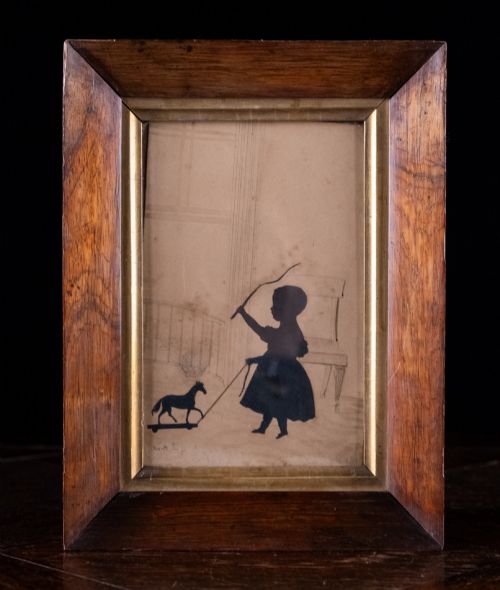
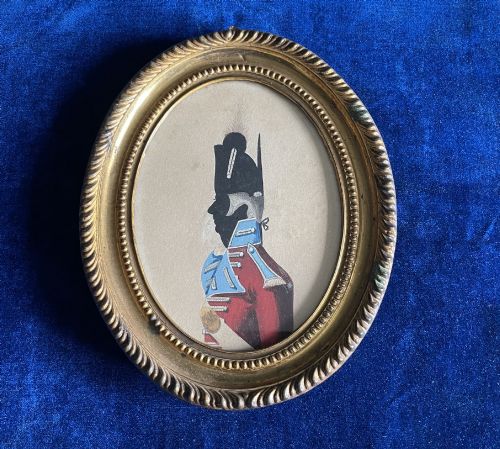
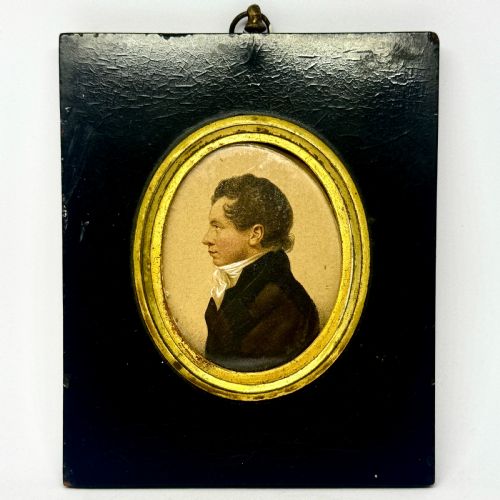
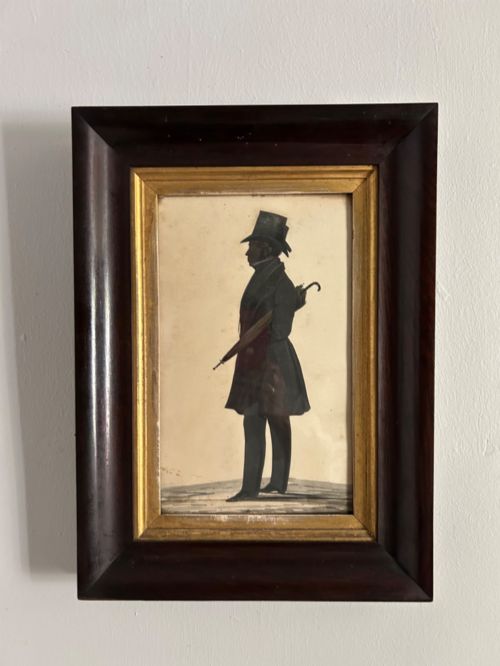


Regency Framed Silhouette
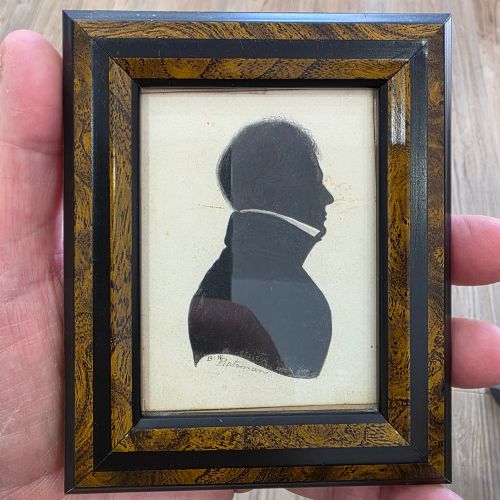
A regency framed silhouette captures the profile of a sitter in paper, ink, or glass, offering an intimate glimpse of Georgian and Victorian life.
Regency Framed Silhouette
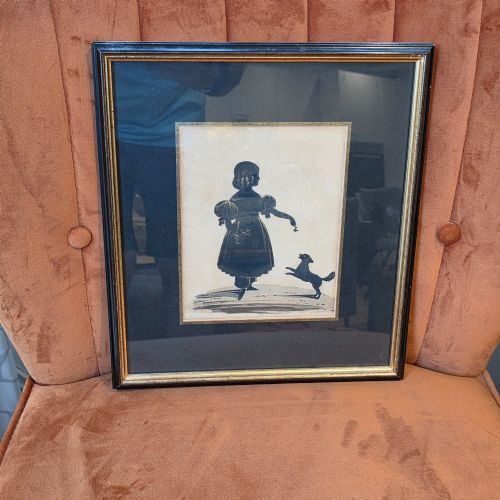
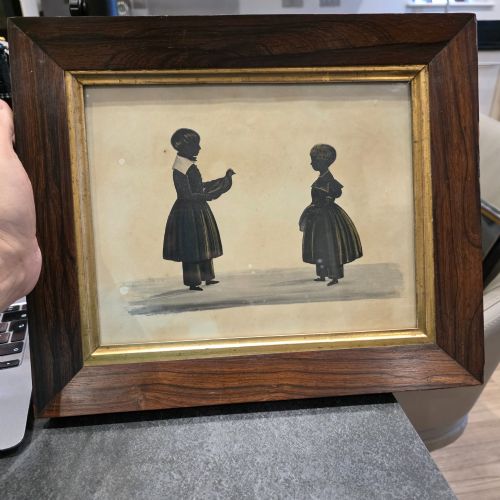
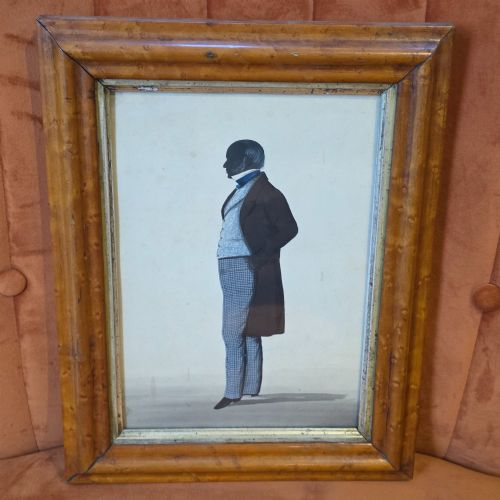
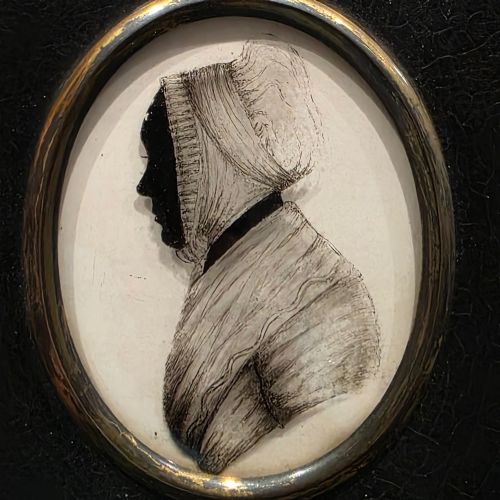
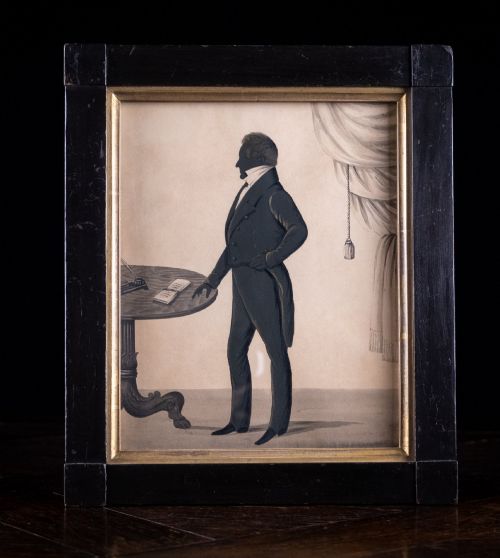
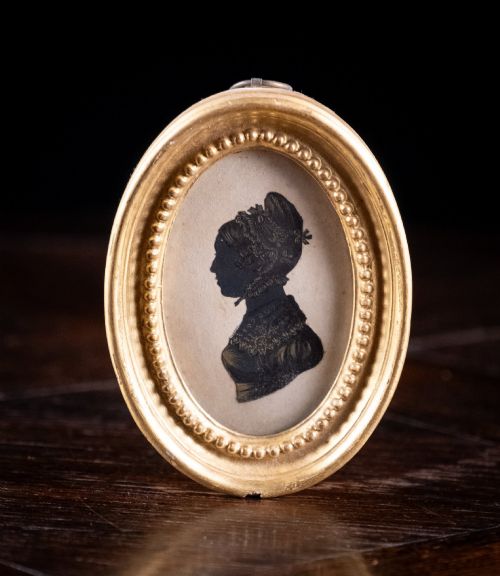
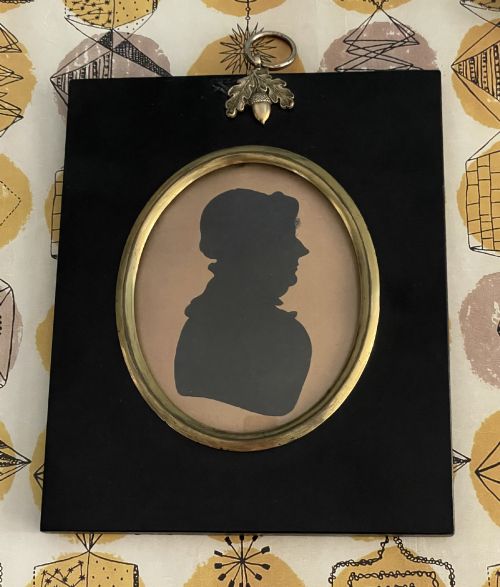
A regency framed silhouette is a profile portrait, typically depicting a gentleman, lady, or child, executed during the Georgian, Regency, and Victorian periods. Buyers search for these pieces to acquire historical likenesses that capture the personal appearance of individuals from the eighteenth and nineteenth centuries.
The pieces on this page span wall art, portrait miniatures, and framed artwork originating from the nineteenth century, 1800, and the eighteenth century. They frequently show sitters alone or with companions such as children, dogs, and horses.
The most common formats combine hand-cut paper with ink details or feature delicate painting directly on glass. Frames in ebonised wood, gilt wood, brass, and maple enclose the profiles, protecting the fragile media within.
Materials and Technique
Makers cut profiles from black paper using scissors or knives, often applying gold leaf highlights to enhance costume details, lace, and jewellery. Alternatively, artists painted portraits directly onto convex or flat glass using dark pigments and ink, sometimes backed with pale materials to create contrast.
Wood forms the primary framing material, with ebonised wood, rosewood, and maple providing dark, contrasting surrounds that make the pale or gilded silhouettes stand out. Brass fittings, hangers, and bezels secure the glass fronts and protect the delicate paper work inside.
Several profiles immortalise family pets, recording the exact stance of a cherished dog or horse alongside the human sitter.
Factors of Quality
The precision of the cutting or brushwork dictates the distinction between standard examples and superior works. Master practitioners captured accurate facial structures, distinct hair styling, and the fine textures of fabric with minimal strokes or cuts.
The integration of original framing and protective glass contributes significantly to the integrity of a piece. Examples retaining contemporary brass mounts, rosewood or ebonised surrounds, and legible handwritten contemporary inscriptions on the reverse maintain their original context.
Bateman·William James Hubard·Frith·George Atkinson·James Gillespie·Augustin Edouart·John Miers·Frederick Frith·Thomas London·J. Deacon·John Smith of Edinburgh
The Regency Framed Silhouette Glossary
- Silhouette
- A profile portrait filled in with a solid dark colour, usually black, derived from the name of the French finance minister Etienne de Silhouette.
- Reverse painted
- A technique where the artist paints the portrait on the rear surface of a piece of glass so the image is viewed through the transparent front.
- Ebonised wood
- Timber treated with a finish to imitate expensive ebony, commonly utilised for dark nineteenth-century picture frames.
- Gilt wood
- Wood carved or moulded and coated with a thin layer of gold leaf, frequently seen on Regency and Georgian frames.
- Portrait miniature
- A small-scale painting or likeness designed for intimate viewing, often encased in a protective frame or pocket case.
Regency Framed Silhouette: Frequently Asked Questions
How were these silhouettes displayed?
Historically, owners hung these small portraits closely together on drawing room walls in groups or arrangements.
Many were also designed as portable mementoes, kept on tabletops or carried in pockets to remember absent family members.
How do I care for a framed silhouette?
Keep the artwork out of direct sunlight to prevent the fading of dark paper, ink pigments, and watercolour highlights.
Avoid moisture and damp environments, as condensation behind the antique glass can ruin the delicate paper profile.
How can I tell the period of a silhouette?
Examine the clothing, hair styling, and headwear of the sitter, such as turban caps or high-collared coats typical of the Regency era.
The construction of the frame, the type of backboard, and any handwritten inscriptions or trade labels on the reverse also help establish the date.