

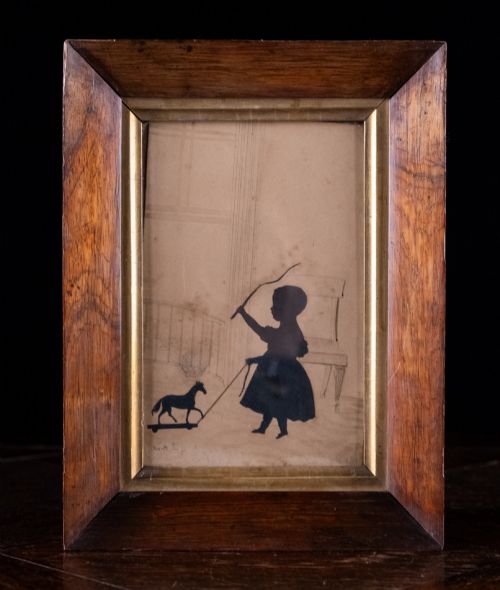
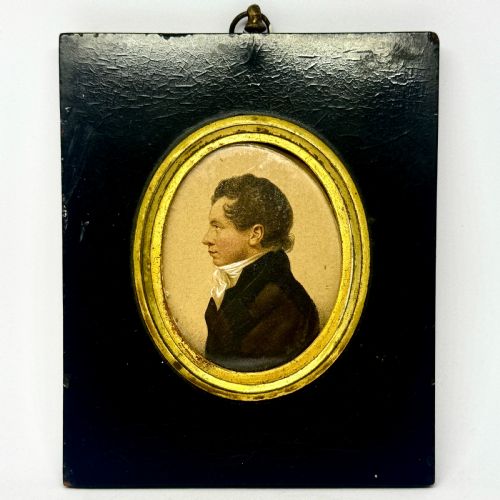


Black Silhouette Portrait
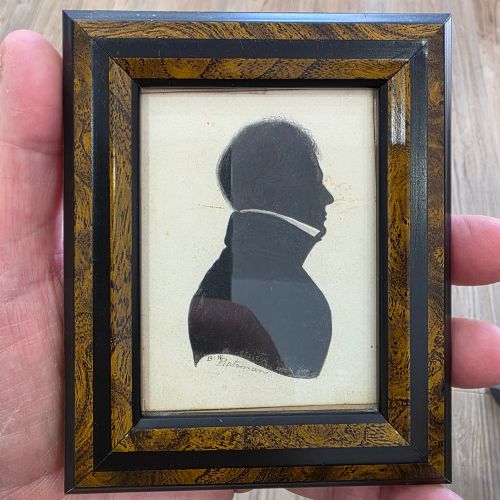
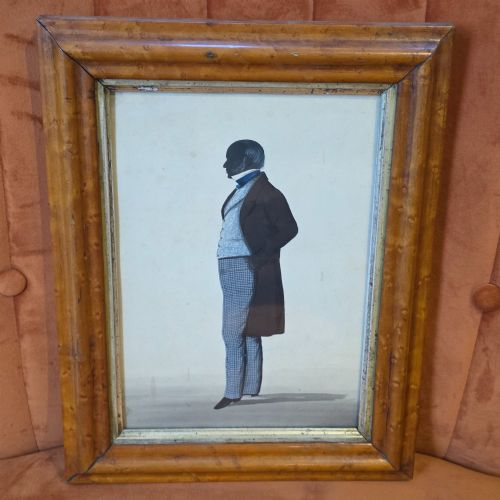
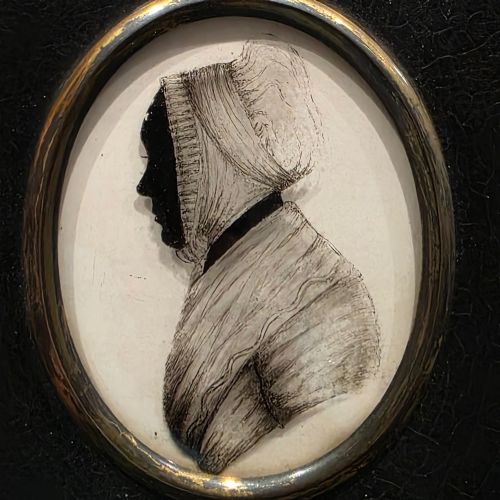
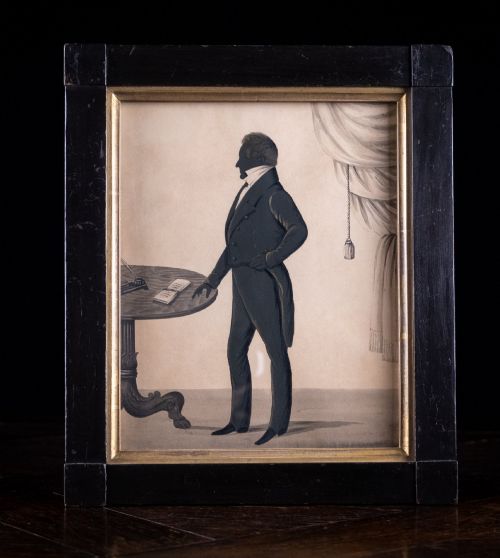
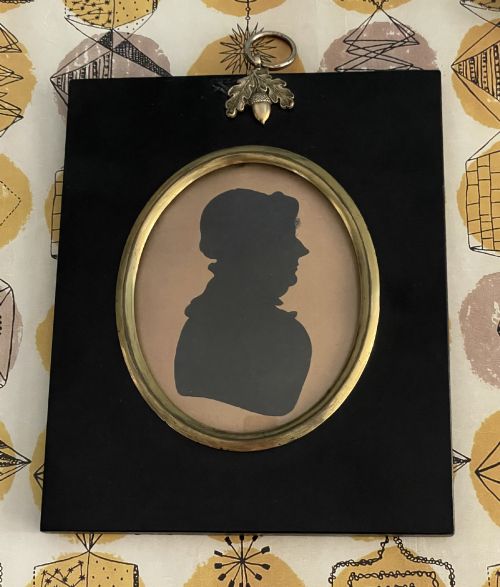
A black silhouette portrait captures a likeness in profile, offering a direct glimpse into Georgian and Victorian lives.
Black Silhouette Portrait
A black silhouette portrait presents a profile likeness, capturing the distinct facial outline of a sitter from the eighteenth and nineteenth centuries. These pieces appear as framed wall art, miniature portraits, and jewellery items, reflecting the personal keepsakes popular before the widespread use of photography.
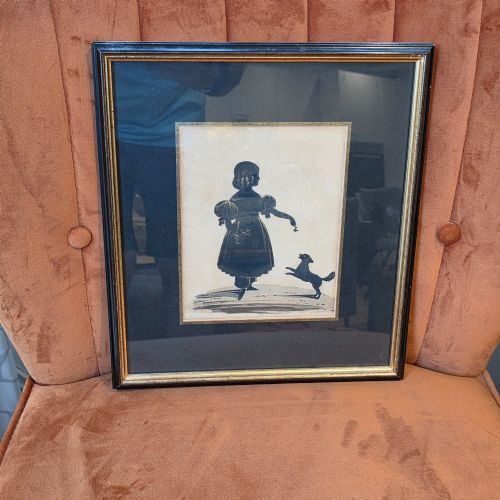
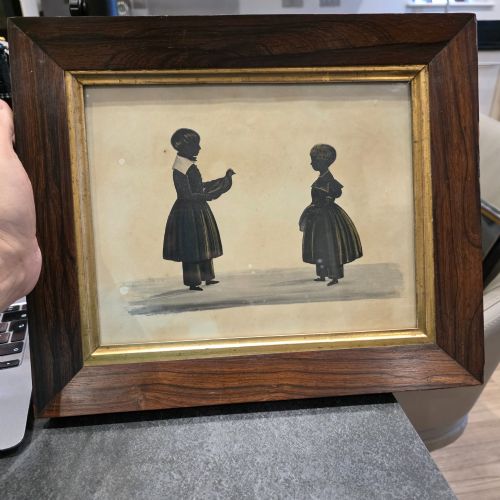
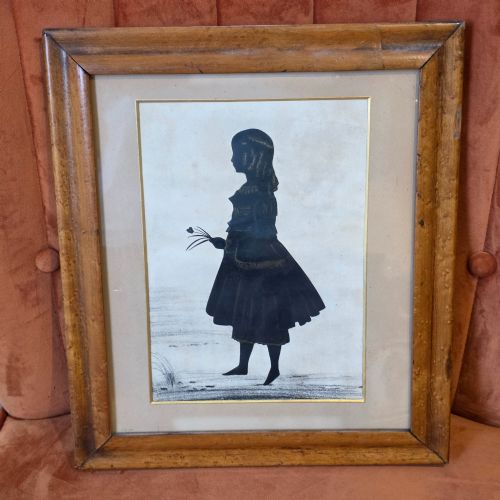
The versions most commonly met on this page date from the Georgian and Regency periods through to the Victorian era. They depict gentlemen, ladies, children, and family groups, often framed in wood, brass, or papier-mache.
Materials and Technique
Artists created these likenesses using paper, glass, ink, and plaster, mounting the cut or painted profile against a contrasting background. Many examples incorporate gold leaf to highlight clothing details, jewellery, or hair.
Makers utilised ebonised wood, rosewood, and brass for frames, protecting the delicate paper and painted surfaces. Some works involve reverse painting on glass, requiring steady brushwork to apply the pigment directly to the reverse side.
Several silhouettes capture household pets alongside their owners, recording the likeness of a dog as carefully as any family member.
Quality and Execution
The condition of the original glass, backing, and frame influences the overall integrity of the piece. Surviving signatures, inscriptions, and original makers' trade labels on the reverse add considerable documentary interest.
Bateman·William James Hubard·George Atkinson·James Gillespie·Augustin Edouart·John Miers·Elizabeth Hudson·Frederick Frith·Thomas London·J. Deacon·Alfred Darbyshire·John Smith of Edinburgh
The Black Silhouette Portrait Glossary
- Silhouette portrait
- A profile likeness filled in with a solid dark colour, typically black, to record a person's facial outline. This form relies entirely on contour rather than internal facial details.
- Reverse painting on glass
- A technique where the artist paints the image on the back side of a glass panel so it is viewed correctly through the front. This method gives the surface a glossy, protected finish.
- Ebonised wood
- Timber treated with a finish to imitate ebony, commonly used for dark framing. It provides a stark, contrasting border that enhances the profile.
- Miniature portrait
- A small-scale painting or silhouette designed for personal carriage or intimate display. These portable works frequently appear as brooches or pendants.
Black Silhouette Portrait: Frequently Asked Questions
How do I identify a Georgian silhouette?
Georgian silhouettes typically feature fine hand-cut paper or painting on plaster, housed in shallow wood or papier-mache frames. They often show distinctive sitter styles from the late eighteenth century.
Examining the backing paper, framing nails, and any handwritten identification on the reverse helps confirm the period.
Were silhouettes painted or cut?
Makers used both methods, with some artists cutting likenesses from black paper and others painting directly onto glass, card, or plaster. Watercolour highlights and gold leaf were frequently added to enhance garments.
Signed pieces often point to the preferred technique of a specific profile artist.
What are silhouette jewellery pieces?
Silhouette jewellery pieces are miniature profile portraits set into brooches, lockets, or pendants made from brass or gold. They allowed owners to wear a likeness of a family member close to them.
These wearable items date predominantly from the Georgian and Regency eras.
How should I display framed silhouettes?
Framed silhouettes require placement away from direct sunlight to prevent the fading of delicate paper, ink, and watercolour elements. Stable indoor humidity protects the original wooden and papier-mache frames.
Keeping them out of damp areas preserves the glass and backing materials.