
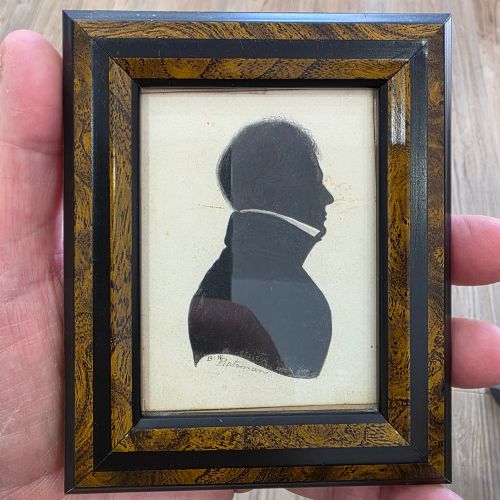
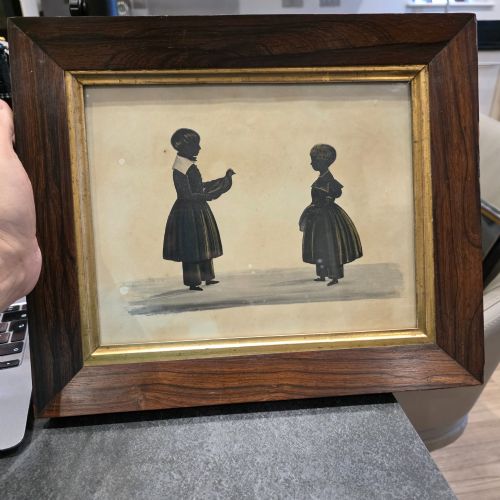
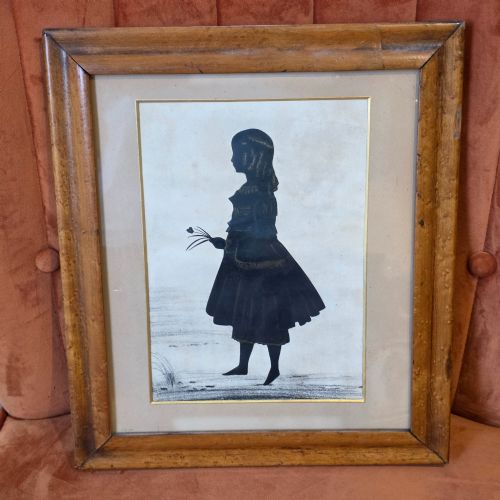
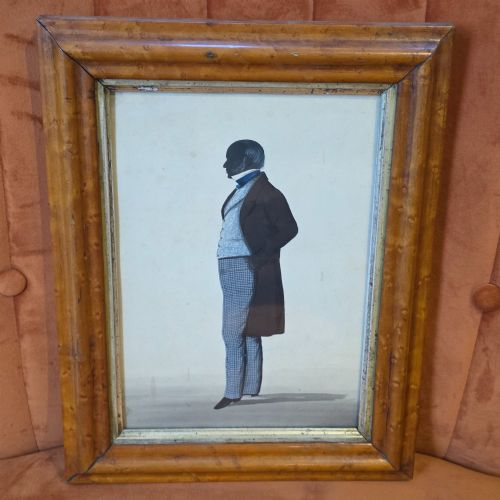
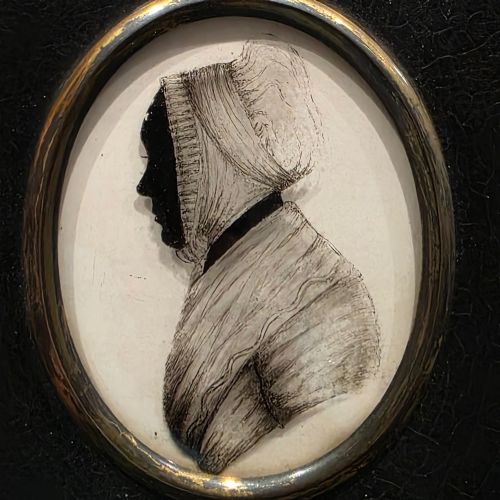

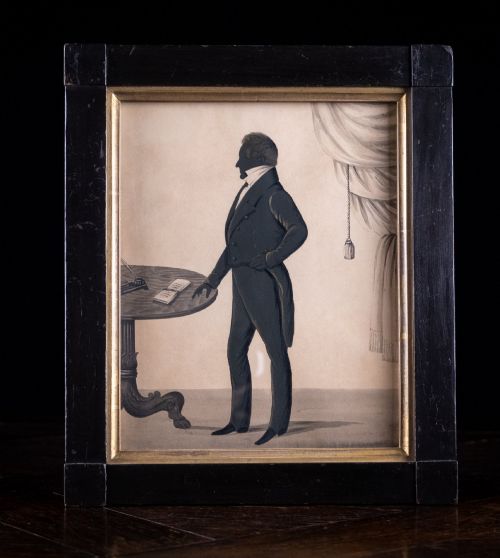
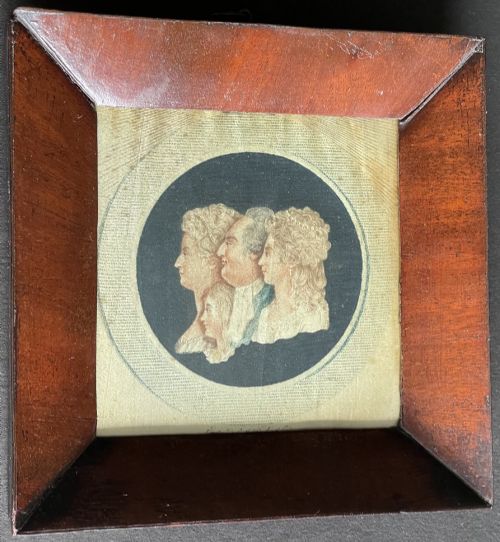
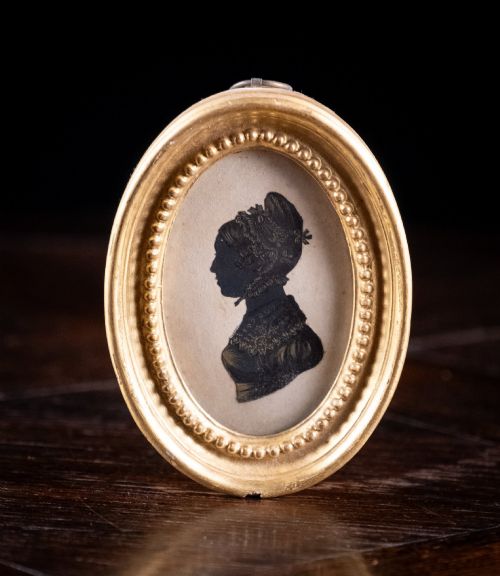
Profile Silhouette Portrait
A profile silhouette portrait captures a crisp shadow likeness in miniature, offering a personal window into Georgian and Victorian lives.
Profile Silhouette Portrait
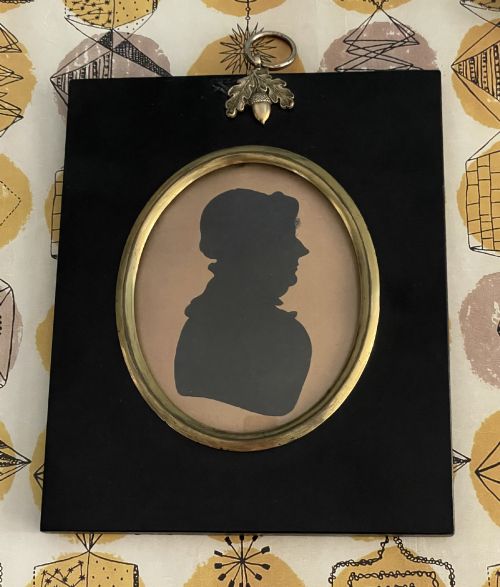
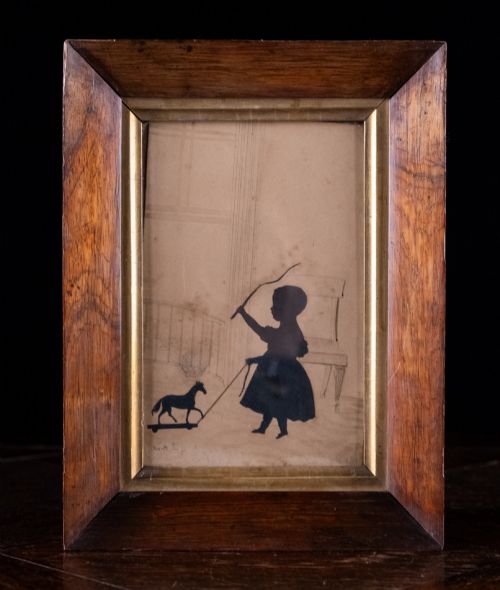
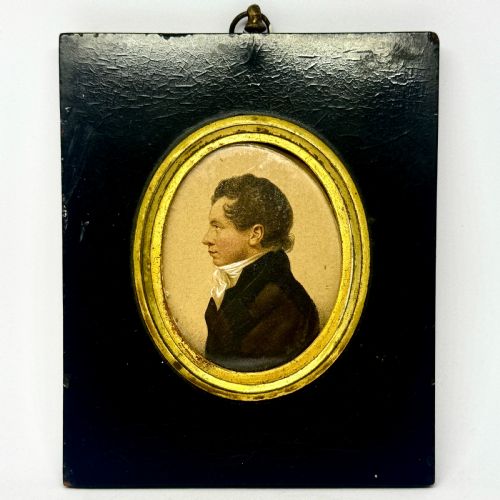
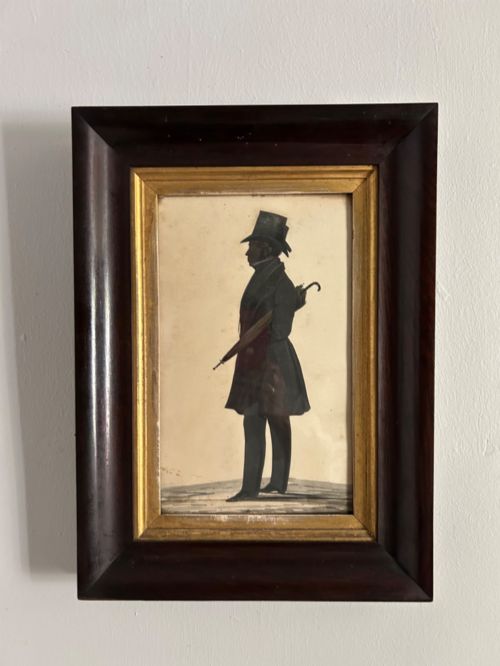
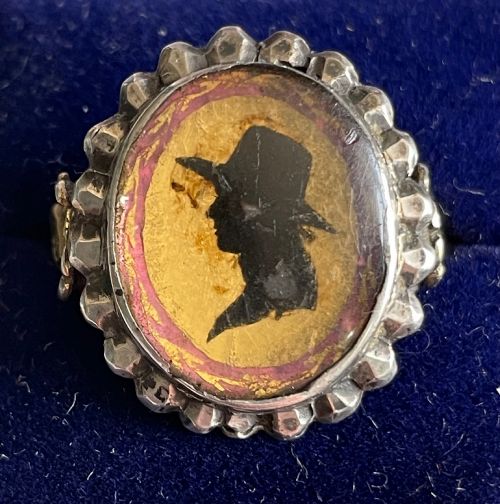
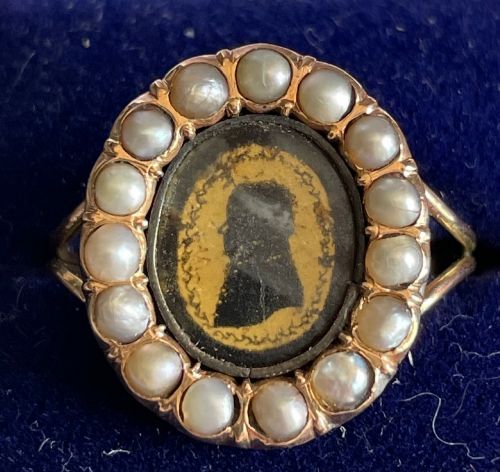
A profile silhouette portrait focuses entirely on the outlined shadow likeness of an individual, usually shown in strict profile. These works appear in forms ranging from framed wall art to small rings, pendants, and portrait miniatures.
The pieces on this page emerge from the 18th century, the Regency era, and the Victorian period, reflecting evolving tastes in personal depiction. Collectors frequently encounter framed cut-paper examples alongside delicate painted works on glass or plaster.
Materials and techniques
Craftsmen produced these likenesses using ink, watercolour, and cut paper mounted on card or glass. Many examples feature fine highlights in gold leaf to delineate clothing and hair details.
Artists housed their work in ebonised wood frames, brass mounts, and miniature jewellery settings. Reverse painting on glass required steady brushwork directly onto the rear surface to achieve a crisp finish.
Materials across these listings include glass, paper, brass, ink, wood, gold leaf, ebonised wood, and gold.
Factors determining quality
The preservation of the original backing materials and protective glass impacts the overall integrity of the piece. Well-documented attribution to a known artist or gallery elevates the historical interest of the work.
Bateman·Frith·Augustin Edouart·John Miers·J Deacon
The Profile Silhouette Portrait Glossary
- Reverse painting on glass
- An art form where the maker applies pigment to the rear side of a glass panel so the image is viewed through the clear front. This method protects the paint from dust and moisture.
- Ebonised wood
- Timber treated to resemble heavy, black ebony wood. Makers utilised this finish to provide a dark, contrasting border for framed portrait miniatures.
- Gilded silhouette
- A shadow portrait enhanced with applied gold leaf. This technique adds rich decorative detail to collars, buttons, and headwear.
- Portrait miniature
- A small-scale painting or likeness designed for personal portability or intimate display. These items often double as jewellery pieces like brooches and rings.
Profile Silhouette Portrait: Frequently Asked Questions
What periods do these silhouettes come from?
The listings span the 18th century through the Victorian era, with strong representation from the Georgian and Regency periods. Artists worked actively across these decades, shifting between cut paper and painted glass mediums.
Collectors find dated pieces alongside works attributed to specific commercial galleries and profile artists. Each era brings distinct framing choices and costume details.
How were these miniature portraits displayed?
Owners typically hung framed silhouettes on parlour walls or kept them close as personal jewellery. Rings, pendants, and brooches allowed individuals to carry likenesses of family members throughout the day.
Framed wall art often appeared in pairs or small family groupings. Ebonised wood and brass frames protected the delicate paper and glass components from damage.
What materials did silhouette artists utilise?
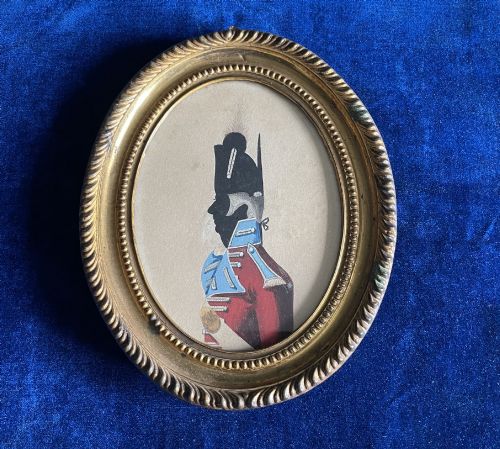
Makers relied on black paper, ink, and watercolour applied to card, plaster, or glass surfaces. Gold leaf frequently provided striking highlights to uniforms and dresses.
Frames incorporate ebonised wood, brass, and rosewood. These durable housings ensured the fragile internal components survived centuries of handling.
How can I identify a painted silhouette?
Painted examples display fine brushstrokes and shading, often executed directly onto convex glass, plaster, or card. Artists used dense black ink or pigment to define the profile contour.
Signed pieces and those bearing artist trade labels on the reverse offer clear clues to their origin. Examination under magnification reveals the hand of the painter rather than the clean edge of a knife.