
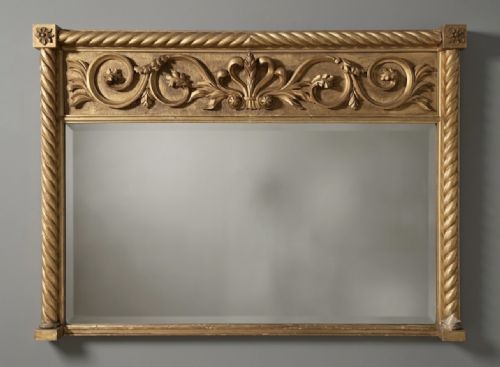
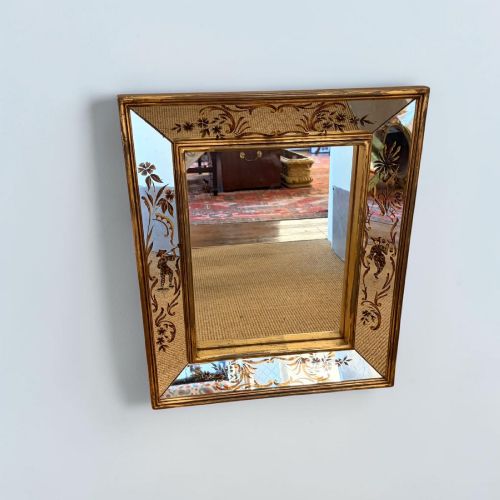
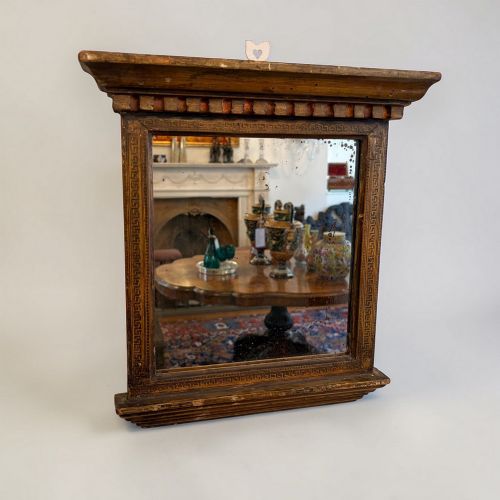
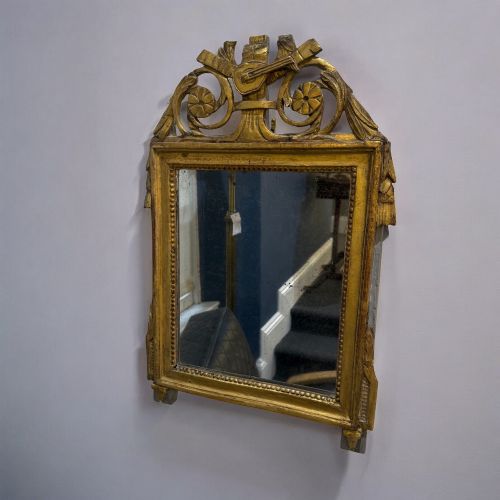
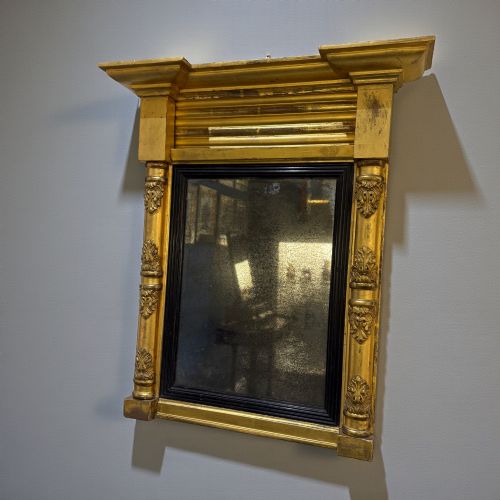
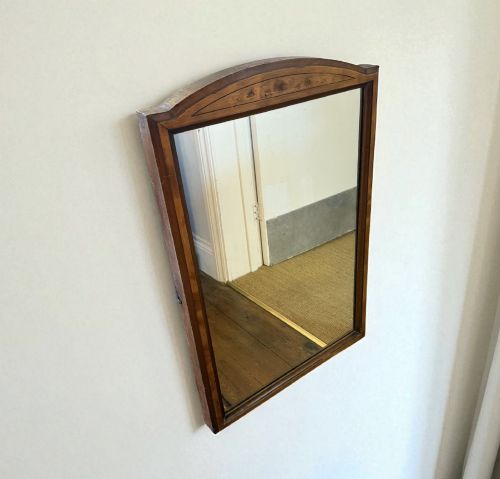
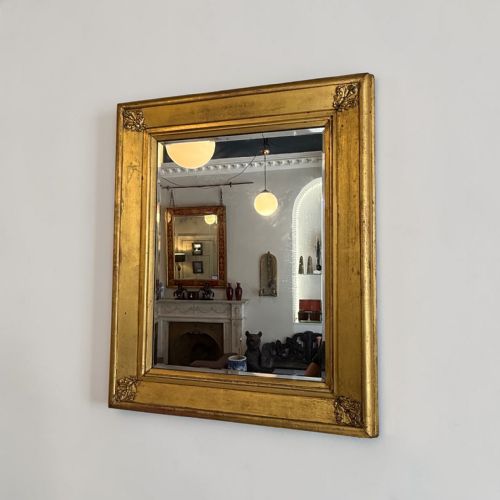
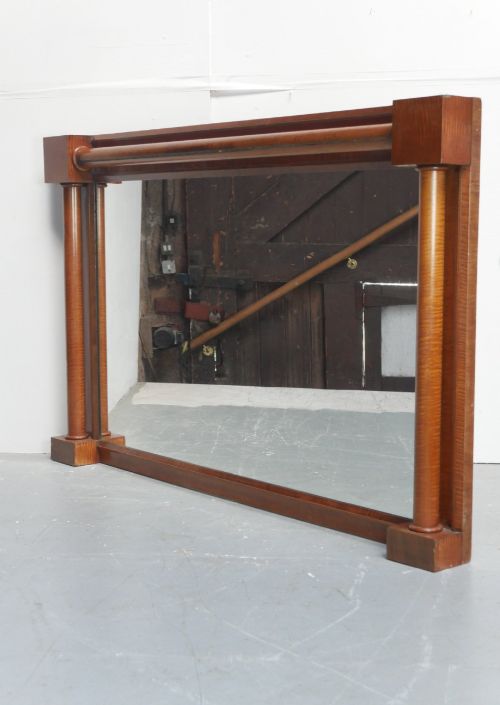
Regency Frame Mirror
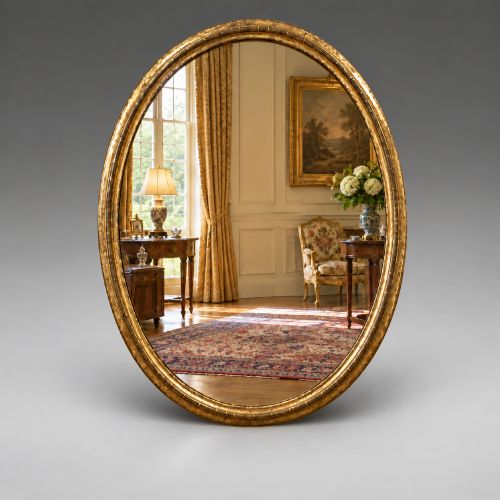
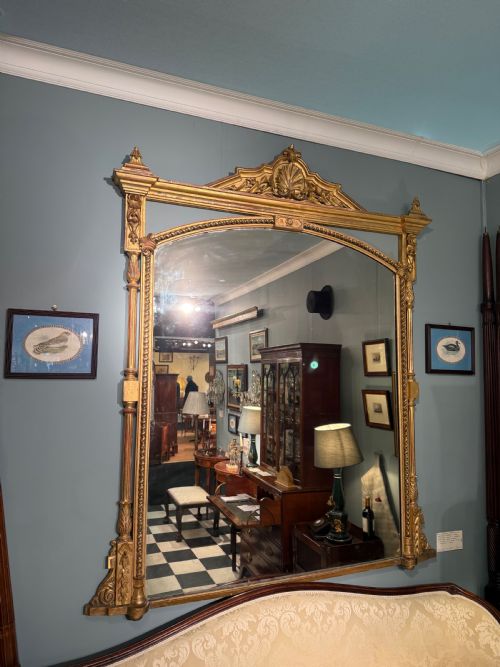
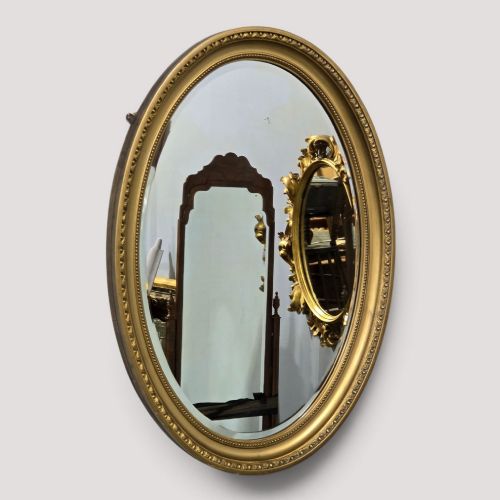
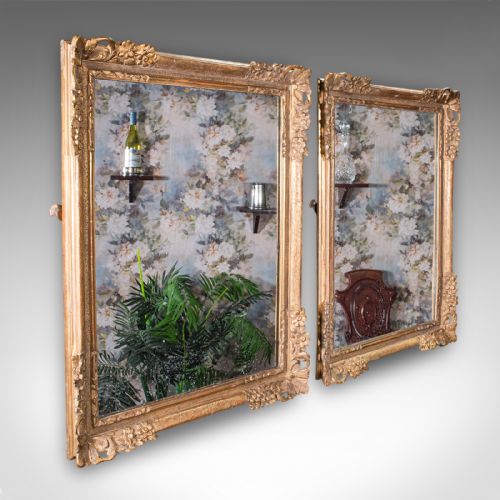
A regency frame mirror brings immediate architectural focus to a room, utilising gilded surfaces and convex glass to bounce light across the interior.
Regency Frame Mirror
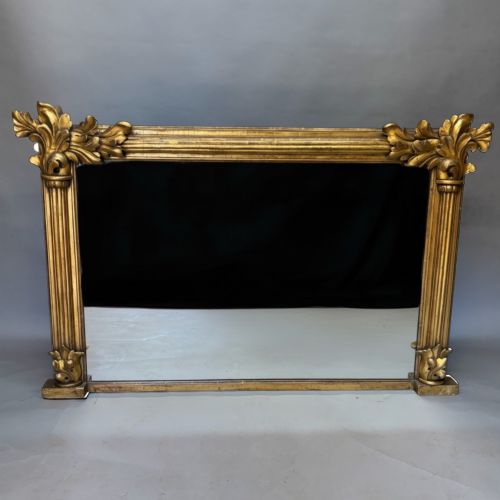
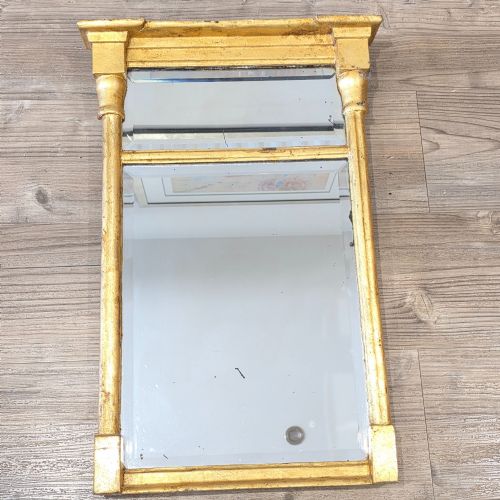
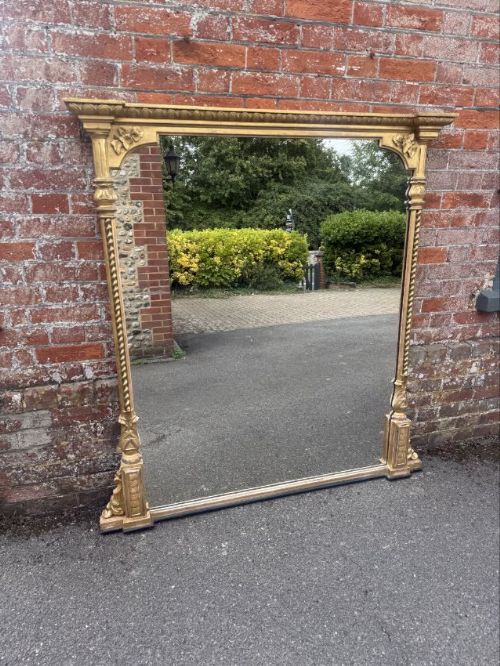
A regency frame mirror encompasses several distinct domestic forms, ranging from substantial overmantels designed for fireplace placement to compact pier glasses and cheval dressing mirrors.
The inventory on this page shows pieces originating primarily from the nineteenth century alongside later revivals, capturing both authentic Regency period items and subsequent Victorian interpretations.
Convex circular mirrors, often framed with ebonised details or carved eagles, sit alongside rectangular wall mirrors featuring rope twist carvings or column framing.
Materials and construction
Frames rely heavily on carved wood and gesso, finished with gold leaf or oil gilding to achieve the characteristic reflective brilliance demanded by the style.
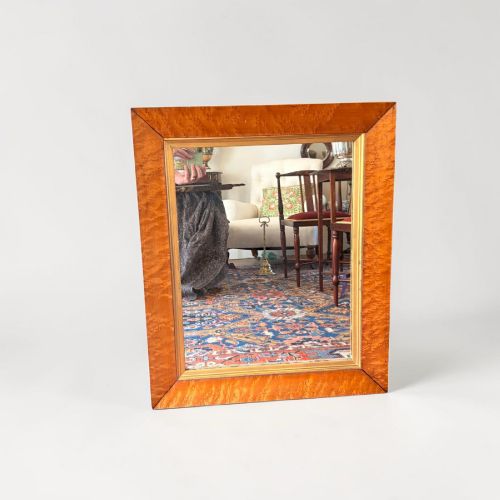
Cabinetmakers utilised dense timbers such as mahogany, satin birch, and rosewood for smaller dressing table mirrors and pier glasses, often incorporating functional drawers.
Composition ornament moulds were frequently applied over timber foundations to create crisp Neoclassical relief details like reeding and acanthus leaves.
Several mirrors incorporate fierce wooden eagles perched atop the frames, keeping a watchful glass eye over the Victorian parlour.
Distinctions in manufacture
The depth and definition of the carved woodwork separate standard production items from pieces displaying superior hand-chiselled detail on rope twists and eagles.
The condition and retention of the original mercury glass plate or early foxed silvering directly influence the character and visual depth of the reflective surface.
Subtleties in proportion and the structural integrity of the underlying gesso and gilt layers indicate the original workshop standard of the mirror.
P & MA Nicholson
The Regency Frame Mirror Glossary
- Giltwood
- Timber that has been coated with a thin layer of gold leaf. This finish provides the bright metallic sheen characteristic of formal period frames.
- Convex mirror
- A circular glass mirror curved outward to produce a wide-angle panoramic reflection. These pieces were frequently mounted with ball-stud bezels.
- Pier glass
- A tall, narrow mirror designed specifically to hang on the wall space between windows. They often sat above matching console tables.
- Overmantel
- A wide mirror intended to be positioned directly above a fireplace mantelpiece. They dominate the chimney breast and amplify room illumination.
- Gesso
- A plaster-like mixture applied to wood frames to create a smooth surface for gilding. It holds intricate moulded details with sharp precision.
Regency Frame Mirror: Frequently Asked Questions
How do I hang a heavy overmantel mirror safely?
Due to the substantial weight of nineteenth-century timber and gesso frames, these mirrors require professional wall anchoring directly into masonry or secure stud work.
Using heavy-duty mirror plates distributed across the frame structure ensures the load is supported safely without straining the antique joints.
Why does the glass look dark in places?
Older mirrors often display foxing, which appears as small dark spots or cloudiness within the silvering behind the glass.
This chemical ageing process is natural for period plates and serves as an indicator of genuine age rather than a modern replacement.
Where should a convex mirror be placed?
Convex mirrors concentrate ambient light from across an entire space into a single focal point, making them effective opposite windows or in narrow hallways.
Positioning them at eye level allows viewers to appreciate the curved distortion and the detailed frame ornamentation.
Are dressing table mirrors stable?
Period dressing table mirrors utilise pivoting side arms mounted on upright supports, allowing the glass angle to be adjusted freely.
While the base drawers add stabilizing weight, freestanding table models should be placed on level surfaces away from heavy traffic.