




Regency Foldover Table
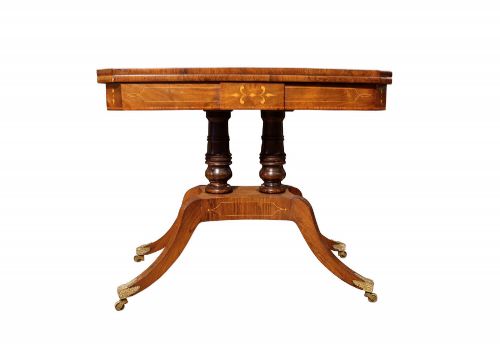
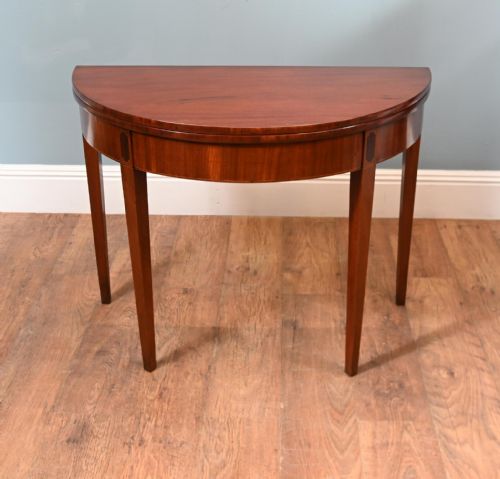
These regency foldover table examples combine ingenious pivoting tops with rich timbers to serve as both compact console surfaces and generous playing boards.
Regency Foldover Table
A regency foldover table is a dual-purpose piece designed to sit neatly against a wall as a console or side table before opening out to double its surface area for cards, tea, or games. The form spans the Georgian, Regency, William IV, and George IV periods, extending into later revival iterations.
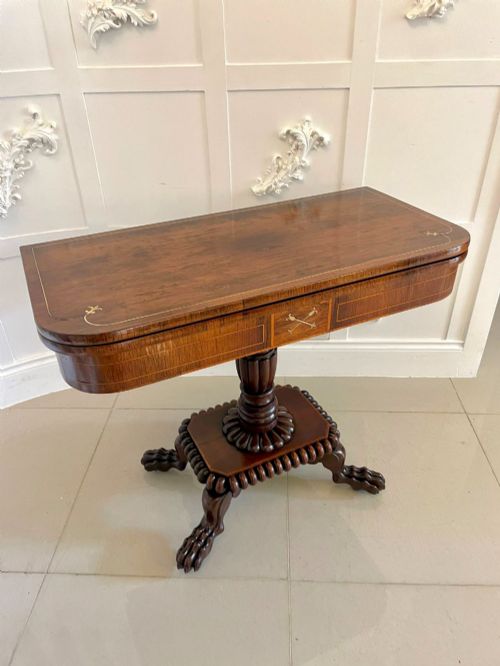
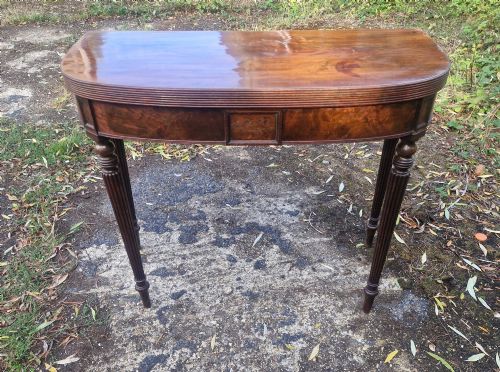
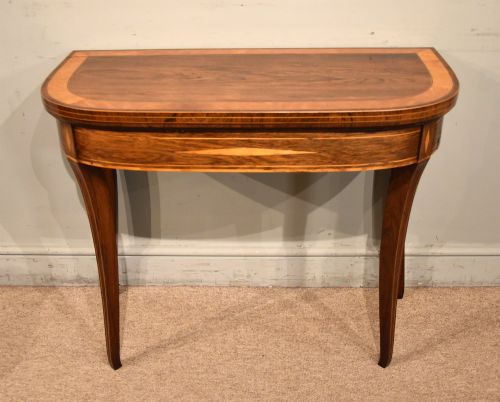
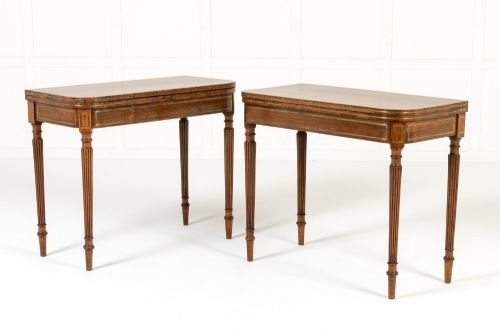
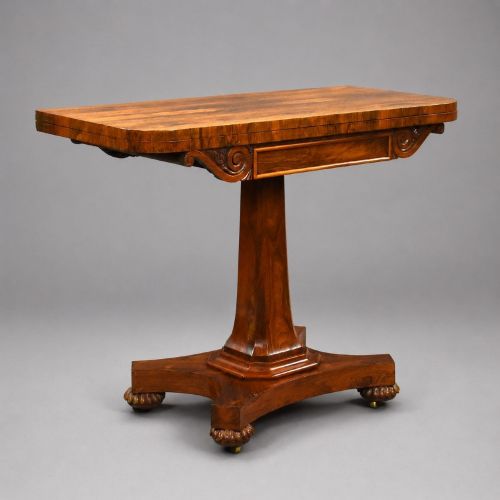
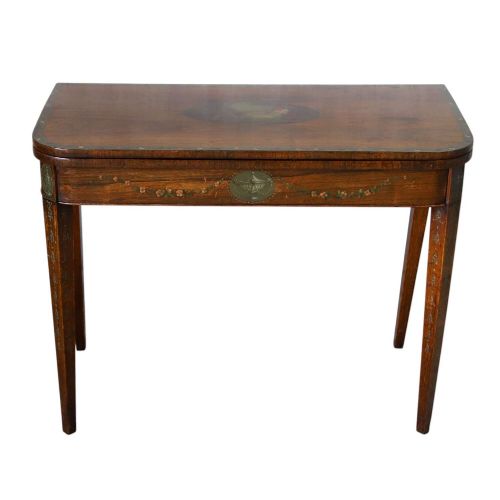
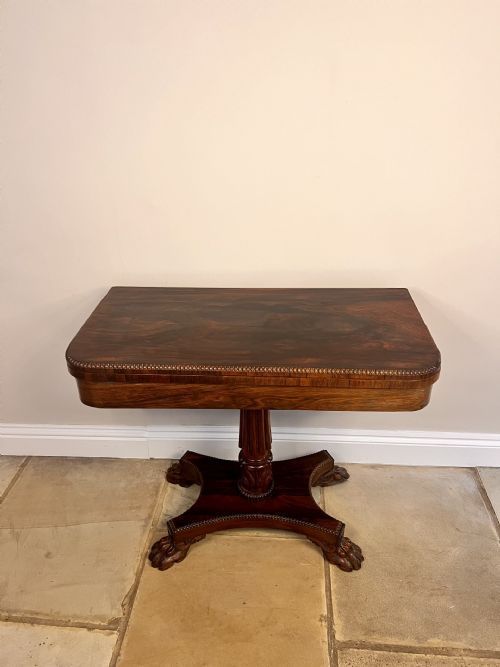
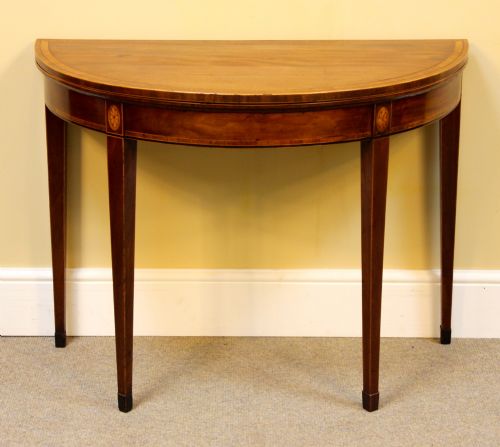
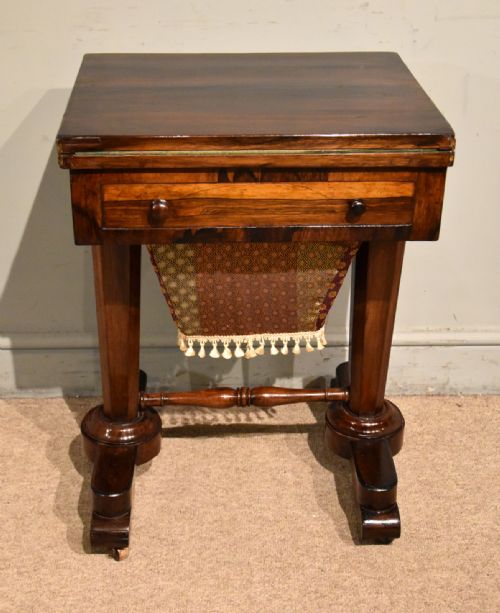
Mahogany and rosewood dominate the selection on this page, frequently taking the form of card tables, tea tables, and games tables with D-shaped or demi-lune profiles. Many examples utilise clever swivel mechanisms or hinged leaves supported by pedestals, lyre bases, or pillar structures.
Buyers meet variations ranging from plain mahogany service pieces to richly figured rosewood specimens decorated with brass inlay, satinwood banding, and intricate sabots with castors.
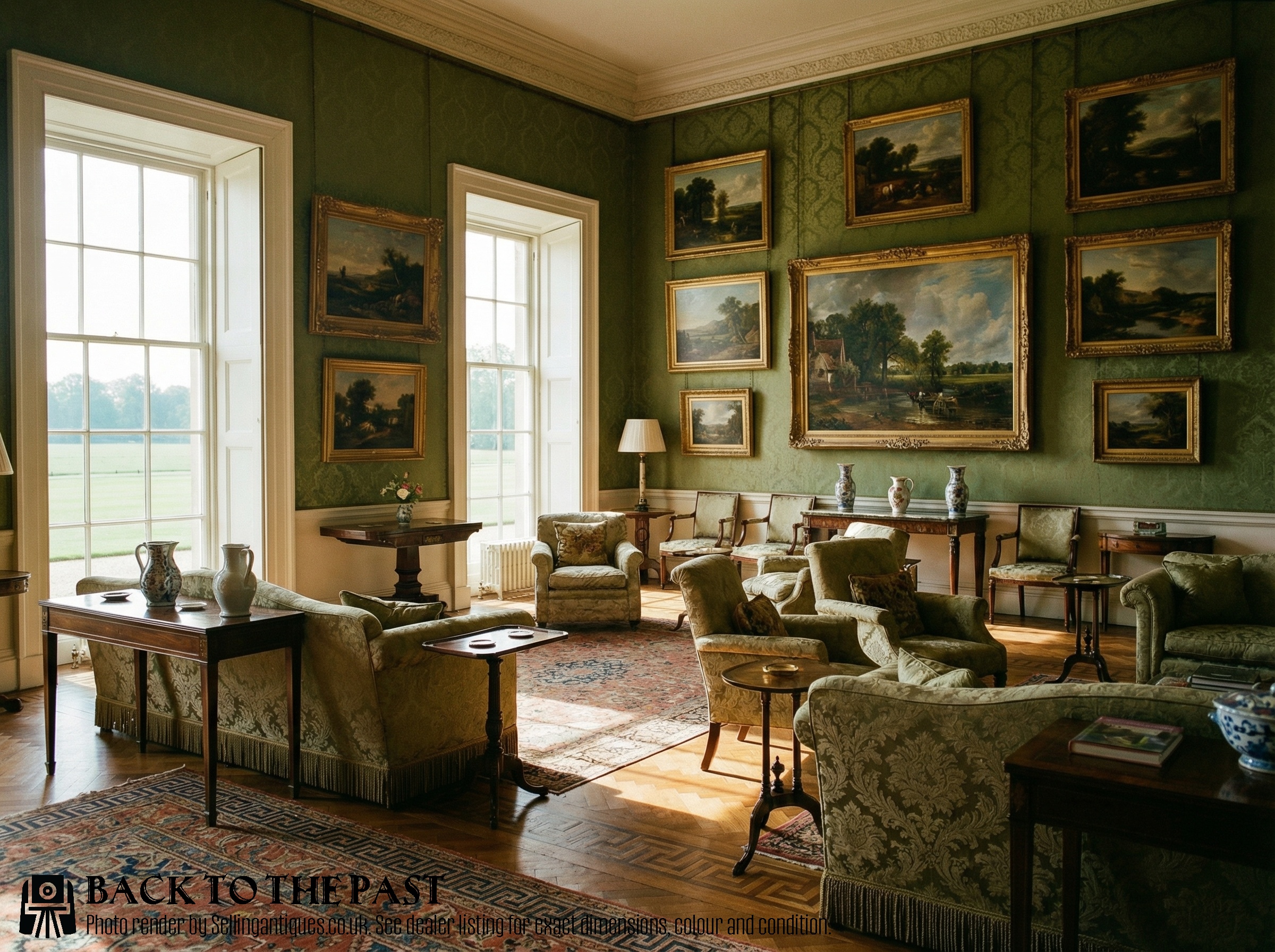
Materials and construction
Cabinet makers built these tables using solid timber frames faced with carefully selected mahogany, rosewood, goncalo alves, or palisander veneers to display striking grain patterns. Contrasting woods such as boxwood, satinwood, and ebony provided fine stringing and geometric inlay.
Brass featured heavily both as structural decoration through inlaid scrollwork and lines, and functionally in the form of castors and cast brass sabots protecting the feet. Interior surfaces often retained baize or leather playing linings for card and games use.
Regency Foldover Table Retail Price Guide 2026
Typical asking prices for regency foldover table among the pieces listed under this phrase on Sellingantiques today, from the lower quarter to the upper quarter. They describe what is for sale here now, not the wider market.
Several ladies' variations include integrated workboxes, proving that nineteenth-century card players also required discreet storage for sewing.
Distinctions in quality
Quality rests heavily on the choice of timber and the precision of the cabinet work, particularly how cleanly the book-matched veneers meet across the foldover top. Superior pieces display crisp carving on pedestals or legs, robust hinge mechanisms that allow the leaf to sit completely flat when opened, and well-executed brass inlay.
Maker attribution elevates certain tables, with pieces in the manner of Gillows or bearing signatures from workshops like George Bullock showing a superior standard of internal framing and decorative detail compared to standard provincial workshop production.

George Bullock·Gillows
The Regency Foldover Table Glossary
- Demi-lune
- Having a half-moon or semicircular shape when viewed from above. This profile allowed tables to sit flush against a wall while saving floor space.
- Lyre base
- A pedestal support carved in the distinctive shape of an ancient Greek lyre instrument. It became popular during the Regency and George IV periods.
- Sabot
- A metal sleeve fitted over the foot of a table leg for protection and decoration. Brass versions were common on higher-end Regency furniture.
- Stringing
- Thin inlaid lines of contrasting wood used to outline panels and edges. It added linear definition to mahogany and rosewood surfaces.
- Palisander
- A dense, heavily figured exotic hardwood akin to rosewood. It was frequently utilised for fashionable Regency and William IV cabinet work.
Regency Foldover Table: Frequently Asked Questions
How do you open a regency foldover table?
The hinged top rotates on a central pivot or swings open on a knuckle joint, supported by a pivoting rear leg or a swinging gate-leg frame.
Once unfolded, the top reveals a finished surface, frequently lined with baize or leather for playing card games.
What is the difference between a card table and a tea table?
Card tables typically feature baize or felt interiors designed for gaming, alongside small hidden wells for storing counters or dice.
Tea tables usually present a plain polished wood interior surface intended to hold porcelain teaware during evening gatherings.
How can you tell a Regency table from a Georgian one?
Georgian tables generally lean towards simpler mahogany construction with straight or pad feet, reflecting earlier 18th-century restraint.
Regency examples introduce bolder rosewood veneers, brass inlay, and classical revival supports like lyres, columns, and heavily carved pedestals.
Where should I place a foldover table at home?
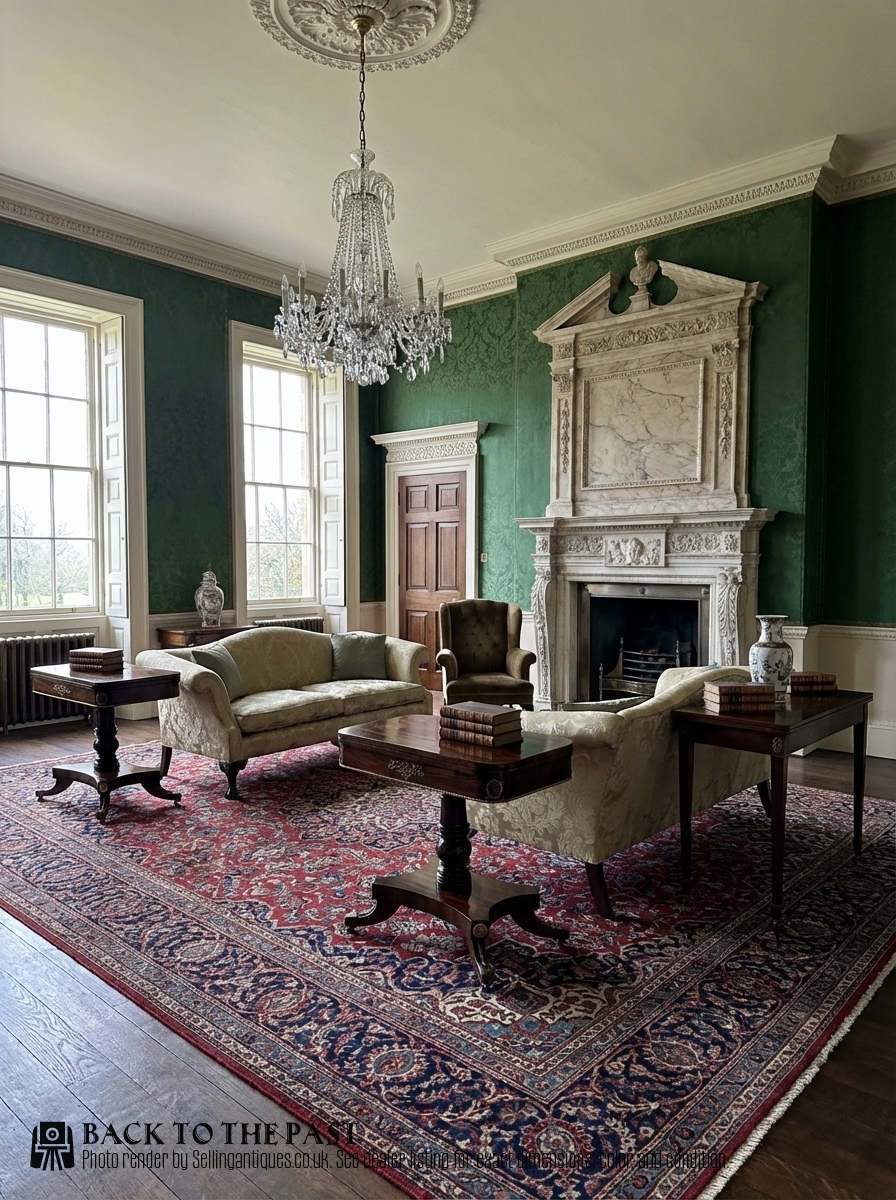
These tables work best positioned against a hallway or living room wall in their closed console configuration, acting as a surface for lamps or ornaments.
When hosting guests, you can pull the table into the room and unfold the top to create an instant dining or card-playing surface.