


Regency Floral Cups
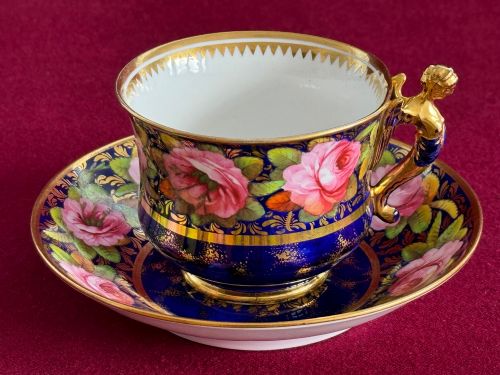
Regency floral cups are the painted porcelain duos and trios that defined tea tables during the early nineteenth century.
Regency Floral Cups
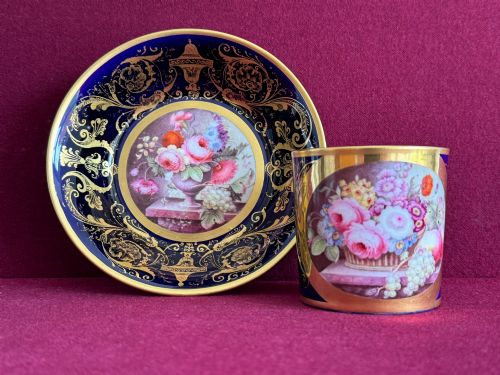
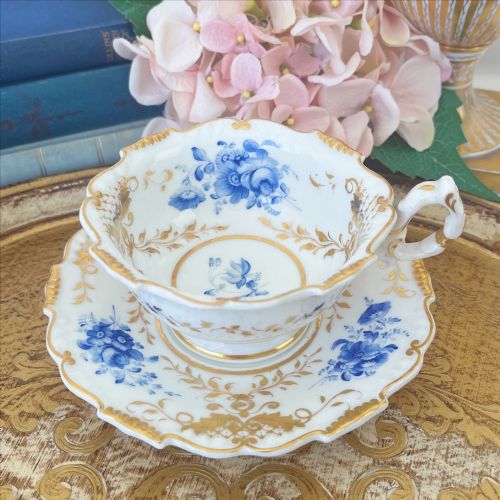
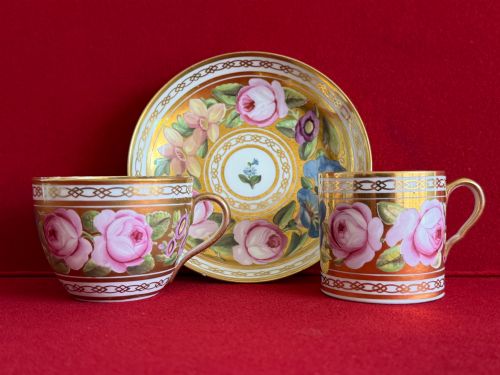
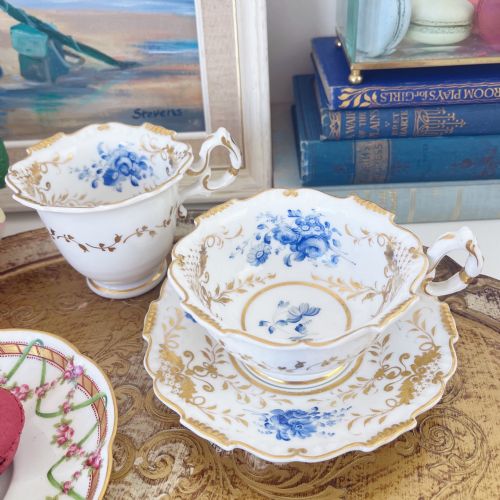
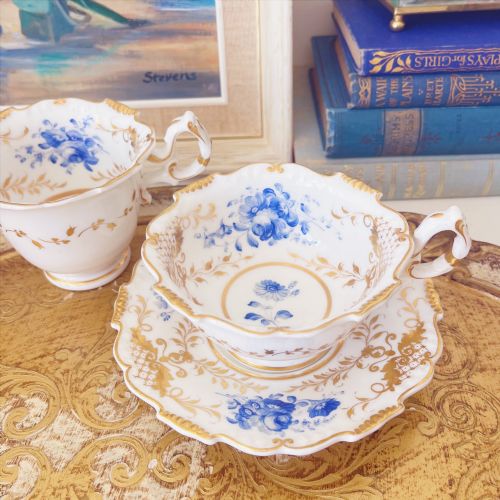
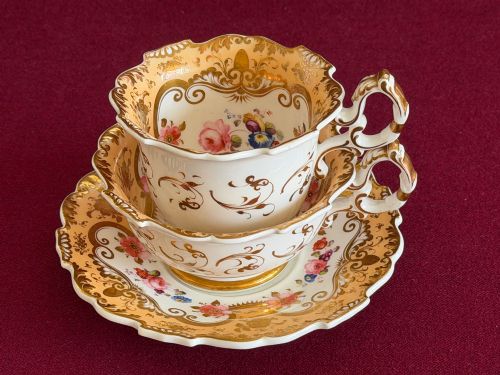
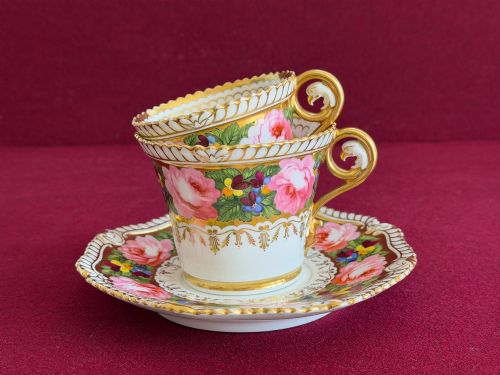
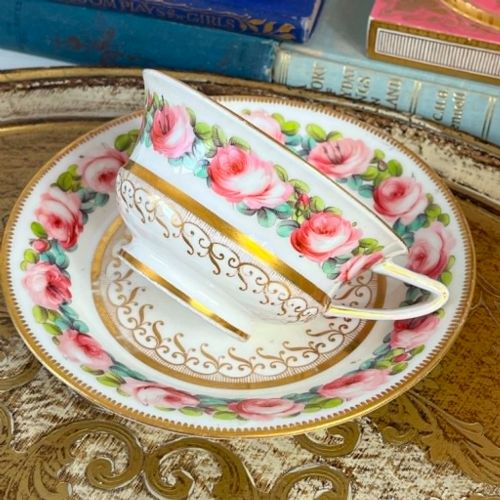
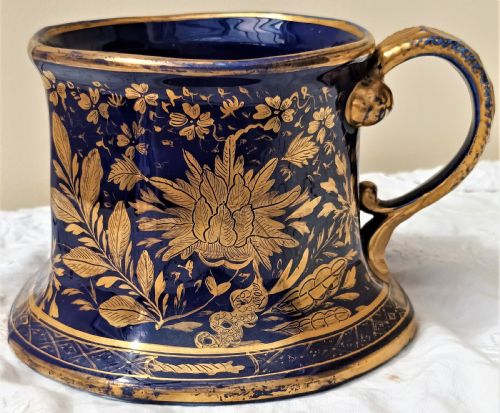
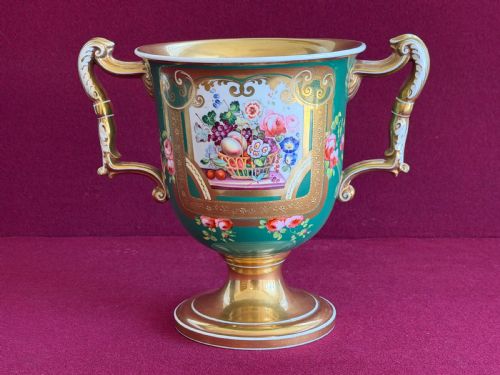
Regency floral cups comprise tea and coffee cup trios, duos, cabinet cups, and loving cups originating from the Georgian and Regency periods. These drinking vessels showcase handpainted botanical motifs such as pink cabbage roses and specific patterns on porcelain or bone china bodies.
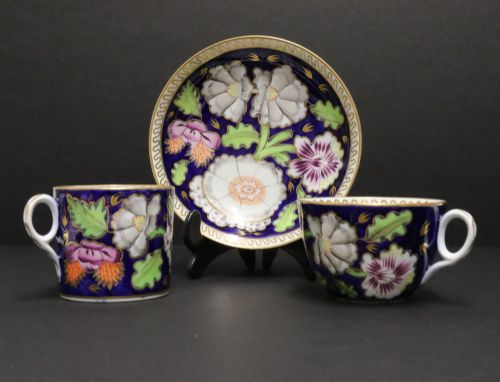
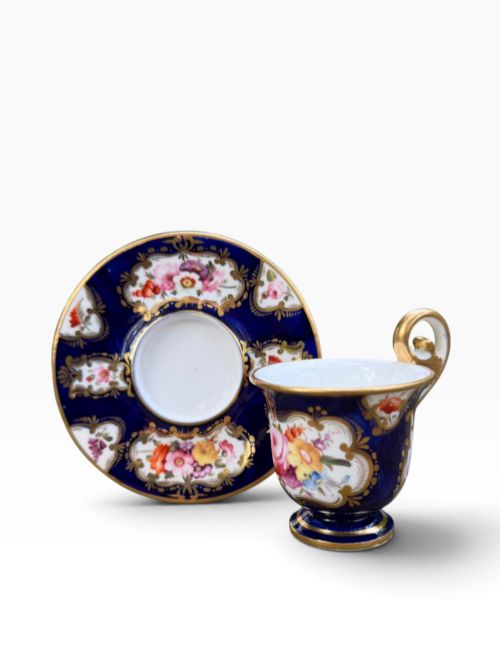
The versions most commonly encountered on this page include English porcelain teacups and saucers alongside cabinet cups from renowned early nineteenth-century factories. Makers arranged these forms into matched sets for tea and coffee service or produced them as individual cabinet pieces meant for display.
How they were made
Potters shaped these vessels using fine porcelain, bone china, and ironstone before applying smooth glazes to the clay bodies. Handpainted enamel decoration provided the vibrant floral scenes, which frequently incorporated meticulous botanical details.
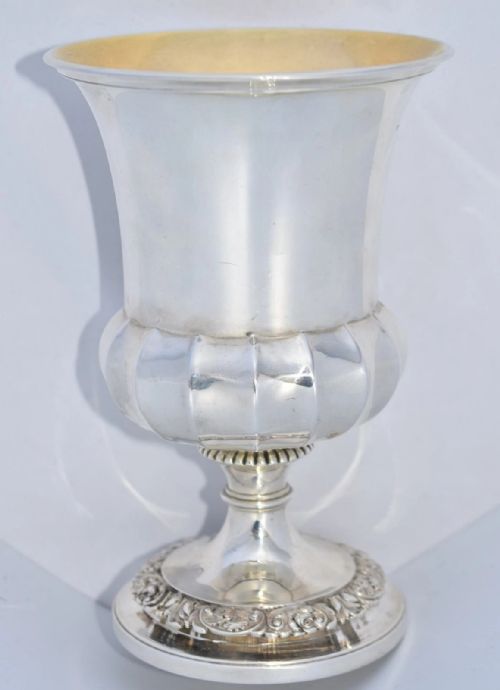
Artisans enhanced the appearance of the porcelain by applying gold leaf and heavy gilding around the rims, handles, and bases. Certain pieces also utilised sterling silver for holloware forms like chalices.
Listings feature porcelain, bone china, ironstone, and sterling silver objects created during the Regency and Georgian periods.
What varies in quality
The refinement of the porcelain body and the precision of the handpainted enamel work establish the upper tiers of quality. Finer examples feature sophisticated botanical painting executed by skilled hands rather than basic transfer printing.
The preservation of the original gilding and gold leaf significantly influences the standing of a piece. Complete trios and matched sets retain greater integrity than isolated components.
H & R Daniel·Chamberlain Worcester·Davenport·Newhall·Coalport·Mason·Yates·William Eaton·Minton
The Regency Floral Cups Glossary
- Trio
- A matched set consisting of a teacup, a coffee cup, and a saucer. These three-piece groupings allowed drinkers to switch between beverages during formal morning or afternoon service.
- Cabinet Cup
- A decorative vessel intended for display in a glazed cabinet rather than everyday use. These pieces often feature elaborate gilding and specialised painting.
- Ironstone
- A heavy, durable type of earthenware patented in the nineteenth century. It offered greater strength than standard porcelain while accepting colourful enamel designs.
- Enamel
- Opaque glass used to paint coloured decoration onto fired porcelain before a secondary low-temperature firing. This technique created the bright floral palettes seen on Regency vessels.
- Gilding
- The application of gold leaf or powdered gold to ceramic surfaces. It provided decorative contrast against white porcelain bodies and handpainted flowers.
Regency Floral Cups: Frequently Asked Questions
What is a coffee can?
A coffee can is a straight-sided cylindrical porcelain cup used for drinking coffee during the early nineteenth century. These vessels typically lack the curving bowl shape found on standard teacups.
Potters designed them with looped handles to hold hot liquids comfortably. They frequently appear as part of larger breakfast or tea trios.
How do I care for antique porcelain?
Antique porcelain and bone china require gentle hand washing in warm water with mild soap. Dishwashers and harsh detergents will damage the delicate enamel paints and wear away the gold leaf.
Store cups and saucers away from direct sunlight to preserve the pigments. Use padded dividers if stacking saucers to protect the glazed surfaces from scratching.
What distinguishes a cabinet cup?
Cabinet cups were manufactured primarily for display in drawing room cabinets rather than for practical tea drinking. They often feature more elaborate handpainted botanical scenes and heavier gilding than utilitarian wares.
These pieces frequently survive in complete duos or trios because owners treasured them as decorative works of art.
How do I identify a Regency period piece?
Regency ceramics date from the early nineteenth century, specifically spanning the Regency era and the reign of George IV. Look for characteristic porcelain bodies, specific handle shapes, and distinct handpainted floral motifs.
Factory patterns and porcelain formulations from this timeframe reflect the technical developments of English potteries between eighteen hundred and eighteen thirty.