

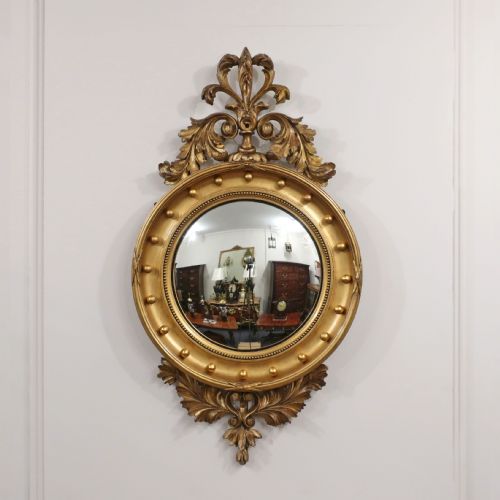
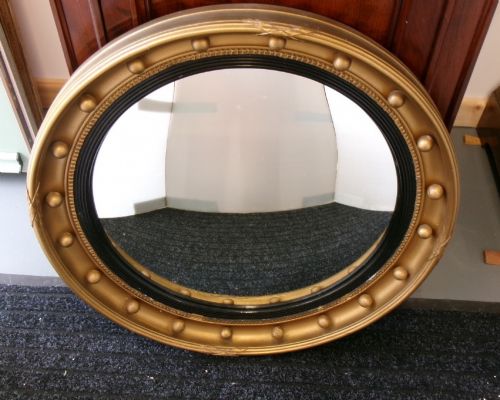
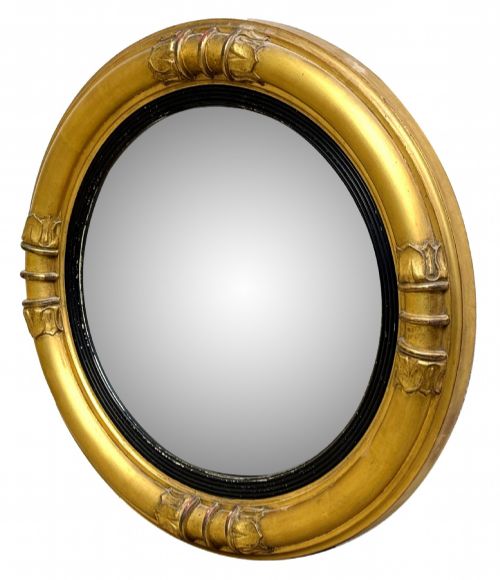
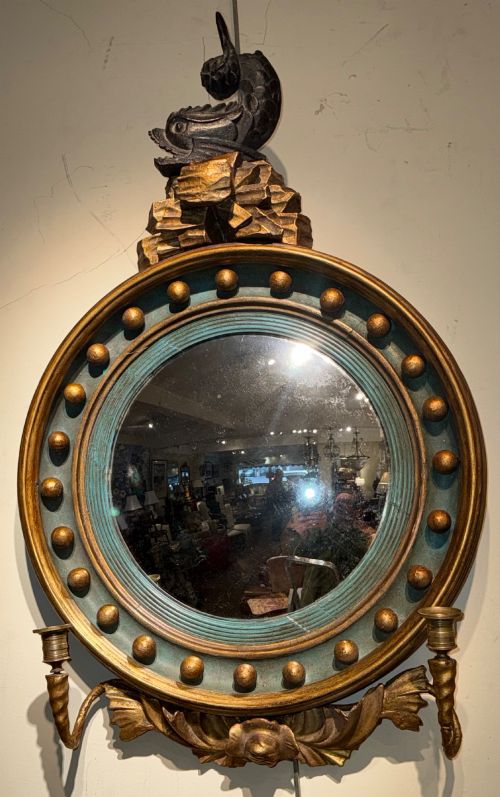



Regency Fisheye Mirror
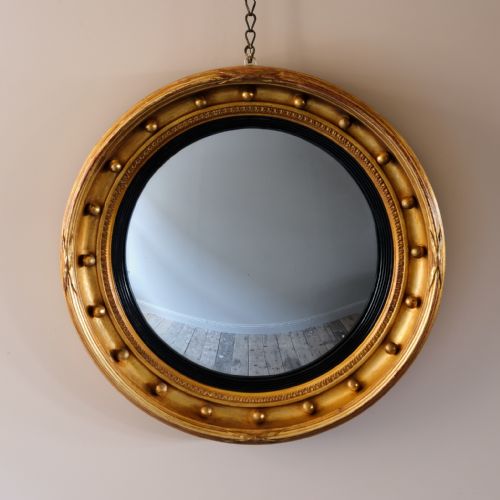
A regency fisheye mirror bends the room into a single circular orb, drawing light and space into the centre of your wall.
Regency Fisheye Mirror
A regency fisheye mirror typically takes a circular wall-mounted form designed to capture and reflect an entire interior within a curved glass plate. When you search for this phrase, you encounter convex mirrors dating from the Regency period through to later nineteenth-century revivals and early twentieth-century interpretations.
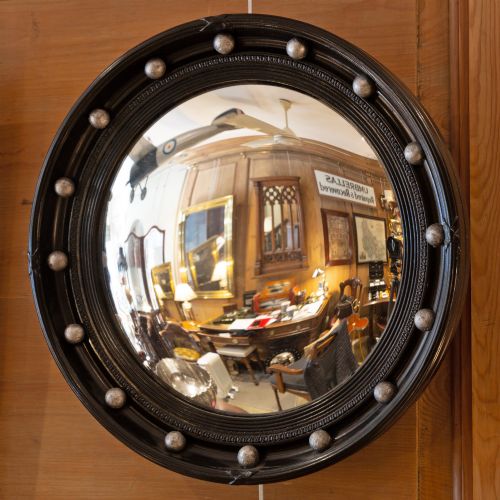
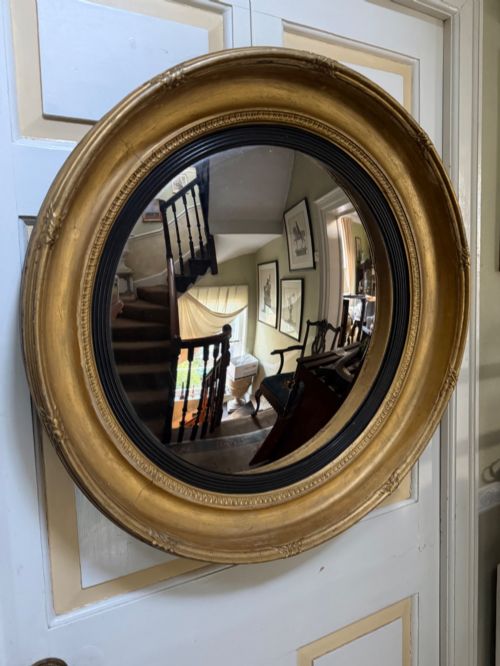
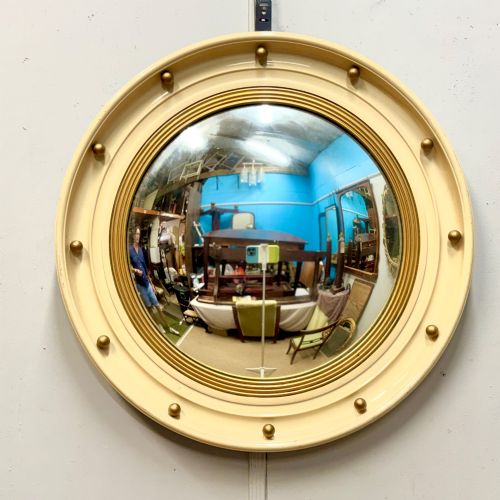
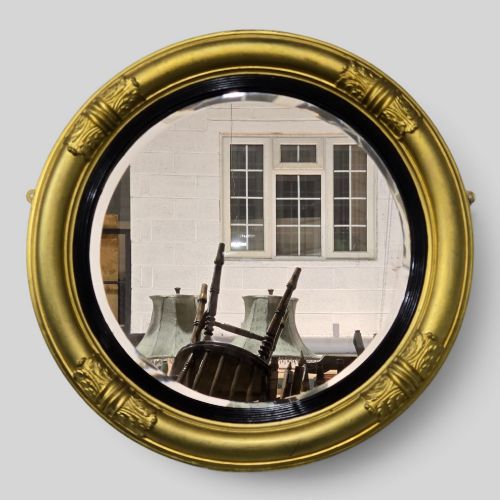
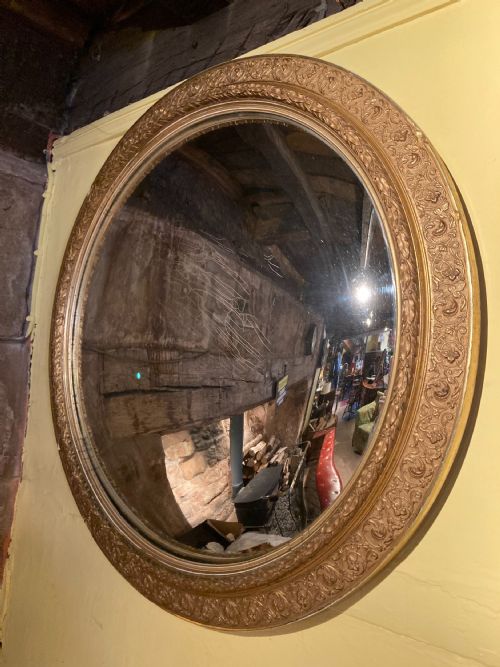
The dominant examples on this page span genuine Regency period pieces alongside nineteenth-century and early twentieth-century variations including Victorian porthole mirrors and butler's mirrors. These circular wall mirrors appear in various scales, from small ebonised versions with silver balls to large giltwood frames surmounted by carved eagles.
Materials and Construction
Makers constructed these frames primarily from giltwood, gesso, and ebonised wood, often incorporating brass and mahogany or painted wood finishes. The complex circular mouldings required skilled carving and application of gesso before gilding.
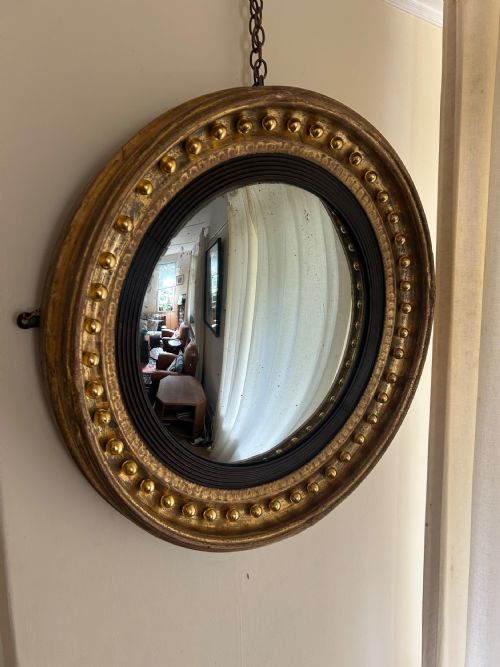
The optical core consists of curved glass plates that create the characteristic convex reflection. Frames frequently feature ornamental details such as silver balls inset into the inner ebonised rings or carved eagle mounts perched atop the crest.
Regency Fisheye Mirror Retail Price Guide 2026
Typical asking prices for regency fisheye mirror among the pieces listed under this phrase on Sellingantiques today, from the lower quarter to the upper quarter. They describe what is for sale here now, not the wider market.
Victorian superstition held that convex sorcerer's mirrors could ward off evil spirits and protect the home by trapping negative energy in their curved glass.
Evaluating Quality
The distinction between ordinary and superior pieces lies in the crispness of the carved gesso and giltwood details, particularly on crests like eagles or complex moulding profiles. Bold scale and well-proportioned framing elevate a piece far above standard production.
The integrity of the original convex glass plate and the retention of the original gilt or ebonised surfaces dictate the historical and visual merit of the mirror.
The Regency Fisheye Mirror Glossary
- Convex mirror
- A circular mirror with an outward-curving glass plate that produces a wide-angle, panoramic reflection of the room.
- Giltwood
- Timber, usually soft wood, that has been coated with a thin layer of gold leaf over a prepared gesso ground.
- Ebonised
- Wood treated with a finish to imitate expensive ebony, often seen on inner rings paired with gilt frames.
- Gesso
- A plaster-like mixture applied to wood frames and carved or moulded into intricate decorative reliefs before gilding.
Regency Fisheye Mirror: Frequently Asked Questions
What is a regency fisheye mirror?
A regency fisheye mirror is a circular convex wall mirror designed during the early nineteenth century to reflect a wide-angle view of an interior space. These pieces are often called butler's mirrors or sorcerer's mirrors.
They serve as both optical novelties and decorative focal points, concentrating light from windows and chandeliers into a single curved reflection.
Where should I hang a convex mirror?
These mirrors work best on a principal wall in a reception room or hallway where they can capture the movement and light of the entire space. Because of their optical properties, they function effectively opposite a window or doorway.
Ensure the hanging height allows viewers to look directly into the centre of the curved glass plate from a comfortable standing position.
How do I date a convex mirror?
Dating relies on examining the construction of the wooden frame, the composition of the gesso, and the characteristics of the glass plate. Genuine Regency examples display period-specific carving styles and traditional gilding techniques.
Later nineteenth-century and early twentieth-century revivals often utilise machine-sawn timber or different backing materials while mimicking the earlier forms.
Why are some called butler's mirrors?
The term butler's mirror historically refers to convex mirrors placed in dining rooms or service areas to allow staff to monitor the room discreetly. The wide field of view helped attendants watch multiple tables at once.
Over time, the name became synonymous with circular convex wall mirrors regardless of their original domestic placement.