



Butler Wall Mirror
A butler wall mirror brings depth and light to a room through its distinctive round convex glass.
Butler Wall Mirror
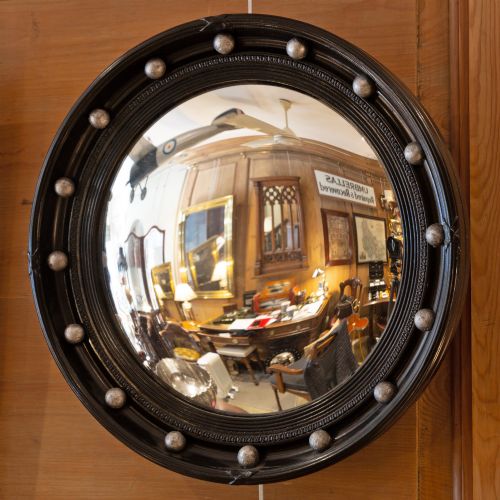
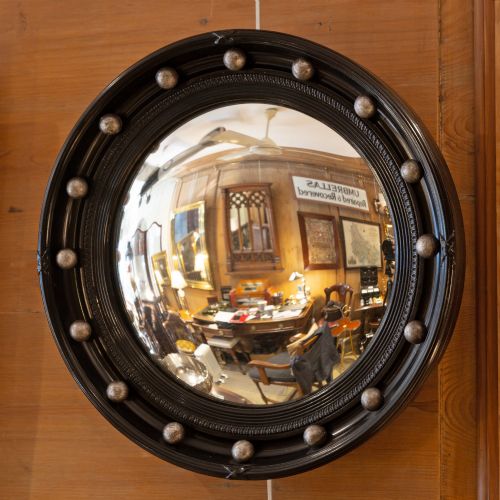
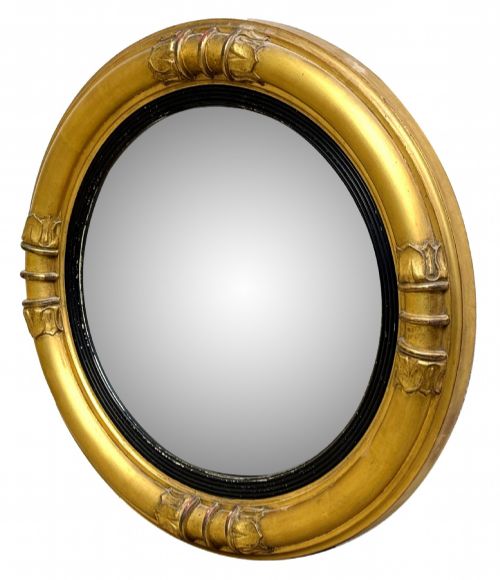
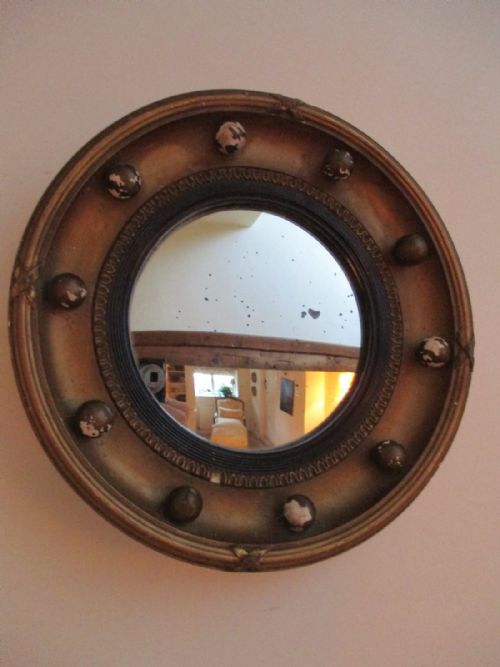
A butler wall mirror is a circular looking glass defined by a curved convex surface that captures a wide, distorted reflection of the entire interior space. These pieces appear most frequently in nineteenth century forms, alongside early twentieth century interpretations.
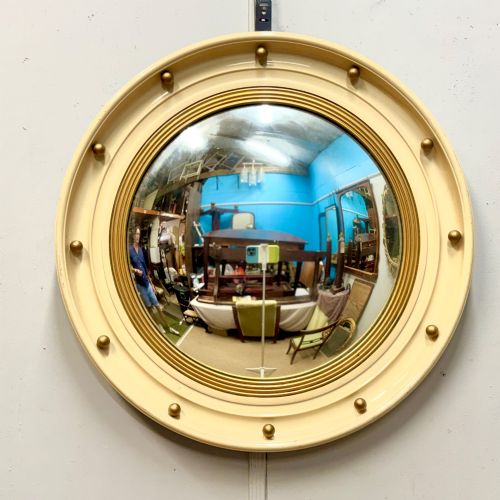
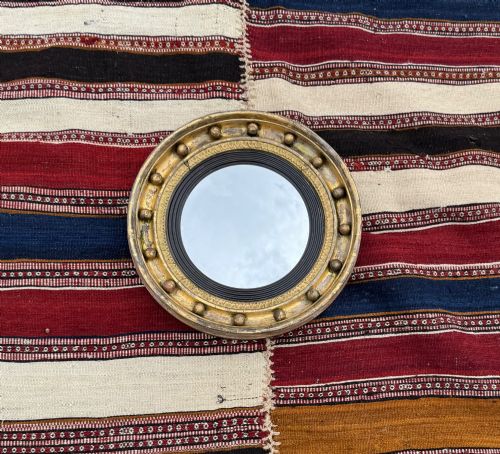
The standard design on this page combines a round frame with ball ornaments set into an ebonised or gilt surface. Buyers encounter both small domestic examples and larger formats designed to dominate a wall.
Originating in Regency aesthetics, these mirrors endure through nineteenth century revivals that maintain the circular silhouette and convex focal point. Each piece serves as both an optical device and a decorative focal point.
How they were made
The construction relies on shaped wood frames finished in giltwood, gesso, or ebonised wood. Artisans applied layers of gesso to carve fine details before adding paint, gold leaf, or dark ebonised finishes.
Convex glass was blown and shaped to curve outward, often accompanied by inner ebonised slips that frame the reflective surface. Metal components and silver balls punctuate the outer perimeters of these circular frames.
Butler Wall Mirror Retail Price Guide 2026
Typical asking prices for butler wall mirror among the pieces listed under this phrase on Sellingantiques today, from the lower quarter to the upper quarter. They describe what is for sale here now, not the wider market.
Convex mirrors were historically placed in butler pantries so staff could monitor the entire dining room with a single glance.
What varies in quality
Quality depends upon the depth of the carving and the crispness of the giltwood or ebonised surfaces. Better examples display finely turned wooden balls and well-preserved gesso ornamentation without heavy distortion.
The clarity of the convex glass and the integrity of the inner slip indicate the level of craftsmanship. Superior pieces maintain harmonious proportions between the circular frame and the decorative elements.
The Butler Wall Mirror Glossary
- Convex glass
- Curved outward like the exterior of a sphere, this glass gathers a panoramic view of the room into a compact circle.
- Ebonised wood
- Timber treated with a dark stain or finish to imitate expensive ebony. This dark treatment contrasts sharply with gilt highlights and silver balls.
- Giltwood
- Wood carved and coated with thin gold leaf or gold paint. It provides a luminous border that catches interior light.
- Gesso
- A plaster mixture applied to wood frames to create a smooth surface for carving and gilding. It allows for intricate decorative relief work.
- Regency style
- An aesthetic movement drawing on classical motifs and bold circular forms. This style heavily influences nineteenth century convex mirror design.
Butler Wall Mirror: Frequently Asked Questions
Where should I hang a butler wall mirror?
These mirrors function best opposite a window or light source to maximise the panoramic reflection across the room.
Their circular format suits hallways, living spaces, and above mantelpieces where they balance rectangular furniture.
How do I identify a nineteenth century mirror?
Nineteenth century examples typically exhibit hand-turned wooden elements, traditional gesso application, and aged glass characteristics.
Examining the construction of the circular frame and the materials used on the back reveals the period of manufacture.
What is the purpose of the silver balls?
The small spheres embedded around the frame catch and multiply ambient light from multiple angles in the room.
They serve as a signature decorative feature of convex mirrors, framing the central curved glass.
How do I care for ebonised wood and gilt frames?
Dust the frame gently with a dry, soft cloth to prevent the accumulation of dirt on the delicate gesso and gilt surfaces.
Avoid liquid cleaners and moisture to protect the antique finishes and the silvered backing of the glass.