
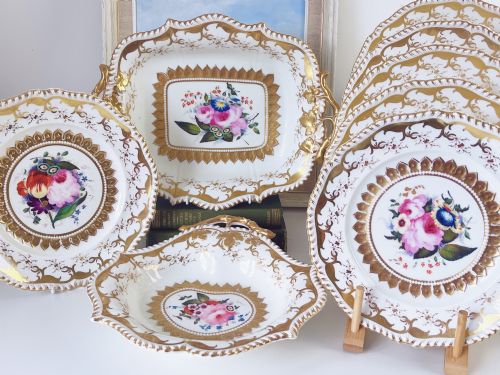
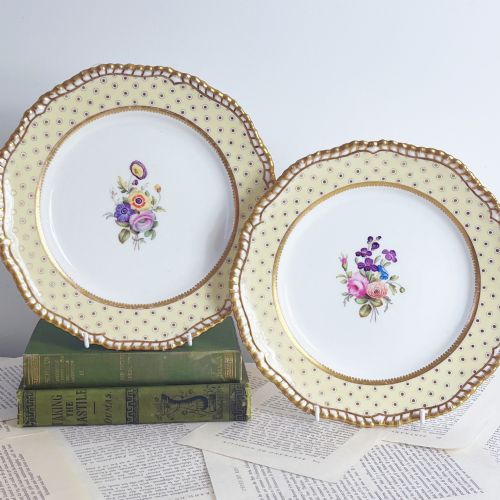
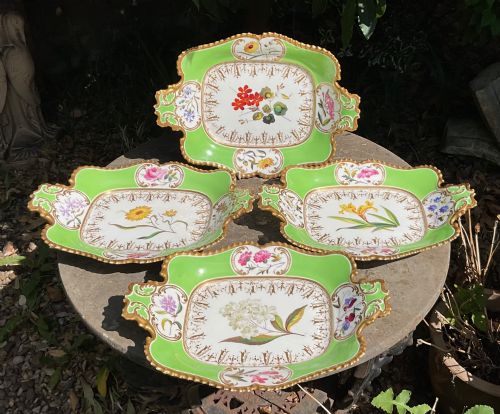
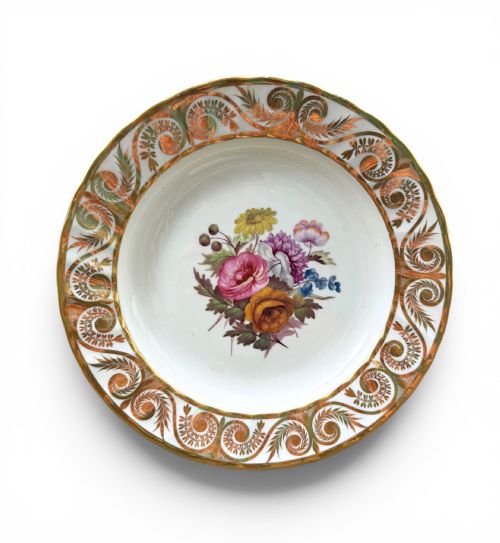


Regency Dessert Plate
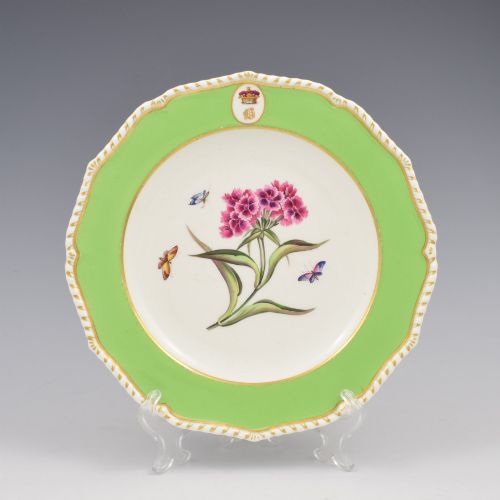
A regency dessert plate brings the colour and meticulous hand-painting of the early nineteenth century straight to the table.
Regency Dessert Plate
A regency dessert plate forms part of a formal dining tradition where the final course of fruit, sweetmeats and confectionary was served on display pieces distinct from the main dinner service. These items emerge from the early nineteenth century, spanning periods noted as Regency, Georgian, nineteenth century, and eighteen hundred.
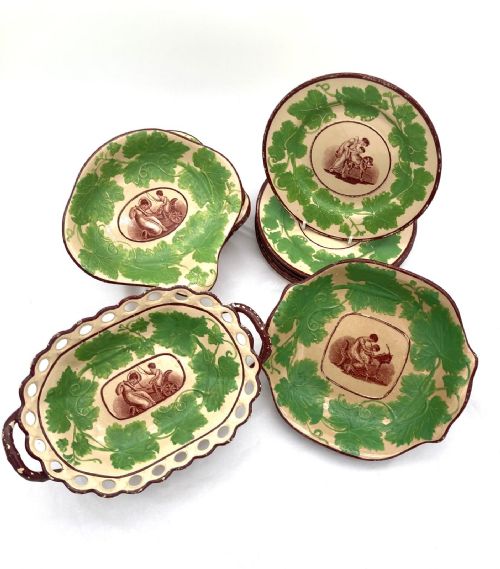
The pieces appearing on this page take the form of individual plates, cabinet plates, serving dishes, and complete dessert services in porcelain, ironstone, ceramic, and earthenware. Forms range from botanical studies and armorial designs to topographical scenes and patterns inspired by Japanese Imari and Chinese porcelain.
Makers represented include prominent factories such as Spode, Chamberlains Worcester, Bloor Derby, Flight, Barr and Barr, Minton, Coalport, Grainger Lee and Co, Mason's, Wedgwood, Davenport, and Ridgway. These workshops produced wares that combined utility with ornamental ambition for wealthy households.
Materials and Techniques
Potters of this era relied heavily on fine porcelain, ironstone, and earthenware bodies shaped on wheels or pressed into moulds to create plates and serving dishes. Surface decoration was enhanced through the application of enamel colours, gold leaf, and gilding, often fired multiple times in kiln chambers to fix the pigments.
Painting was executed by hand, employing specialists for botanical specimens, fruit, topographical views, and armorial crests. Transfer printing also emerged as a method for applying complex patterns efficiently before finishing details were added by brush.
The documented periods span the Regency, Georgian, and Victorian eras, alongside specific records from eighteen hundred.
Distinctions in Quality
Quality rests upon the execution of the painting and the precision of the gilding, distinguishing factory work by named artists from standard production runs. Hand-painted botanical studies and detailed topographical scenes by known decorators demand higher skill than repetitive transfer-printed patterns.
The fineness of the porcelain body and the crispness of moulded details further separate standard utility wares from exhibition pieces. Exceptional examples display rich enamel palettes and heavy burnished gold leaf that retain their lustre across decades of handling.
Grainger Lee and Co·Spode·Chamberlains Worcester·Derby·Bloor Derby·Minton·Coalport·Flight Barr and Barr·Masons·Wedgwood·Barr Flight and Barr·Davenport·Ridgway
The Regency Dessert Plate Glossary
- Armorial
- Bearing a heraldic crest, coat of arms, or family motto painted in the centre or border. These bespoke commissions identified the ruling or landed family who ordered the service.
- Chinoiserie
- European interpretations of Chinese and East Asian decorative motifs. These patterns featured imaginary landscapes, exotic birds, and figures within pagodas.
- Imari
- A style of ceramic decoration employing a palette of underglaze blue, iron red, and gilt. The aesthetic mimics Japanese export wares popularised during the period.
- Drabware
- A stoneware body finished in a muted greyish-brown or olive slip. Wedgwood produced this utilitarian material during the nineteenth century.
- Ironstone
- A heavy, durable ceramic patented by Charles Mason. It combined refined earthenware ingredients with slag iron to create a tough alternative to porcelain.
Regency Dessert Plate: Frequently Asked Questions
How were regency dessert plates used?
These plates were brought out at the conclusion of a formal dinner for the final course of fruit, sweetmeats, nuts, and small cakes. They were often displayed on sideboards or dessert tables before being passed among guests.
Because dessert services were manufactured in large sets, many plates survived independently after the original serving dishes and matching components became separated over generations.
Can I use these plates for food?
While these ceramics were originally created for dining, antique pieces featuring hand-painted enamels and gold leaf are generally treated as display items today. Modern dishwashers, microwaves, and acidic foods can damage delicate glazes and wear away the historic gilding.
Gentle hand washing in lukewarm water with mild soap is recommended if collectors choose to use them occasionally for light dining.
What is the difference between porcelain and ironstone?
Porcelain is a vitrified, translucent ceramic fired at high temperatures to create a smooth, white body that rings when struck. It was favoured for delicate cabinet plates and fine botanical services.
Ironstone is a dense, opaque earthenware developed for strength and durability. It resists chipping more readily than porcelain, making it practical for larger serving dishes and busy households.
How do I identify the maker of a plate?
Makers marked their wares using factory stamps, impressed letters, pattern numbers, and painted script on the underside of the base. These factory marks varied over time, allowing pieces to be dated accurately by comparing the style of the stamp with historical records.
In addition to factory marks, the painting style, palette, and shape of the rim often point directly to specific workshops in Worcester, Derby, or Staffordshire.