

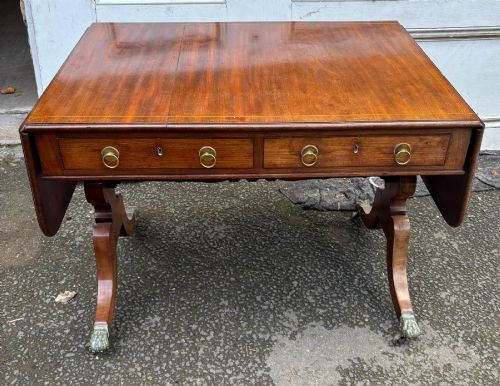
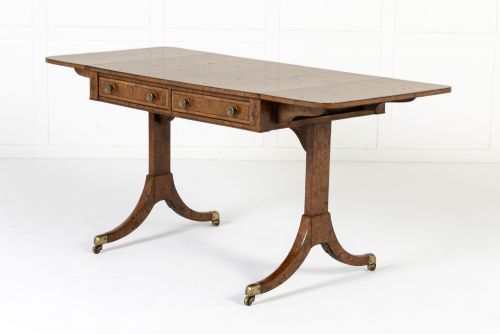
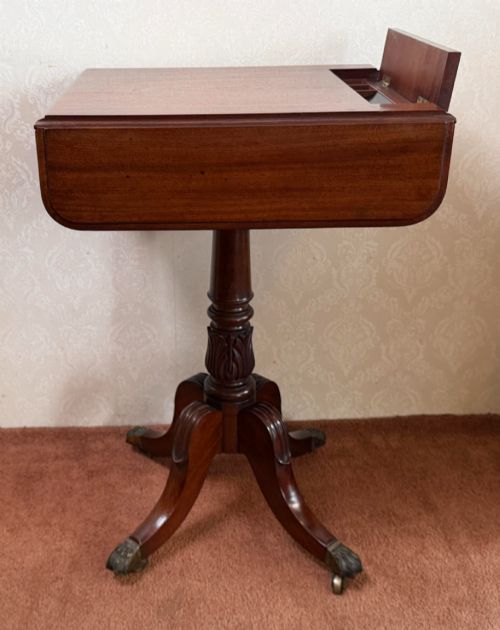
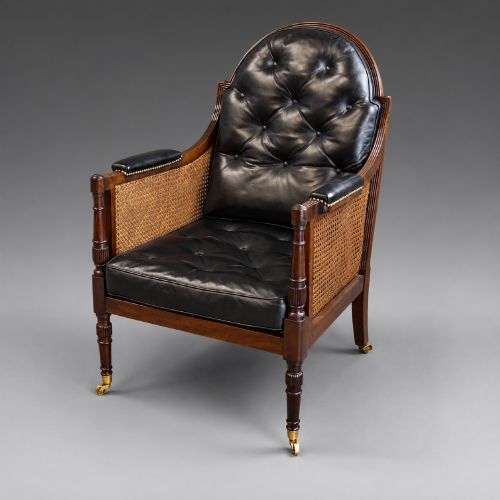
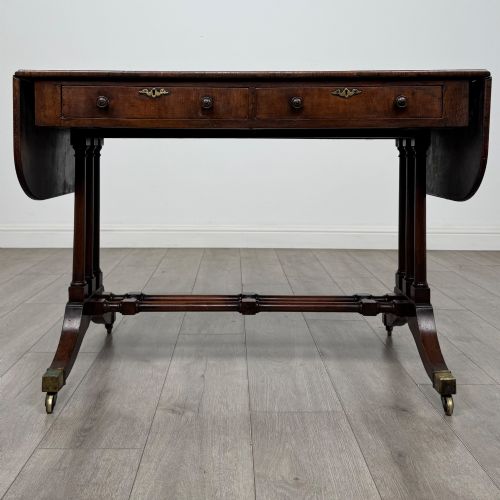

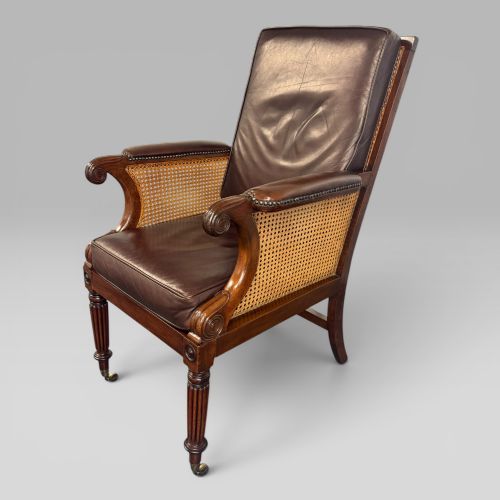
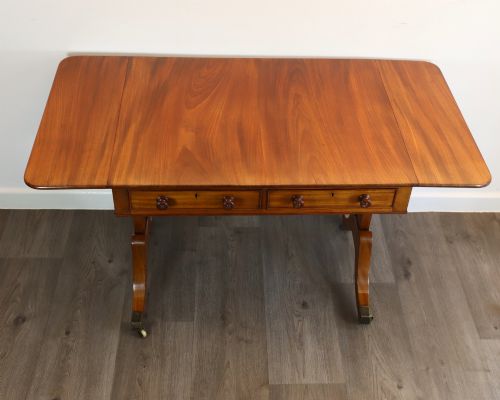
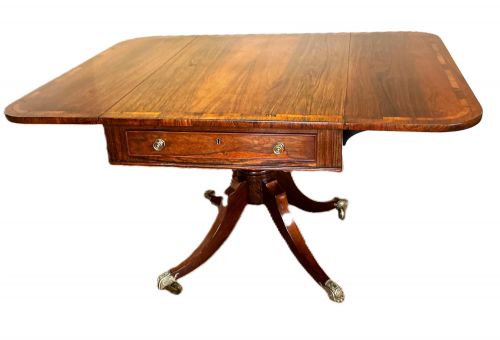


Regency Desk Brass Castors
Regency desk brass castors anchor elegant writing tables, drum tables and sofa tables designed for graceful movement across period rooms.
Regency Desk Brass Castors
When you search for regency desk brass castors, you encounter sophisticated writing tables, drum tables and sofa tables dating primarily from the Regency, George III, George IV and wider 19th century periods. These pieces serve as functional workstations and centre-room tables that rely upon small wheels to reposition heavy timbers effortlessly.
The selections on this page are dominated by mahogany and rosewood forms, alongside side tables, library chairs and bergères sharing similar structural hardware. You meet drop-flap variations, pedestal drum tables with rotating tops and twin-pillar writing surfaces equipped with original metal wheels.
The origins span the late 18th century through the Victorian era and into the 1920s, reflecting enduring stylistic preferences for classical proportions. The hardware itself remains integral to the mobility and historical authenticity of each antique.
Materials and construction
Cabinetmakers utilised dense hardwoods such as mahogany and rosewood, often enhanced with contrasting veneers like satinwood, boxwood and yew wood. Timber selection provided the heavy structural integrity required for freestanding library tables and writing desks.
Cast brass formed the small wheels and sockets fixed to the base of each leg, allowing heavy furniture to glide across carpets and polished floors without damaging the timber feet. Secondary details involved precise reeding, inlaid banding and leather writing surfaces fitted directly into the mahogany frames.
Regency Desk Brass Castors Retail Price Guide 2026
Typical asking prices for regency desk brass castors among the pieces listed under this phrase on Sellingantiques today, from the lower quarter to the upper quarter. They describe what is for sale here now, not the wider market.
Some library chairs proudly carry the precise name of their historical patent right down to the rolling mechanism.
Evaluating craftsmanship and condition
Superior examples display finely figured mahogany grains, intricate boxwood stringing and well-preserved brass wheel mounts that rotate smoothly within their original sockets. The integration of solid secondary timbers and stable drawer construction distinguishes finer cabinetwork from simpler utility pieces.
The crispness of turned pedestal columns, the intact nature of drop-flap mechanisms and the fidelity of period brass fittings determine the overall grade of a writing table or sofa table. Original patination on the timber surface further elevates the standing of an antique.
Gillows
The Regency Desk Brass Castors Glossary
- Castor
- A small wheel mounted on a swivel assembly attached to the bottom of a furniture leg. This hardware allows heavy tables and desks to be repositioned easily.
- Sofa table
- A rectangular drop-leaf table designed to stand in front of a sofa, featuring two small drawers and trestle supports fitted with brass wheels.
- Bergère
- An enclosed upholstered armchair with exposed wooden framing, frequently constructed in mahogany and fitted with cane panels.
- Reeding
- A decorative parallel moulding consisting of multiple rounded convex beads pressed or carved into timber legs and columns.
Regency Desk Brass Castors: Frequently Asked Questions
What are regency desk brass castors used for?
These small metal wheels allowed heavy mahogany writing tables and library furniture to be moved across rooms for optimal light and placement.
Cabinetmakers fitted them directly into the feet of pedestals and table legs to protect dense timbers from wear during repositioning.
How do I identify a genuine period table?
Examine the timber grain, secondary wood choices inside drawers and the weight of the cast brass hardware fitted to the legs.
Genuine pieces from the early nineteenth century display hand-cut joinery and patination consistent with age rather than modern replication.
Where were drum tables placed?
Drum tables sat in the centre of libraries or studies as freestanding writing and reference surfaces accessible from all sides.
Their rotating tops and perimeter drawers provided convenient storage for books, papers and writing implements.
Are sofa tables sturdy enough for daily work?
Sofa tables were originally built for light domestic tasks, needlework and correspondence rather than heavy administrative duties.
The drop-leaf flaps operate on hinged brackets that require careful handling when extended.