





Regency Demilune Console
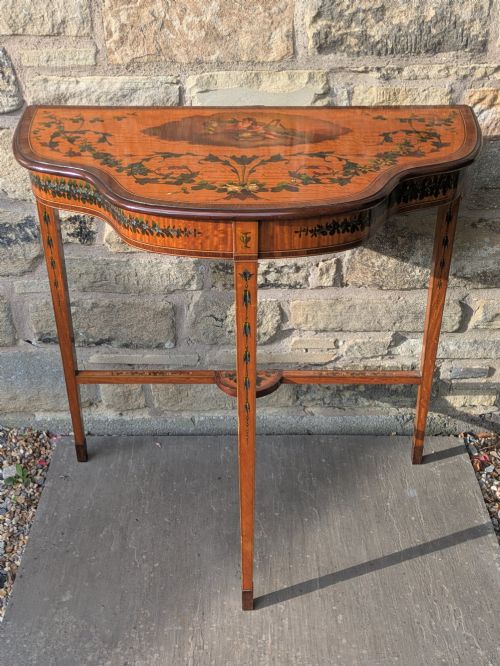
A regency demilune console is a half-round architectural table designed to sit flat against a wall, offering elegance and practical surface space.
Regency Demilune Console
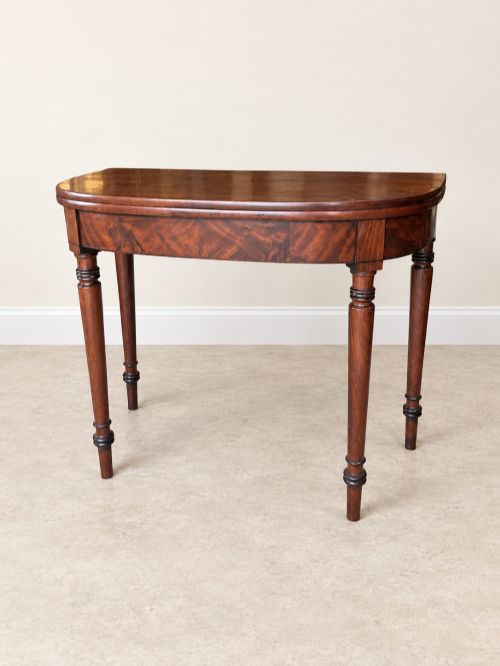
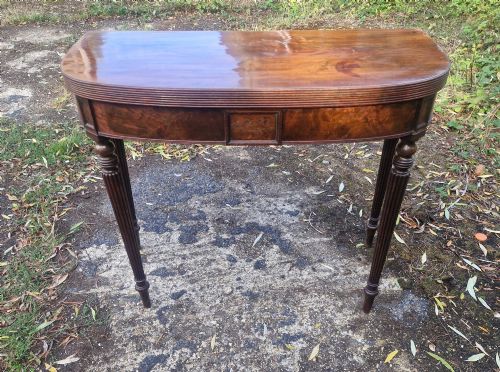
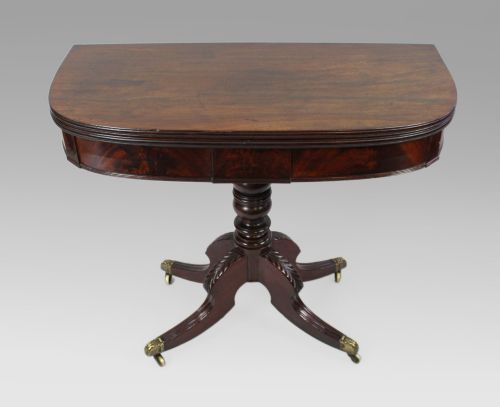
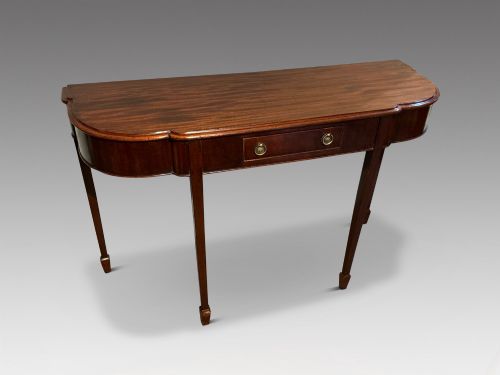
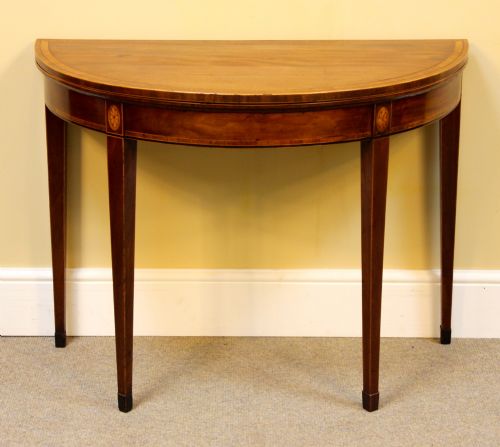
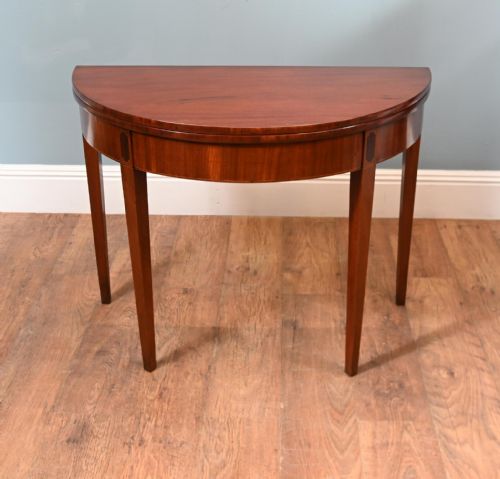
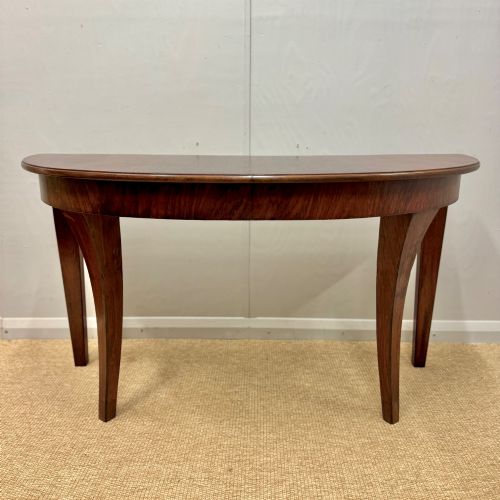
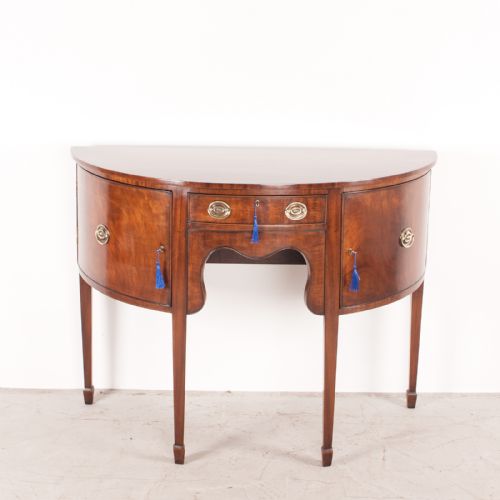
A regency demilune console takes the form of a semicircular table designed to stand against a wall in hallways and principal rooms. Buyers seeking this form will encounter half-round consoles, D-shaped tables, and fold-over card or tea tables dating from the Georgian and Regency periods.
The inventory on this page spans the nineteenth and twentieth centuries, incorporating Georgian, Regency, and Neoclassical styles. Pieces appear in formats such as side tables, games tables, and marble-topped washstands.
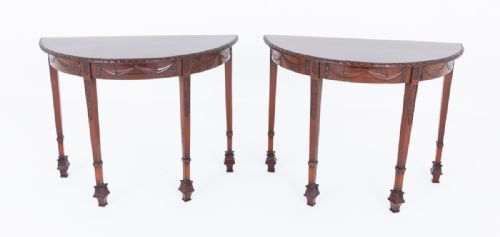
Many examples function as fold-over tables that open to reveal baize-lined surfaces for cards or tea. Pairs of tables also appear, designed to stand individually or lock together to form larger dining surfaces.
Materials and construction
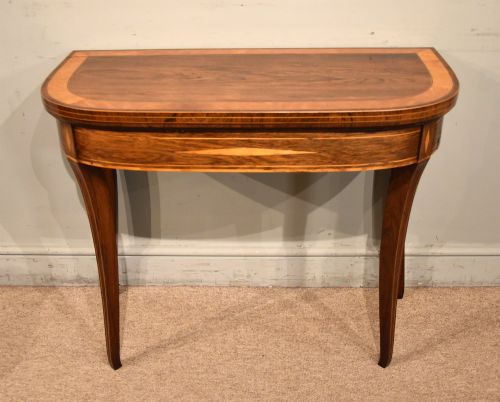
Cabinetmakers built these tables primarily using solid timbers and veneers of mahogany, rosewood, and satinwood. Workshops incorporated contrasting woods like boxwood for delicate stringing and geometric inlay work.
Surface treatments include traditional polishing alongside painted finishes and giltwood embellishments. Heavier tops feature inset slabs of white or coloured marble supported by carved wooden frames or concave legs.
Regency Demilune Console Retail Price Guide 2026
Typical asking prices for regency demilune console among the pieces listed under this phrase on Sellingantiques today, from the lower quarter to the upper quarter. They describe what is for sale here now, not the wider market.
Some folding tables hide secret wells beneath their tops, originally intended for stabling mother-of-pearl gaming counters.
Distinctions in quality
The refinement of timber selection and the precision of veneer matching dictate the visual hierarchy of these tables. Finer examples display carefully chosen grain patterns across the semicircular top and apron.
Execution of decorative elements such as boxwood inlay, carved giltwood details, and leg turning separates standard production from superior workshop output. The structural integrity of folding mechanisms and hinges also marks the standard of original craftsmanship.
Gillows
The Regency Demilune Console Glossary
- Demilune
- A French term meaning half-moon, describing tables with a flat back edge and a semicircular front. These pieces fit closely against interior walls.
- Card table
- A folding table designed for parlour games, featuring a hinged top that opens to reveal a felt or baize playing surface. Many examples include a concealed well for storing counters and cards.
- Inlay
- A decorative technique where pieces of contrasting wood, such as boxwood, are inserted into recessed cavities on the furniture surface. This method creates geometric borders and floral motifs.
- Giltwood
- Timber that has been coated with a thin layer of gold leaf or gilt paint. This finish appears frequently on neoclassical and decorative console bases.
- Console table
- A table supported by wall brackets or legs, historically positioned beneath mirrors or against blank wall spaces. The form emphasises decorative presence over freestanding utility.
Regency Demilune Console: Frequently Asked Questions
How do I use a demilune console?
These half-round tables function effectively in narrow hallways, entryways, and reception rooms where floor space is limited. Their flat backs allow them to sit flush against the wall while providing a surface for lamps, mirrors, or decorative objects.
Many period versions feature fold-over tops that open up for card games or tea service. This dual functionality allows the furniture to adapt between a compact console and a larger functional table when entertaining.
What is the difference between a console and a card table?
A traditional console table stands permanently against a wall as a decorative and display piece, often paired with a wall mirror. Their frames and legs are fixed in an open position.
Card tables feature a hinged top that folds closed when not in use, concealing the playing surface. While many card tables double as console tables when closed, their internal construction supports the weight of a folding leaf.
How do I date a Regency table?
Dating relies on observing timber choices, construction methods, and stylistic details associated with the early nineteenth century. Regency pieces frequently incorporate dark woods like mahogany and rosewood, alongside neoclassical motifs such as reeded legs and brass stringing.
Examining the underside, hinges, and secondary timbers provides further context regarding the manufacturing period. Workshops of the era often drew inspiration from classical Greek and Roman design.