


Regency Convex Wall Mirror
A regency convex wall mirror bends light across a room in a curved round glass plate, catching the entire interior in miniature.
Regency Convex Wall Mirror
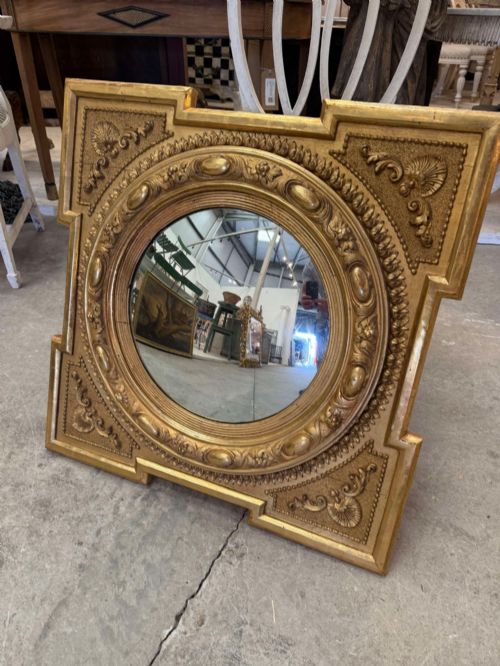
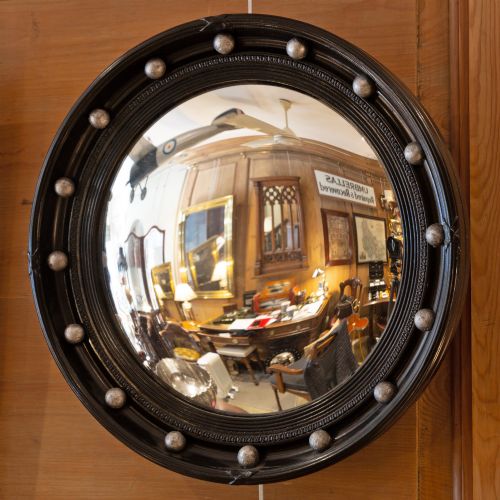
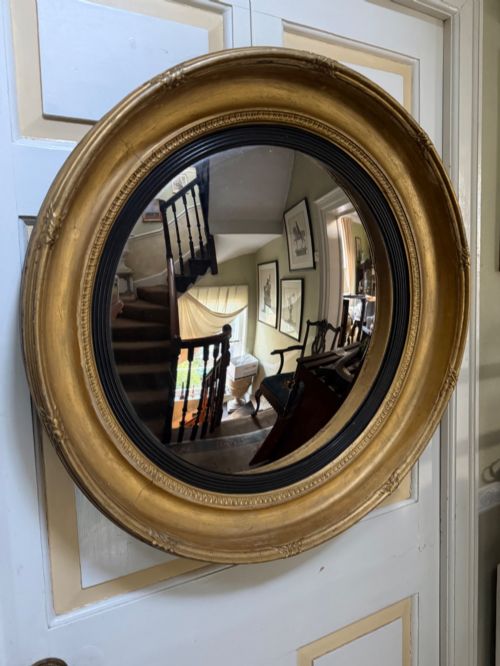
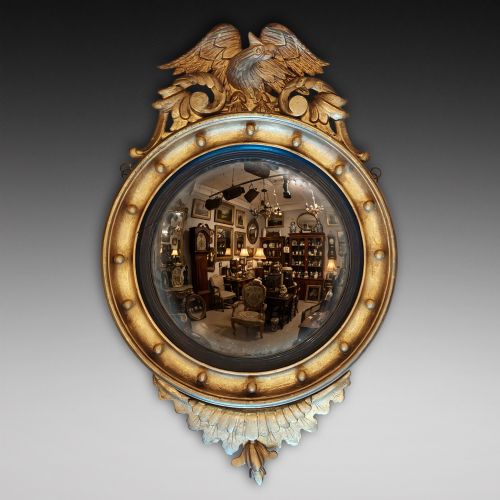
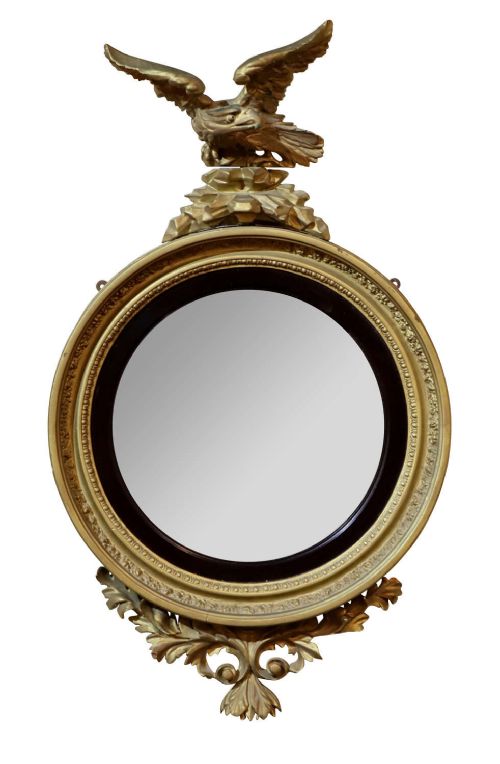
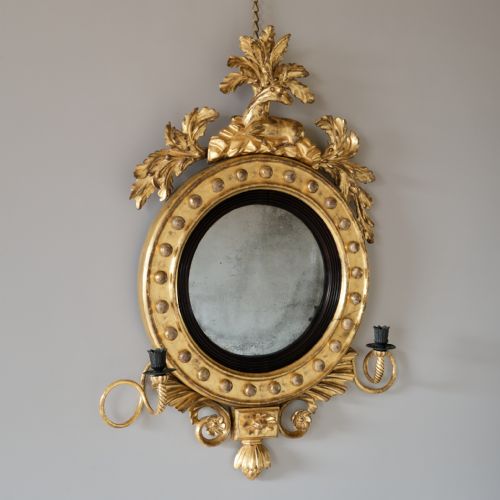
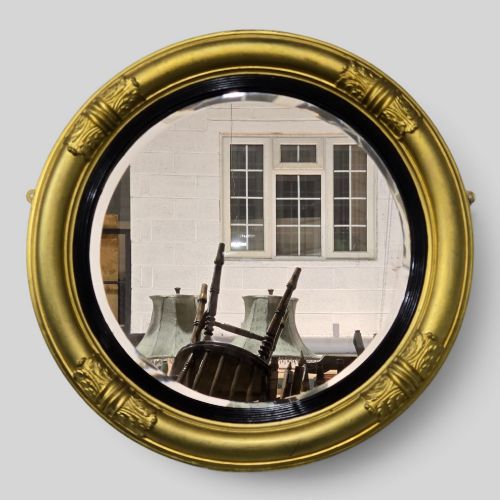
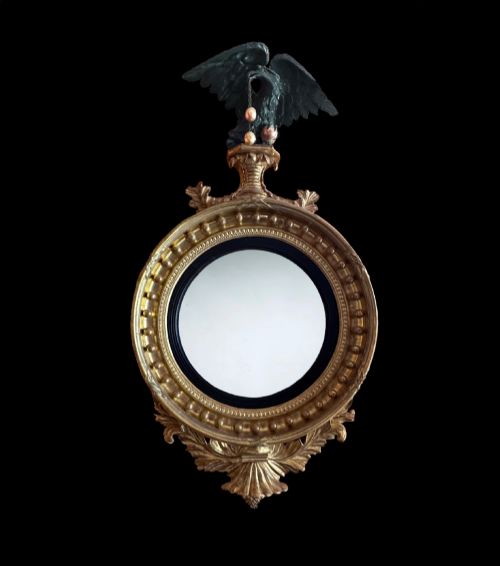
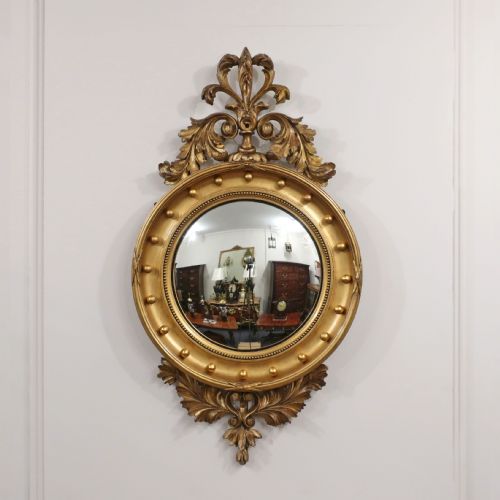
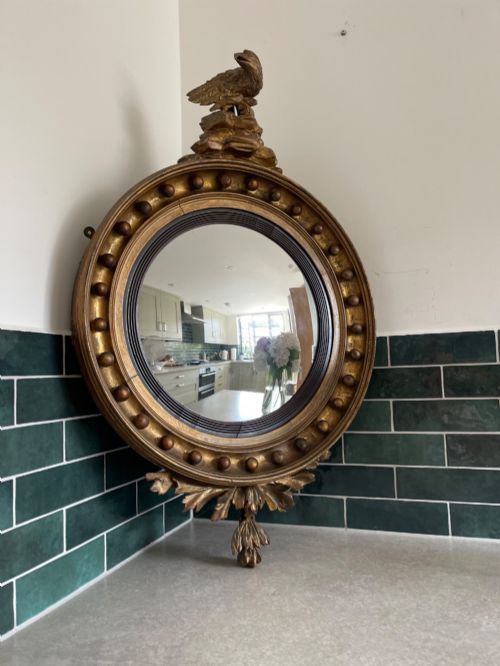
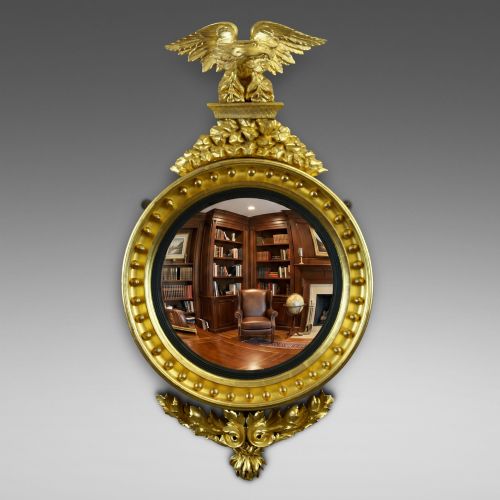
A regency convex wall mirror takes a circular form, often featuring a deep round frame moulded in giltwood or gesso. You will most frequently meet pieces attributed to the Regency period and the subsequent 19th century revivals, dominated by circular profiles.
Many examples incorporate dramatic crests, most notably spread eagles perched atop the frame, alongside candle sconces known as girandoles. These grander wall sconces and butler's mirrors served both decorative and practical functions in grand homes.
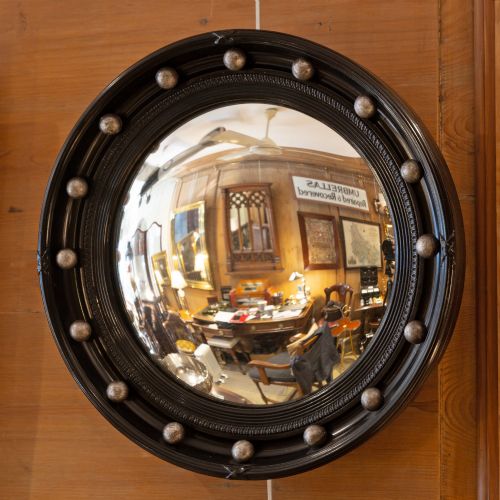
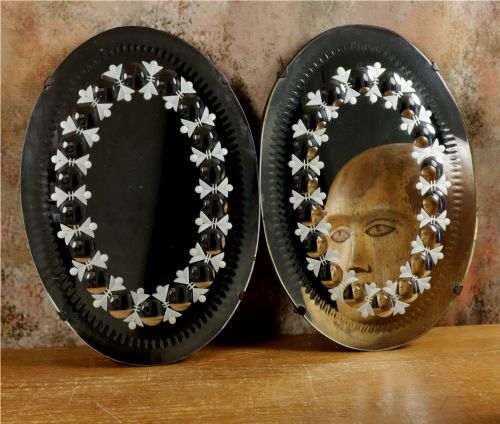
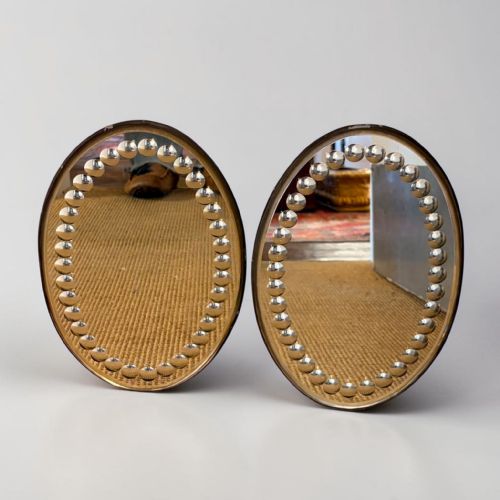
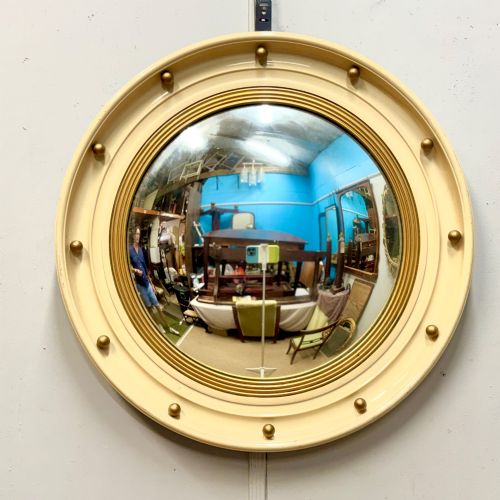
The format spans from small miniature looking glasses to large wall-hanging plates exceeding standard proportions. The evidence shows variations including ebonised wood finishes, dragon motifs and simple round frames.
How they were made
Makers shaped timber frameworks using carved wood, gesso and applied gold leaf to create the characteristic metallic brilliance of the frame. Ebonised wood and brass details frequently appear alongside traditional gilt surfaces.
The central feature is a curved convex mirror plate designed to reflect a wide-angle view of the surrounding space. Skilled artisans secured these heavy spherical glasses within deep rabbets behind protective slips.
Regency Convex Wall Mirror Retail Price Guide 2026
Typical asking prices for regency convex wall mirror among the pieces listed under this phrase on Sellingantiques today, from the lower quarter to the upper quarter. They describe what is for sale here now, not the wider market.
Victorian collectors sometimes called these sorcerer's mirrors because the bulging glass resembles a crystal ball used for divination.
What varies in quality
Quality rests in the crispness of the carved details on the frame, particularly the modelling of eagle crests and foliate ornament. Sharp, deep carving separates superior examples from softer, later revivals.
The integrity of the original gilt surface and the depth of the convex glass plate dictate the visual impact of the piece. Untouched gilding retains a warmth that heavy modern over-painting obscures.
The Regency Convex Wall Mirror Glossary
- Convex mirror
- A round mirror with an outward-curving glass plate that produces a wide, distorted reflection of the room.
- Giltwood
- Timber coated with a thin layer of gold leaf over a prepared gesso ground.
- Girandole
- A wall mirror fitted with attached candle sconces that project light from the sides.
- Ebonised slip
- A dark, blackened inner moulding placed between the frame and the glass plate.
- Surmount
- An ornamental feature, such as a carved eagle, positioned at the very top of the mirror frame.
Regency Convex Wall Mirror: Frequently Asked Questions
Why are these mirrors round?
The spherical glass requires a circular boundary to distribute the reflection evenly across the curved surface.
This format allows the glass to gather light from every corner of an interior into a single orb.
What is a butler's mirror?
A butler's mirror is a colloquial term often applied to round convex looking glasses.
Historical accounts suggest staff used the wide field of view to monitor activity in large dining rooms.
How do I hang a heavy convex mirror?
These pieces require secure wall fixings anchored directly into masonry or heavy timber studs.
Due to the substantial weight of the timber frame and thick glass, standard picture hooks are unsuitable.
Are all convex mirrors from the Regency period?
The listings include original Regency items alongside 19th-century Victorian pieces and later revival styles.
Construction details and wood characteristics help distinguish early 19th-century work from later interpretations.