



Regency Clothes Cupboard
A regency clothes cupboard is a substantial storage piece built for keeping garments in order, combining generous proportions with refined architectural detail.
Regency Clothes Cupboard
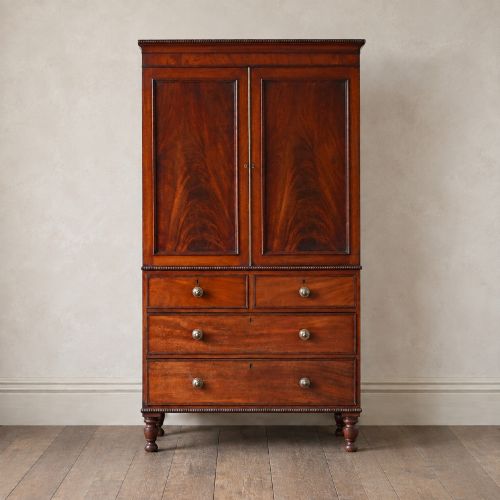
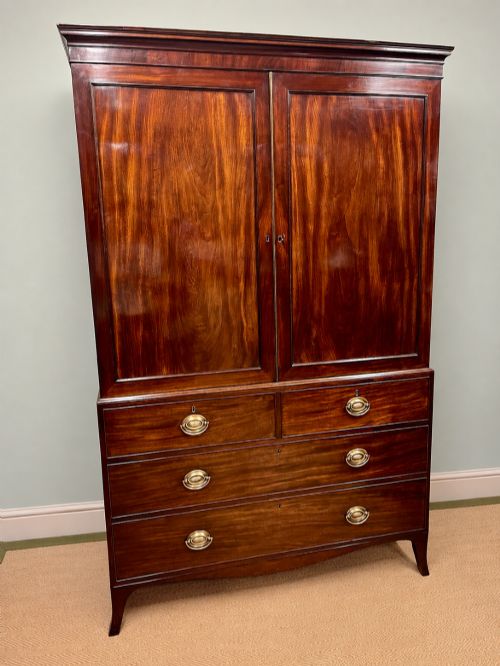
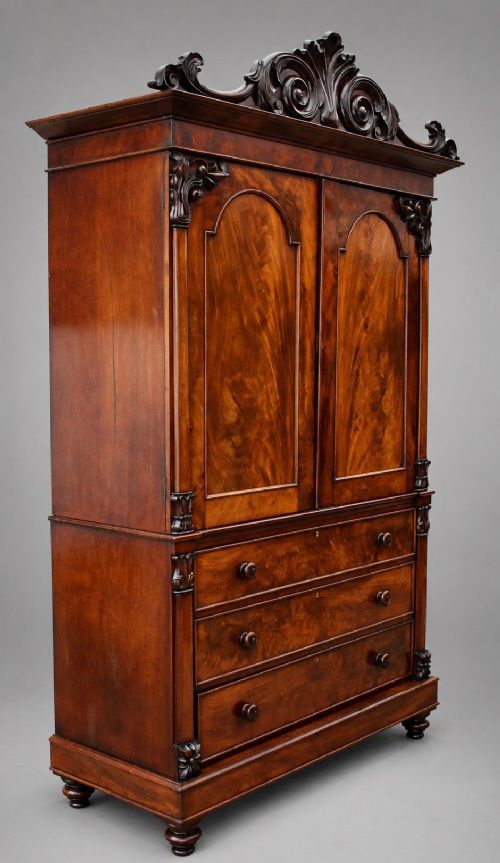
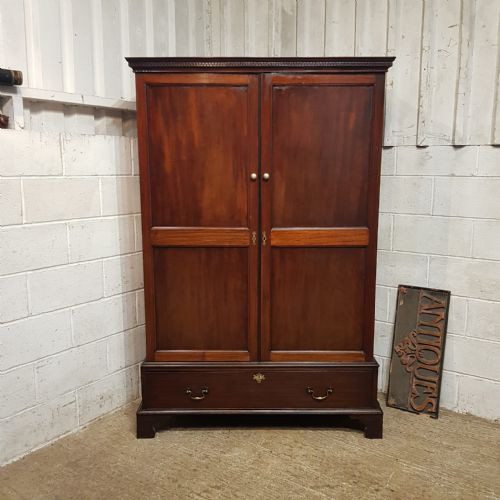
When you search for a regency clothes cupboard, you encounter large storage furniture primarily constructed as linen presses, wardrobes, and compactums. These items originate predominantly from the nineteenth century, spanning periods from late Georgian and Regency through to William IV, George IV, and later revival styles.
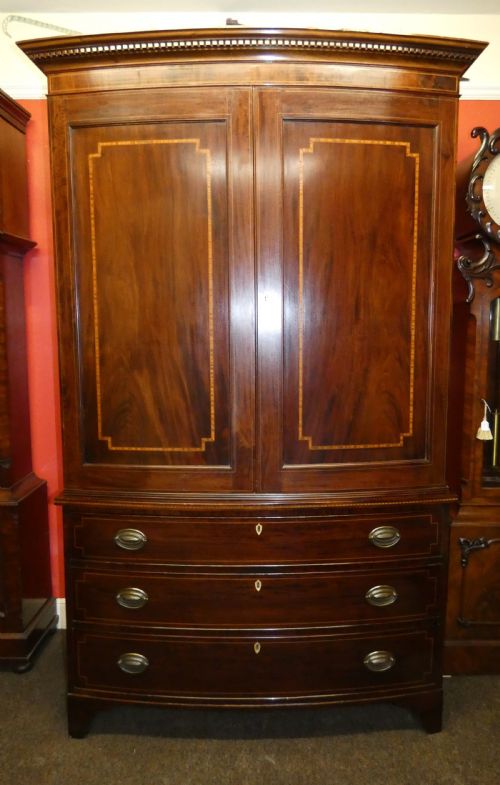
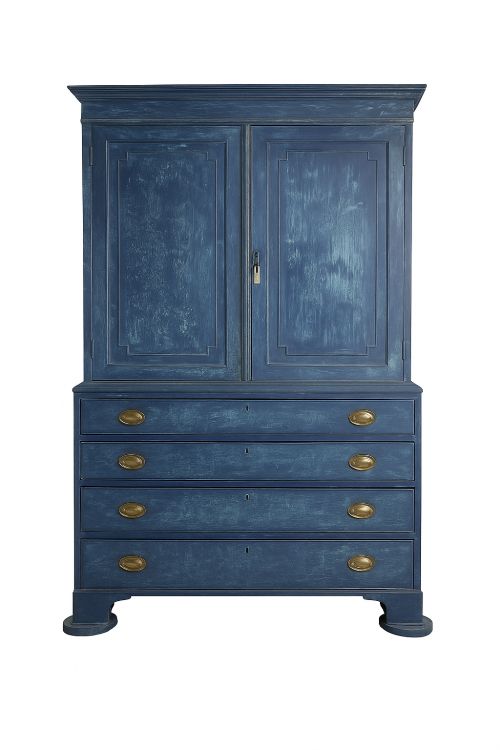
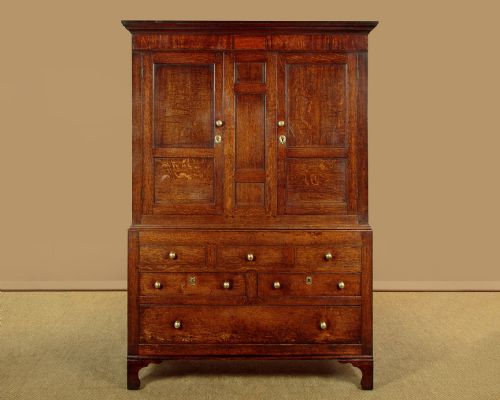
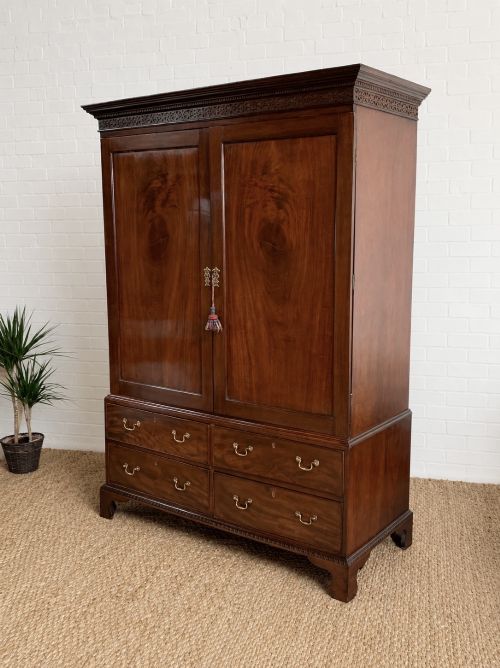
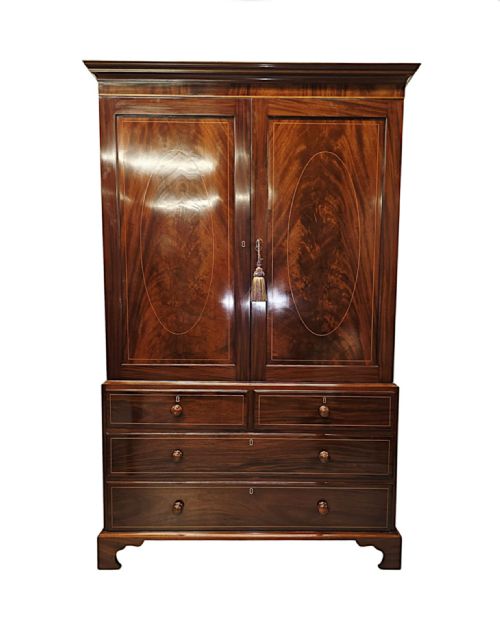
The version you are most likely to meet on this page is the mahogany linen press, often featuring a upper section with sliding trays enclosed by doors above a chest of drawers. Pieces take various forms, from straightforward bow-fronted carcases to breakfront designs and painted or inlaid variants.
Origins stretch across regions, with examples linked to Welsh country workshops, Scottish makers, Irish ateliers, and Channel Island cabinets. Alongside formal Regency designs, the listings include country oak tack cupboards and revival pieces from the early twentieth century.
How they were made
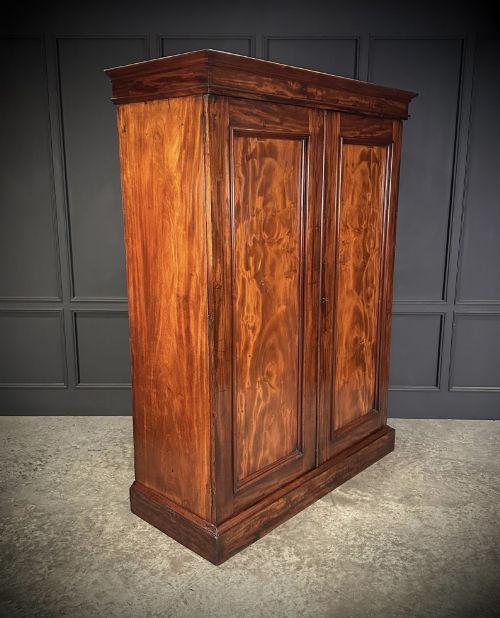
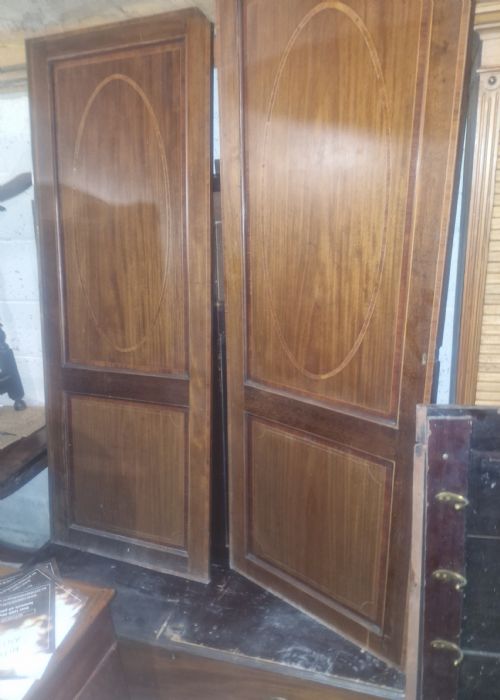
Makers built these pieces primarily using solid mahogany, flame mahogany veneer, curl mahogany, and oak, complemented by satinwood stringing and brass hardware. Timber selection focused on grain figure, utilising book-matched flame veneers and burr walnut on prominent exterior surfaces.
Construction involved heavy carcase joinery with internal sliding trays or hanging space, mounted above graduated drawer banks fitted with brass handles or escutcheons. Decorative elements relied on inlay, blind fretwork cornices, painted finishes, and bow-fronted or breakfront moulding.
Listings feature pieces spanning the 18th century, Georgian, Regency, William IV, and 19th-century revival periods, constructed primarily in mahogany, oak, and burr walnut.
What varies in quality
Quality separates through the selection and matching of timber veneers, where continuous flame or curl mahogany grain across large doors indicates superior cabinet-making. Finer pieces demonstrate precision in structural proportions, such as well-balanced three-quarter height proportions or breakfront profiles.
Detailing differentiates the range, distinguishing simple utility cupboards from pieces featuring sophisticated inlaid stringing, carved cornices, or original brass mounts. The integrity of internal sliding linen trays and the smooth operation of deep drawer banks also set high-tier examples apart.
Gillows
The Regency Clothes Cupboard Glossary
- Linen press
- A tall storage cabinet with an upper section designed for folded textiles and a lower chest of drawers. These pieces formed essential bedchamber furniture before fitted wardrobes became common.
- Compactum
- A multi-functional wardrobe combining hanging space, shelves, and internal drawers within a single unified carcase. This form maximised storage efficiency in nineteenth-century dressing rooms.
- Flame mahogany
- A veneer cut from timber where the branch meets the trunk, producing a distinctive flickering flame pattern. Cabinet-makers reserved this figured wood for primary display surfaces.
- Blind fretwork
- Carved ornamentation applied to a solid background so that the pattern appears pierced without actually cutting through to the surface. It often decorates the cornice of formal storage pieces.
- Breakfront
- A cabinet design where the central section projects forward from the flanking wings. This architectural arrangement creates depth and shadow on large wardrobes.
Regency Clothes Cupboard: Frequently Asked Questions
What is a regency clothes cupboard?
A regency clothes cupboard is a large nineteenth-century storage item, frequently taking the form of a linen press or wardrobe designed to hold garments and textiles.
These pieces combine functional internal sliding trays or hanging space with decorative exterior timber work, predominantly in mahogany and oak.
How were linen presses used?
Linen presses served to store freshly laundered household linens and folded garments on sliding internal shelves before modern wardrobe hanging space became standard.
The lower drawer banks provided additional capacity for smaller items of clothing and apparel.
Where do regional cupboard styles originate?
Regional cupboards originate from workshops across Britain and Ireland, including Welsh country pieces in oak, Scottish mahogany presses, and Channel Island hall wardrobes.
Local timber availability and distinct vernacular traditions shaped the construction methods of these regional variants.
How do I live with a large wardrobe?
Large wardrobes require adequate wall space and ceiling height to accommodate their substantial proportions and heavy timber carcases safely in a modern room.
Internal spaces can house folded clothing or be adapted with hanging rails where depth permits.