


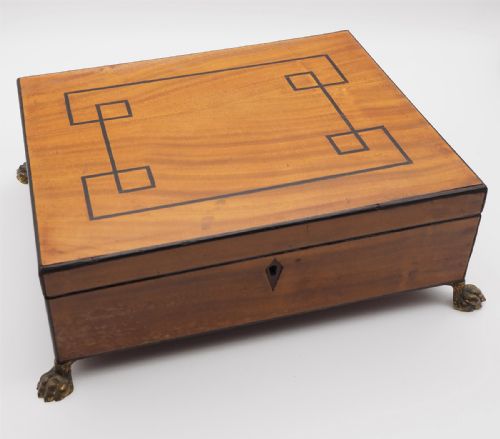

Regency Claw Foot Box
These regency claw foot box examples combine substantial timber and cast metal supports, offering both practical storage and period character.
Regency Claw Foot Box
A regency claw foot box encompasses small storage vessels and occasional furniture items produced during the early nineteenth century and the wider Regency and Georgian periods. The selection spans compact jewellery caskets and tea caddies alongside larger work tables, cellarettes, and ottomans resting upon distinct animal paw or claw and ball supports.
Buyers meet variations fashioned from solid and veneered timbers including mahogany, flame mahogany, rosewood, and satinwood, frequently accented with brass mounts, leather, or fabric linings. These pieces reflect the formal decorative vocabulary of the period, moving from delicate tabletop storage boxes to heavy wine coolers and pedestal work tables.
How They Were Made
Cabinet makers utilised dense tropical hardwoods, applying figured mahogany and rosewood veneers over secondary timbers to achieve dramatic surface grain patterns. Boxes and larger furniture pieces often incorporated intricate marquetry, ebony stringing, or repoussé brass elements fixed with traditional joinery methods.
Support feet were cast in brass or carved directly from solid wood, anchoring heavier forms such as sarcophagus cellarettes and ottomans. Interior compartments in work boxes and tea caddies utilised finely fitted secondary woods and silk or leather linings tailored to hold specific domestic items.
Some nineteenth-century work boxes doubled as miniature writing desks, complete with slanted velvet surfaces for hasty correspondence.
What Varies in Quality
The choice of timber veneer dictates the visual impact, with matched flame mahogany and exotic woods marking out superior examples from plain equivalents. The crispness of carved paw feet or the weight and detail of cast brass mounts distinguish standard production from finer workshop output.
Interior execution reveals the standard of construction, where dovetailed joints, intact original linings, and functioning locks separate well-preserved items from heavily altered pieces. Structural stability in larger work tables and cellarettes depends on the integrity of the timber framing and the secure attachment of the base supports.
The Regency Claw Foot Box Glossary
- Sarcophagus
- A monumental container shape featuring a domed or peaked lid and a tapered body, commonly utilised for tea caddies and wine coolers during the Regency period.
- Cellarette
- A freestanding container or cabinet designed to hold bottles of wine, often heavily insulated and raised on claw feet or castors.
- Repoussé
- A metalworking technique where a design is hammered into relief from the reverse side, frequently seen on brass planters and jardinières in the evidence.
- Marquetry
- The art of applying pieces of veneer to a structure to form decorative patterns, visible on period tea caddies using exotic timbers like amboyna.
- Work Table
- A small domestic table fitted with drawers or fabric bags for sewing and needlework implements, often supported on a central pedestal with carved feet.
Regency Claw Foot Box: Frequently Asked Questions
What is a regency claw foot box?
A regency claw foot box is a nineteenth-century storage container or furniture piece raised on carved animal paw or brass claw and ball feet. These items range from small jewellery caskets and tea caddies to larger work tables and cellarettes.
The design reflects the neoclassical tastes of the Regency and George IV periods, combining dense timbers like mahogany and rosewood with metal mounts.
How were tea caddies used?
Tea caddies served to store precious loose-leaf tea under lock and key in the formal rooms of a nineteenth-century household. The inner compartments kept different tea varieties separate and protected from moisture.
Keys were held by the master or mistress of the house, as tea was an expensive commodity during the Georgian and Regency eras.
What woods are typical for these pieces?
Makers relied heavily on mahogany, flame mahogany, and rosewood for their rich natural colour and grain. Satinwood, Gonçalo Alves, and amboyna also appear on higher-status decorative boxes and tables.
Secondary timbers were used for internal partitions, while brass and leather provided structural and decorative contrast.
How do I identify a Regency period piece?
Regency pieces display specific classical motifs, including animal paw feet, brass rosettes, and bold timber veneers. The proportions are typically architectural, drawing inspiration from Greek and Roman design.
Construction details such as hand-cut dovetails and traditional fixings help confirm the early nineteenth-century date.