

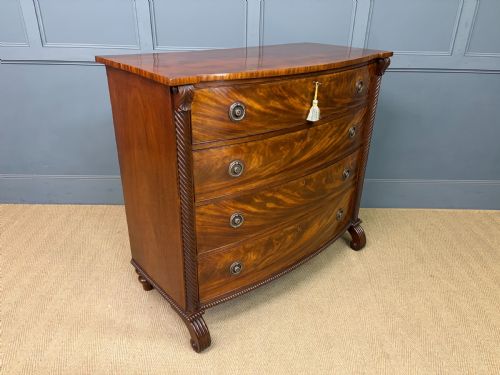
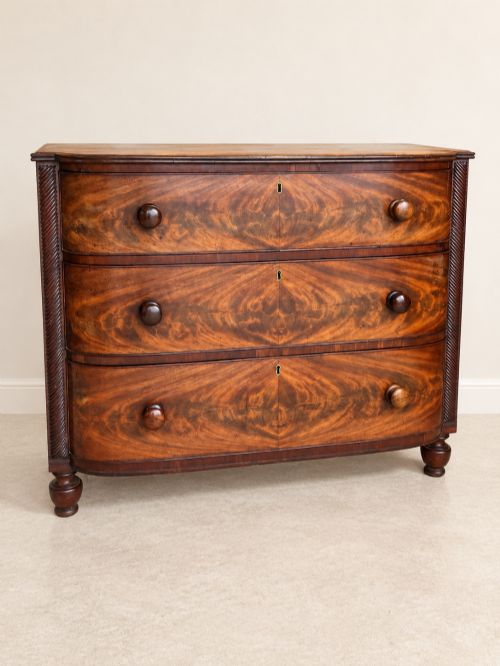
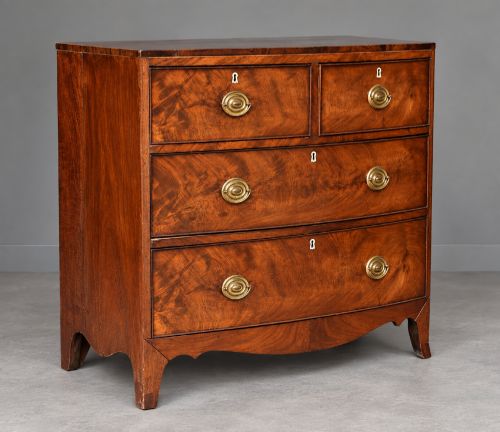
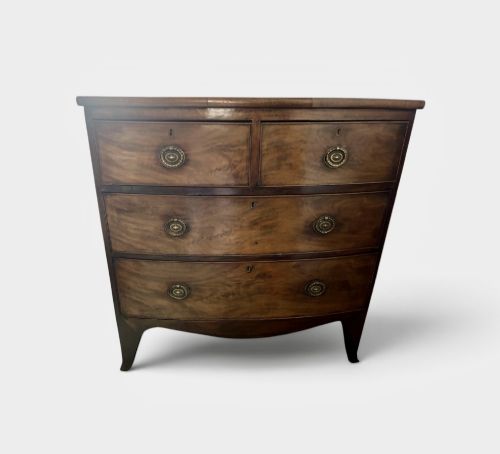

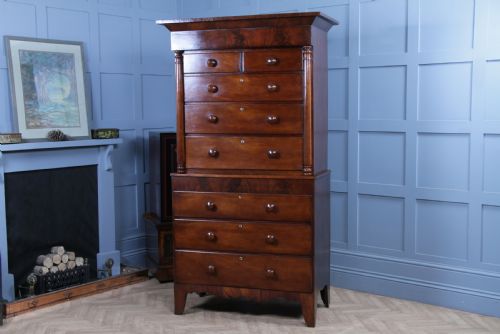
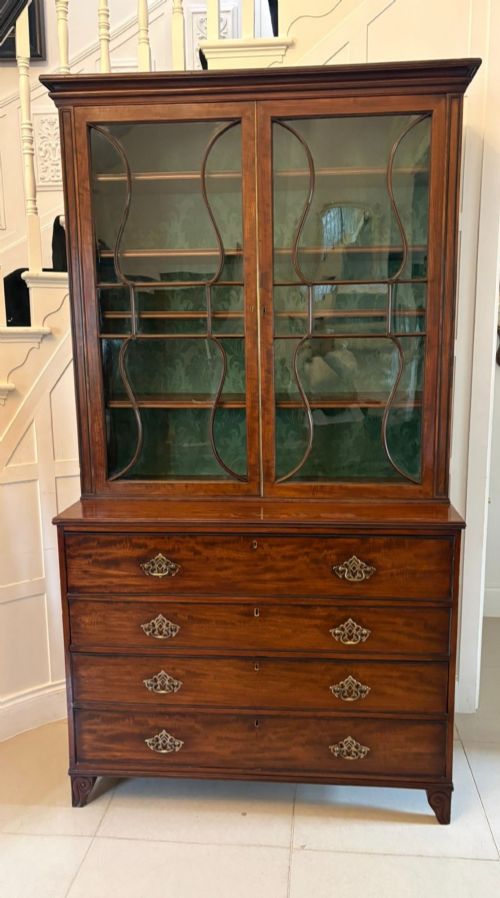
Regency Chest on Chest
When you search for a regency chest on chest, you seek a towering double-bodied piece of storage combining Georgian proportion with Regency elegance.
Regency Chest on Chest
A regency chest on chest, also known as a tallboy, is a substantial case furniture form consisting of one large chest of drawers stacked directly upon a deeper or wider lower chest. These towering storage items organise clothing and linens vertically, making efficient use of floor space while providing significant capacity through six to eight graduated drawers.
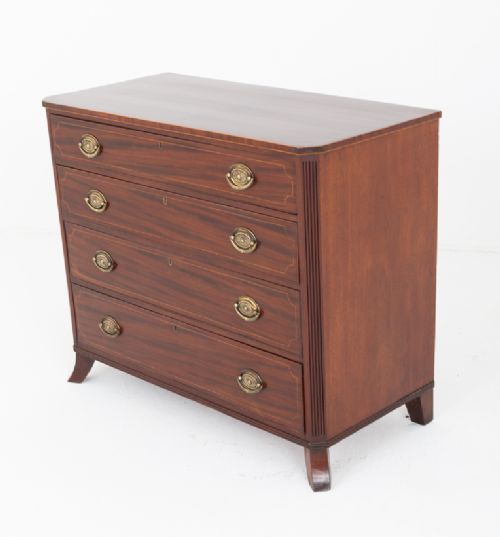
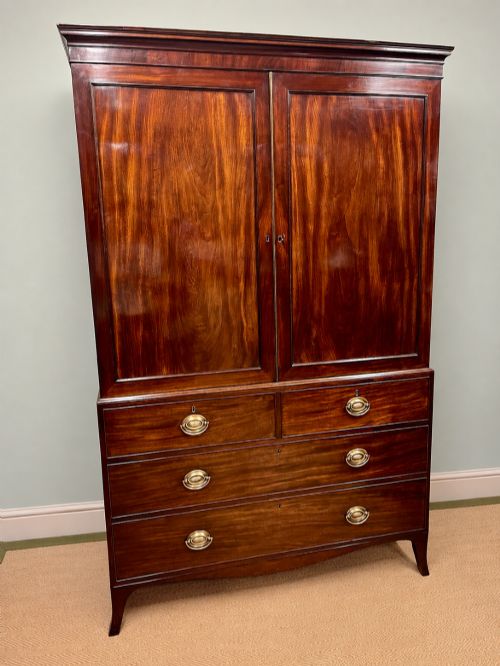
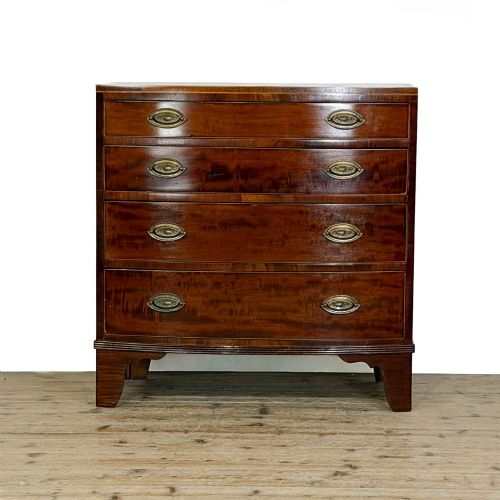
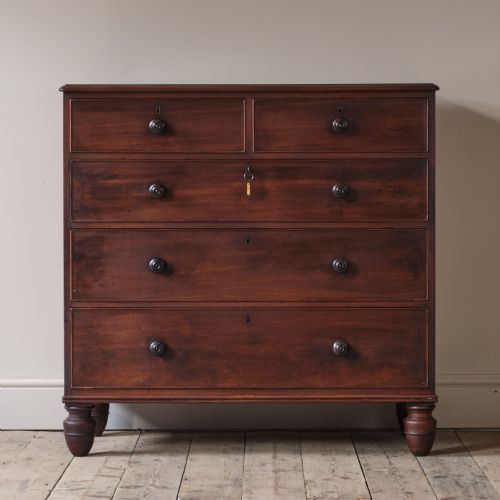
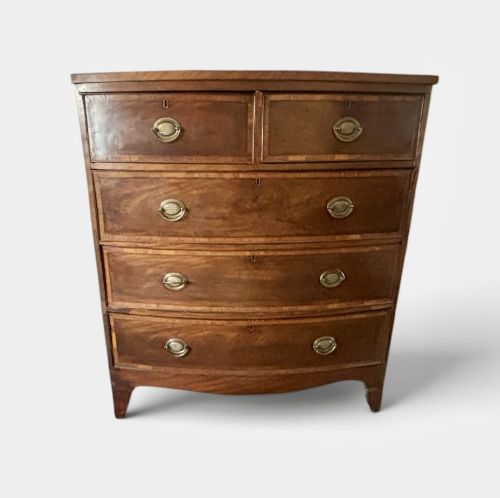
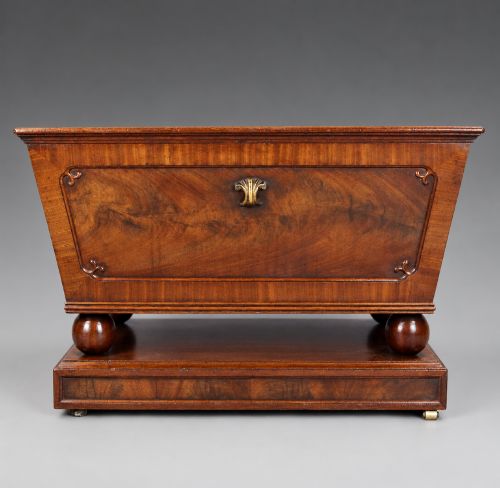
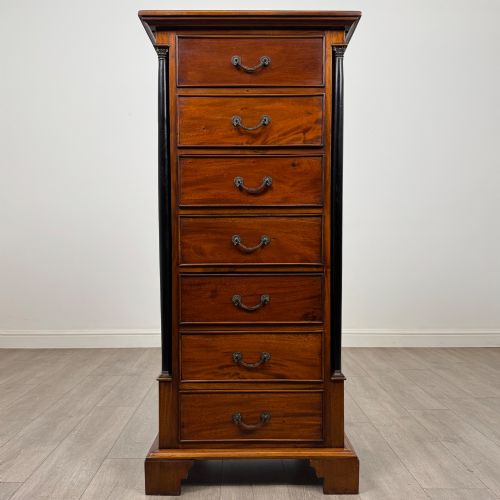
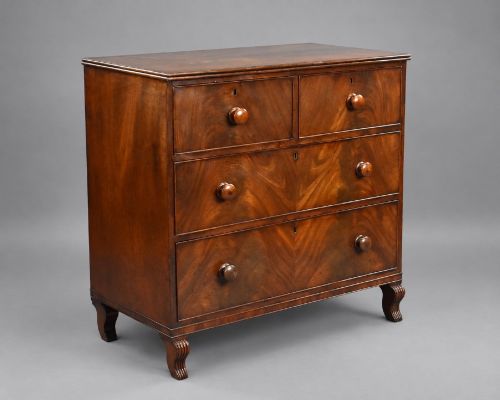
The pieces appearing on this page span the Regency, Georgian, and 19th-century periods, showcasing forms built from solid woods and rich veneers. While standard chests of drawers and linen presses appear frequently alongside them, the true double-tiered tallboy remains the definitive silhouette for vertical storage.
Makers of this era constructed these imposing carcasses in two separable sections for easier transport up stairwells and through narrow domestic hallways. This practical division does not diminish their visual authority, which relies on balanced proportions and disciplined architectural cornices.
How they were made
Cabinet makers utilised dense structural timbers like oak for internal drawer linings and carcass carcases, applying richly grained mahogany, flame mahogany veneer, and occasionally rosewood to the external visible surfaces. Fine stringing lines in satinwood or ebony frequently accent the drawer edges and borders.
Veneers were laboriously sawn and hand-applied to deal or oak backboards, matching grain patterns across multiple drawer fronts to create symmetrical visual movement. Traditional dovetail joints secure the drawer corners, demonstrating robust framing techniques designed to withstand heavy daily use over centuries.
Historical travelling cases on this page include apothecary chests designed to dispense remedies on the move.
What varies in quality
Quality rests heavily on the selection of timber veneers, where highly figured flame mahogany or birds-eye maple commands superior status over plain straight-grained surfaces. The subtlety of inlay work, such as neat satinwood banding or delicate crossbanding, further distinguishes exceptional workshop output from simpler provincial carpentry.
Proportion and hardware integrity separate finer examples from standard production, visible in the retention of original brass drop handles, escutcheons, and smoothly operating drawer runners. Well-executed bracket feet or splayed legs provide appropriate architectural support for the heavy upper body without appearing clumsy.
T & G Seddon·Samuel Pratt·George Oakley
The Regency Chest on Chest Glossary
- Tallboy
- A tall chest of drawers formed by stacking one cabinet directly upon another, usually providing six to eight storage tiers. This form maximises vertical capacity while maintaining a compact footprint in domestic rooms.
- Crossbanding
- A decorative border technique where thin strips of veneer are laid perpendicular to the surrounding grain direction. This method frames drawer fronts and top surfaces with a contrasting linear border.
- Satinwood
- A durable, highly lustrous timber native to the tropics, prized for its golden-yellow sheen and smooth texture. Makers utilised it for stringing lines, inlay details, and contrasting banding.
- Bracket foot
- A structural support projecting from the lower corners of a case piece, shaped like a small architectural bracket. These feet elevate the heavy carcass cleanly off the floor.
- Escutcheon
- A protective metal plate surrounding a keyhole, designed to prevent wear on the surrounding wood surface. They are frequently cast in brass and fashioned to match the period drop handles.
Regency Chest on Chest: Frequently Asked Questions
How do I separate the two sections?
The upper carcass simply lifts straight up and off the lower base once any interior locking mechanisms or securing screws are undone.
Because these modular carcasses were engineered for ease of transport during historical household relocations, no hidden mechanical latches typically bind the two halves together.
Where should I place a tallboy?
Position your chest against a structurally sound wall in a bedroom or dressing room where its considerable height will not overwhelm the ceiling clearance.
Ensure the floor beneath is level to prevent uneven stress on the stacked carcass joints and to maintain smooth drawer alignment.
How do I clean the mahogany surfaces?
Dust the wood regularly with a soft, dry lint-free cloth to prevent grit accumulation from scratching the polished veneer layer.
Apply a quality beeswax polish sparingly once or twice a year to nourish the grain, buffing it thoroughly to maintain the natural satin sheen.
Are the brass handles original?
Examine the interior of the drawer fronts around the mounting holes to check for filled previous screw placements or mismatched fastening impressions.
Original hardware typically displays consistent patination and wear patterns matching the age of the surrounding timber carcass.