

Regency Carved Rosewood Table
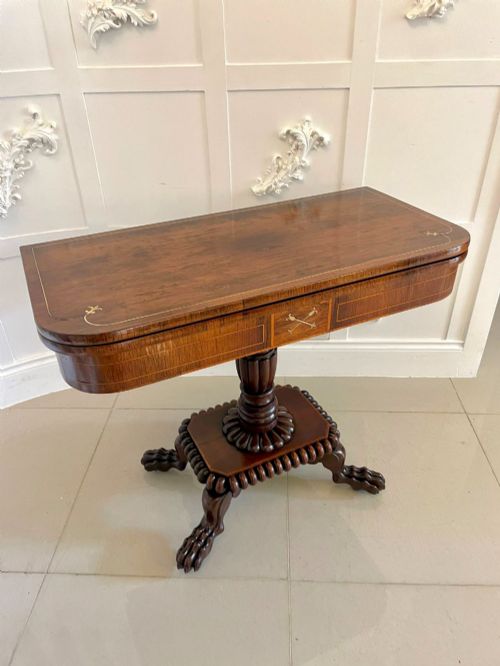
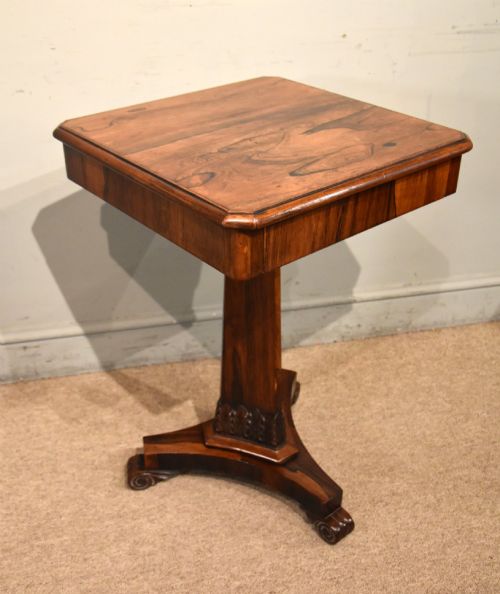
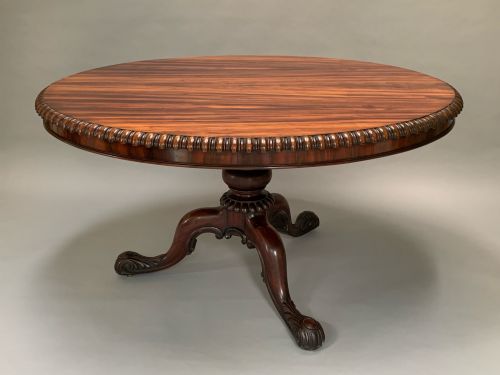
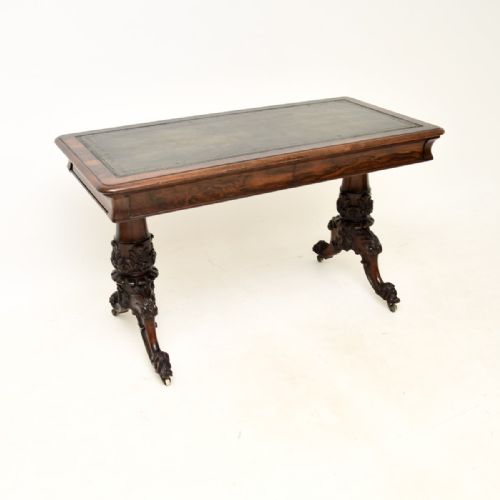
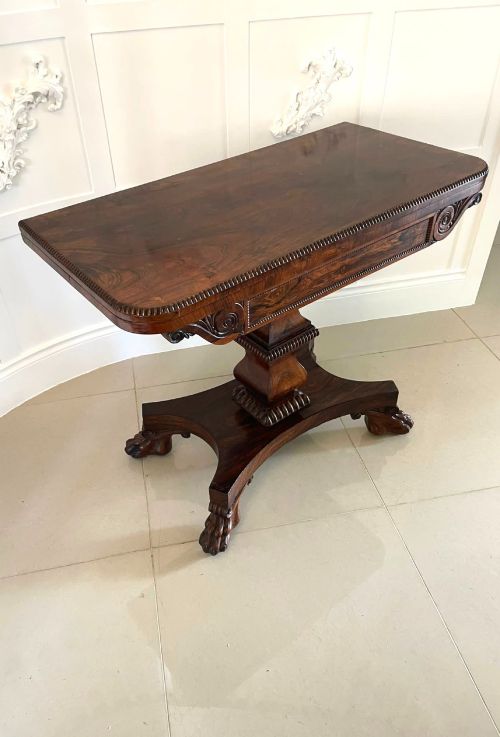
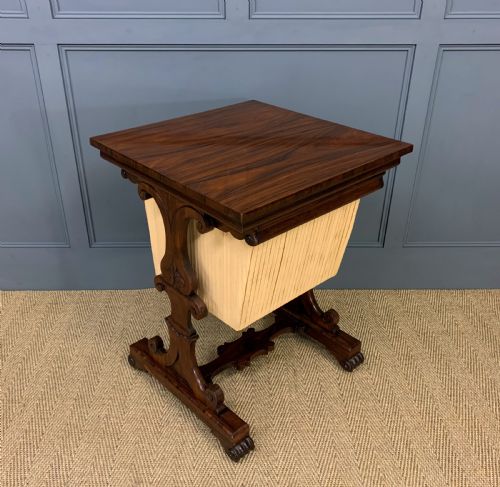
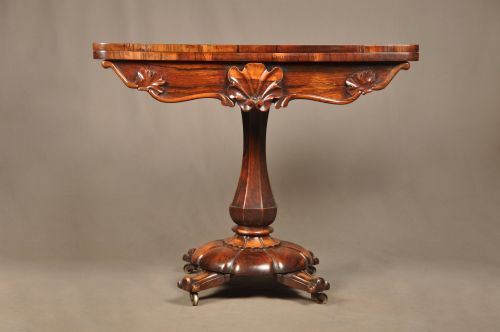
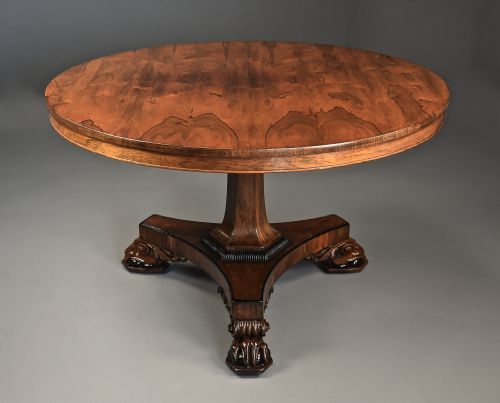
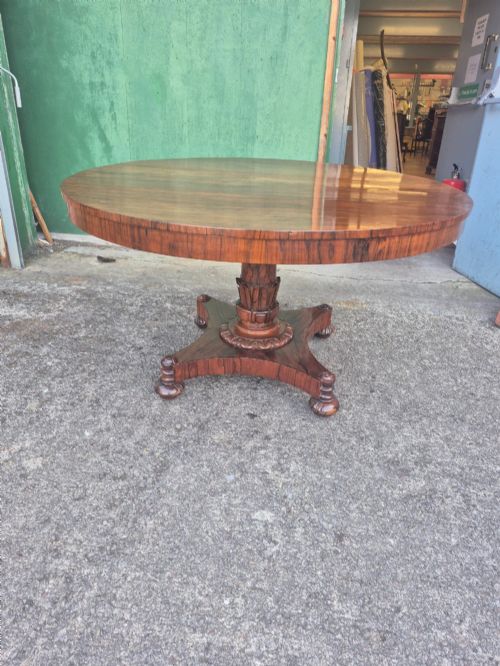
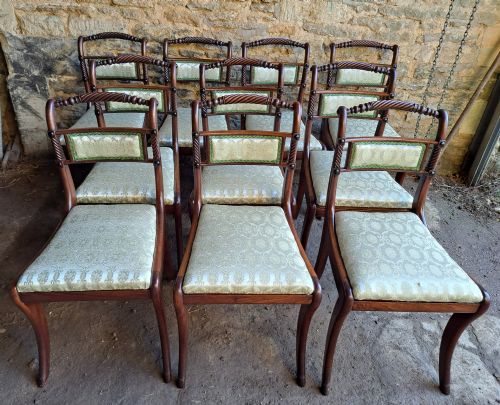
These regency carved rosewood table examples combine rich dark timber with confident carving, offering a refined centrepiece for a traditional drawing room.
Regency Carved Rosewood Table
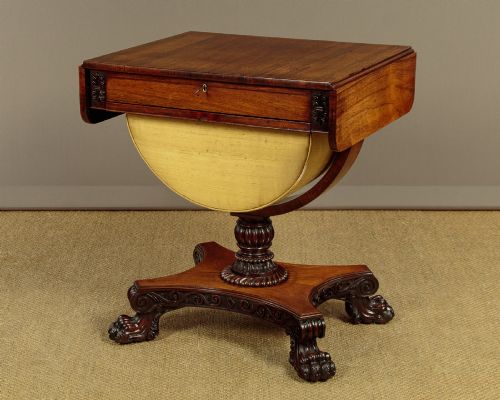
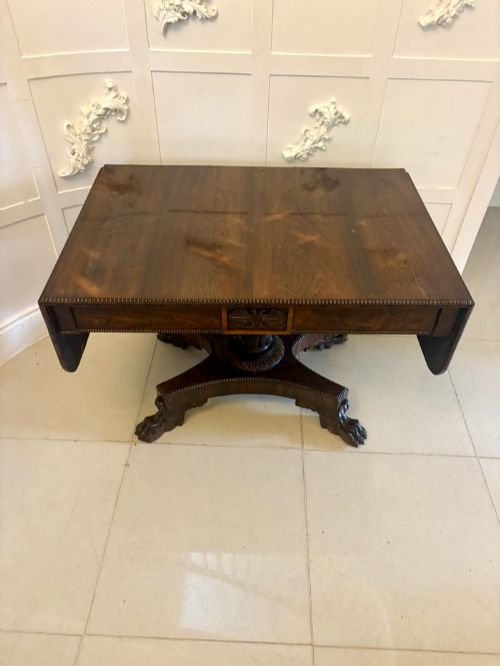
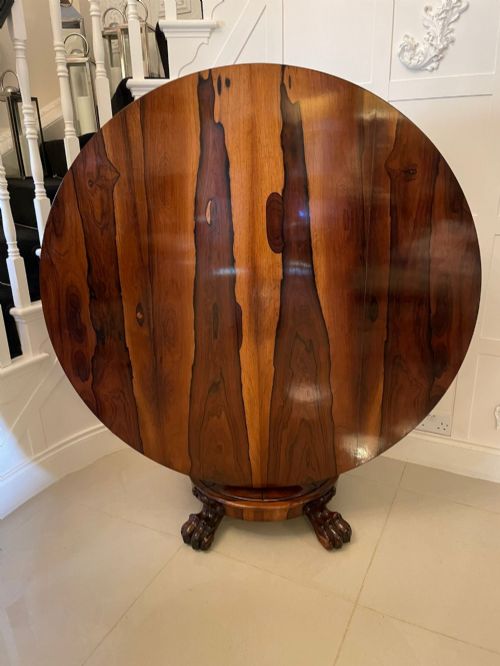
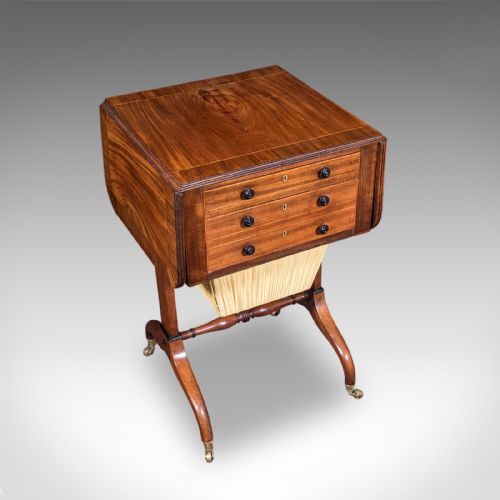
A regency carved rosewood table encompasses versatile forms ranging from fold-over card tables and breakfast dining pieces to library drum tables and small occasional stands.
Most items seen here date from the nineteenth century, bridging the Regency, George IV, and William IV periods with occasional early Victorian examples.
Makers utilised rich timber grains for practical domestic functions, including sewing, writing, and displaying decorative objects in formal reception rooms.
How They Were Made
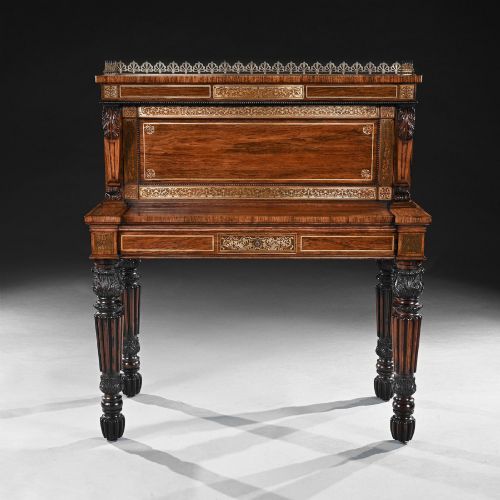
Cabinetmakers selected dense rosewood for its dark figured grain, often incorporating brass inlay, satinwood details, and parcel-gilt highlights into the construction.
Supports frequently featured carved lions paw feet, pillar pedestals with triform or tripod bases, and sunburst motifs executed by skilled hands.
Materials paired with rosewood across these examples include brass, satinwood, leather, mahogany, and figured marble.
What Varies in Quality
The standard of a regency carved rosewood table depends on the depth and crispness of the timber carving, particularly around the pedestals and feet.
Refinement shows in the precision of brass inlay work, the figuring of the rosewood veneers, and the structural integrity of tilt-top mechanisms or Pembroke leaves.
Gillows·Peters of Genoa
The Regency Carved Rosewood Table Glossary
- Card Table
- A hinged table designed for playing games, featuring a top that folds open to reveal a baize-lined playing surface.
- Breakfast Table
- A large circular or oval dining table, often with a tilt-top mechanism allowing it to be stored against a wall when not in use.
- Sofa Table
- A rectangular piece traditionally placed in front of a sofa, equipped with drop leaves at either end.
- Triform Base
- A three-sided pedestal base commonly supporting the central pillar of large nineteenth-century tables.
- Brass Inlay
- The technique of embedding thin strips or geometric brass motifs directly into the rosewood surface for decorative contrast.
Regency Carved Rosewood Table: Frequently Asked Questions
How were these tables used originally?
These pieces served multiple domestic functions in formal rooms, acting as desks for writing, stands for tea service, or surfaces for evening card games.
Many designs adapted to changing daily needs through folding tops, drop leaves, or tilt mechanisms that cleared floor space when entertaining.
How do I tell a Regency piece from a William IV one?
Regency designs tend to lean towards classical restraint with delicate proportions, subtle brass inlay, and slender tapered supports.
William IV pieces generally present heavier, more robust proportions with bolder pillar pedestals, deeper carved foliage, and substantial lion paw feet.
Can I use a breakfast table for daily dining?
A tilt-top breakfast table provides a sturdy surface for everyday meals while offering the flexibility to tip the top vertical for easy storage.
Care should be taken to protect the polished rosewood surface from heat and moisture using appropriate table mats.
What maintenance does rosewood require?
Rosewood benefits from regular dusting with a dry, soft cloth and occasional treatment with appropriate wax to nourish the timber grain.
Keeping the table away from direct sunlight and radiators prevents the wood from drying out and guards against veneer cracking.