
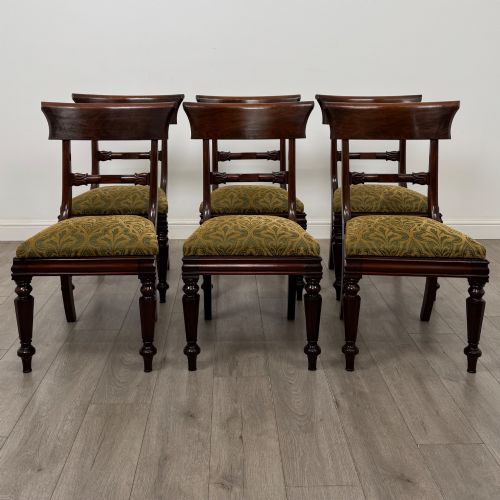
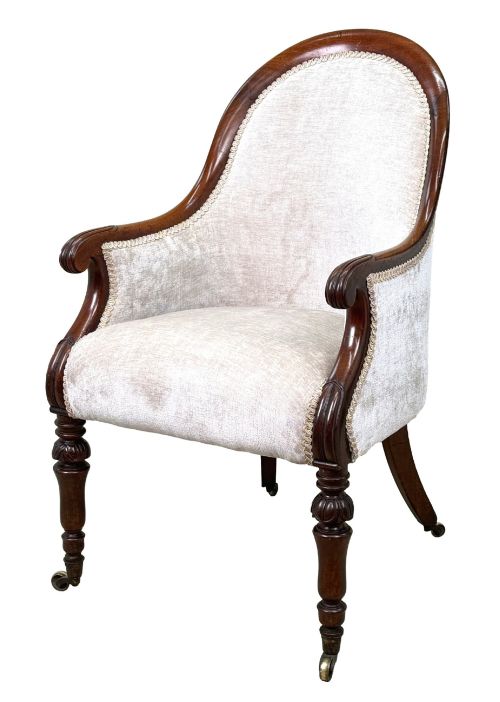
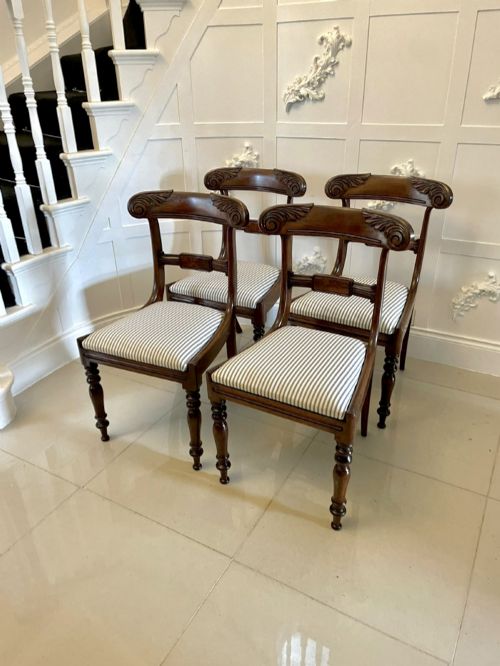
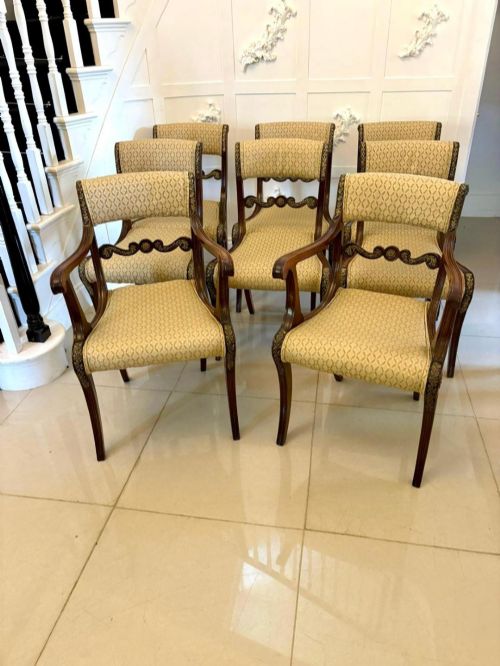
Regency Carved Mahogany Chair
A regency carved mahogany chair brings the sharp architectural lines and rich grain of the early nineteenth century directly into a modern room.
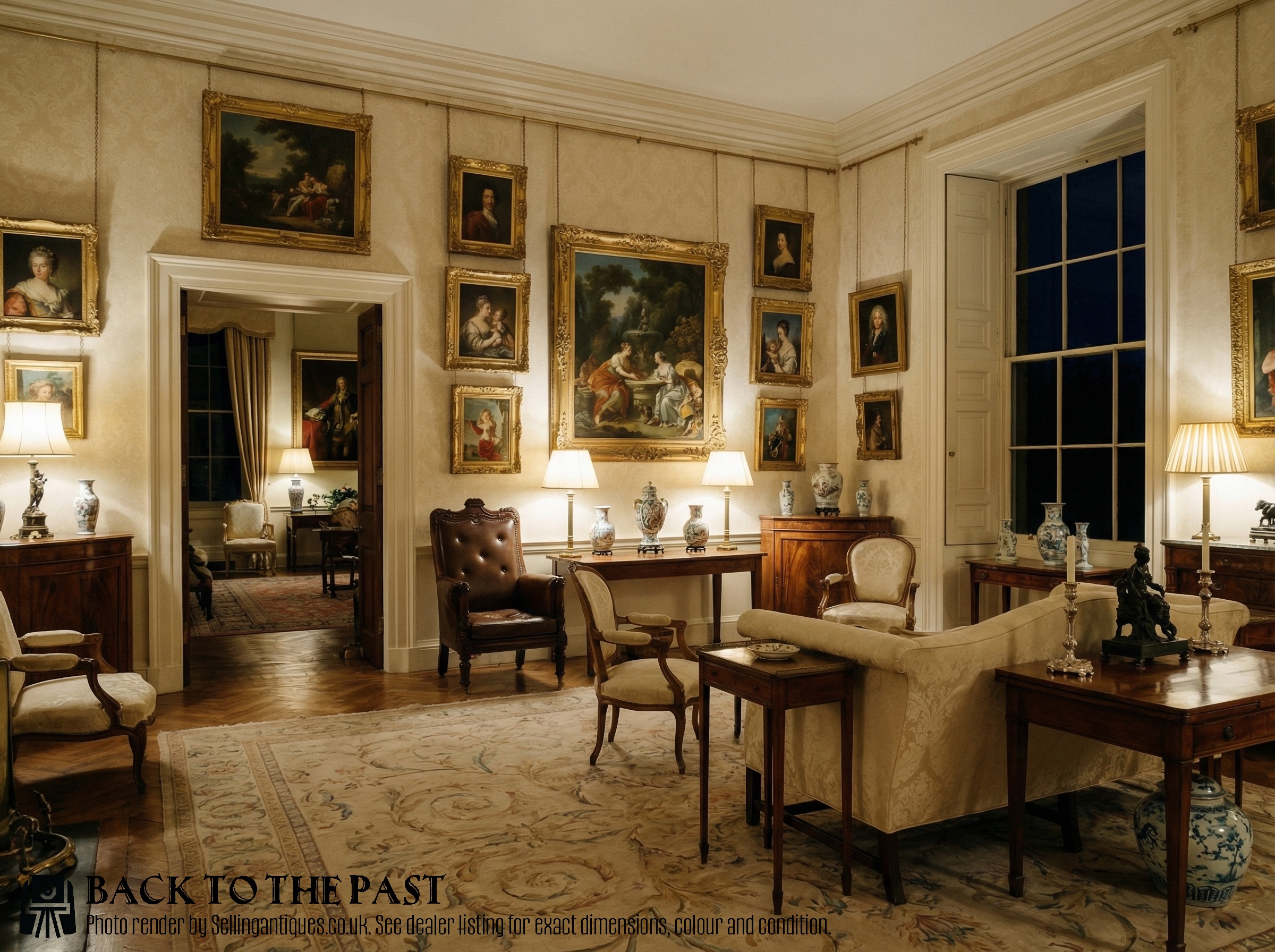
Regency Carved Mahogany Chair
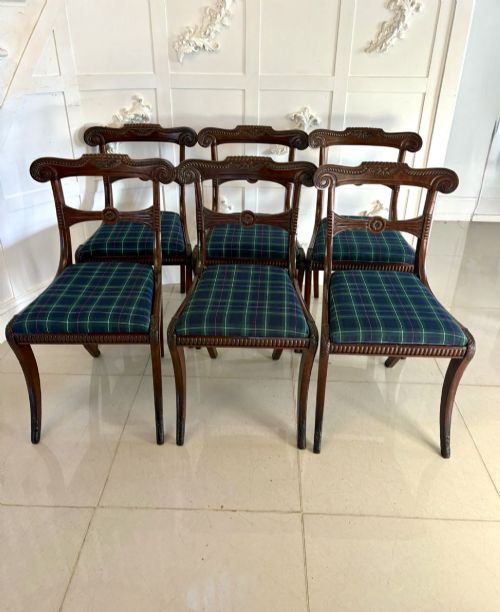
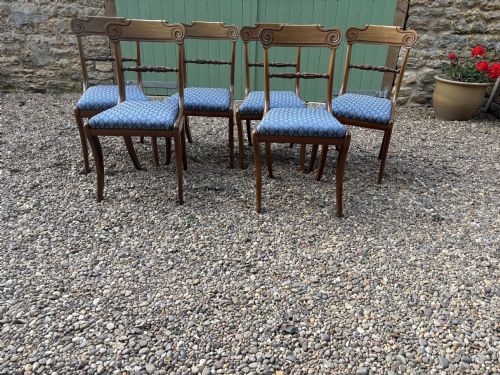
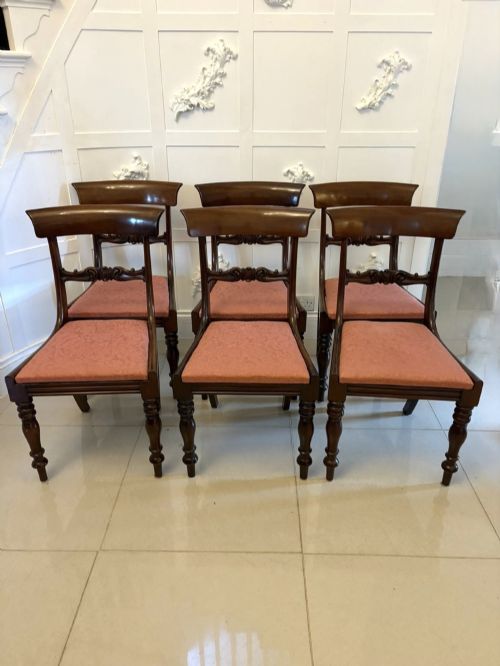
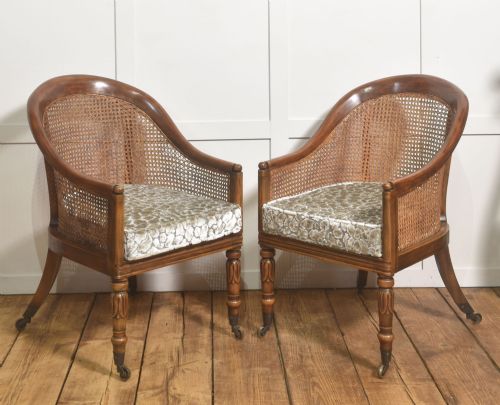
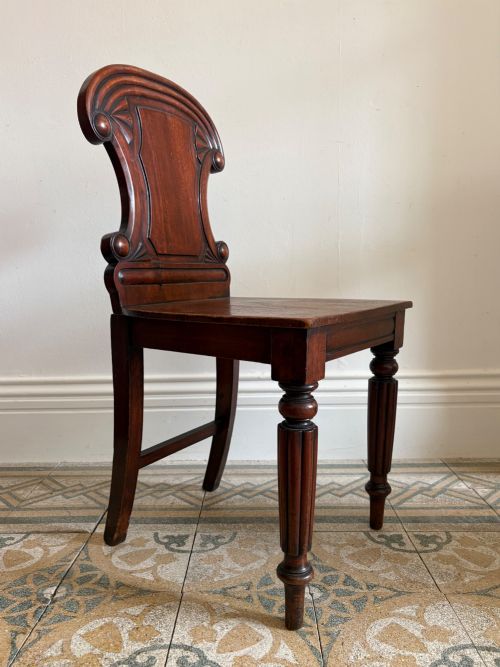
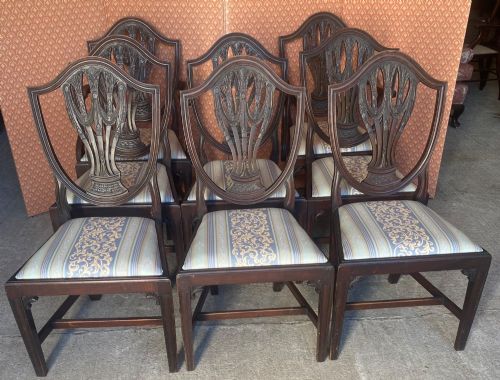
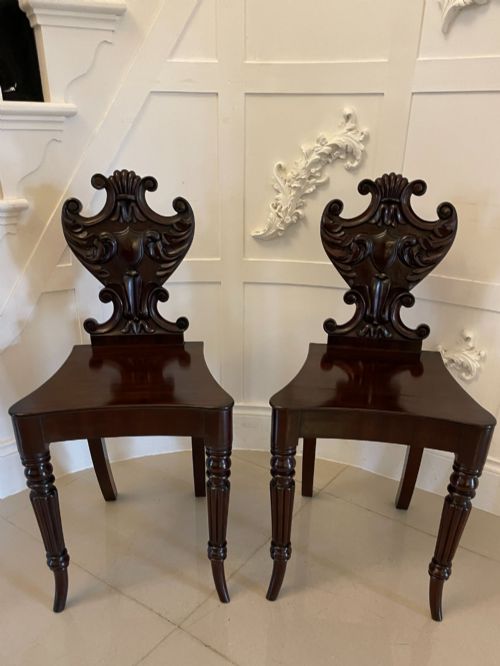
A regency carved mahogany chair spans the period from the late Georgian years through the reigns of George IV and William IV, encompassing styles from strict classical revival to early Victorian interpretations. You will find dining chairs, library armchairs, hall chairs, and desk chairs forming the core of the available selection.
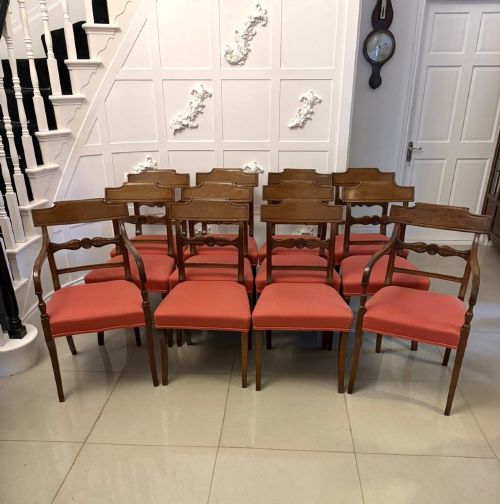
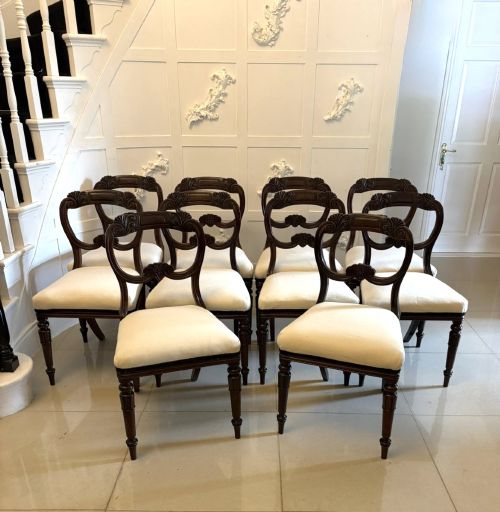
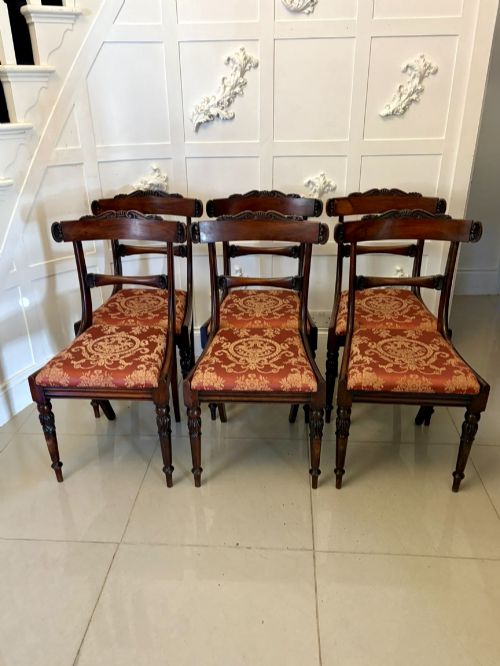
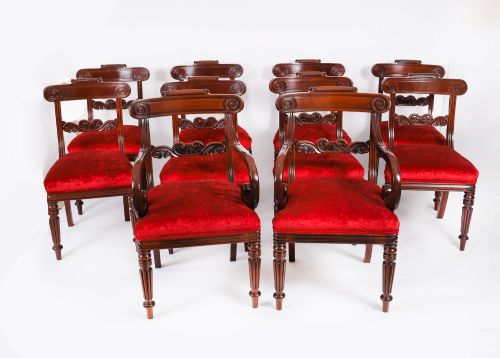
Dining chairs most frequently appear in sets ranging from pairs up to ten or twelve, while individual armchairs and side chairs populate the single seating options. The designs draw heavily on Grecian and classical motifs, expressed through carved details on the top rails and splats.
Makers and cabinet makers of the period utilised indigenous and Cuban mahogany to build pieces that range from modest hall seating to exhibition quality library chairs. Surviving examples often retain original upholstery fabrics, leather, or cane seats alongside brass inlay and brass details.
How They Were Made
Cabinet makers built these chairs using solid mahogany and figured mahogany veneers, shaped through traditional joinery and turning techniques. The structural frames relied on closely fitted joints, whilst decorative elements such as ropebacks, lyre backs, and bar backs were hand-carved directly into the dense timber.
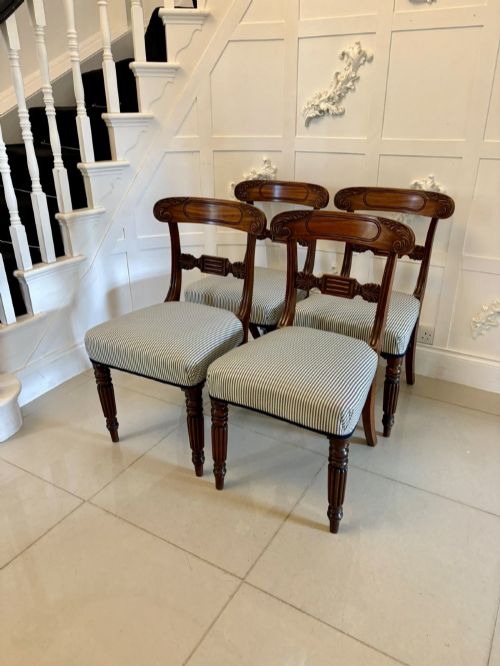
Surface ornamentation often incorporated brass inlay and brass mounts, alongside cane inserts for seats and carved details like ionic columns or scroll arms. Upholstered variants utilised fabric, velvet, or leather fixed over webbing and stuffing to provide a padded seat.
Listings feature mahogany, fabric, velvet, leather, and brass, spanning the Georgian, Regency, William IV, and Victorian periods.
What Varies In Quality
The choice of timber dictates the visual depth of a piece, with figured Cuban mahogany displaying superior grain movement compared to plain stock. The crispness and hand-carved detail of the back splats and crest rails distinguish standard workshop production from exhibition quality pieces.
Structural integrity depends on the original joinery and the survival of the timber without excessive intervention. Sets that remain together in their original state carry greater consistency than assembled groups matching later periods.
Gillows
The Regency Carved Mahogany Chair Glossary
- Mahogany
- A dense tropical timber valued for its rich reddish-brown colour and stable grain, widely utilised throughout the Georgian and Regency periods. Cabinet makers selected figured variants for prominent surfaces and chair backs.
- Sabre leg
- A curving, tapered chair leg that sweeps outward in the manner of a cavalry sabre, characteristic of Regency seating design. This form provides stable floor contact while maintaining a slender profile.
- Carver
- An armchair designed with elbow supports, traditionally placed at the head of a dining table or paired with matching side chairs. These pieces mirror the decorative scheme of the dining sets they accompany.
- Bar back
- A horizontal wooden rail across the upper back of a chair, often shaped or carved with central tablets. This form appears frequently on William IV dining chairs.
- Cane
- Split rattan woven into an open mesh pattern to form lightweight and resilient seat panels. This technique often appears on library armchairs and reception seats.
Regency Carved Mahogany Chair: Frequently Asked Questions
How do I identify a true Regency chair?
Authentic Regency chairs typically display classical architectural influences such as sabre legs, brass inlay, and carved Grecian motifs executed in solid mahogany or Cuban mahogany. Examining the joinery and timber grain helps confirm the period.
Makers of the era often drew inspiration from contemporary pattern books, resulting in distinctive forms like lyre backs and ropebacks that evolved from late Georgian styles into the William IV era.
Are large sets of dining chairs matching?
Large sets of eight or ten chairs frequently originate as assembled groups or may include later additions built in a matching Regency style during the Victorian period. Checking the timber grain and minor variations in the carving helps determine if the set started life together.
Individual carvers within a large set often feature arm supports that complement the side chairs while maintaining a unified aesthetic around the dining table.
How should I care for antique mahogany?
Mahogany responds best to stable indoor humidity and protection from direct sunlight, which can alter the rich brown tone of the timber over time. Regular dusting with a soft, dry cloth preserves the polished surface.
Avoid placing these chairs near direct heat sources to prevent the solid wood and veneer from drying out or splitting at the joints.
What is the difference between a side chair and a carver?
A side chair is built without armrests, designed to tuck neatly beneath a dining table or line a hallway wall. A carver includes arm supports and offers a wider seat intended for comfort.
Dining arrangements historically combined a pair of carvers at the table ends with a set of side chairs along the sides.