
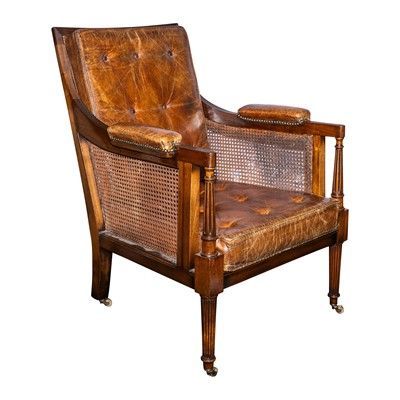


Regency Caned Side Chairs
Regency caned side chairs are elegant seating pieces defined by woven cane seats and classical lines, sought after for bringing refined period character to a room.
How they were made
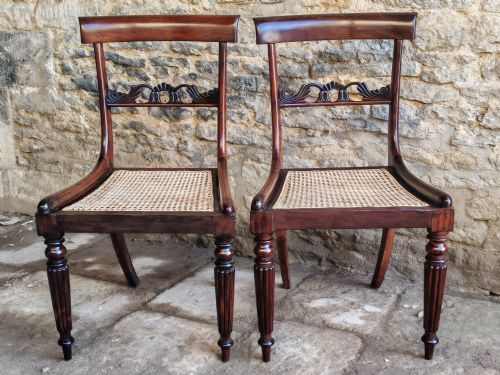
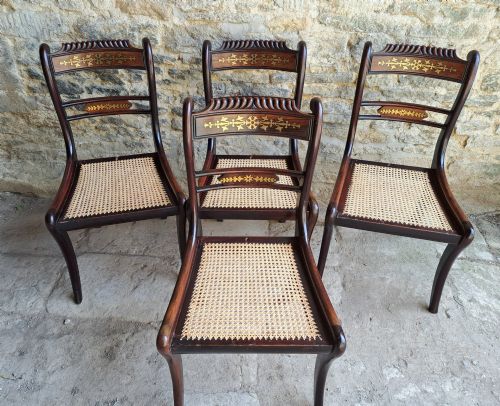
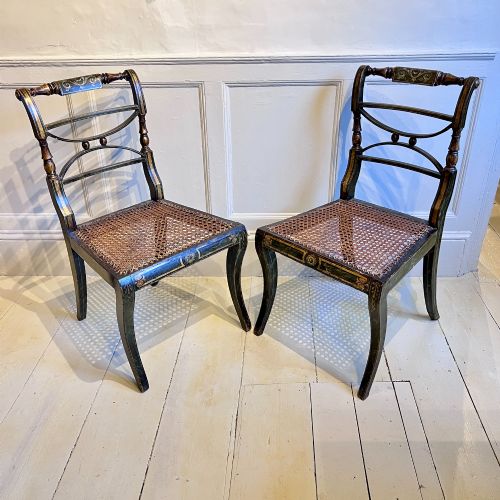
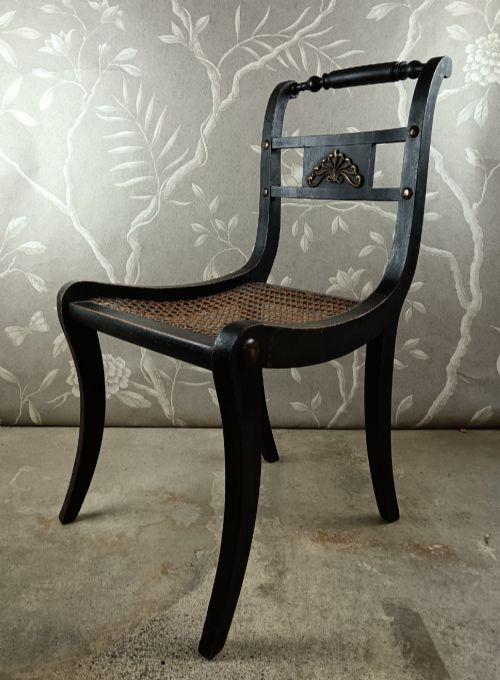
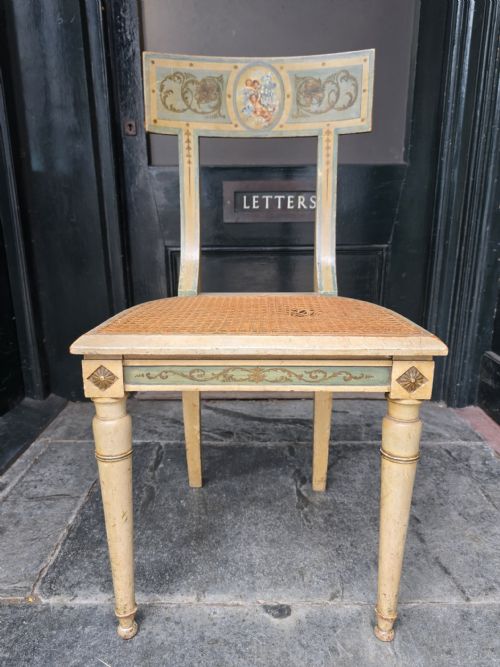
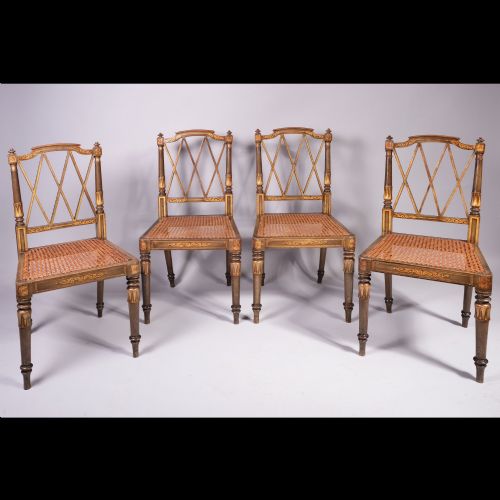
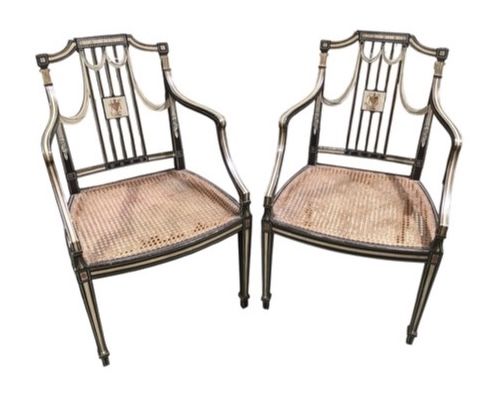
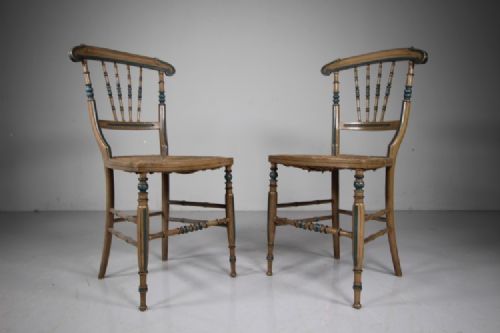
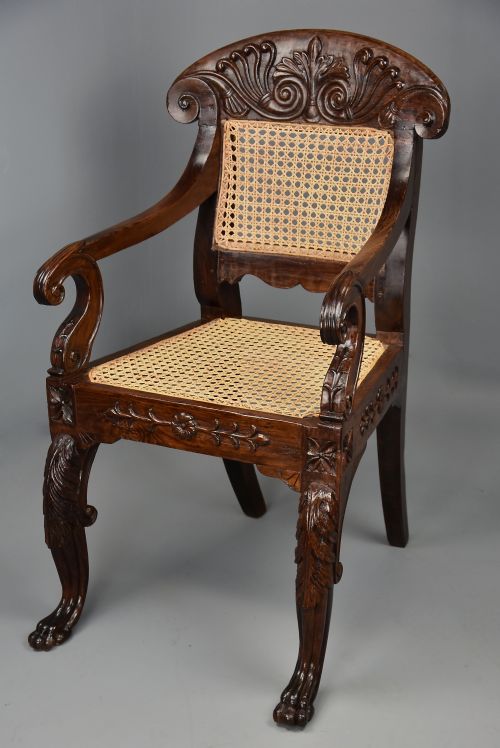
Cabinetmakers utilised dense timbers such as mahogany and rosewood alongside native woods that were subsequently painted, ebonised or finished to simulate exotic graining. Artisans applied brass inlay and gilding to enhance the classical profiles derived from antique prototypes.
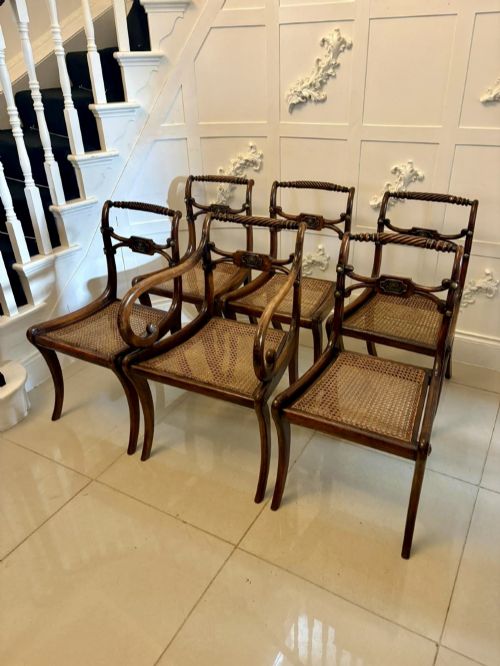
Seats were formed using split cane woven tightly through holes drilled around the perimeter of the seat frame to provide a resilient and breathable surface. Turned and carved elements, including sabre legs and rope twist crossbars, required precise carpentry joinery to withstand daily use.
What varies in quality
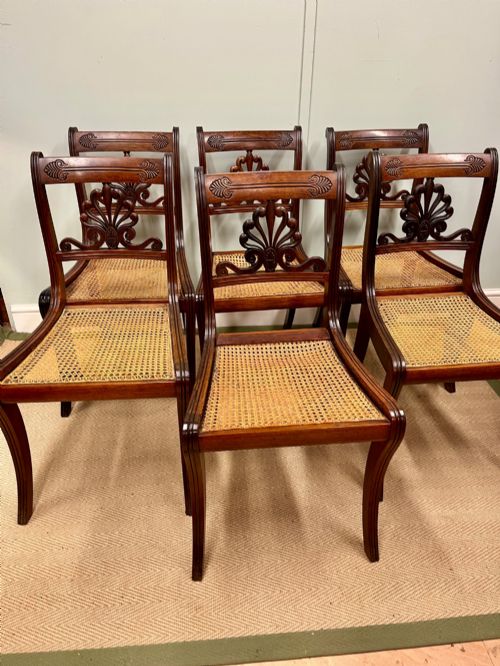
The refinement of the carving on back rails and the precision of brass inlay distinguish superior examples from standard production. Execution of the painted or ebonised decoration, particularly where parcel gilding is involved, marks the tier of the maker's workshop.
The integrity of the timber frame and the tightness of the original or period cane work determine the preservation standard. Chairs retaining their original painted surfaces or distinct maker attributions command greater interest among collectors.
Listings feature items spanning the Regency period, the wider nineteenth century, and twentieth-century revivals in mahogany, rosewood and painted wood.
Gillows
The Regency Caned Side Chairs Glossary
- Cane
- Woven material made from the outer skin of rattan palms, utilised to create flexible and supportive chair seats. This technique allows for lightweight construction without sacrificing durability.
- Sabre leg
- A concave sweeping leg that tapers towards the foot, characteristic of classical furniture design. It provides stability while echoing the curved forms of ancient Greek klismos chairs.
- Bergère
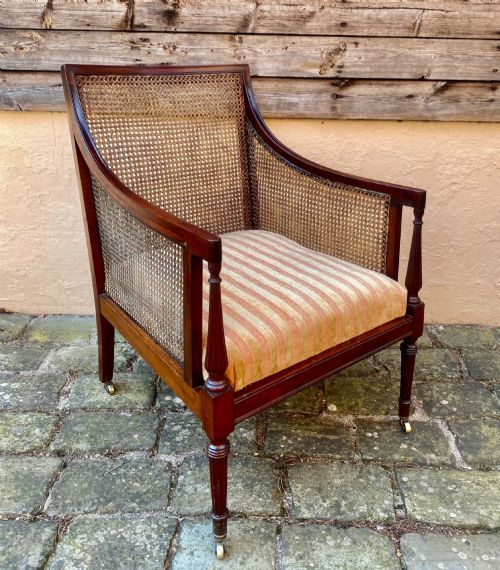
- An enclosed upholstered armchair with solid sides, frequently fitted with a cane panel insert. This form offers deeper comfort compared to open side chairs.
- Ebonised
- Wood treated with a dark stain or finish to imitate ebony. This treatment was popular during the Regency period to contrast with gilt highlights.
- Klismos
- An ancient Greek chair design featuring curved backboards and outward-curving legs, which influenced nineteenth-century revival styles. The silhouette prioritises graceful proportions and ergonomic comfort.
Regency Caned Side Chairs: Frequently Asked Questions
How do I identify a genuine period chair?
Examine the timber construction, joinery methods and the wear patterns on the cane seat. Period examples exhibit traditional hand-cut joints and patination consistent with age.
Compare the proportions and decorative motifs, such as sabre legs or brass inlay, against documented pieces from the early nineteenth century.
Can these chairs be used daily?
Most sturdy examples handle regular seating, though older cane requires mindful treatment to prevent damage. Avoid placing heavy loads on delicate occasional chairs.
Ensure the frame remains tight at the joints before placing them into heavy rotation around a dining table.
What is the difference between side chairs and armchairs?
Side chairs are built without armrests, designed to tuck neatly around a dining table or sit against a wall. Armchairs provide structural arm supports and are typically wider.
Matching sets often combine a pair of armchairs with several side chairs for the heads of the table.
How should I care for cane seats?
Keep cane away from direct heat sources and harsh sunlight to prevent the natural material from drying out and snapping. Light dusting and occasional damp wiping maintain its flexibility.
Professional re-caning restores structural integrity if the original weave breaks down over decades of use.
What does simulated rosewood mean?
Simulated rosewood is a decorative paint finish applied to a secondary timber to replicate the rich grain patterns of genuine rosewood. Artisans used this technique to achieve a luxurious appearance at a lower cost.
Inspect the surface closely under good light to trace the brushwork used by nineteenth-century decorators.