
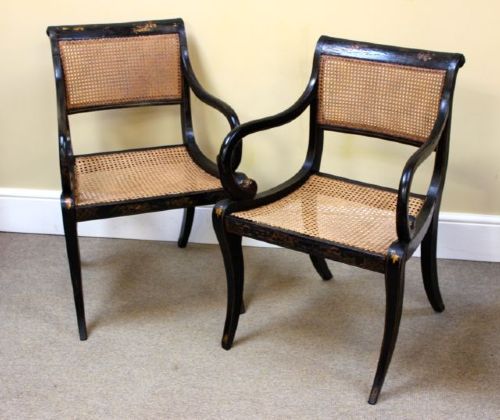
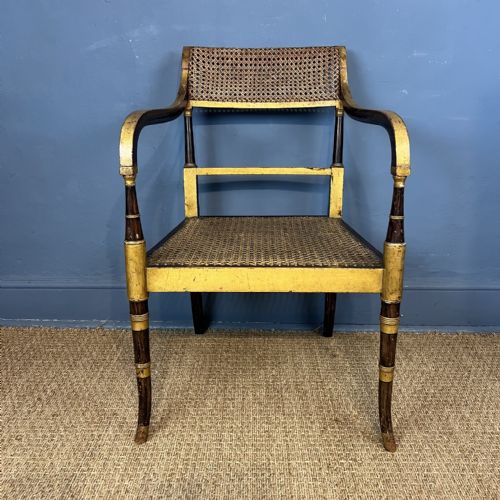
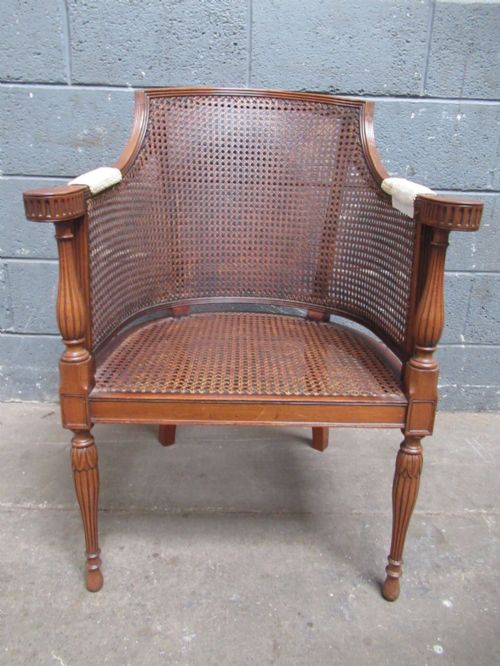
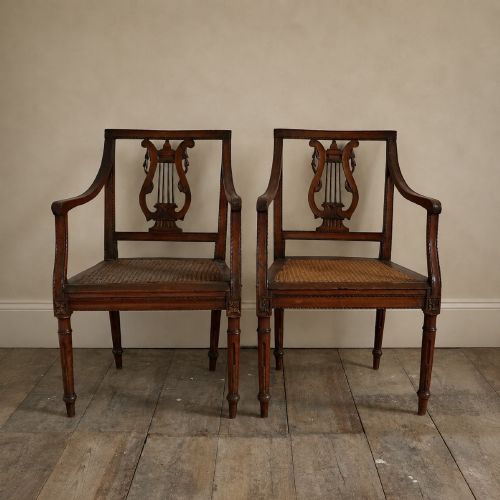

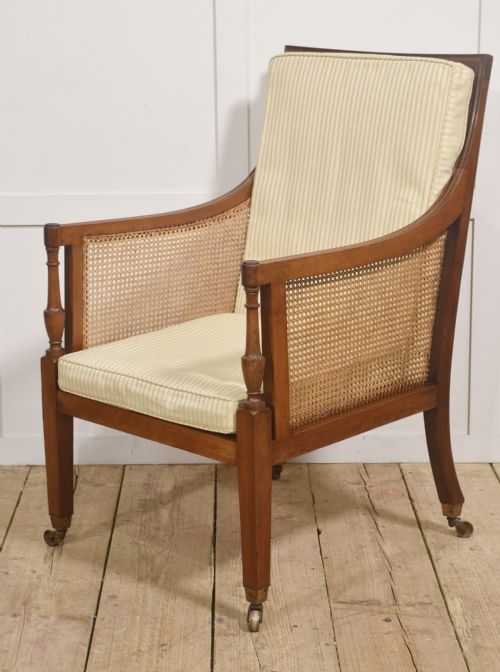


Regency Caned Armchair
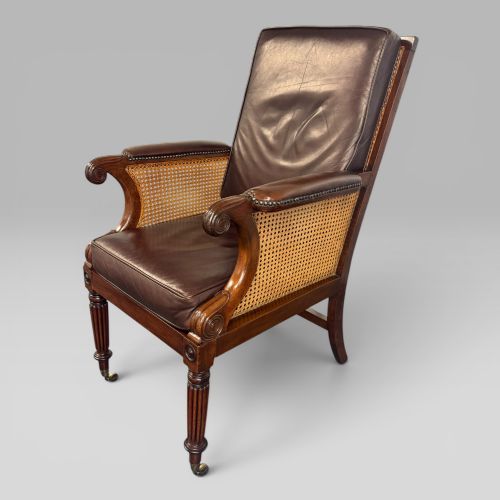
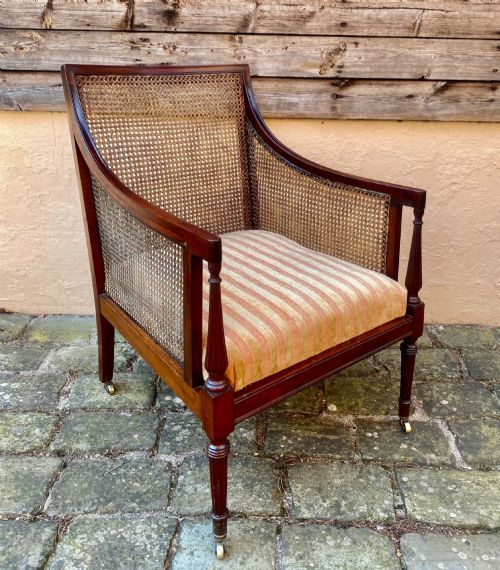
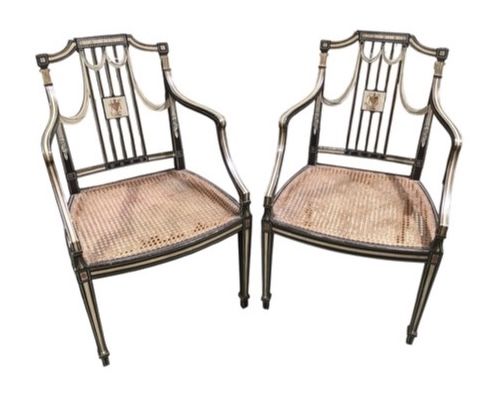
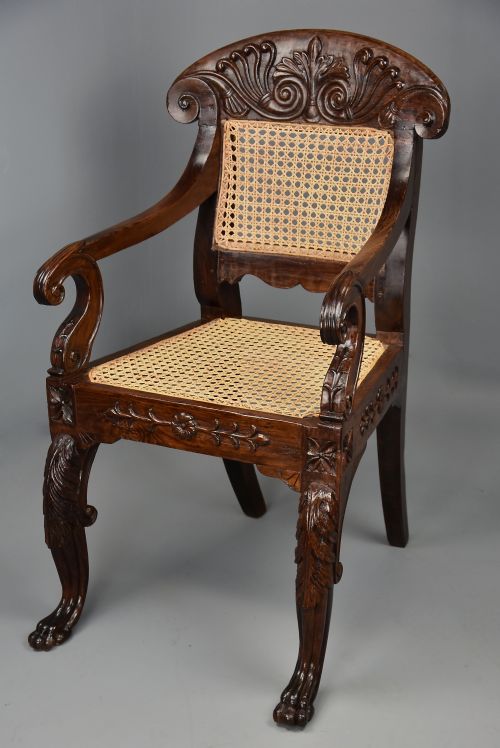
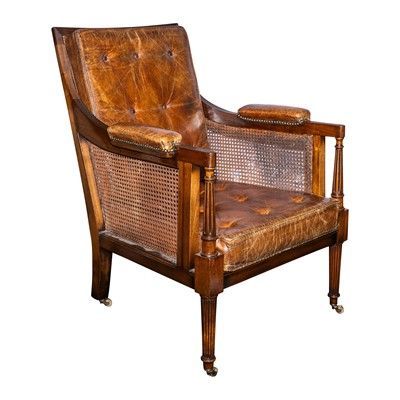
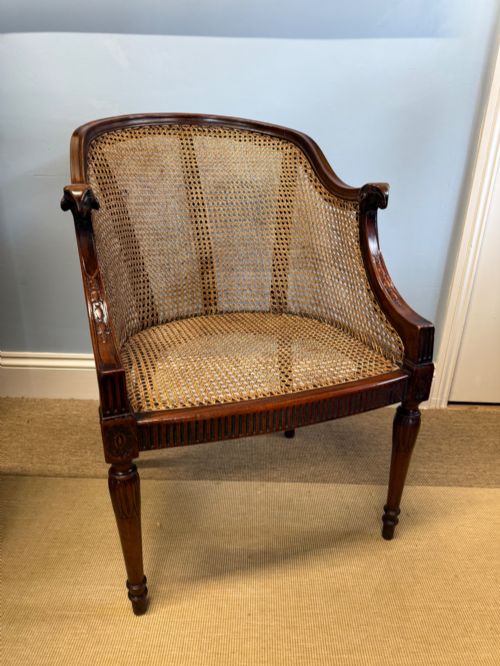
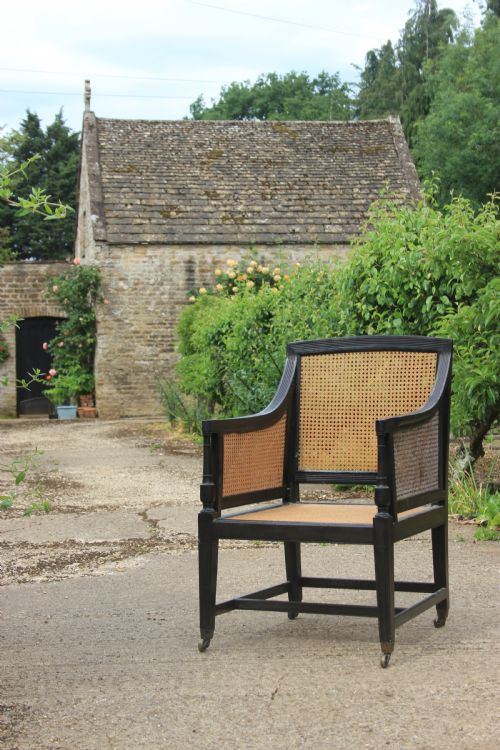
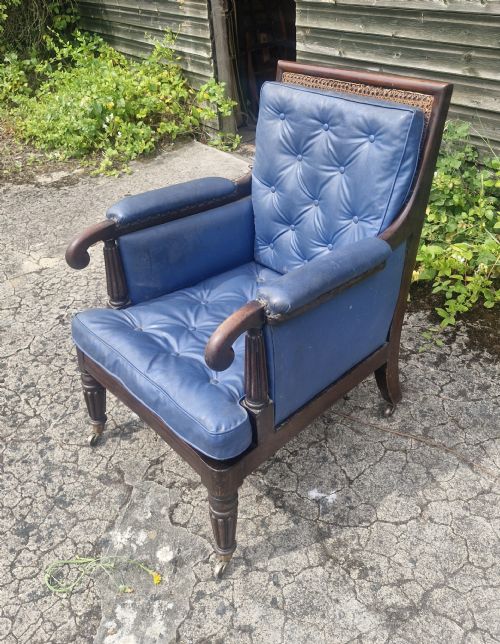
These regency caned armchair examples combine woven cane with rich timbers for a seat designed for the library and drawing room.
Regency Caned Armchair
A regency caned armchair brings together the seating forms developed during the early nineteenth century alongside later revivals spanning the nineteenth and twentieth centuries. Buyers encounter library armchairs, bergères, and elbow chairs designed for reading rooms and formal reception spaces.
The primary forms utilise cane for seats and backs, often paired with mahogany, rosewood, ebony, or painted finishes. Pieces range from genuine Regency period items to William IV examples, Edwardian revivals, and later twentieth-century interpretations.
Makers produced standard library chairs alongside specialised metamorphic forms that convert into steps, as well as child-sized armchairs. Anglo-Indian variants incorporate exotic timbers and distinctive carving traditions influenced by British design.
How they were made
Cabinetmakers constructed the frames using dense hardwoods including mahogany, padouk, and ebony, alongside decorative finishes such as parcel gilt, ebonising, and faux rosewood graining. Frames incorporate turned legs, carved arms, and lyre-shaped splats.
The characteristic caning involves hand-weaving natural cane through holes drilled around the seat or back frame to create a resilient, flexible surface. Workshops also integrated brass fittings, leather upholstery pads, and painted decoration.
Regency Caned Armchair Retail Price Guide 2026
Typical asking prices for regency caned armchair among the pieces listed under this phrase on Sellingantiques today, from the lower quarter to the upper quarter. They describe what is for sale here now, not the wider market.
Listings feature mahogany, ebony, padouk, and rosewood timbers paired with natural rattan cane and leather upholstery.
What varies in quality
Quality rests upon the crispness of the timber carving, the selection of figured veneers, and the integrity of the structural joinery. Finer examples display precise turning, well-executed gilt or painted highlights, and substantial timber scantlings rather than lighter revival construction.
The execution of the cane work and the retention of original surface finishes determine the character of each piece. Library chairs with complex mechanics, such as folding steps or adjustable reading actions, demonstrate higher levels of period craftsmanship.
Gillows
The Regency Caned Armchair Glossary
- Bergère
- An enclosed upholstered armchair featuring cane panels on the back and sides. These seats frequently include loose leather or fabric cushions.
- Caning
- A method of weaving rattan peel through frame perforations to form a supportive mesh seat or back. This technique provides lightweight strength.
- Ebonised
- Timber treated with a dark stain or finish to imitate solid ebony. Cabinetmakers utilised this treatment to create stark contrast against gilt details.
- Metamorphic
- Furniture designed to transform into an alternative object, such as a library armchair converting into a set of steps. These pieces combine utility with ingenious mechanics.
- Lyre Back
- A chair back shaped in the form of an ancient Greek lyre instrument. This motif appears frequently in Regency design.
Regency Caned Armchair: Frequently Asked Questions
What is a regency caned armchair?
A regency caned armchair is a seated furniture form featuring a woven cane back or seat, originating during the early nineteenth century or produced in later revival styles. These chairs were intended for reading, writing, and relaxing in libraries and drawing rooms.
They combine structural hardwood frames with flexible cane panels that offer cool, resilient support. Workshops produced them in various timber types, from native mahogany to exotic imported ebony and padouk.
How do I spot a true period piece?
Identifying a true period example involves examining the timber ageing, the construction methods of the frame, and the type of cane work used. Nineteenth-century pieces display hand-woven cane and timber patination consistent with age.
Revival pieces from the Edwardian or later eras often reveal machine-drilled holes or standardised turning that differs from Regency workshop production. Comparing timber density and joinery style helps clarify the period of manufacture.
How were these chairs used historically?
Historically, these chairs served primarily in libraries, studies, and drawing rooms where occupants spent extended periods reading or conversing. The open cane work provided ventilation and comfort compared to solid wood seats.
Many library bergères were paired with writing desks or positioned near bookshelves for easy access to volumes. Some specialised versions included metamorphic steps for reaching high shelves.
How do I care for antique cane?
Antique cane requires stable humidity and gentle cleaning to prevent the natural fibres from drying out and snapping. Dusting with a soft brush and occasionally dampening the underside with a clean sponge maintains flexibility.
Avoiding direct heat sources and heavy point loads preserves the woven mesh over time. When cushions are included, they distribute weight evenly across the frame.