
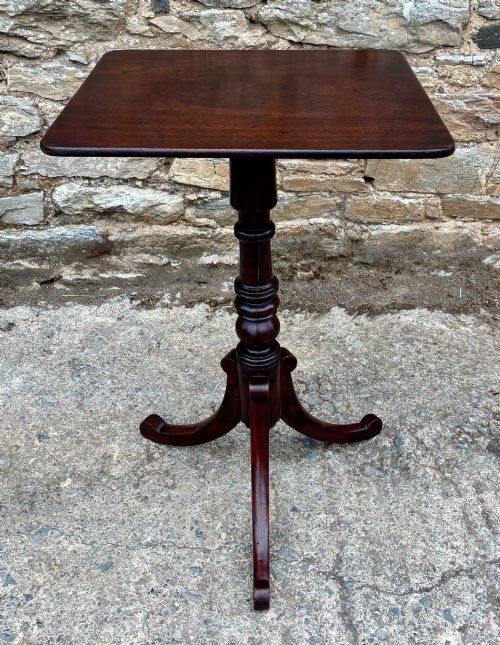
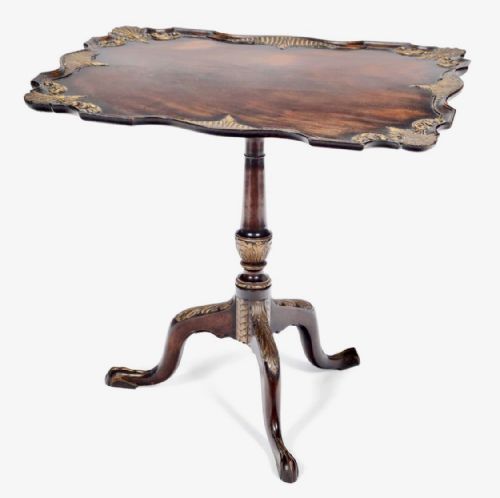

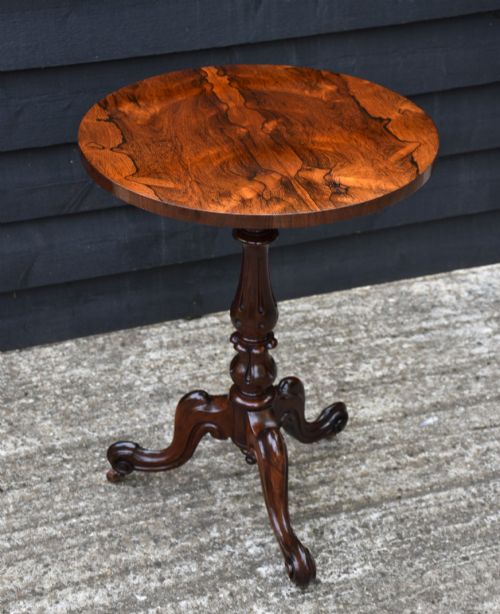
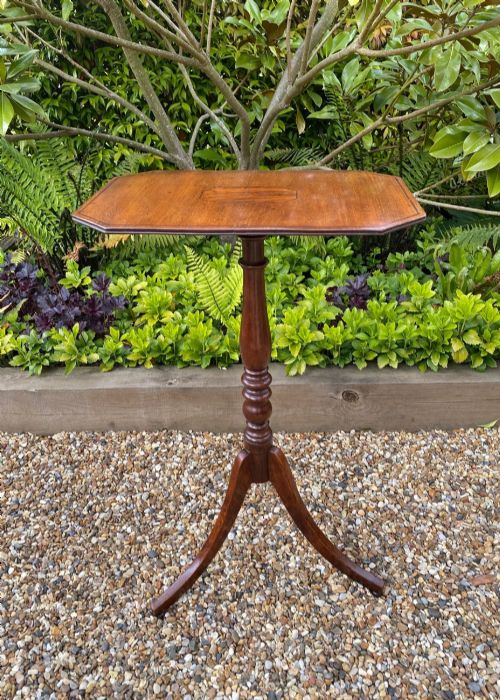
Regency Candle Table
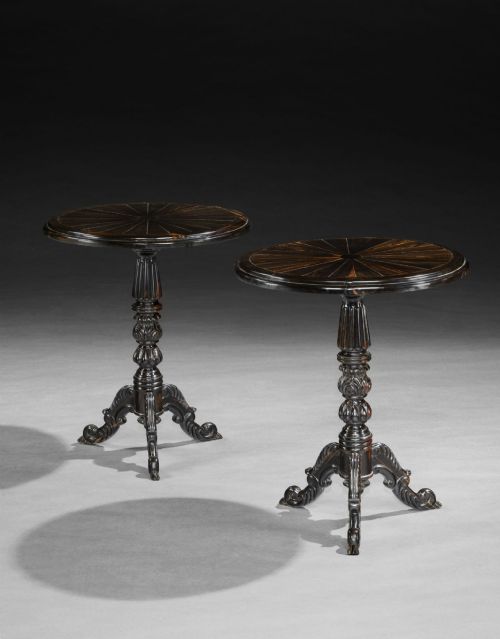
These pieces known as a regency candle table offer compact surfaces designed to hold a light source beside a chair or bed.
Regency Candle Table
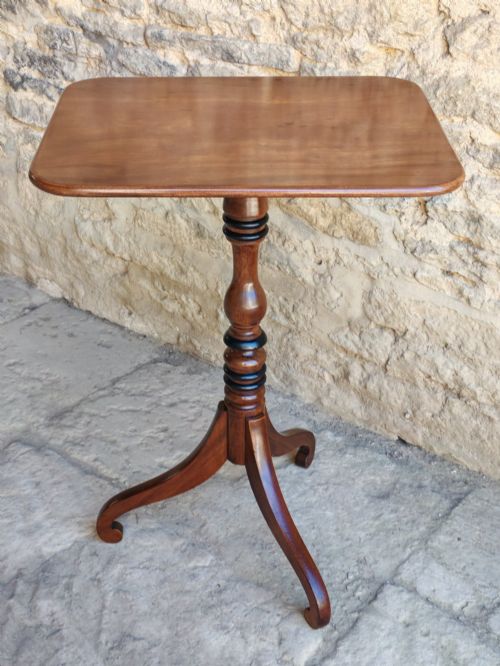
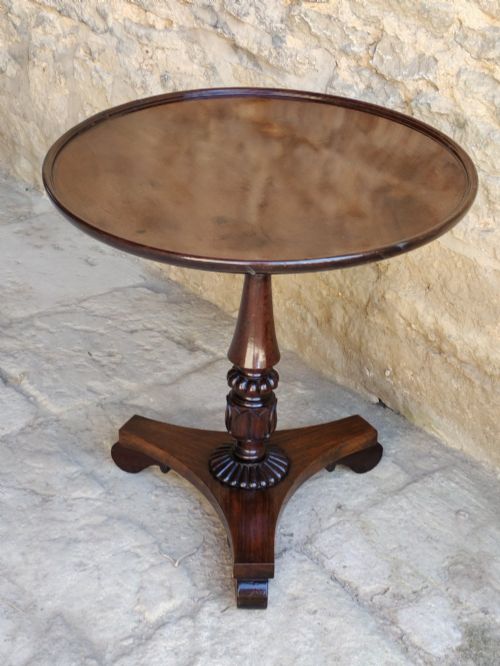
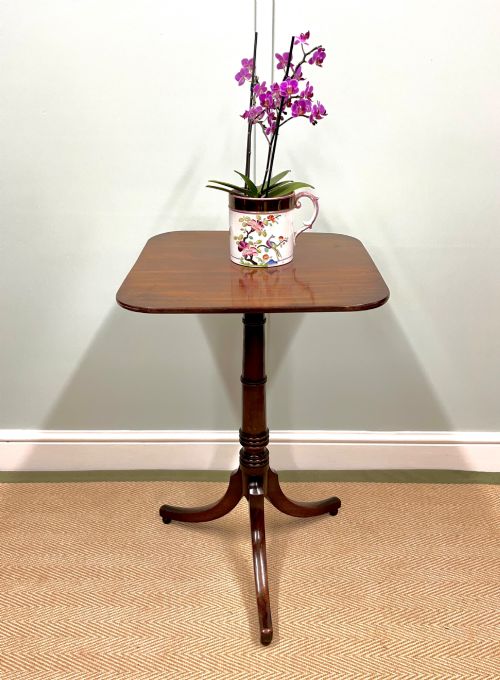
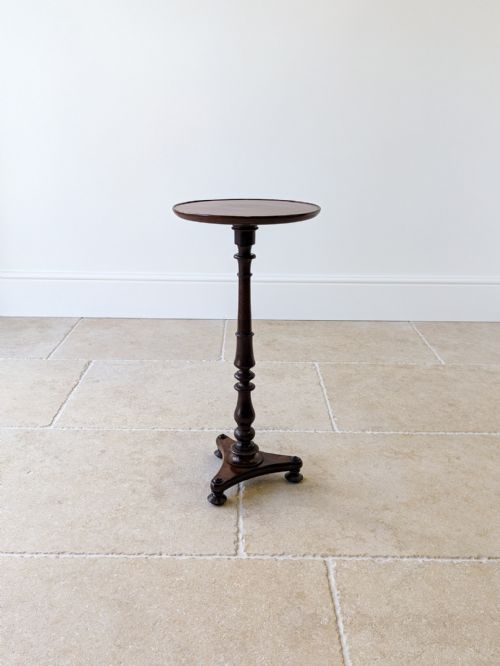
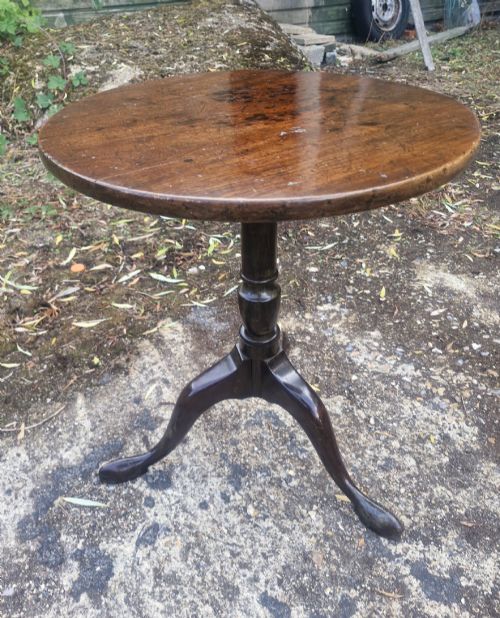
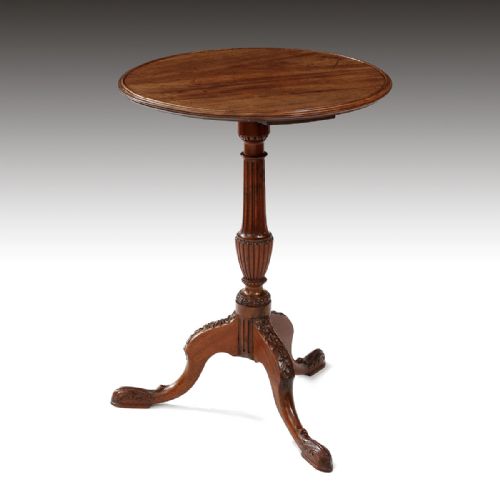
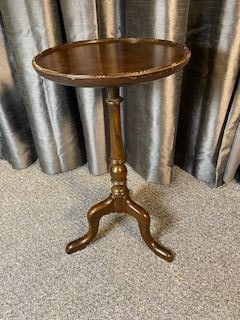
When you search for a regency candle table, you encounter small occasional stands designed to hold illumination alongside seating during the Georgian and nineteenth-century periods. These pieces appear primarily as tripod tables, wine tables, and side tables constructed for domestic interiors.
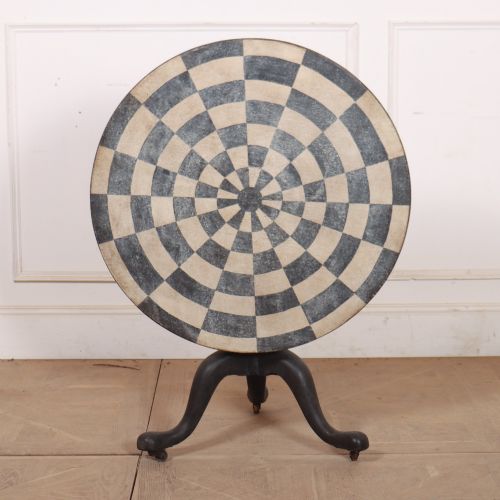
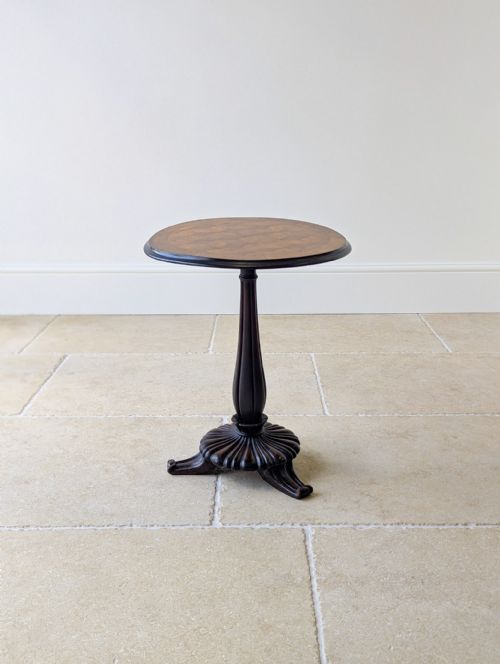
The most common examples on this page are mahogany and rosewood tripod tables featuring tilt-top mechanisms or fixed tops. Makers often produced them with pedestal stems supported by three curved legs for stability on uneven floors.
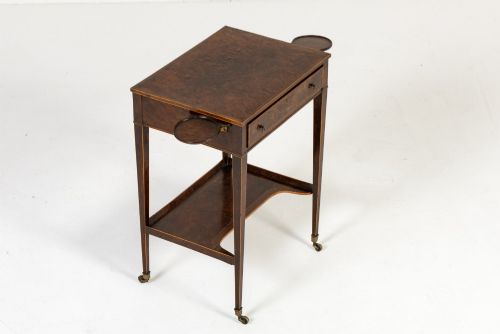
Beyond standard timber forms, the selection includes variants with boxwood inlay, penwork decoration, or specific wine table configurations. Occasional items incorporate brass fittings or telescopic adjustments for height.
How they were made
Cabinetmakers utilised dense hardwoods like mahogany, rosewood, and fruitwood, turning central pedestals on lathes and shaping legs by hand. Tops were frequently fashioned from single boards or matched veneers laid over secondary timbers.
Joinery relied on sturdy tenons and dovetails, paired with iron or brass tilt-top catches that allowed the table surface to fold flat when not in use. Decorative finishes involved French polishing or applied details such as parcel gilding and wood inlay.
What varies in quality
The calibre of a piece depends on the selection of timber grain, particularly figured mahogany or burr veneers, and the crispness of turned or carved elements on the pedestal base. Superior examples display balanced proportions where the weight of the top aligns harmoniously with the span of the legs.
Craftsmanship shows in the seamless operation of tilt-top mechanisms and the precision of inlaid boxwood lines or penwork decoration. Lesser items exhibit crude repairs, replaced hardware, or timber shrinkage that compromises the stability of the central column.
Gillow·Pierre Philippe Thomire
The Regency Candle Table Glossary
- Tilt top
- A tabletop mounted on a hinge mechanism that allows the surface to pivot into a vertical position for storage against a wall.
- Tripod table
- A small stand supported by a central pillar resting on three spreading legs, common in the eighteenth and nineteenth centuries.
- Wine table
- A compact occasional table with a dishtop or flat surface originally intended to hold glasses and bottles during social evenings.
- Occasional table
- A movable piece of furniture designed for general use in a reception room rather than a specific task.
- Inlay
- A decorative technique where contrasting woods or materials are set flush into the surface of the primary timber.
Regency Candle Table: Frequently Asked Questions
What is a regency candle table used for?
These small stands were originally positioned beside seating to hold candlesticks, lamps, or small refreshments within easy reach during the evening.
Their compact footprints made them versatile additions to drawing rooms and parlours where space was at a premium.
Are these tables made of solid mahogany?
Many examples utilise solid timbers for turned pedestals and legs, while tabletops frequently employ mahogany or rosewood veneers laid over stable secondary woods.
This method prevented warping and allowed cabinetmakers to showcase highly figured grain patterns on the main surface.
How do I tell a wine table from a candle stand?
Wine tables often feature raised dishtops designed to keep bottles and glasses secure, whereas candle stands generally present flat surfaces suited for lighting apparatus.
Both forms share similar tripod proportions, making their exact historical function depend largely on the rim profile of the top.