


Regency Campaign Desk
A regency campaign desk offers portable utility and handsome timber, combining clever folding mechanics with fine cabinet-making for the traveller and collector.
Regency Campaign Desk
When you search for a regency campaign desk, you encounter a specialised form of portable writing furniture designed for officers and travellers. The pieces on this page span writing slopes, folding desks, and secretaire chests from the Georgian and Regency periods.
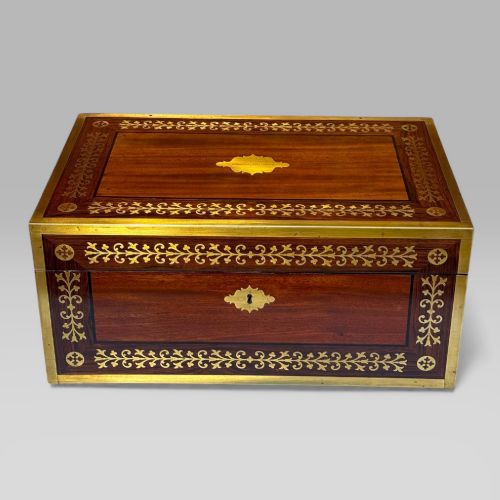
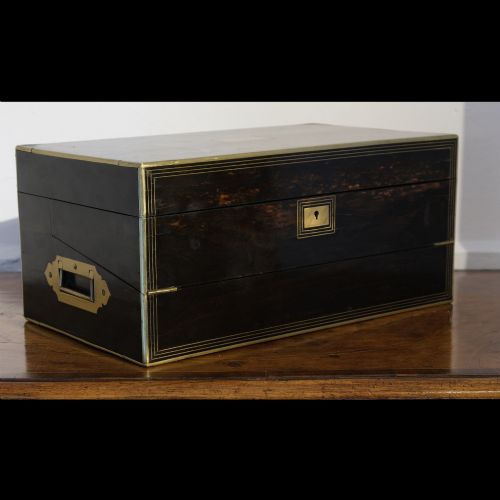
You are most likely to meet mahogany or rosewood writing boxes bound in brass, alongside occasional camphorwood chests and folding tables. These items were built to dismantle or fold compactly for transport on military campaigns and long journeys.
The selection ranges from compact table-top boxes to substantial desks on stands and metamorphic pieces. Each version reflects the rigorous space-saving demands of nineteenth-century military life.
How they were made
Cabinet-makers constructed these pieces using dense hardwoods like mahogany, rosewood, walnut, and coromandel to withstand the rigours of travel. Camphorwood also appears, chosen for its insect-repellent properties in tropical climates.
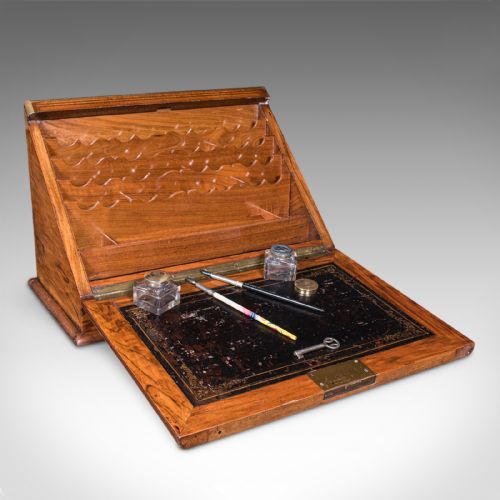
Brass corners, straps, and flush-fitting pull handles were countersunk into the timber to protect the edges from knocks during transit. Secret drawers, internal stationery compartments, and folding mechanisms required precise joinery to operate smoothly within restricted dimensions.
Listings feature eighteenth and nineteenth-century pieces in mahogany, rosewood, walnut, coromandel, and camphorwood, spanning forms from writing slopes to folding campaign tables.
What varies in quality
The distinction between ordinary utility items and superior examples lies in the execution of the brass binding and the selection of figured timber. Finely grained rosewood veneer, intricate brass inlay, and well-executed secret compartments elevate a piece significantly.
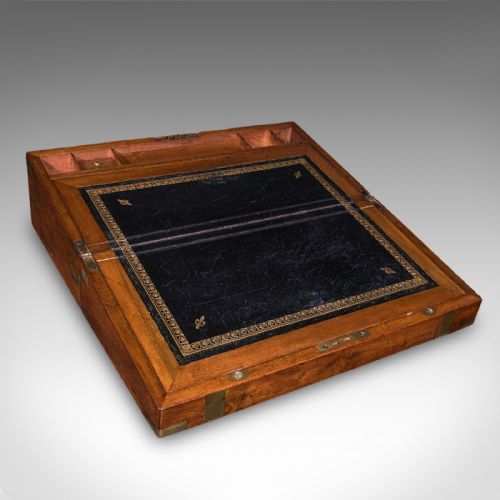
The integrity of the folding mechanisms and the original condition of fitted leather writing surfaces also determine the standing of the piece. Superior examples retain their original internal fittings, locks, and structural rigidity after centuries of movement.
The Regency Campaign Desk Glossary
- Writing slope
- A portable box with an angled writing surface that opens to reveal storage compartments and inkwells. These were essential writing tools for officers on the move.
- Secretaire chest
- A chest of drawers featuring a fitted top drawer that drops down to form a writing desk. It conceals pigeonholes and small drawers inside.
- Campaign box
- A sturdy timber box reinforced with metal mounts designed to protect documents and valuables during transit. They often feature flush handles for tight packing.
- Campaign table
- A folding or dismantling table engineered for military use in the field. These pieces pack flat into minimal space.
- Metamorphic furniture
- Pieces designed to transform from one function to another, such as a desk converting into a dining or dressing table. Such clever engineering suited limited quarters.
Regency Campaign Desk: Frequently Asked Questions
What is a regency campaign desk?
A regency campaign desk is a portable writing piece made to fold, dismantle, or travel easily during the nineteenth century. These items include writing slopes, folding desks, and fitted chests.
They combine robust timber construction with protective brass hardware designed for officers on military campaigns or long voyages.
How were campaign desks used?
Owners used them as portable offices while travelling, setting them on tables or folding stands to write correspondence and store documents. The fitted interiors kept ink, paper, and seals secure.
Many examples feature secret compartments for sensitive papers and valuables, reflecting the practical needs of military life.
How do I identify a period piece?
Look for period timbers such as mahogany, rosewood, and camphorwood combined with hand-cut dovetails and heavy brass mounts. Construction details like hand-beveled glass and traditional locking mechanisms indicate nineteenth-century origin.
Study the style markers of the Regency and Georgian eras, including brass inlay and fitted interior stationery cases.
How do I care for campaign furniture?
Keep these pieces away from direct sunlight and dramatic humidity changes to protect the timber veneers and leather surfaces. Regular dusting and occasional wax application preserve the polish.
Handle folding mechanisms and brass hardware with care to maintain their original operational integrity.