
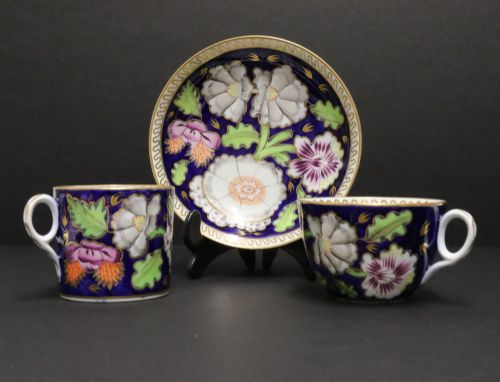
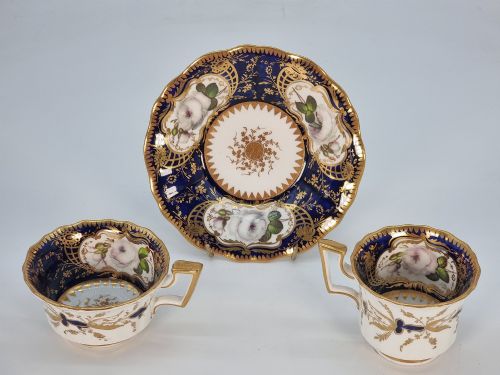
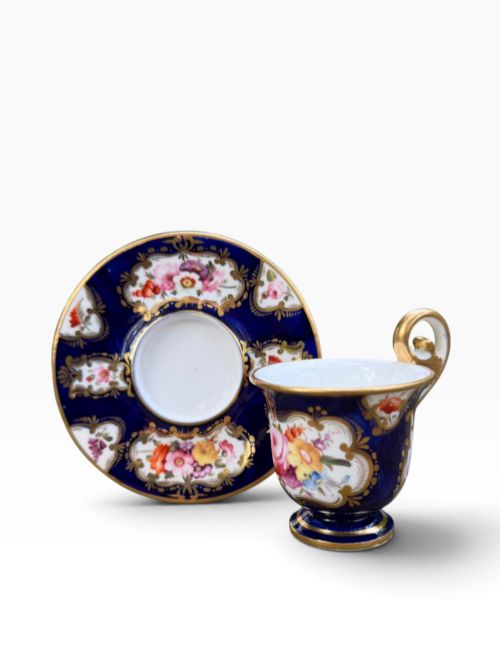
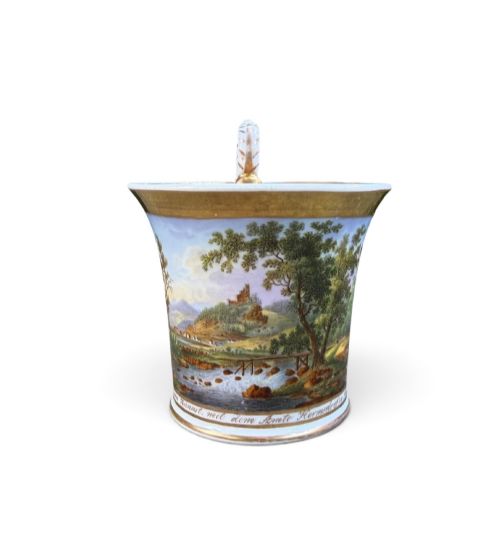


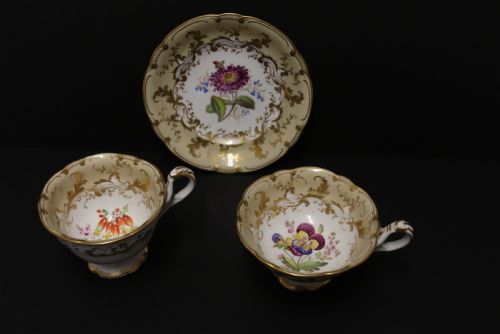

Regency Cabinet Cup
These porcelain regency cabinet cup pieces are ornamental drinking vessels designed for display rather than everyday dining.
Regency Cabinet Cup
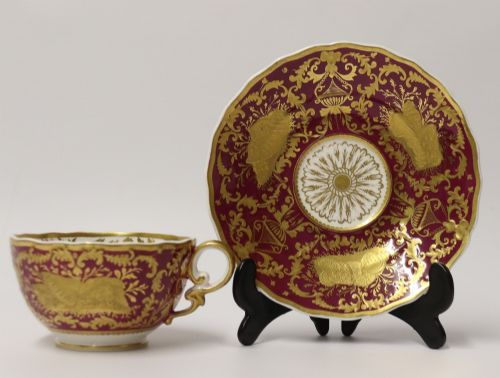
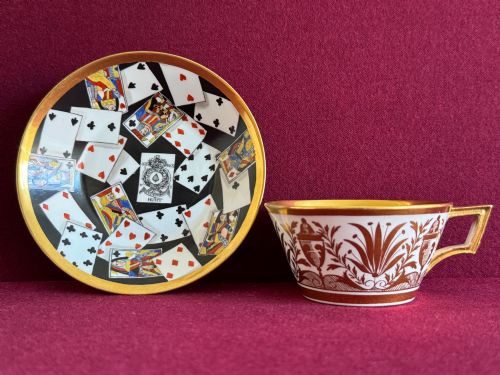
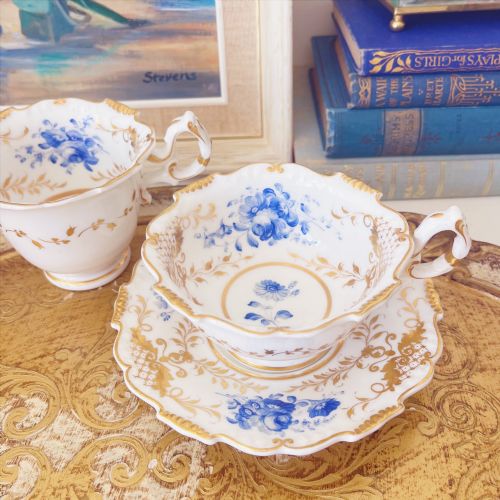
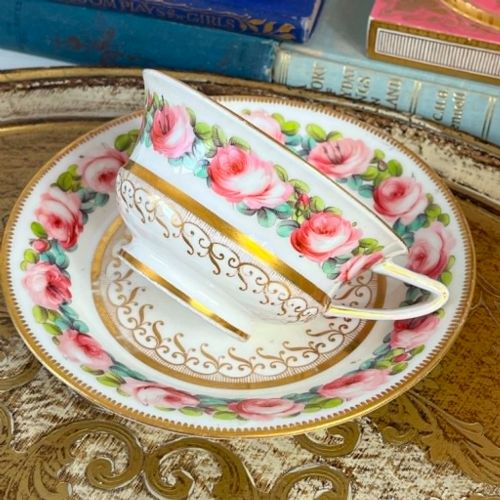
A regency cabinet cup is a specialised ceramic piece created to sit within a cabinet or upon a mantelpiece during the early nineteenth century. The examples on this page predominantly take the form of individual teacups, trios, and demitasse sets originating from English and continental factories.
The aesthetic bridges the Georgian and Regency periods, drawing upon neoclassical and Empire design vocabularies. These vessels reflect a shift towards decorative ceramics that celebrated technical proficiency in porcelain manufacture.
Materials and Techniques
Makers utilised bone china and hard-paste porcelain, shaping them into handled cups accompanied by matching saucers or stands. These bodies provided a smooth white ground suited to detailed ornamentation.
Decoration relied on handpainted motifs combined with extensive gold gilding, gold leaf, and enamel work. Artisans applied these metallic and polychrome finishes to accentuate classical forms.
The site listings span the nineteenth century, Regency, and Georgian periods, focusing on porcelain and bone china.
Standards of Craftsmanship
The distinction between tiers rests upon the precision of the handpainted scenes and the generosity of the gilding. Finer pieces display crisp topographical views or botanical studies executed with strict control.
The weight and translucency of the porcelain body also signal quality. Superior vessels demonstrate a finer potting technique alongside meticulous finishing of handles and rims.
H and R Daniel·Davenport·Newhall·Coalport John Rose·Berlin·Meissen·Spode·Barr flight Barr Worcester·Ridgeway
The Regency Cabinet Cup Glossary
- Cabinet Cup
- A decorative cup made for display in a cabinet rather than for regular tea service. These pieces often feature elaborate gilding and painted scenes.
- Demitasse
- A small cup used for serving strong black coffee. In this period they share the decorative ambition of larger cabinet cups.
- Trio
- A matching set comprising a teacup, coffee cup, and saucer. They demonstrate coordinated factory decoration.
- Hard-paste Porcelain
- A durable ceramic paste composed of kaolin and petuntse fired at high temperatures. It yields a bright white, vitrified body.
Regency Cabinet Cup: Frequently Asked Questions
What is a regency cabinet cup used for?
These cups were produced primarily for visual display within parlours and drawing rooms during the early nineteenth century. Rather than daily dining use, they functioned as miniature canvases showcasing factory skill.
Collectors arranged them on shelves or mantelpieces alongside other decorative porcelain objects of the period.
How do I identify the period?
Dating relies upon stylistic markers such as neoclassical shapes, Empire motifs, and specific handpainted colour palettes. Factory patterns and porcelain bodies also help narrow the timeframe to the early nineteenth century.
Comparing handles and foot rims against known factory examples clarifies the production era.
Are saucers always included?
Many listings present cups alongside their original matching saucers or stands as duos or trios. The evidence records numerous integrated sets surviving together.
Individual cups sometimes appear separately when the matching saucer has been lost over time.
Where were these porcelain pieces made?
Production occurred across prominent English ceramic works as well as continental European factories. English names like Coalport, Spode, and Davenport sit alongside continental works such as Berlin and Meissen.
Each regional centre employed distinct porcelain paste recipes and painting styles.