
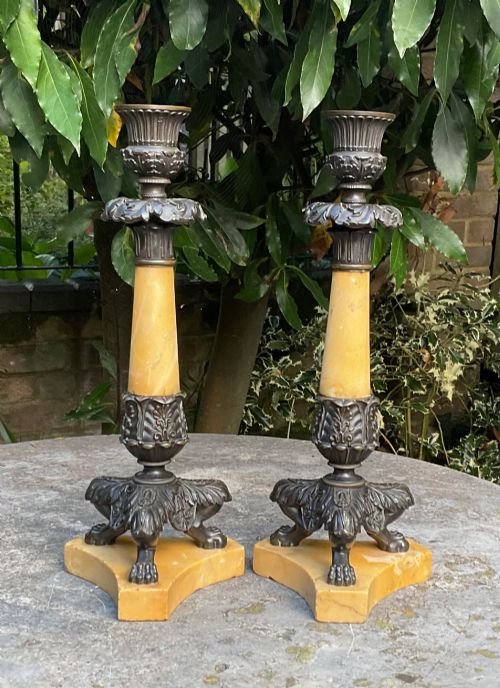

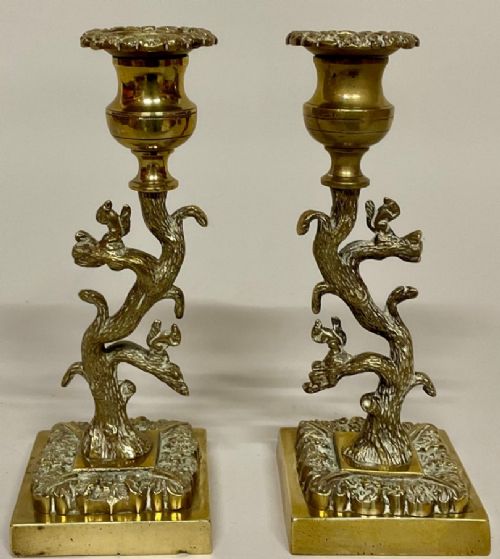
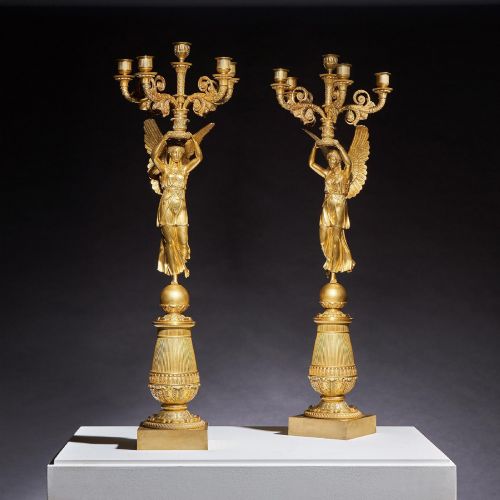
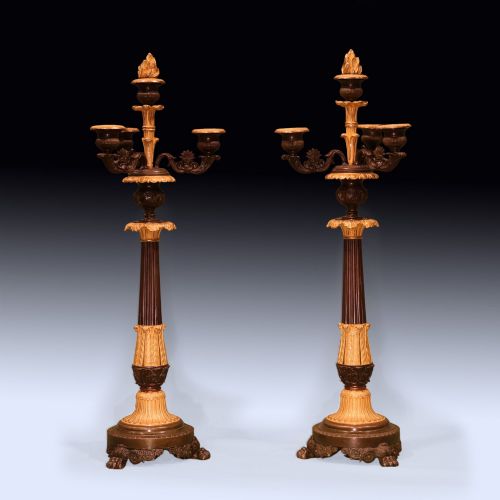
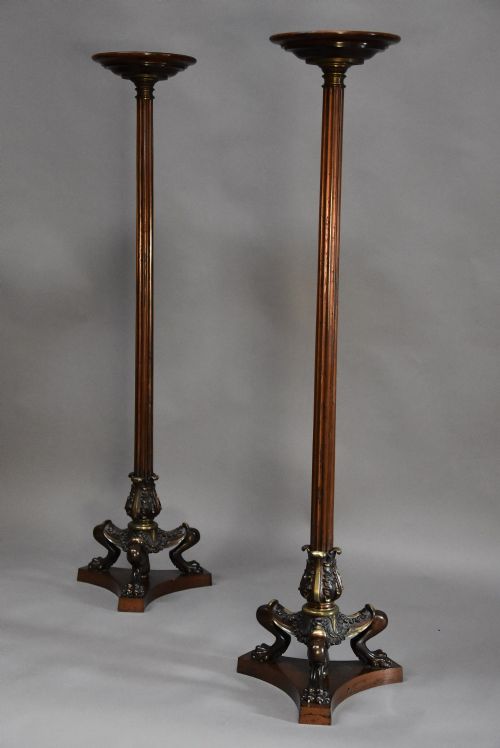


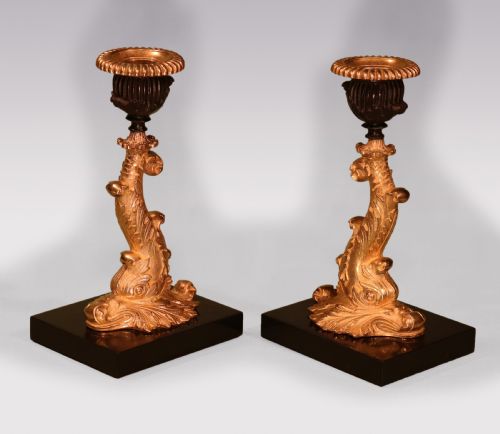


Regency Bronze Candle Stand
These regency bronze candle stand options bring disciplined classical form and dark patinated metal to a room, offering warm illumination through centuries-old design.
Regency Bronze Candle Stand
A regency bronze candle stand brings together dark patinated metal, polished ormolu, and classical forms rooted in the early nineteenth century. Buyers searching for a regency bronze candle stand will encounter matching pairs most frequently, ranging from simple campana sconces to elaborate figural candelabra.
The selections span true Regency periods alongside later nineteenth-century revivals, capturing the aesthetic of French Empire and George IV design. Formats vary from single candlesticks and four-arm candelabra to tall torcheres and classical Athenienne structures.
Makers and designers of the period drew inspiration from antiquity, incorporating motifs such as dolphins, squirrels, putti, and zodiac symbols into the cast metalwork. These pieces served both practical lighting purposes and decorative roles on mantelpieces and side tables.
Distinguishing quality
The crispness of the chasing and the depth of the casting separate standard production from superior examples. Finely chased surface details reveal the hand of a skilled artisan working the metal after it left the mould.
The richness of the fire-gilding on the ormolu sections and the integrity of the patination indicate the original grade of the manufacture. Heavier gauge metal and balanced proportions across paired objects denote higher workshop standards.
Watch closely for tiny squirrels scampering among cast bronze branches, reminding us that Regency decorators enjoyed a touch of woodland whimsy.
Pierre Philippe Thomire·Humphrey Hopper·George Smith·Thomas Hope
The Regency Bronze Candle Stand Glossary
- Ormolu
- Gilt bronze produced by applying a mixture of gold and mercury to a bronze base and heating it. This technique creates a durable, golden finish characteristic of high-end Regency metalwork.
- Patinated Metal
- Metal treated with chemicals or heat to alter its surface colour and create a dark, protective finish. It forms the primary body of many classical candlesticks.
- Campana Sconce
- A bell-shaped cup that holds the candle, styled after ancient Roman ceramic vessels. It sits at the top of the shaft in classical lighting designs.
- Torchere
- A tall stand designed to support a light fixture or candle, often featuring slender legs or a central column. These pieces rise significantly higher than standard table candlesticks.
- Athenienne
- A tripod stand supporting a basin or burner, adapted during the neoclassical period for use as a candle holder. This form echoes ancient Greek domestic furniture.
Regency Bronze Candle Stand: Frequently Asked Questions
How do I care for bronze and ormolu?
Dust the surfaces gently with a soft, dry brush to prevent the accumulation of dirt within the chased details. Avoid commercial metal cleaners, as aggressive liquids can strip the original fire-gilding and antique patina from the bronze.
Maintain a stable room climate away from direct moisture to protect any integrated marble or mahogany elements. Gentle handling preserves the delicate surface textures achieved by nineteenth-century founders.
Were these stands made as pairs?
Many surviving examples were produced as symmetrical pairs to flank mantelpieces, sideboards, or console tables in formal rooms. Workshops cast matching sets to ensure uniform ornamentation and height across both objects.
Single stands also occur, often originating from larger sets or torcheres designed to stand alone. Examining the base construction helps confirm whether individual pieces share a common origin.
How can I tell a Regency period piece from a later revival?
True Regency objects date from the early nineteenth century and reflect the direct influence of classical antiquity popular during the Regency and George IV eras. They display hand-chased metalwork and specific material combinations common to that decade.
Revival pieces emerged later in the nineteenth century, often utilising heavier machine finishing or modified construction techniques. Comparing the casting sharpness and assembly methods provides clues to the exact manufacturing era.