

Pair of Gilt Candelabra
A pair of gilt candelabra brings sculptural presence and warm illumination to a room, drawing the eye with polished metal and classical detail.
Pair of Gilt Candelabra
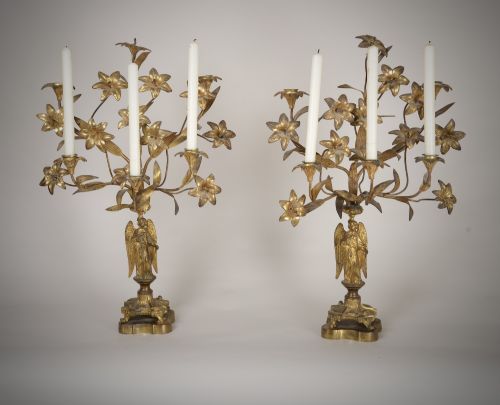
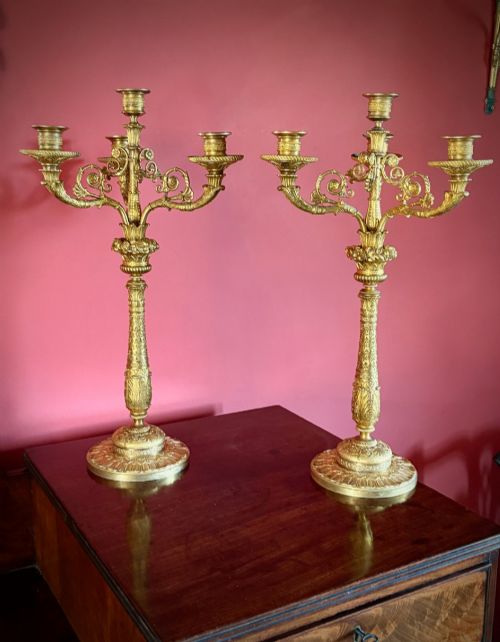
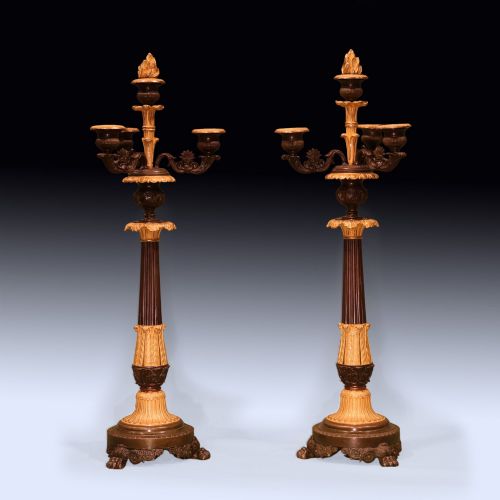
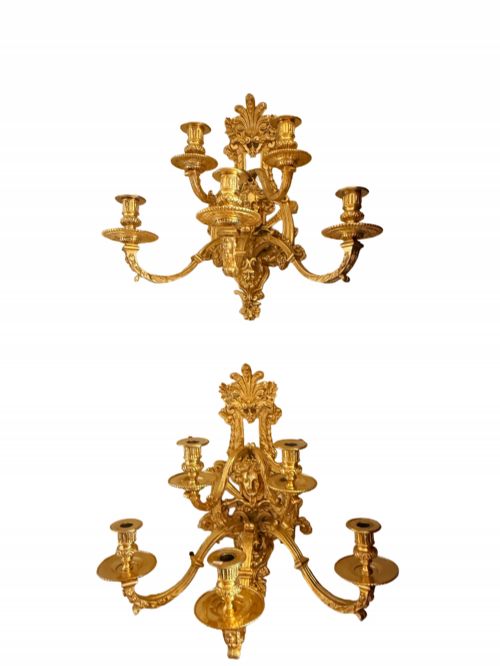
A pair of gilt candelabra serves as a decorative and functional lighting fixture designed for tables, mantelpieces or walls. These pieces are predominantly encountered in nineteenth-century French and English iterations, spanning styles from Regency and Empire to Rococo Revival.
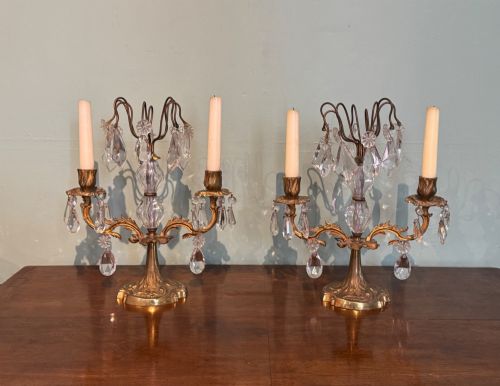
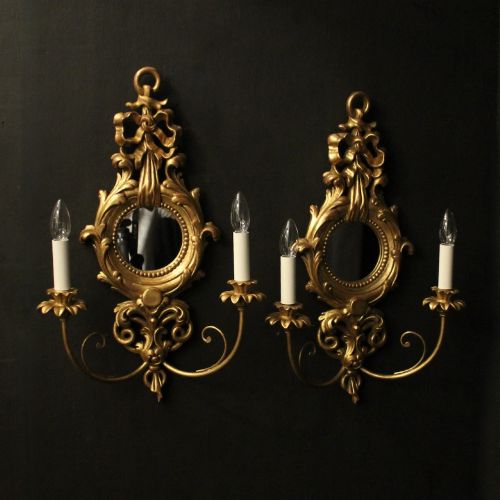
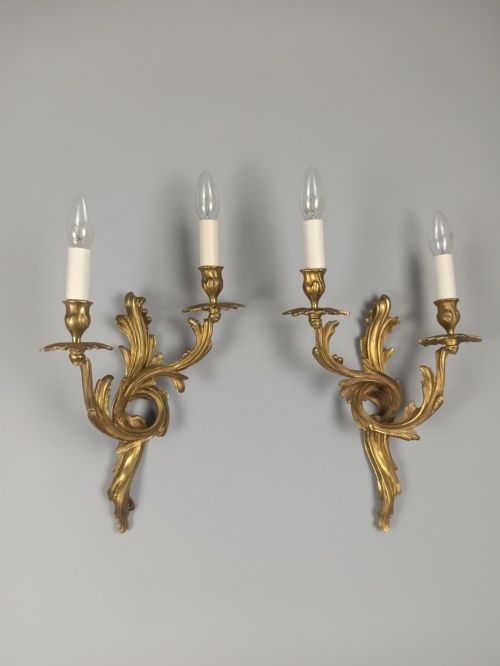
The selection ranges from multi-branched candelabra and wall lights to mounted candlesticks incorporating marble, porcelain, or glass elements. Makers across Europe produced these works to anchor formal interior schemes with symmetry and metallic brilliance.
Buyers look for these objects to introduce period character and vertical interest to domestic spaces. The survival of matched pairs remains a primary consideration for collectors seeking authentic decorative symmetry.
Materials and construction methods
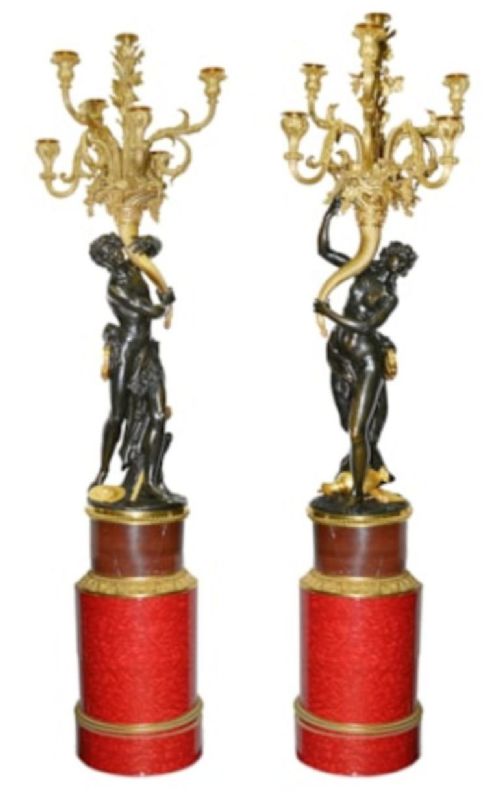
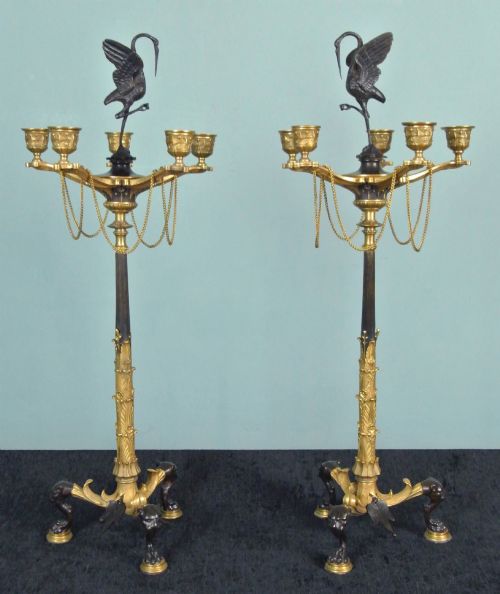
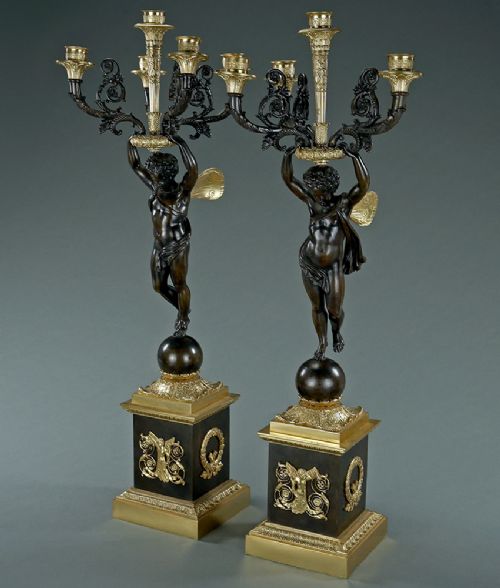
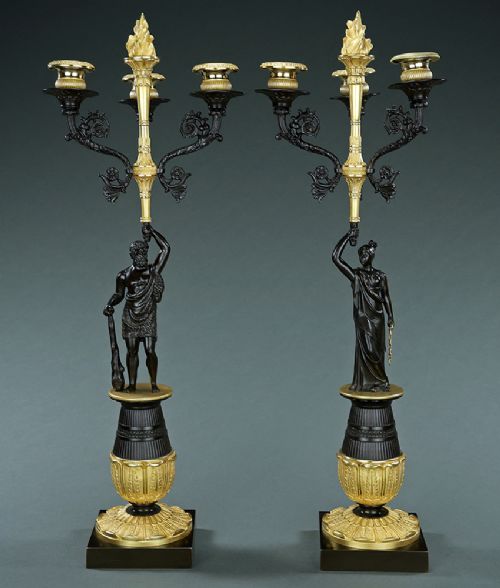
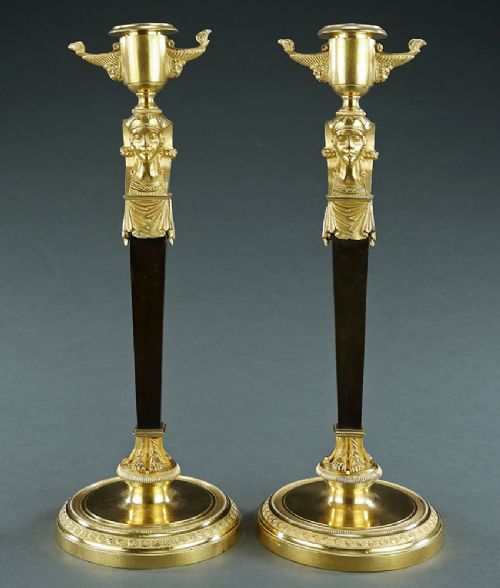
Construction relies heavily on cast bronze, brass, and gilt metal, often combined with patinated bronze to create tonal contrast. Ormolu, denoting finely chased and gilded bronze, provides the signature bright finish seen on many examples.
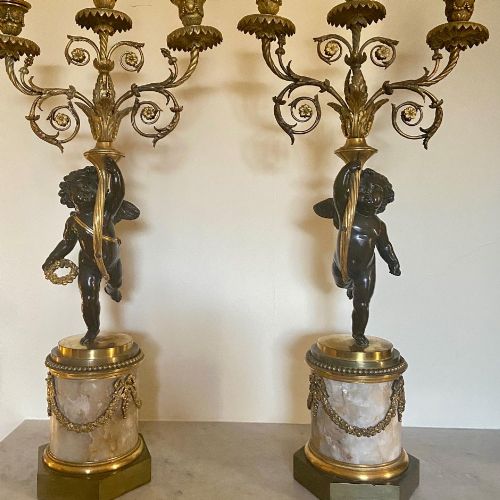
Foundational elements frequently incorporate white or coloured marble, onyx, or carved giltwood, adding substantial weight and textural variety. Artisans utilised fire gilding techniques in earlier periods, later transitioning to electroplating methods by the late nineteenth century.
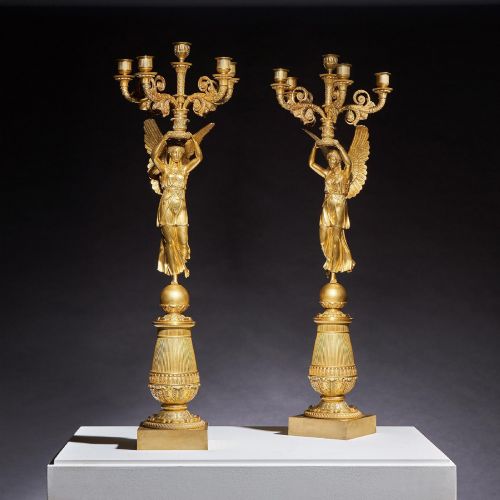
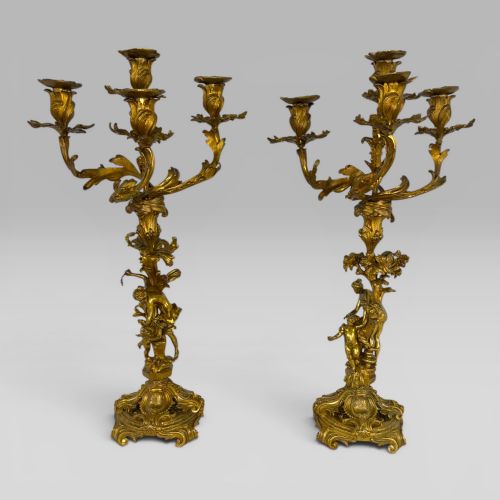
Several pieces feature playful putti, stags, elephants, and cherubs holding up candle branches, bringing a touch of theatre to the dining table.
The indicators of superior manufacture
The choice of secondary materials, such as solid marble bases or heavy fire-gilded bronze components, distinguishes higher-grade pieces from mass-produced alternatives. Signed works by notable bronze-founders demonstrate an elevated standard of craftsmanship that commands attention.
Barbedienne·Pierre Philippe Thomire·Claude Galle·Elkington & Co
The Pair of Gilt Candelabra Glossary
- Ormolu
- Gilded bronze, produced by applying a mercury-gold amalgam to cast bronze and heating it to drive off the mercury. This technique yields a durable, warm golden lustre characteristic of fine decorative objects.
- Patinated bronze
- Bronze treated with chemical solutions to produce a dark brown, green, or black surface finish. It provides a visual contrast against bright ormolu mountings.
- Champlevé
- An enamelwork technique where troughs are dug into a metal surface and filled with vitreous enamel before firing. It appears on nineteenth-century decorative metalwork.
- Girandole
- An ornamental branched wall light or candelabrum featuring a backplate that often incorporates a mirror. It reflects candlelight to increase illumination in a room.
- Retour d'Egypte
- A neoclassical design style influenced by Napoleon's campaign in Egypt. It incorporates distinct motifs such as sphinxes, pharaohs, and lotus leaves.
Pair of Gilt Candelabra: Frequently Asked Questions
How do I clean a pair of gilt candelabra?
Dust gently with a soft, dry brush to prevent the accumulation of dirt within intricate crevices. Avoid chemical polishes, particularly on ormolu or gilt surfaces, as abrasive substances strip away the historic finish.
For stubborn marks, use a damp cloth with mild soap, followed immediately by drying with a soft lint-free cloth. Care must be taken to protect any adjoining marble, wood, or glass elements during cleaning.
Were these candelabra converted to electricity?
Many nineteenth-century examples underwent conversion to electricity during the twentieth century to function as table lamps or wired wall lights. This process often involved running wiring through the central shaft or branches.
Buyers should inspect the wiring status of each piece upon acquisition. Restoring a converted candelabra back to hold taper candles is possible depending on how the original nozzle fittings were altered.
How can I distinguish Louis XVI style from Rococo?
Louis XVI style pieces emphasise neoclassical symmetry, straight lines, architectural proportions, and restrained motifs such as urns, ribbons, and fluting. They present a balanced and orderly aesthetic.
In contrast, Rococo pieces celebrate asymmetry, C-scrolls, naturalistic foliage, and flowing organic curves. The ornamentation appears more exuberant and dynamic without the strict geometric framework of the neoclassical period.