
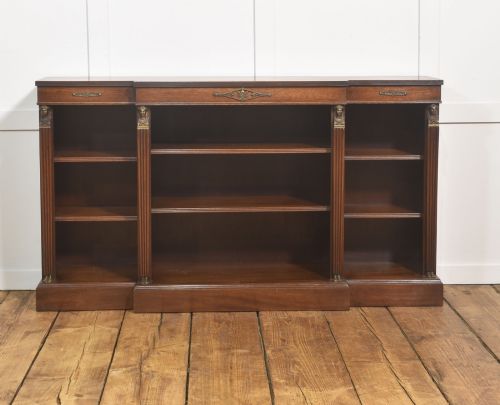


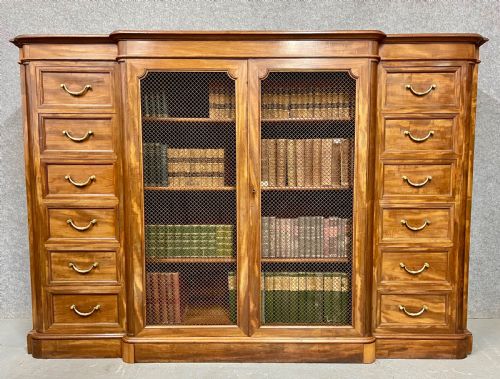


Regency Breakfront Side Cabinet
These regency breakfront side cabinet pieces combine architectural presence with refined timber work, offering both a statement surface and generous concealed storage.
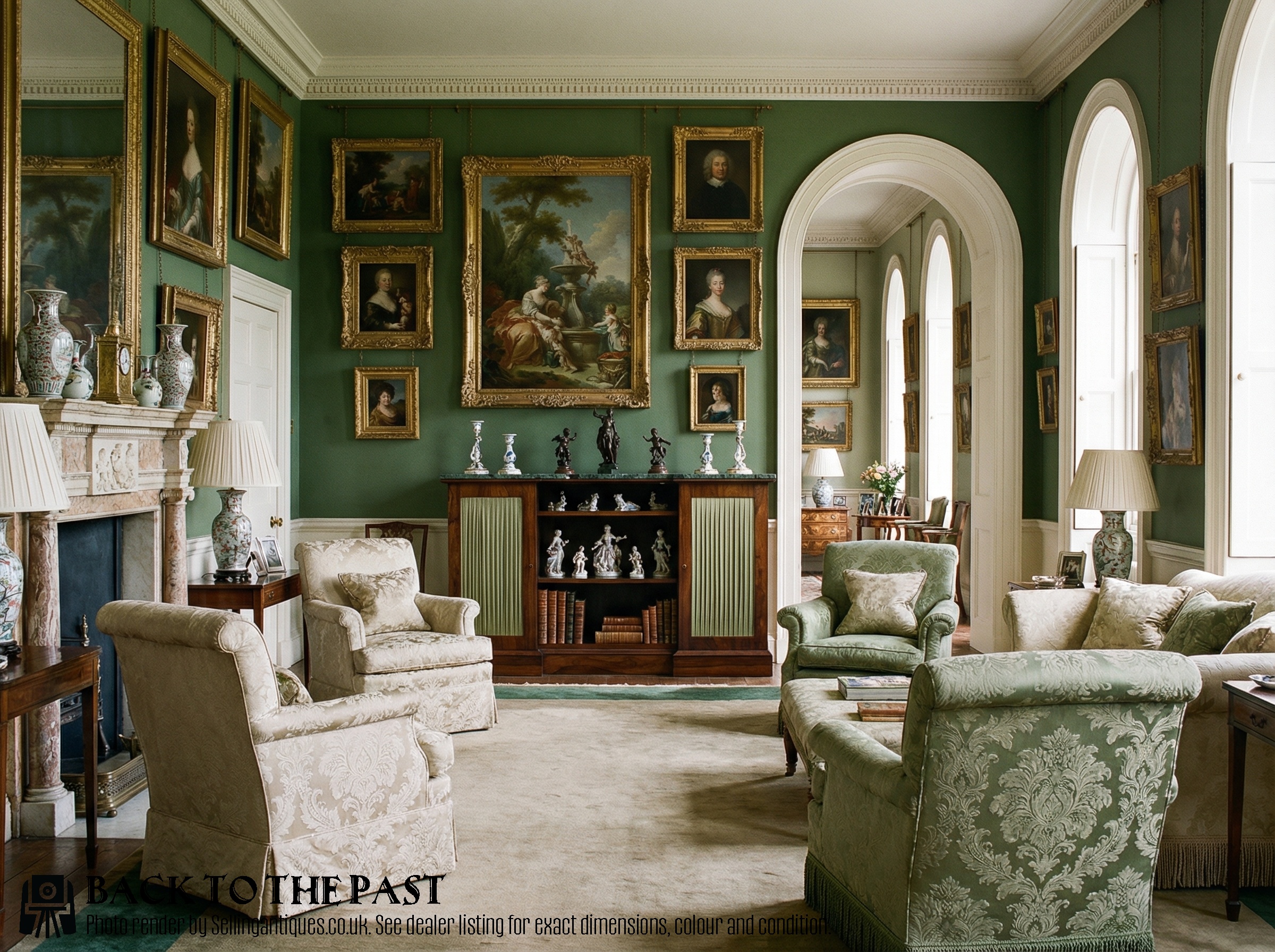
Regency Breakfront Side Cabinet
A regency breakfront side cabinet presents a projecting central section flanked by recessed wings, creating a balanced architectural façade along a wall. The form appears in various configurations including four door models, open bookcases, and chiffoniers.
Most examples found in this selection date from the Regency period or the nineteenth century, alongside later revivals from nineteen ten and nineteen twenty. Rosewood and mahogany dominate the materials, frequently complemented by brass inlays and marble tops.
Materials and construction
Cabinet makers utilised dense native and exotic timbers, applying rosewood, mahogany, satinwood, amboyna veneer, and simulated rosewood over sturdy carcases. Grain patterns were carefully chosen to accentuate the forward-projecting centre and flanking doors.
Metalwork played a structural and decorative role, with brass line inlays, giltwood details, and parcel gilt highlights defining the architectural panels. Marble tops appear on selected pieces, providing a contrasting durable surface above the timber base.
Regency Breakfront Side Cabinet Retail Price Guide 2026
Typical asking prices for regency breakfront side cabinet among the pieces listed under this phrase on Sellingantiques today, from the lower quarter to the upper quarter. They describe what is for sale here now, not the wider market.
The listings feature rosewood and mahogany predominantly, alongside alternative surfaces in marble, fabric, and simulated rosewood.
Assessing quality in execution
The distinction between tiers rests upon the selection of timber veneers and the precision of the brass inlay work. Superior examples exhibit matched grain alignment across the breakfront doors and crisp execution of decorative mounts.
Proportion and scale also separate the finest pieces, where the stepped projection of the facade maintains visual harmony rather than appearing heavy. Secondary woods and internal construction details reveal the care taken by the cabinet maker.

The Regency Breakfront Side Cabinet Glossary
- Breakfront
- An architectural furniture design where the central section projects forward from the flanking wings. This configuration creates visual depth and breaks the linear monotony of a long wall.
- Chiffonier
- A low cabinet, typically fitted with doors enclosing shelves and sometimes surmounted by a small shelf or gallery. The form evolved during the nineteenth century to serve dining and drawing rooms.
- Parcel Gilt
- Partially gilded decoration applied to specific carved details or mouldings. It highlights architectural elements against the dark grain of rosewood or mahogany.
- Gonçalo Alves
- A dense exotic hardwood with striking contrasting grain patterns, sometimes utilised in high-status Regency furniture. It provides a distinct visual texture compared to standard mahogany.
Regency Breakfront Side Cabinet: Frequently Asked Questions
How do I spot a true Regency piece?
Examine the secondary timbers used for drawer linings and internal framing, alongside the specific construction methods of the period. True Regency pieces exhibit hand-cut joinery and characteristic timber selection rather than later machine production.
Compare the carcass proportions and decorative vocabulary with documented examples from the early nineteenth century. Details such as brass stringing and specific veneer thicknesses help establish the correct period.
Where should I place a breakfront cabinet?
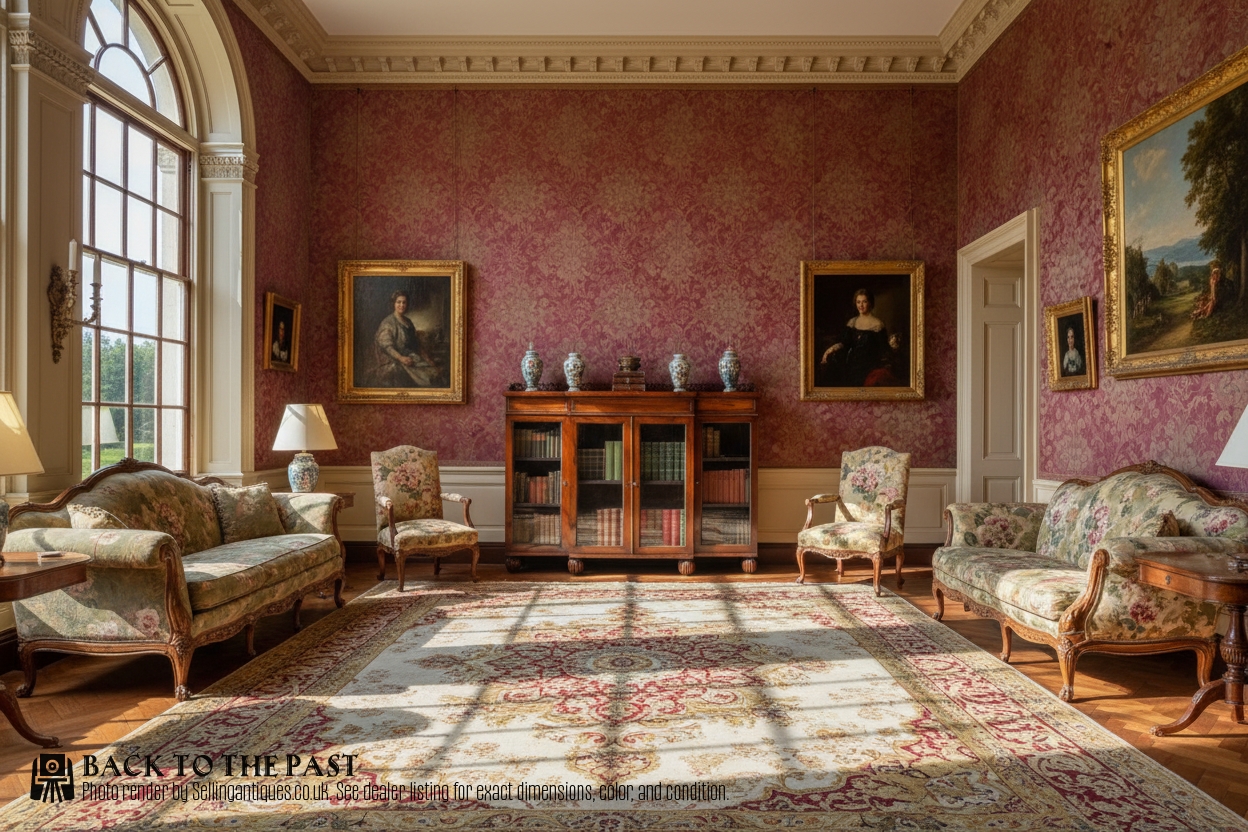
These cabinets suit principal reception rooms, dining spaces, or libraries where their extended facade can be viewed without obstruction. Ensure adequate wall space allows the projecting central section to sit comfortably.
Keep the cabinet away from direct heat sources and strong sunlight to protect sensitive rosewood and mahogany veneers. Placing the piece on a level floor ensures the doors hang true and close correctly.
What is the difference between a chiffonier and a side cabinet?
A chiffonier generally includes a low superstructure or gallery above the main surface, whereas a side cabinet presents a clean top surface. Both forms provide enclosed storage behind doors below.
Chiffoniers frequently appear in nineteenth-century contexts as multifunctional serving pieces. Side cabinets tend to offer a broader uninterrupted top surface for display.
How do I care for rosewood furniture?
Dust the timber regularly with a soft, dry cloth to prevent grit accumulation on the veneer surface. Avoid silicone-based polishes which can penetrate the grain and damage historic finishes over time.
Maintain stable room humidity to prevent timber movement and veneer lifting. Occasional application of appropriate wax feed helps nourish antique polished surfaces.