


Regency Brass Planter
A regency brass planter brings polished metal and dark timber into a room, serving equally as a jardiniere or a wine cooler.
Regency Brass Planter
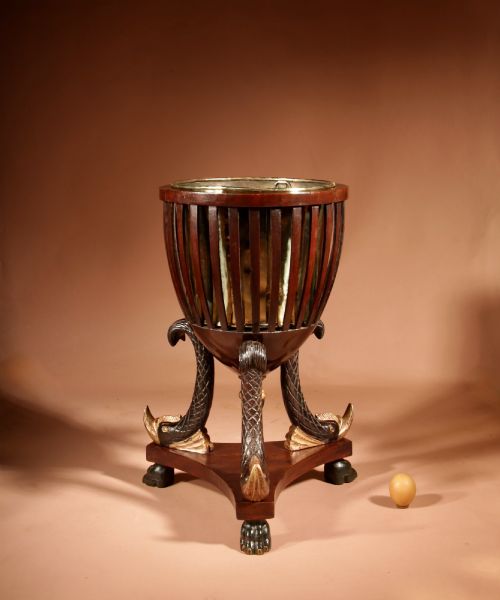
When you search for a regency brass planter, you encounter vessels that bridge functional utility and decorative display from the late eighteenth and early nineteenth centuries. These pieces appear in forms such as jardinieres, wine coolers, cellarettes, peat buckets, and log baskets, reflecting how domestic objects served multiple roles.
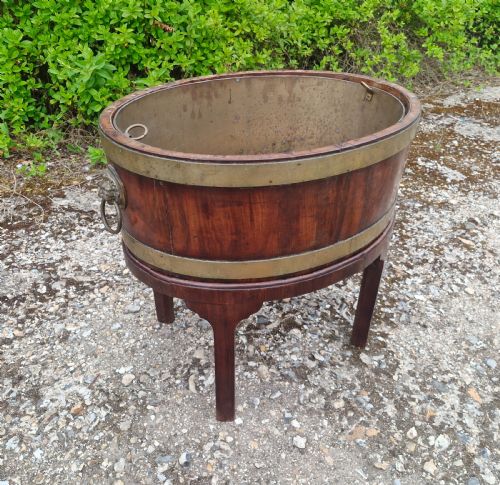
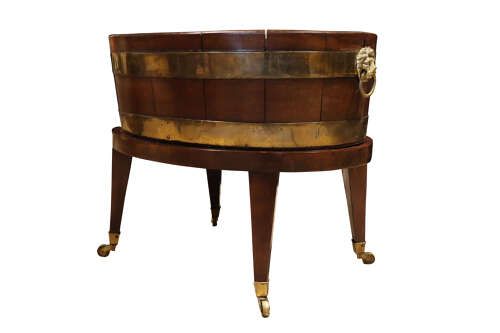
The version you are most likely to meet on this page is constructed from mahogany with brass banding, often taking a coopered cylindrical or bucket shape. Stylistic influences span Regency, Georgian, French Empire, and Dutch Empire, showing a preference for classical proportions and contrasting materials.
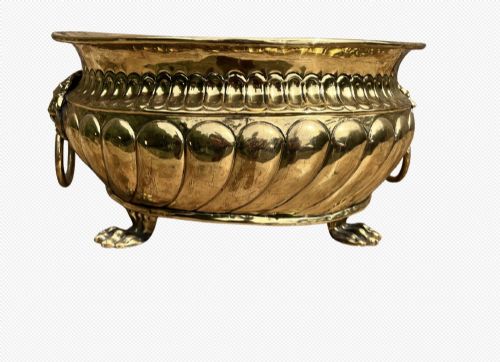
Beyond timber vessels, the selection includes solid or repoussé brass planters featuring animal heads or decorative metalwork intended for fireside or tabletop display. Dating stretches from the primary Regency period through later revival interpretations in the nineteenth and twentieth centuries.
How They Were Made
Construction relies heavily on traditional cooperage techniques, where individual staves of mahogany, walnut, or satinwood are shaped, fitted, and bound with metal hoops. This method ensured watertight integrity when the vessels held ice for wine or moisture for living plants.
Metal components utilise sheet brass, sometimes enhanced with repoussé work to press relief designs into the surface. Liners in zinc or copper were frequently employed inside the wooden buckets to protect the timber from damp earth and water.
Surface finish relies on French polishing or natural wax applied to hardwoods like mahogany, ebonised wood, and walnut. Inlaid details and brass handles or animal head mounts complete the assembly, combining structural carpentry with decorative metalcasting.
Materials recorded across the inventory include brass, mahogany, zinc, metal, ebonised wood, satinwood, and walnut.
What Varies in Quality
Quality separates through the crispness of the brass work and the selection of the timber grain. Finer examples display carefully chosen mahogany figures and tightly fitted brass bands that sit flush against the staves.
The integrity of the interior metal liner and the survival of original mounts or cast handles heavily influence the standing of a piece. Earlier Regency examples demonstrate more meticulous joinery and heavier gauge brass than later twentieth century revivals.
The Regency Brass Planter Glossary
- Coopered
- Constructed from curved staves of wood joined edge to edge and bound with metal hoops, much like a barrel. This technique allowed makers to create watertight vessels for wine cooling or planting.
- Repoussé
- A metalworking technique where the artisan hammers the design from the reverse side to form a raised pattern on the front. This ornamentation appears on brass panels and bodies.
- Jardiniere
- An ornamental pot or stand designed to hold growing plants or flowers. In this context, the term often overlaps with wine coolers and peat buckets.
- Cellarette
- A lockable container used to store bottles of wine or spirits near the dining table. Many examples share the exact coopered bucket form as planters.
- Tea stove
- A small portable hearth or container used in period rooms, sometimes repurposed as a jardiniere or knitting basket. These items feature metal liners and carrying handles.
Regency Brass Planter: Frequently Asked Questions
What is a regency brass planter?
A regency brass planter is a decorative vessel made from timber and brass, dating from the early nineteenth century or later revival periods. They were originally designed for multiple domestic duties including holding plants, chilling wine, or storing fuel.
Today, they function primarily as interior planters or decorative storage containers that highlight period craftsmanship through the combination of warm woods and polished metal.
Were these used for plants or wine?
These vessels served dual purposes in period households depending on the occasion and the room. Many were coopered with internal liners specifically to hold ice and bottles during dining.
Others held potted plants or cut flowers to bring greenery into formal living spaces. The waterproof liners allowed them to transition between botanical display and beverage cooling without damaging the timber exterior.
How do I care for the brass and wood?
Maintenance requires protecting both the polished metal and the polished timber surface from excess moisture and direct heat. Use a dry or slightly damp cloth for regular dusting without harsh chemical cleaners.
Ensure that any plant placed inside has a proper inner pot or saucer to prevent water from sitting against the antique brass or wood base.
How can I tell the period?
Dating relies on examining the timber species, the construction methods of the coopered staves, and the style of the brass mounts. Earlier nineteenth century pieces typically show heavier gauge metals and hand-cut joinery.
Later Georgian style or twentieth century revivals often use machine-made components and different finishing techniques. Comparing the patination and wear patterns helps clarify the age of the item.