
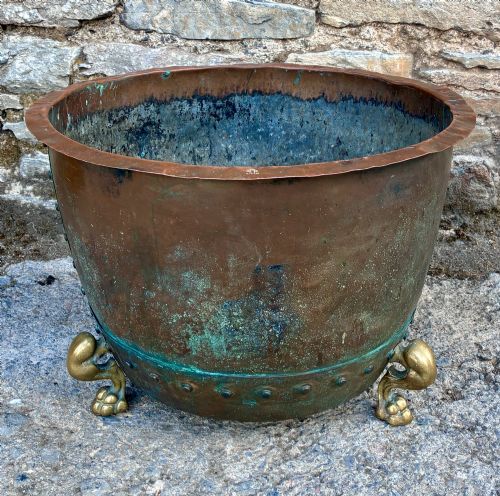


Claw Foot Brass Vessel
These claw foot brass vessel pieces are hearthware, log buckets and planters that bring warmth and genuine weight to a room.
Claw Foot Brass Vessel
When you search for a claw foot brass vessel, you find solid metal containers designed for the fireside or the garden. The pieces on this page span the 18th century, Victorian and Edwardian eras, taking the form of jardinières, planters, coal buckets and cauldrons.
Most examples you meet here are made of brass or copper, shaped into cylindrical planters or robust fireside bins. They draw on styles ranging from rustic farmhouse to French chateau and French empire, reflecting how homes heated and decorated their principal rooms in past centuries.
How they were made
The makers of these vessels relied on heavy metalworking techniques such as handbeating and copper repoussé to shape the body and raise decorative motifs from the sheet metal. Rivets held the structural seams together firmly, creating robust containers meant to withstand daily fireside use.
Brass and copper predominated, often combined with cast metal feet bolted or riveted to the base. Piercing work appeared on select cylinders, allowing light through the metal wall while maintaining structural integrity.
The listings on this site show materials restricted entirely to brass, copper and mixed metal.
What varies in quality
Quality rests on the integrity of the metalwork and the crispness of the hand-beaten or repoussé detail. A superior vessel shows confident hammer marks and solid construction at the joints rather than thin, machine-pressed uniformity.
The attachment of the feet and handles reveals much about the workshop origin. Better pieces integrate the claw feet securely into the heavy gauge of the body, whereas simpler utilitarian buckets rely on basic mechanical joins.
William Soutter & Sons
The Claw Foot Brass Vessel Glossary
- Repoussé
- A metalworking technique where the artisan hammers the design from the reverse side to form a raised pattern in relief on the front. This method gives texture and depth to the metal surface.
- Pierced
- A method of cutting decorative openwork patterns through the metal sheet. It is frequently seen on cylindrical planters from the Victorian period.
- Cauldron
- A large metal pot used traditionally for boiling over an open fire. In later centuries, heavier copper versions found new purpose by the hearth.
Claw Foot Brass Vessel: Frequently Asked Questions
What were brass vessels used for?
These metal vessels served practical domestic roles beside the fireplace and in the parlour. Households used them to hold coal, store logs or display indoor plants.
Their sturdy construction handled heavy fuel and damp soil without failing. Over time, utilitarian items transitioned into decorative interior pieces.
How do I clean an antique brass vessel?
Gentle dusting with a soft cloth preserves the historic surface of copper and brass. Avoid harsh chemical polishes that strip away the dark oxidation built up over decades.
Leaving the natural patina intact maintains the character of Victorian and Edwardian pieces. Aggressive cleaning reduces both visual depth and historical value.
How do I date a brass vessel?
Dating relies on examining the construction methods, such as hand-beating marks versus machine rolling. Rivet styles, handle attachments and foot designs offer clear clues to the manufacturing era.
Victorian and Edwardian examples often display distinct aesthetic traits associated with revival styles. Earlier 18th-century pieces tend to show simpler, heavier forging techniques.
Where should I place a brass vessel at home?
These vessels suit traditional hearths, empty fireplace alcoves or corners of a reception room. Their warm metallic tones complement wood floors and brick fireplaces.
Planters look striking filled with large foliage plants, while coal bins function well holding dried kindling. Their scale allows them to anchor a room visually.