




Regency Brass Bound Box
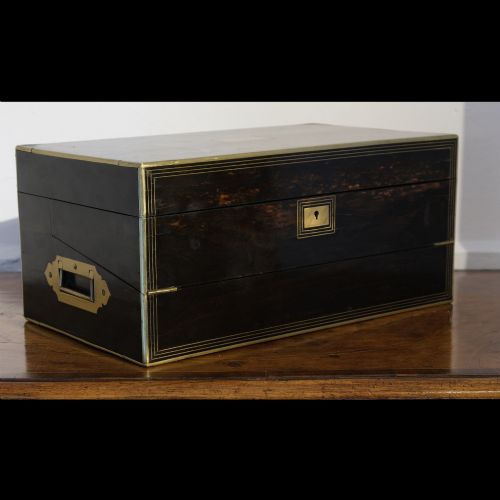
A regency brass bound box brings portable luxury to a room, offering heavy timber construction secured with flush brass corners and strapwork.
Regency Brass Bound Box
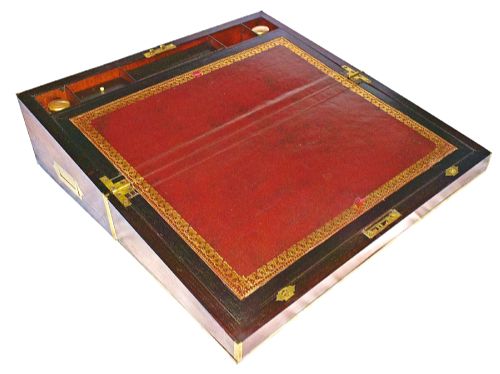
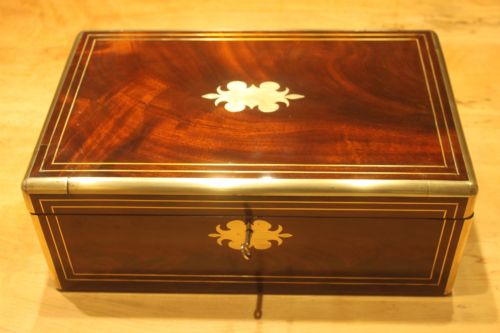
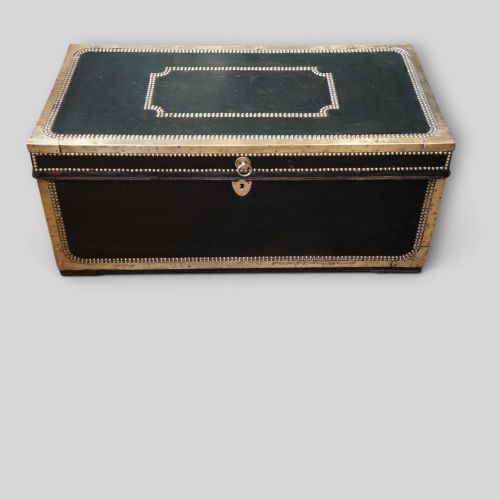
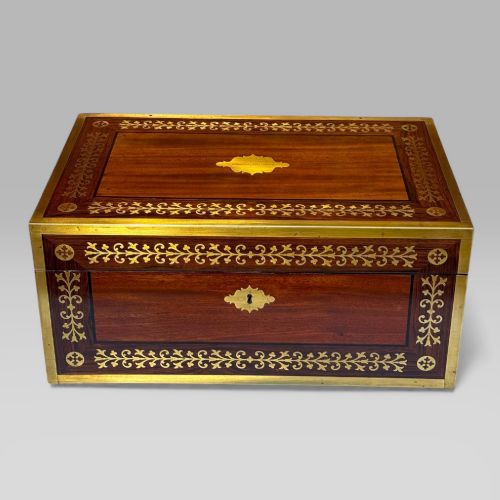
When you search for a regency brass bound box, you encounter portable containers designed for travel, correspondence, or storage during the Georgian and Regency periods. The forms appearing on this page include writing slopes, campaign trunks, wine coolers, jewellery caskets, and document boxes.
The dominant material choices span dense tropical hardwoods like mahogany and rosewood, alongside leather-covered campaign chests and document cases. Pieces range from genuine early nineteenth-century examples to later revival interpretations made in the twentieth century.
Materials and Construction
Cabinet makers built these boxes using solid and veneered timbers such as mahogany, rosewood, and coromandel, often framing the edges with brass corners, straps, and protective banding. Flush inset brass handles and escutcheons allowed officers and travellers to pack items tightly without catching on canvas or webbing.
Internal fittings required precise joinery to house secret drawers, inkwells, pen trays, and velvet-lined writing surfaces that folded flat for use on the move. Leather coverings were secured with rows of individual brass studs, sealing the edges against moisture and hard handling.
Regency Brass Bound Box Retail Price Guide 2026
Typical asking prices for regency brass bound box among the pieces listed under this phrase on Sellingantiques today, from the lower quarter to the upper quarter. They describe what is for sale here now, not the wider market.
One surviving leather travel case still guards the engraved initial 'K' from a journey undertaken in eighteen eighteen.
Quality and Proportion
Quality rests in the precision of the brass inlay work and the thickness of the timber rather than applied surface decoration. Superior examples display tightly fitted mitres, unwarped lids, and original flush-mounted hardware that sits completely level with the wood surface.
The interior arrangement dictates utility and grade, separating standard document storage from fully fitted campaign writing slopes equipped with secret compartments and engraved escutcheons. Heavier gauge brass corner plates and substantial carrying handles indicate pieces made for rigorous travel rather than domestic display.
Gillows of Lancaster and London·Samuel Pratt·Chapple and Sons·Litherland Davies of Liverpool
The Regency Brass Bound Box Glossary
- Campaign box
- A portable desk or chest constructed for military officers on active service abroad. These pieces feature recessed brass handles and reinforced corners to withstand rough transport.
- Writing slope
- A hinged box that opens to reveal an angled writing surface lined with leather or velvet. Inside compartments hold inkwells, pens, and stationery.
- Cellarette
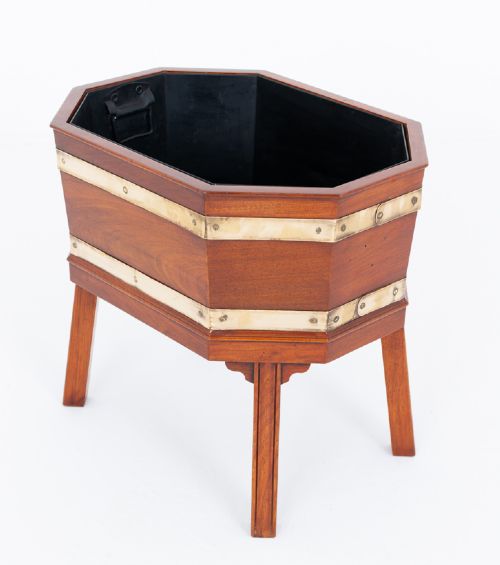
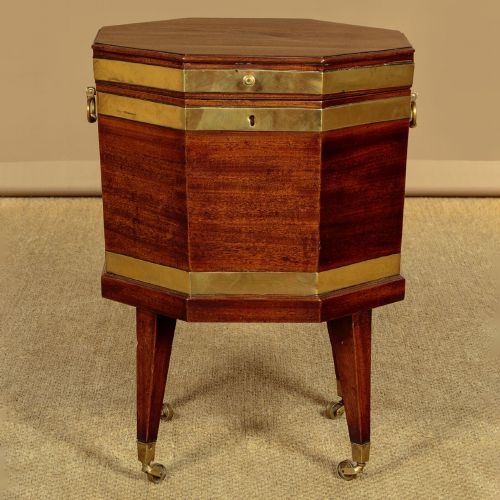
- A freestanding container designed to hold bottles of wine at the dining table. Many examples incorporate brass bands and dense timber construction.
- Escutcheon
- A protective metal plate surrounding a keyhole. On these pieces, brass escutcheons match the corner straps and flush hinges.
- Sarcophagus form
- A distinct coffin-like shape with a stepped lid popular for wine coolers and large chests during the Regency period. This profile maximised internal capacity while maintaining balanced proportions.
Regency Brass Bound Box: Frequently Asked Questions
How do I use a writing slope?
Open the hinged lid and fold down the sloping writing surface to access the internal compartments and pen trays. The flat platform supports paper while inkwells and stamps remain stored in the fixed upper section.
Many slopes include secret drawers hidden behind false partitions in the stationery well. Lowering the writing surface reveals a continuous baize or leather pad designed for letter writing.
What is a cellarette used for?
A cellarette stores wine bottles safely within a dining room or parlour during meals. Lined interiors often held ice or partitioned spaces to keep bottles upright.
Unlike stationary sideboards, these heavy timber chests stood on legs or casters for easy positioning near the table. Brass bands provided structural strength for heavy wood and glass loads.
How do I date a brass bound box?
Examine the timber species, construction methods, and brass hardware style to determine the period. Early nineteenth-century pieces typically feature hand-cut dovetails and heavy gauge brass plates fitted flush into mahogany or rosewood.
Later nineteenth-century and twentieth-century revival pieces often display machine-made screws or different internal paper linings. Maker stamps, engraved initials, and hallmarks on escutcheons also offer clues to the exact decade of manufacture.
Are campaign boxes waterproof?
Campaign boxes utilised tight-grained tropical hardwoods like teak or mahogany to resist damp climates and sea air. Brass banding sealed the external joints against rain and swelling.
Leather-covered variants featured stud-sealed edges to keep moisture away from papers and valuables. However, these containers were weather-resistant rather than fully submersible.
Can I store jewellery inside these boxes?
Small document cases and velvet-lined caskets function well for holding rings, necklaces, and watches. Original compartments often included padded trays specifically sized for trinkets.
Lockable brass mechanisms secure the contents against casual access. The soft interior fabrics prevent scratching on delicate metal surfaces.