


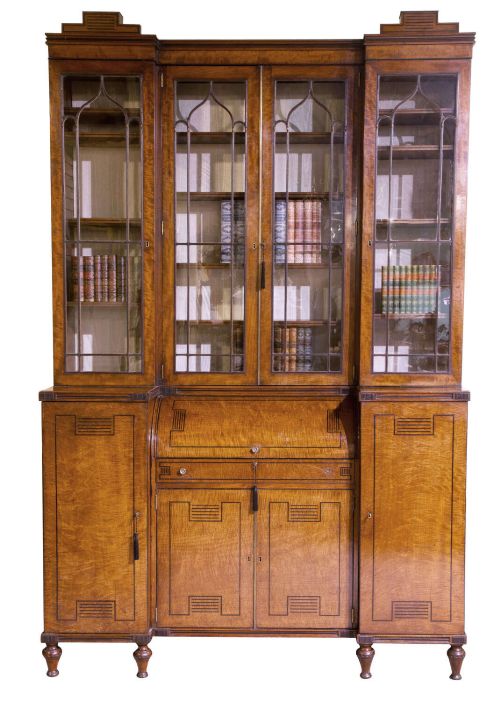
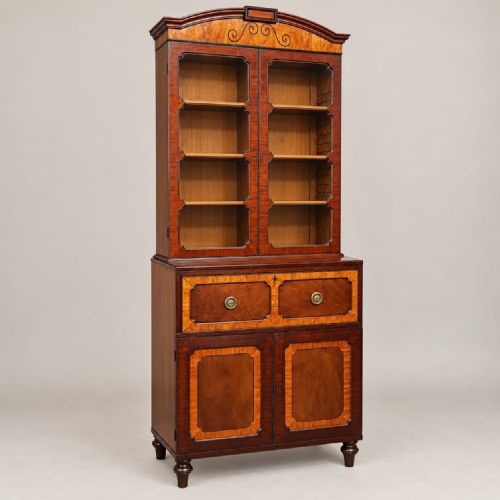
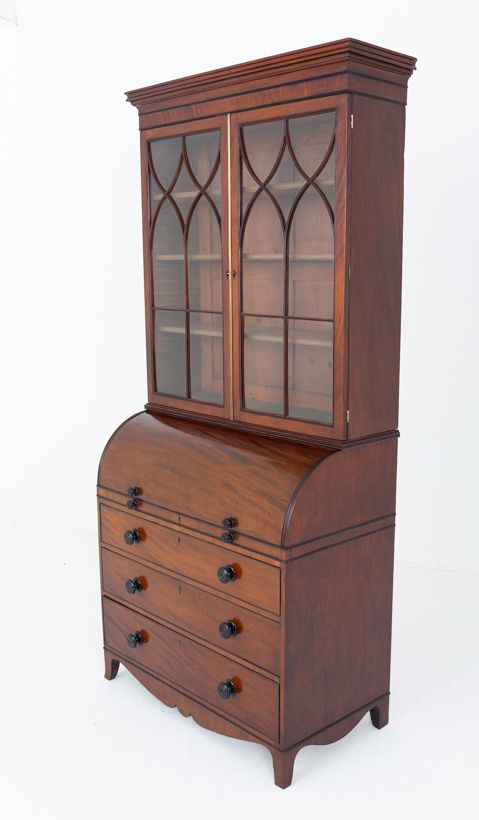
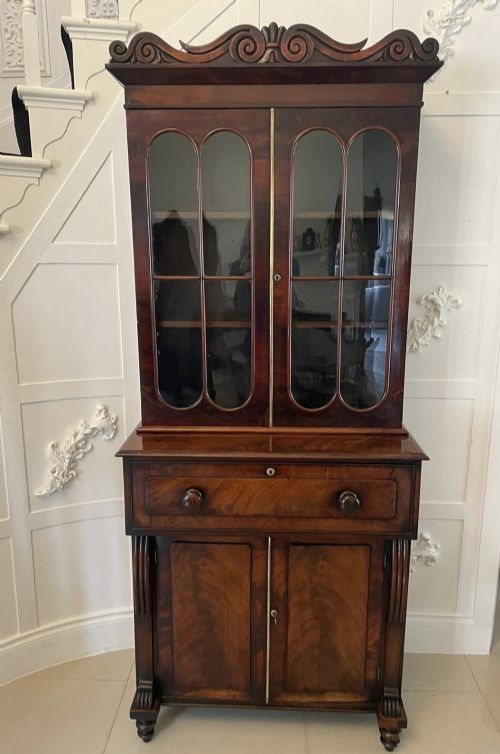
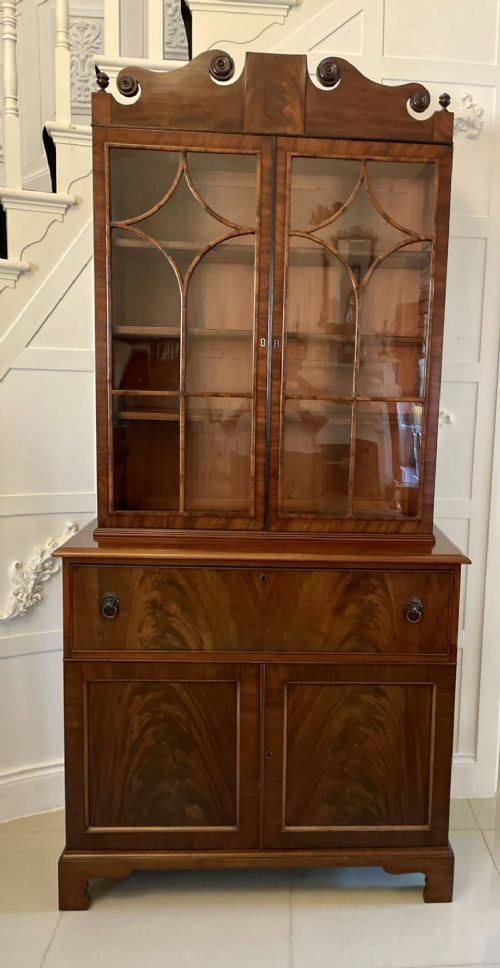
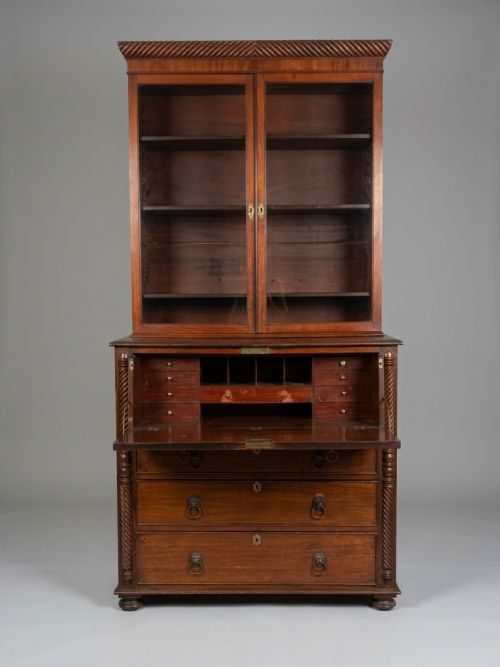
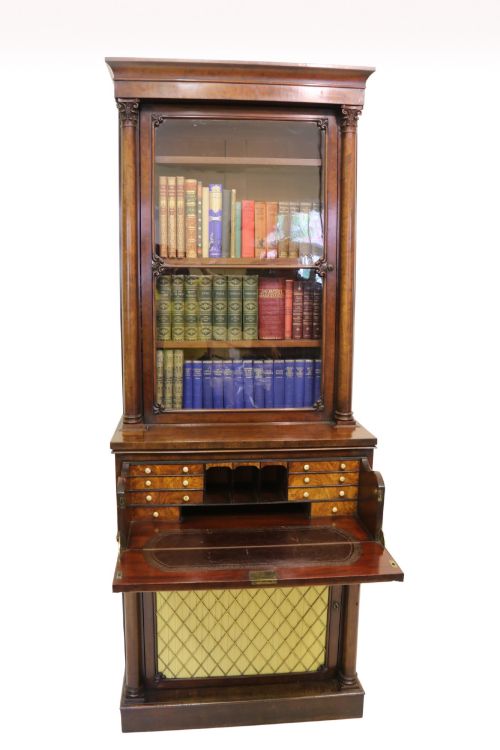
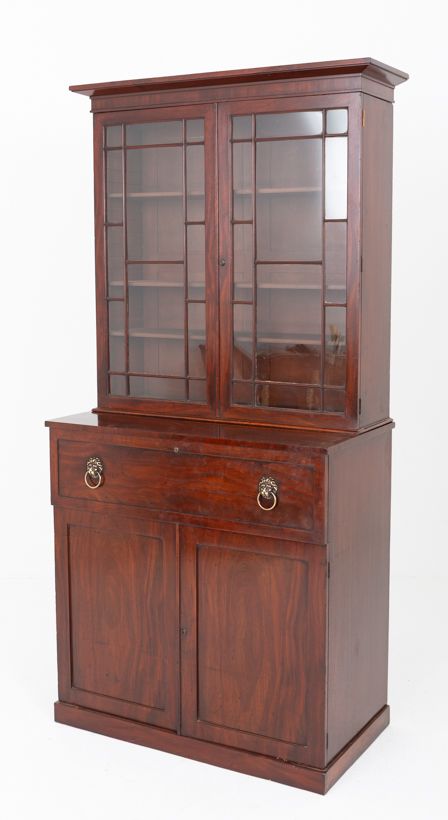
Regency Bookcase with Desk
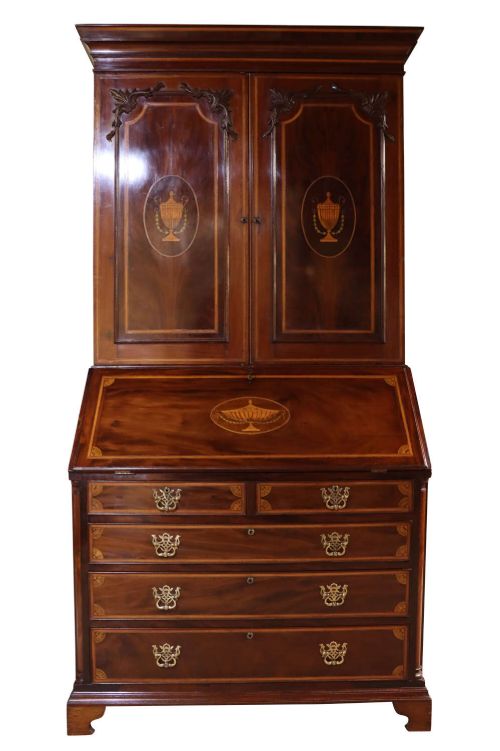
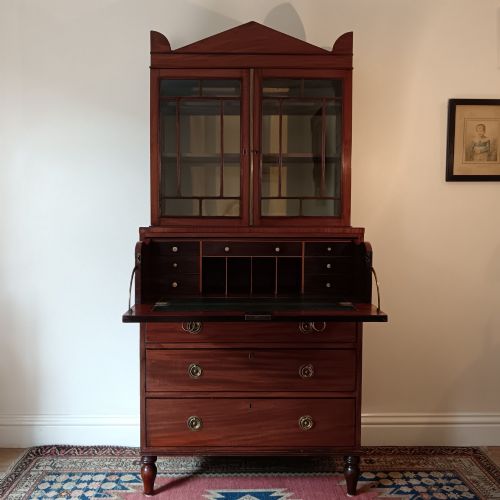
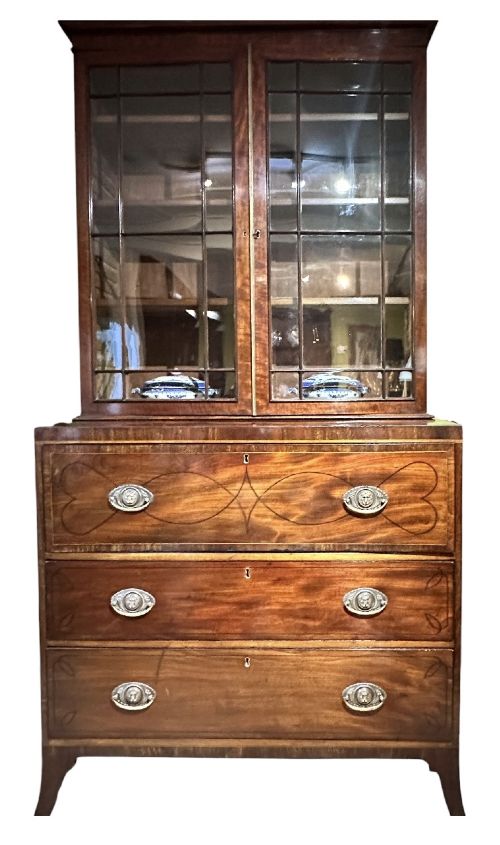
A regency bookcase with desk is a dual-purpose piece that combines display shelving with a concealed writing compartment for domestic study.
Regency Bookcase with Desk
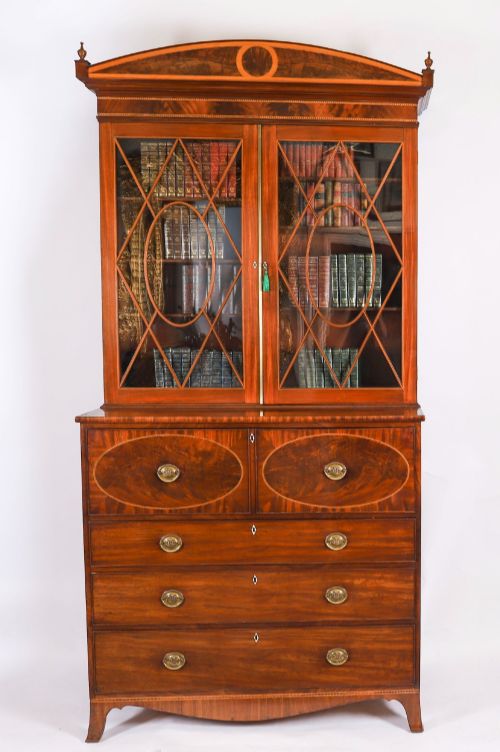
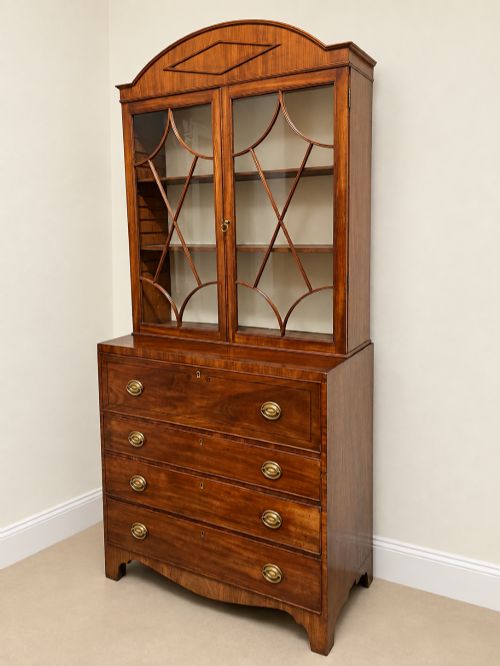
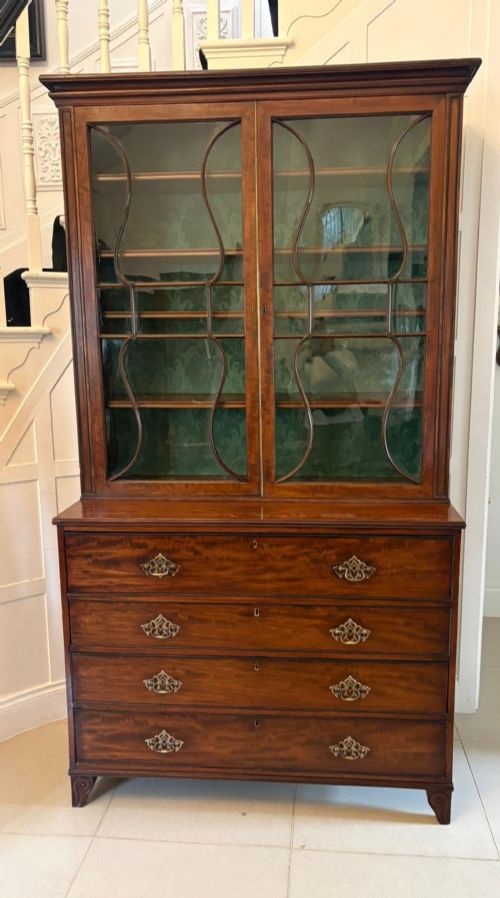
A regency bookcase with desk brings together upper shelving for books and a drop-front or cylinder writing section within a single cabinet. These architectural items emerge predominantly from the nineteenth century, spanning periods from Georgian through William IV and Victorian eras.
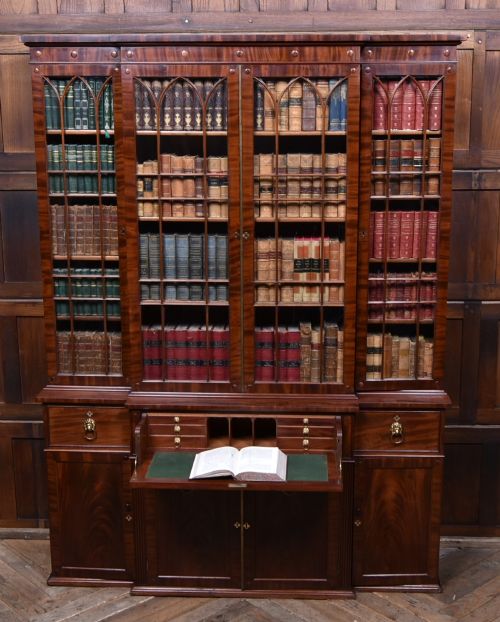
Bureau bookcases and secretaire bookcases form the core of what you will encounter on this page. They typically feature glazed doors above a fitted interior that conceals small drawers and pigeonholes behind a fold-down writing surface.
Most examples are constructed in rich timbers such as mahogany, flame mahogany, and rosewood, often accented with delicate wood inlay. They serve as functional writing stations while simultaneously providing prominent display space for libraries and collections.
How they were made
Cabinet makers relied heavily on solid timber and figured veneers, selecting mahogany and rosewood for their deep grain patterns and durability. Flame mahogany was cut to create striking visual movement across large fall-front writing surfaces and cabinet doors.
Astral glazing bars divided upper glass panels into geometric panes, securing individual panes of glass above the desk section. Drawers utilised fine dovetail joinery, while interiors incorporated elaborate small drawers, compartments, and pigeonholes constructed from secondary woods.
Regency Bookcase with Desk Retail Price Guide 2026
Typical asking prices for regency bookcase with desk among the pieces listed under this phrase on Sellingantiques today, from the lower quarter to the upper quarter. They describe what is for sale here now, not the wider market.
The furniture styles on this page span Georgian, Regency, William IV, and Victorian periods, centred on bureau and secretaire bookcase forms.
What varies in quality
The selection of timber grain heavily dictates the visual distinction of a piece, with book-matched flame mahogany and rosewood commanding a different presence than plain timber. Subtle brass hardware details and precise marquetry inlay also indicate the level of care taken by the maker.
Interior complexity separates standard utilitarian pieces from finer examples fitted with secret compartments, pigeonholes, and intricately arranged small drawers. The crispness of the astral glazing bars and the alignment of the fall-front desk further distinguish workshop standards.
Gillows
The Regency Bookcase with Desk Glossary
- Secretaire
- A cabinet or desk featuring a pull-out or drop-front drawer that conceals a fitted writing interior. This mechanism allows a chest or bookcase to function as a writing desk.
- Astral glazing
- A network of slender wooden bars dividing a glass door into smaller panes. This technique is typical of upper bookcase sections from the Georgian and Regency periods.
- Marquetry
- Decorative patterns formed by fitting together thin slices of various coloured woods and other materials. It creates pictorial or geometric designs on cabinet surfaces.
- Flame mahogany
- A veneer cut from the fork of a mahogany tree where the branches join the trunk. This produces a flamy, feather-like grain pattern prized for principal display surfaces.
- Fall-front
- A hinged writing flap that drops down into a horizontal position for use. It conceals internal stationery compartments when closed.
Regency Bookcase with Desk: Frequently Asked Questions
What is a secretaire bookcase?
A secretaire bookcase combines an upper section of shelves with a lower cabinet containing a pull-out or drop-down writing desk. The internal desk compartment typically includes small drawers and pigeonholes.
These pieces were designed for domestic studies and parlours where space was at a premium. They allowed owners to store a library and write letters within a single piece of furniture.
How do I identify a Regency period bookcase?
Regency pieces often display classical architectural influences such as brass mounts, astral glazed doors, and rich mahogany or rosewood veneers. The proportions tend to be clean and balanced, drawing inspiration from ancient Greek and Roman designs.
Cabinet makers working during this era favoured dark timbers and subtle inlay work over heavy carving. Examining the interior construction and secondary woods helps confirm the nineteenth-century origin.
How were these desks used historically?
Owners used the fold-down or cylinder writing surface for correspondence, managing household accounts, and reading. The upper shelves housed bound volumes and private libraries.
When not in use, the fall-front desk closed to conceal writing materials and papers, maintaining a tidy appearance in the room. The integrated storage kept ink, quills, and stationery close at hand.
What timber was used for these bookcases?
Mahogany is the primary wood found in these bookcases, frequently utilised in figured, flame, or plain varieties. Rosewood also appears on select cabinets, offering a darker and more contrasting grain.
Inlay work often incorporates lighter woods to create geometric or floral borders. Secondary timbers like oak or pine were typically used for hidden drawer linings and internal dividers.