

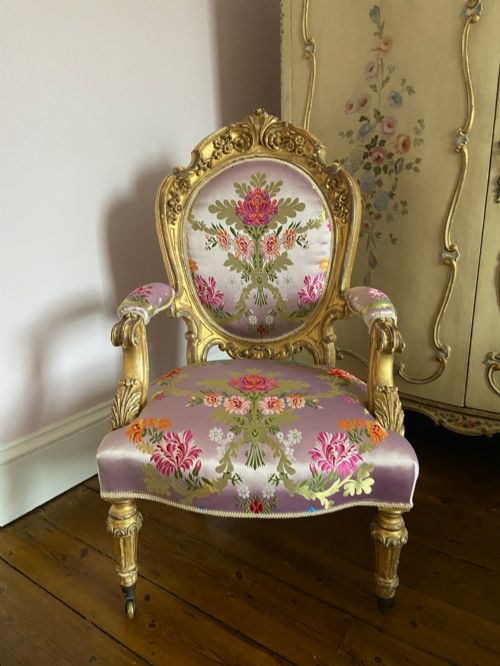
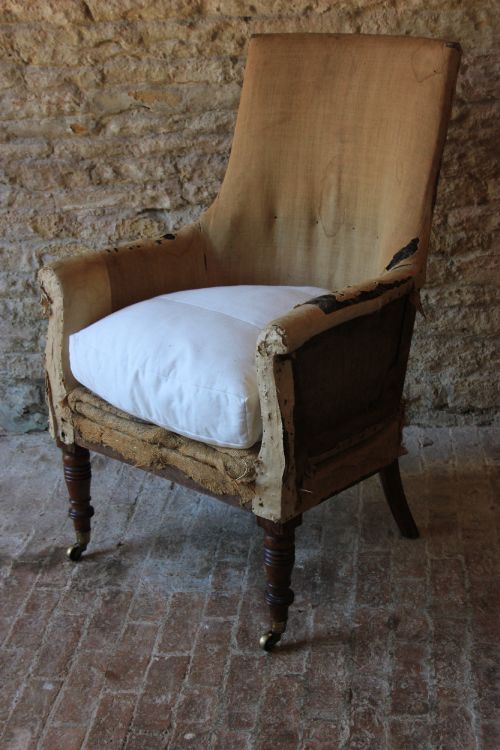
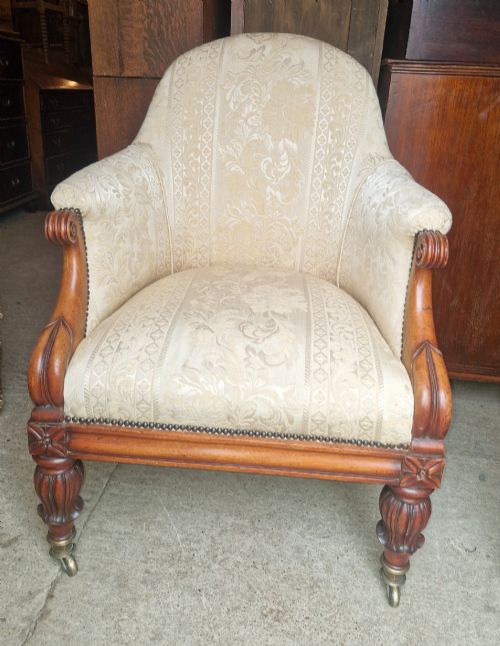


Regency Armchair Frame
These regency armchair frame pieces are bare structural skeletons waiting for upholstery, offering a direct view into early nineteenth century cabinetmaking.
Regency Armchair Frame
When you search for a regency armchair frame, you look at exposed timber carcases stripped of their final covers or preserved in raw wood. These skeletons display the underlying joinery and carving of the seat, back, and arms before any textile goes on.
You meet various forms on this page, dominated by library armchairs, bergere chairs, and desk chairs alongside occasional dining carvers. The design ranges from strict Regency prototypes to later revivals from the nineteenth and twentieth centuries.
The periods and styles stretch across the Regency era, Georgian, William IV, and later Rococo Revival or Regency Revival interpretations. Materials vary from mahogany and ebony to giltwood, walnut, and simulated rosewood.
How they were made
Cabinetmakers shaped these frames primarily from dense hardwoods like mahogany and ebony, occasionally employing giltwood or walnut for specific decorative schemes. Timber selection dictated how crisply the wood carver could render reeding, sabre legs, and turnings.
Construction relied on traditional joinery methods to support the stress placed on open arms and raked back legs. Frames often incorporated dropped seats or cane panels designed to take loose cushions or drop in upholstery pads.
Frames span from early nineteenth century library chairs to twentieth century revival pieces.
What varies in quality
The standard of timber and the crispness of the carving separate a master workshop piece from standard production work. Grain selection in the mahogany or rosewood defines the visual depth of the bare wood.
Structural integrity and the subtlety of the frame proportions dictate the overall merit of the piece. Subtle details like reeded sabre legs or curved arm supports show the hand of a skilled maker.
Gillows·Minter
The Regency Armchair Frame Glossary
- Regency frame
- A wooden armchair skeleton dating from the early nineteenth century or built in that specific classical style. These frames show characteristic elements like sabre legs and reeded framing.
- Sabre leg
- A concave tapering furniture leg that curves outward toward the foot. This form appears frequently on Regency chairs to give a sense of dynamic movement.
- Giltwood
- Timber coated with a thin layer of gold leaf or gesso and gold paint. This finish creates a bright metallic surface on decorative reception and library chairs.
- Curule style
- An ancient Roman X shaped seat design revived during the classical periods. The crossed curved supports form a distinct architectural profile for open armchairs.
Regency Armchair Frame: Frequently Asked Questions
What is a regency armchair frame?
A regency armchair frame is the exposed wooden structure of an antique seat without its final fabric cover. It reveals the bare timber, joinery, and carved details created by nineteenth century cabinetmakers.
These pieces let buyers see the raw construction methods and wood quality before new upholstery is applied. They range from simple library chairs to elaborate giltwood and ebony library seats.
How do I choose the right wood?
Selecting a wood type depends on the room setting and the specific historical period you want to represent. Mahogany remains the most common choice, offering durability and a deep reddish brown grain.
Alternative materials like ebony, giltwood, or simulated rosewood provide distinct visual contrasts. Darker hardwoods suit formal library spaces, while giltwood brings a lighter, more decorative presence.
Can I use these frames daily?
These frames are structurally sound enough for regular seating once properly restored and upholstered. The heavy hardwood construction supports everyday use in a modern home.
Buyers often pair the bare frame with traditional webbing and sprung interiors to ensure long term comfort. Professional upholstery protects the antique timber while making the chair fully functional.
How do I spot a revival piece?
Revival frames date from later periods such as nineteen ten or nineteen hundred, mimicking the earlier Regency style. They use machine assisted joinery or wood types that differ slightly from authentic early nineteenth century stock.
Examining the tool marks, timber ageing, and joint construction helps distinguish an original Regency piece from a later copy. Both hold decorative merit, but understanding the date clarifies the historical context.