

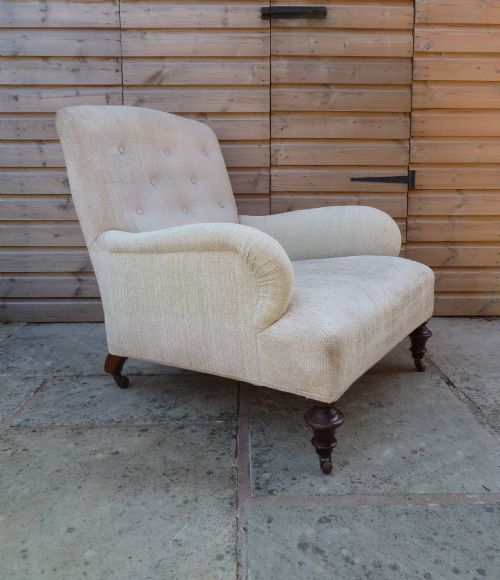
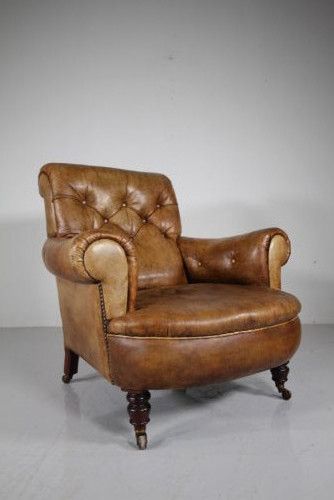
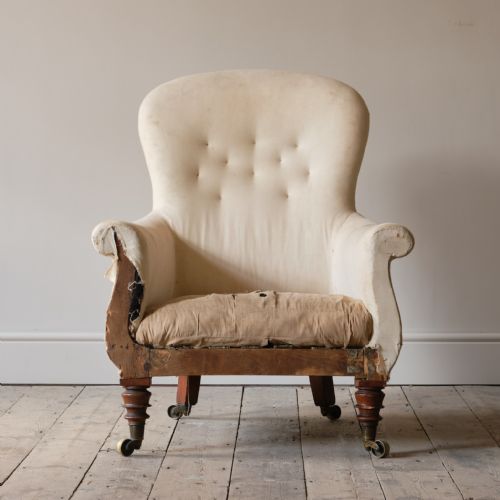
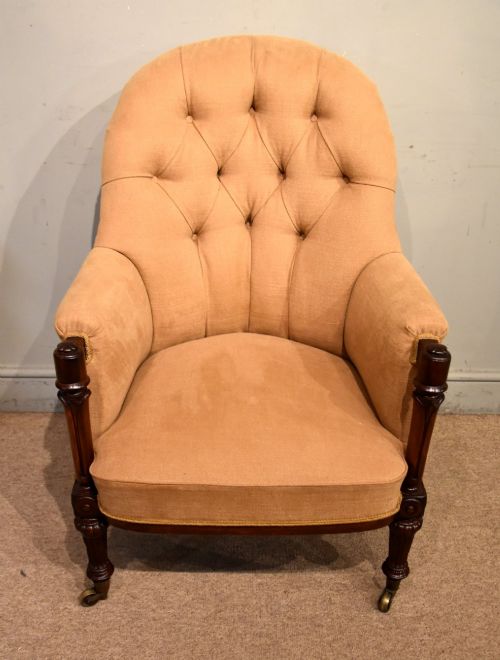
Turned Leg Reading Seat
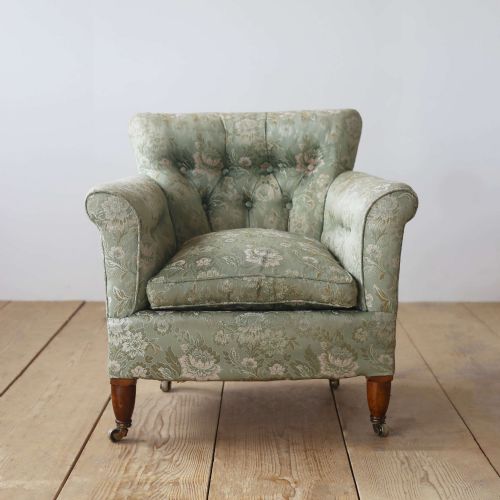
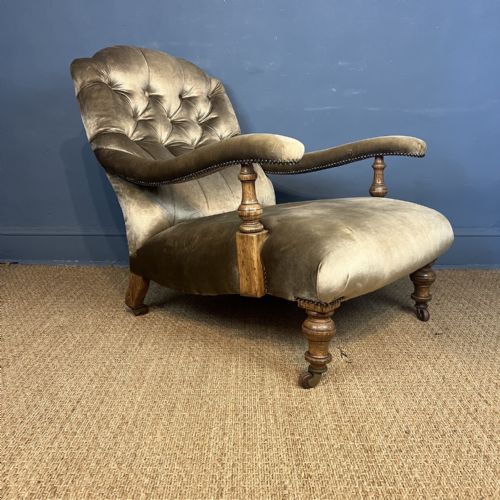
A turned leg reading seat brings robust nineteenth century comfort and timber character straight to your fireside or library.
Turned Leg Reading Seat
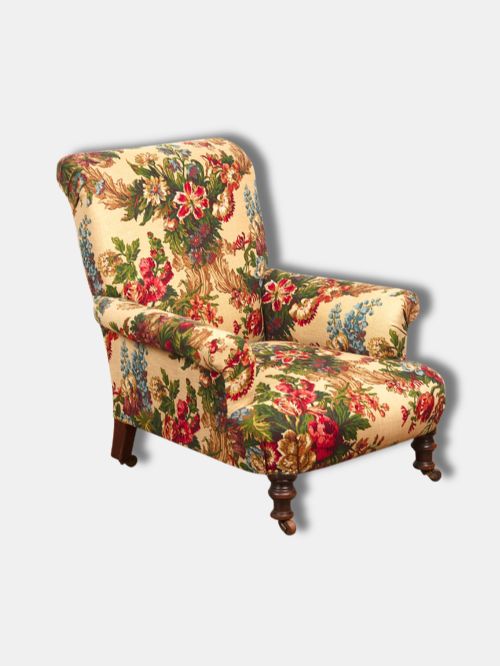
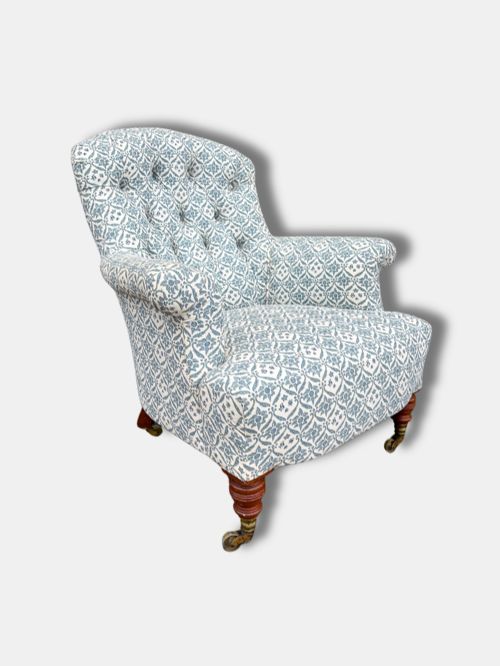
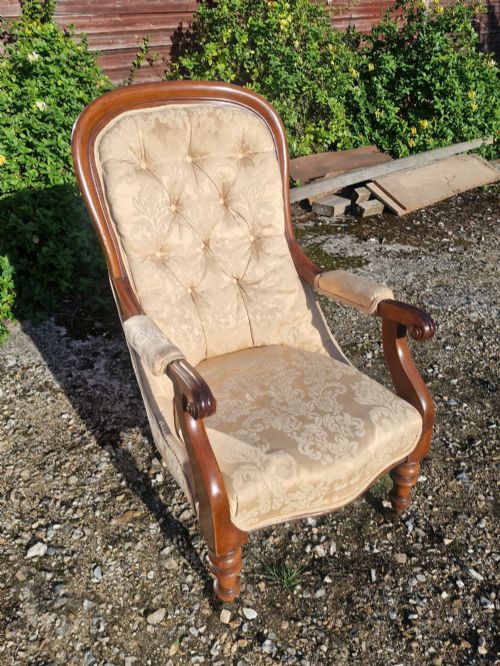
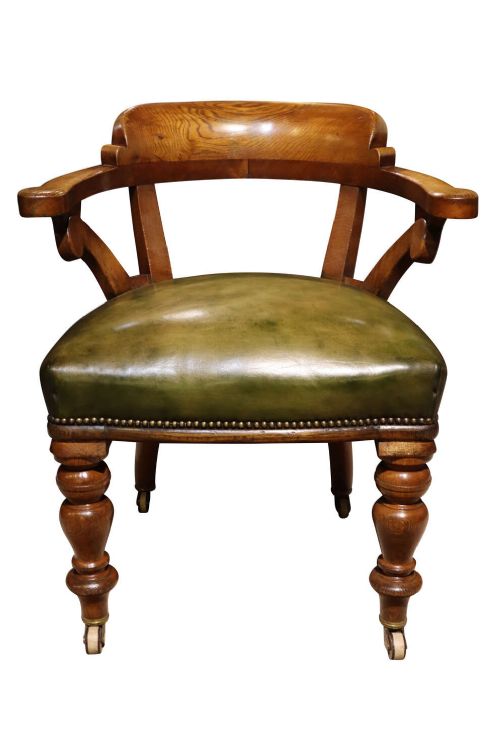
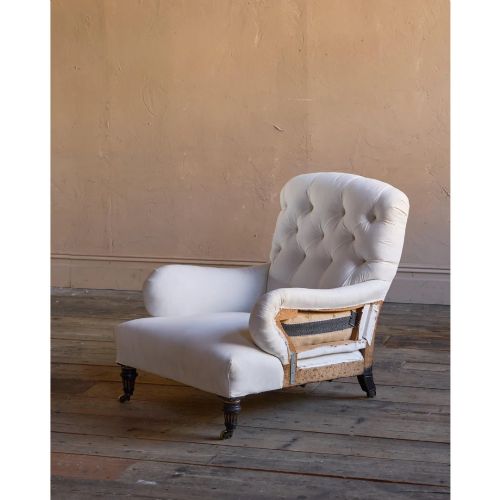
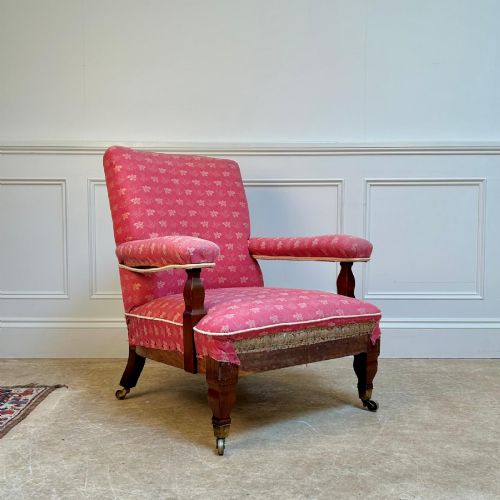
A turned leg reading seat is primarily represented here by nineteenth century armchairs, library chairs, and desk chairs spanning Victorian, Regency, and Edwardian periods. These sturdy forms were designed for long hours of study or repose, often featuring deep seats and supportive backs.
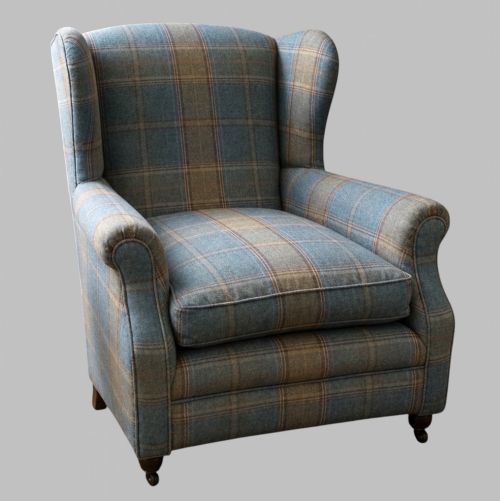
The materials recorded across these seating options combine solid timbers such as mahogany, walnut, oak, and elm with traditional upholstery foundations including hessian, calico, velvet, and leather. Brass elements and wool plaids also appear amongst the later examples.
Makers and stylistic influences range from specific cabinet makers to broader English country house aesthetics, arts and crafts, and aesthetic movement designs. The core function remains an inviting, substantial chair built around sturdy turned wooden supports.
Materials and construction methods
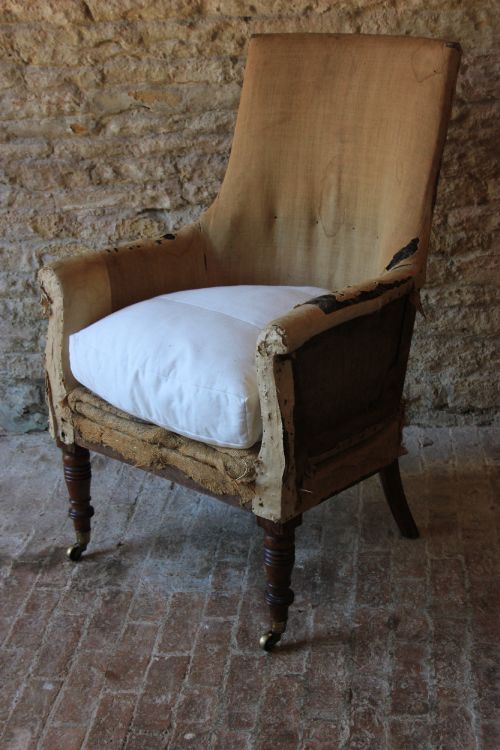
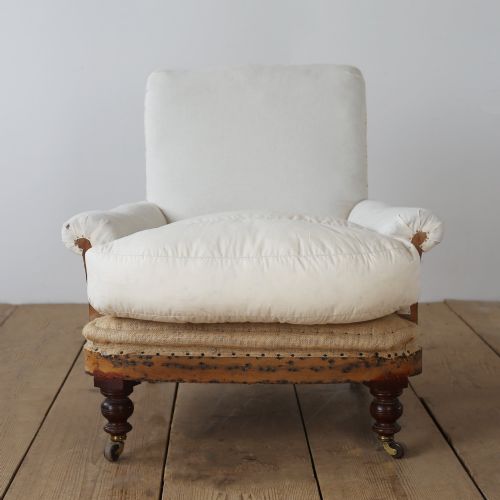
Frames are constructed from dense hardwoods like mahogany, walnut, oak, and elm, providing the structural integrity required for heavy library and armchair forms. Turning lathes shaped the prominent wooden legs seen across the period pieces.
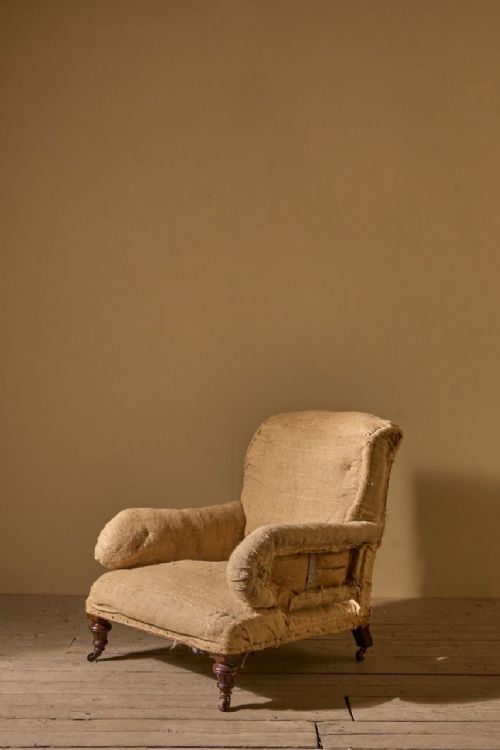
Upholstery relied on traditional layered techniques utilising hessian and calico webbing underneath top coverings of leather, velvet, or woven fabric. Brass tacks and detailed reeding or carving completed the finishing touches on finer frames.
Materials span solid mahogany, walnut, oak, and elm paired with leather, velvet, calico, hessian, and brass details.
Distinctions in craftsmanship and finish
The calibre of a turned leg reading seat rests on the crispness of the timber turning, the selection of dense hardwoods like figured mahogany or walnut, and the integrity of the frame joints. Superior examples demonstrate thoughtful proportions and uncompromised structural weight.
Upholstery depth and the preservation of original or sympathetic coverings contribute significantly to the character of each piece. Finer items often retain maker stamps or display exceptional attention to carved details and brass mounts.
George Jack For Morris·Howard And Sons·Hampton And Sons·Gillows·James Shoolbred
The Turned Leg Reading Seat Glossary
- Library chair
- A substantial upholstered armchair designed for reading rooms, typically featuring padded arms and a supportive back. These chairs prioritise long-term seating comfort.
- Reeded
- A decorative moulding consisting of parallel convex strips resembling bundled reeds. It is frequently carved directly into the wooden legs or frames of Regency and Victorian seating.
- Hessian
- A coarse woven fabric, often made from jute fibres, used traditionally as the foundational webbing beneath chair upholstery. It provides durable support for internal padding.
- Calico
- A plain-woven cotton textile utilised in traditional upholstery as an inner lining layer before the final top cover is applied. It keeps stuffing securely contained.
- Splat
- A vertical strip of wood down the centre of a chair backrest, offering structural support and decorative outline. Elm seat variants frequently incorporate this feature.
Turned Leg Reading Seat: Frequently Asked Questions
What defines a library chair?
A library chair is built for extended reading, featuring a deep seat, supportive backrest, and often upholstered arms. These pieces emphasise physical comfort alongside sturdy timber construction.
They emerged strongly during the nineteenth century in Regency and Victorian styles, serving scholars and readers in grand homes.
How do I identify a Victorian armchair?
Victorian armchairs are typically characterised by heavier proportions, dense timbers like walnut and mahogany, and traditional upholstery methods. Turned wooden legs and brass accents frequently appear.
Makers of this era often combined robust frames with deep seating spaces designed for domestic ease.
What are turned legs?
Turned legs are wooden supports shaped on a lathe to create cylindrical, spiral, or tapered profiles. This woodworking technique adds decorative detail and stability to chair frames.
They appear across various nineteenth century styles, from simple country pieces to refined library seating.
How do I care for leather upholstery?
Leather upholstery on antique chairs benefits from gentle cleaning and occasional conditioning to prevent drying. Avoid placing antique leather in direct sunlight or near heat sources.
Preserving the natural surface helps maintain the character and longevity of historical seating.