



Traditional Mahogany Library Seat
A traditional mahogany library seat brings structural warmth and practical comfort to a study, offering a sturdy frame designed for long hours of reading.
Traditional Mahogany Library Seat
When you search for a traditional mahogany library seat, you encounter robust seating designed primarily for studies, libraries, and studies from the eighteenth century onwards. The selection on this page centres on sturdy armchairs and desk chairs built for sustained use.
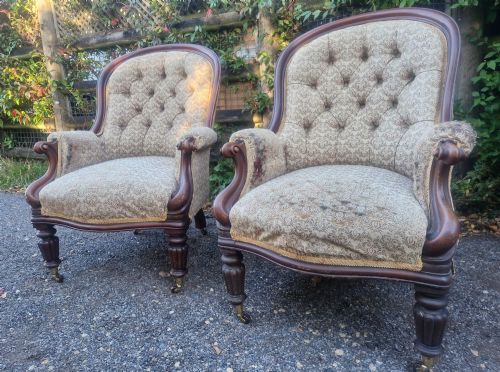
The pieces span several periods, including Georgian, Regency, and Victorian eras, alongside later revival pieces. You will frequently meet heavy timber frames accompanied by upholstered pads or cane panels intended for domestic studies.
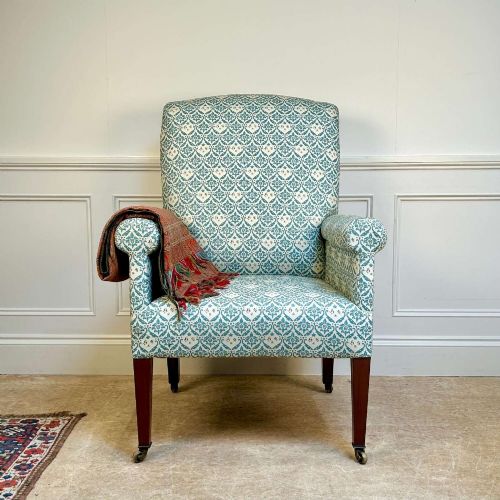
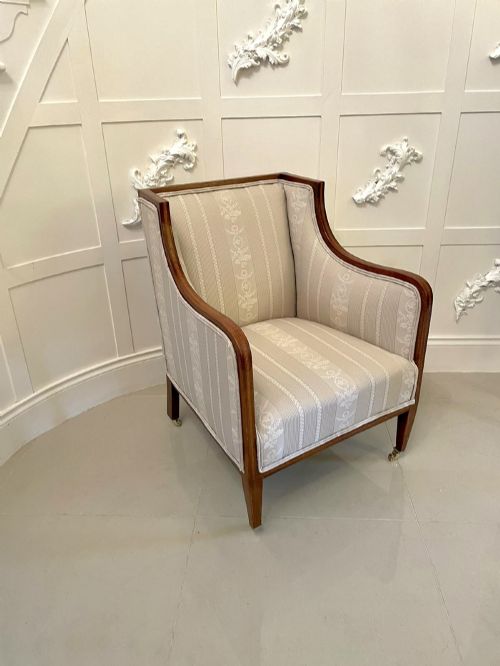
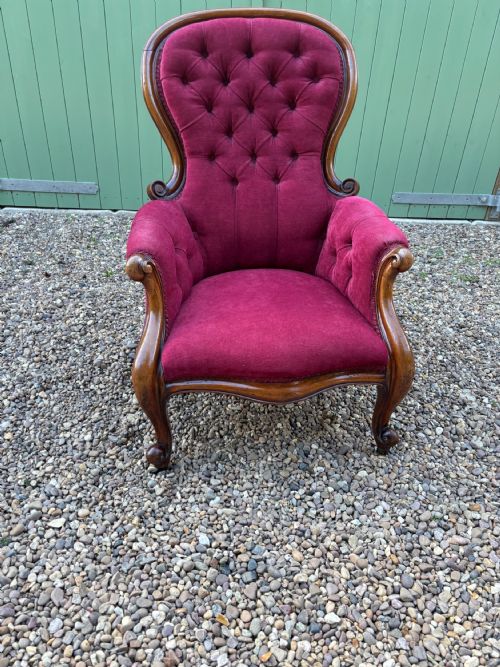
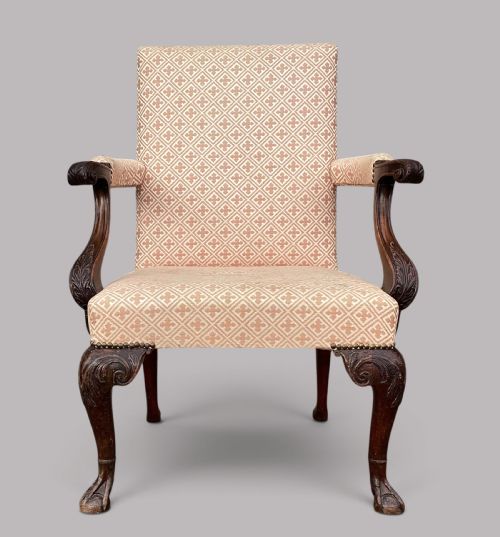
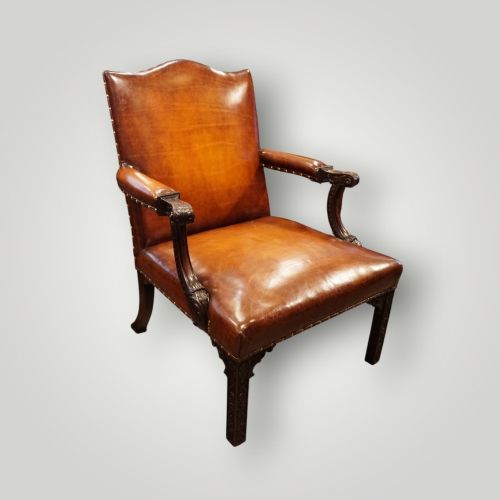
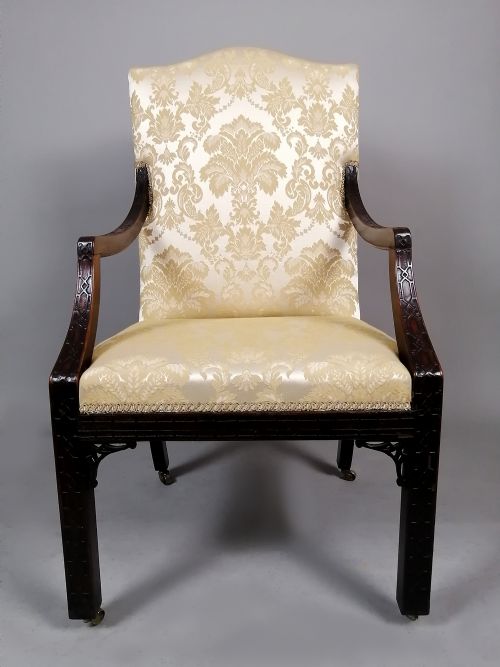
Forms range from open Gainsborough chairs to enclosed wing chairs and buttoned club seating. Each variant serves a specific posture, whether upright at a partner desk or reclined beside a bookcase.
Materials and construction methods
Cabinet makers relied heavily on solid mahogany for its dense grain and structural stability. This hardwood tolerated intricate hand carving along the arm supports, rails, and claw and ball feet without splitting.
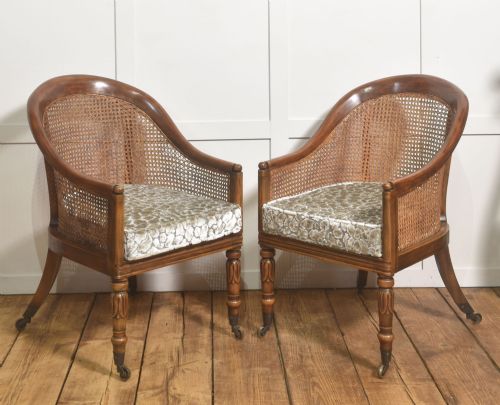
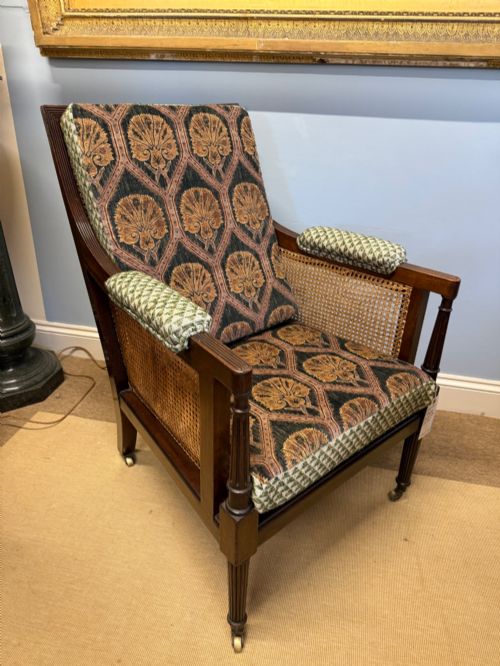
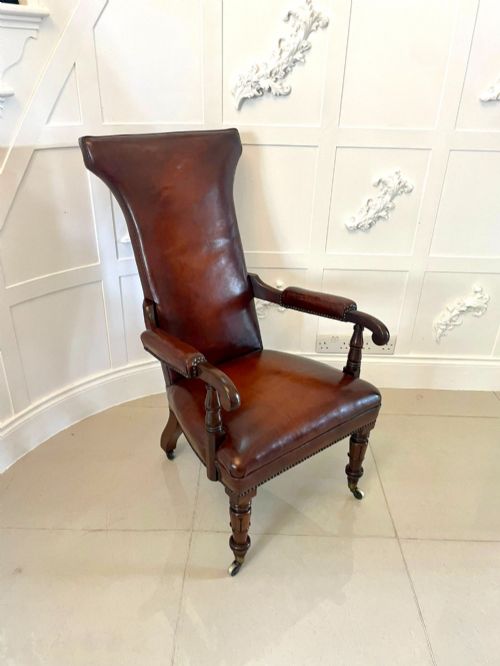
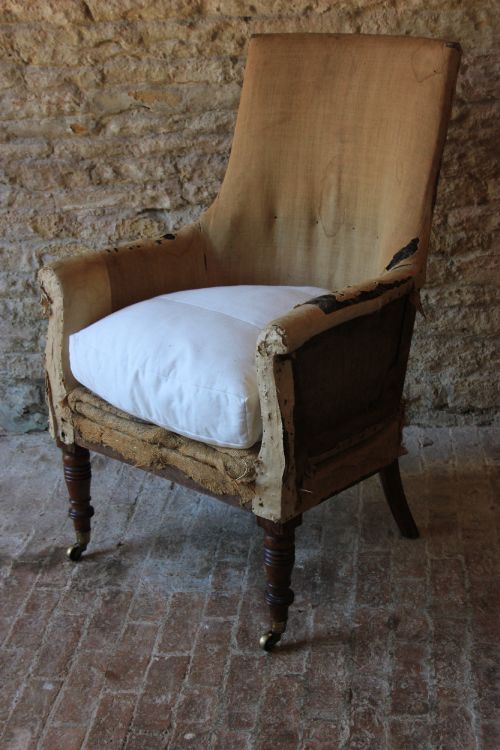
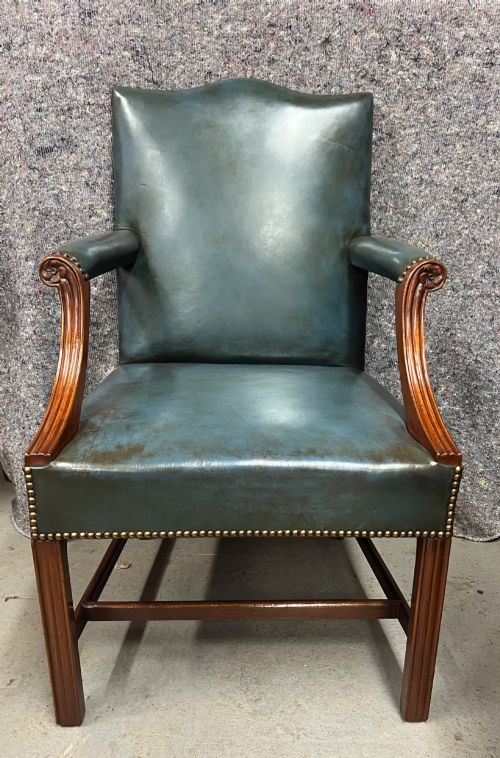
Upholstery required traditional stuffing beneath hand-dyed English hide leather, woven cane, or velvet. Brass tacks frequently secured the edges of the leather hides to the wooden framework.
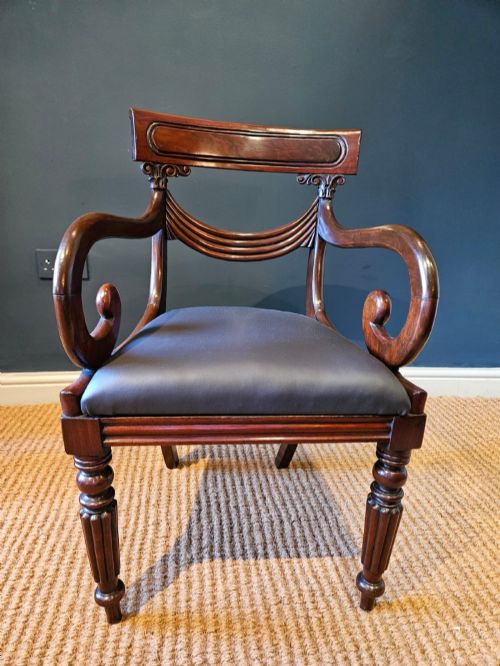
Joinery techniques involved mortise and tenon joints fastened tightly to bear the heavy weight of frequent sitting. Reeded mouldings and blind fretwork were carved directly into the structural mahogany members.
Materials recorded on this page include solid mahogany timber, brass tacks, hand-dyed leather, cane, and velvet.
Distinctions in craftsmanship
Quality rests principally in the depth and crispness of the hand carving on the mahogany frame. Superior examples display sharply rendered acanthus leaves, reeding, or blind fretwork rather than soft, flat moulding.
The choice of covering material and the integrity of the underlying webbing determine durability. Dense buttoning and supple hand-dyed leather indicate a higher grade of workshop production than basic fabric coverings.
Proportion and structural rigidity separate standard seating from exceptional pieces. Well-balanced armrests and solid leg connections ensure the chair maintains its stance over centuries of daily use.
Howard and Sons·Gillows
The Traditional Mahogany Library Seat Glossary
- Gainsborough chair
- An eighteenth-century style of open armchair featuring padded armrests and a wide seat designed for comfort. These seats typically stand on square or cabriole legs.
- Bergère
- An enclosed armchair with stuffed upholstery set within a wooden frame, frequently featuring cane panels along the sides and back. This French-inspired form gained popularity in British libraries.
- Blind fretwork
- Low-relief ornamentation carved into a flat wooden surface to resemble intricate pierced fretwork. Cabinet makers utilised this technique on desk chair legs and seat rails.
- Reeding
- Parallel convex moulding carved into solid timber to resemble upright reeds. This decorative detail frequently appears on the front legs of nineteenth-century chairs.
- Claw and ball
- A carved furniture foot depicting an animal's talon gripping a spherical ball. This motif often terminates the cabriole legs of Georgian and Edwardian seating.
Traditional Mahogany Library Seat: Frequently Asked Questions
How do I identify a Georgian mahogany library seat?
Look for dense, dark mahogany timber paired with hand-carved details such as claw and ball feet or blind fretwork. These earlier pieces often feature generous proportions and exposed wooden frames.
Check for traditional joinery methods and patination on the wood surfaces that indicate considerable age. Regency and Victorian successors often introduced reeded legs or buttoned leather upholstery.
What is the difference between a desk chair and a library chair?
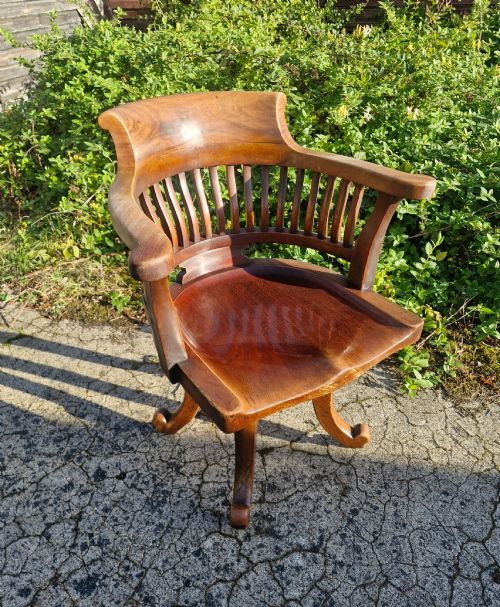
Desk chairs are typically built with mobility in mind, often featuring swivel mechanisms or slightly more upright postures suited for writing tables. Library chairs prioritise relaxed reading comfort with broader seats and padded armrests.
Both utilise durable mahogany frames, but library variants more frequently incorporate cane panels or deep leather cushioning for extended sitting.
Are cane panels durable on antique seating?
Cane panels woven from natural rattan offer surprising resilience when properly tensioned across a wooden frame. They provide a lightweight backrest that allows airflow while maintaining structural support.
Over long periods, dry conditions can cause individual strands to snap, requiring professional re-caning. Gentle cleaning helps preserve the natural flexibility of the rattan.
How should I care for leather upholstery?
Apply a neutral leather balm periodically to maintain the suppleness of historic hide coverings. Avoid placing the seating in direct sunlight to prevent the leather from drying out or fading.
Dust the buttoned folds regularly with a soft cloth to prevent grit accumulation in the creases. Proper climate control in your study protects both the leather and the internal padding.