
Refectory Style Kitchen Table
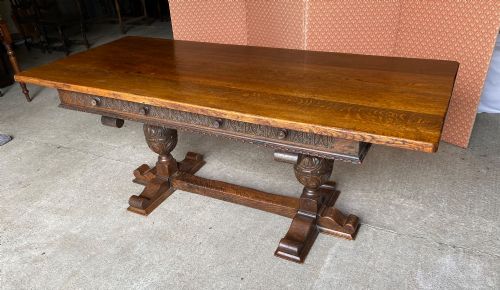
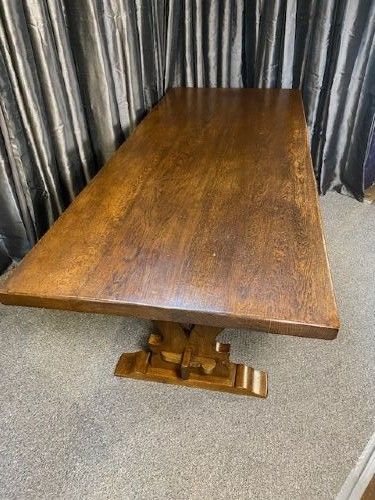
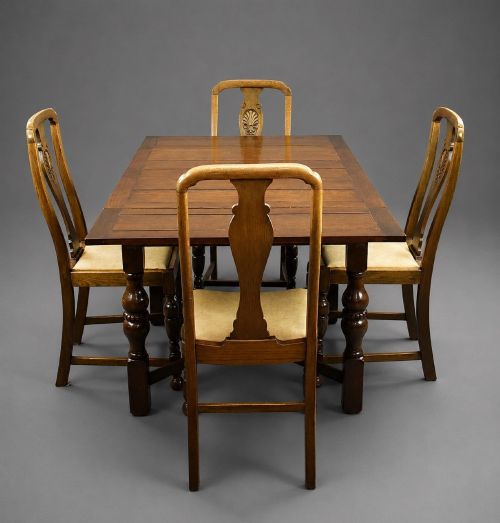
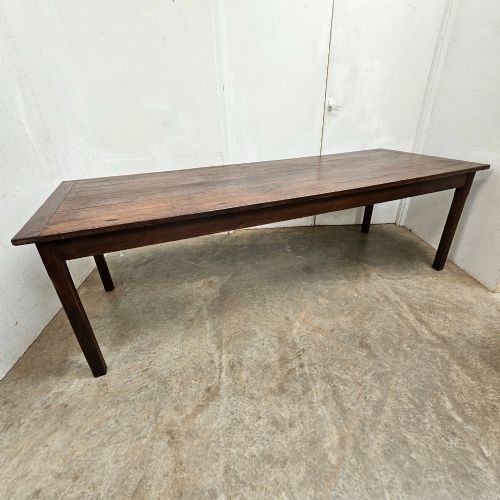
These refectory style kitchen table pieces bring sturdy timber construction and long seating capacity into domestic spaces, drawing on historic dining halls.
Refectory Style Kitchen Table
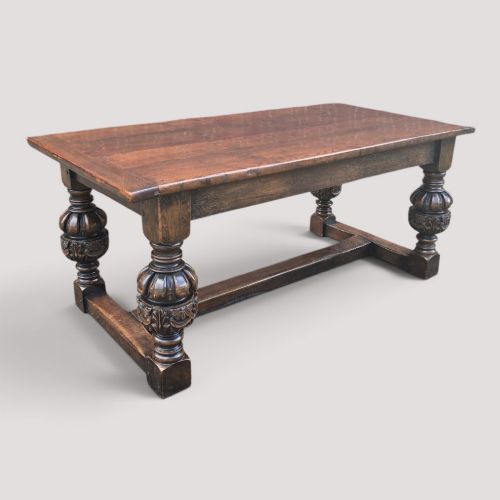
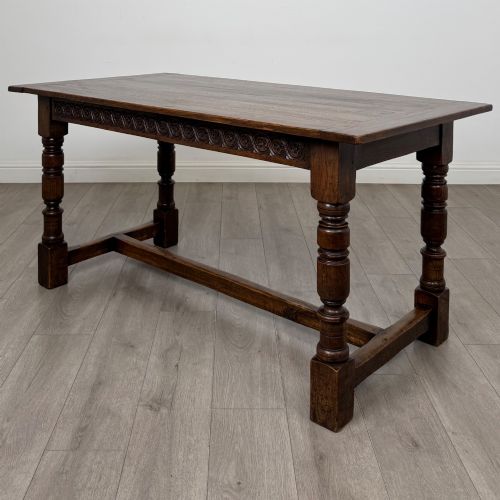
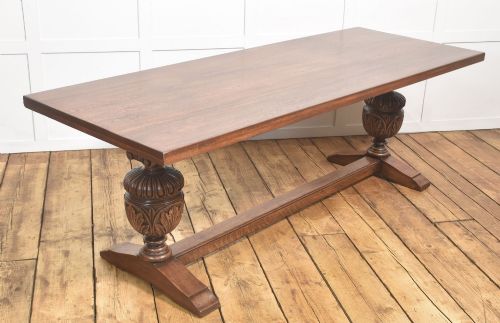
A refectory style kitchen table provides a long, narrow surface suited to communal dining, appearing here primarily in oak and solid timber variants. These tables frequently take design cues from earlier centuries, with styles spanning Jacobean revival, Elizabethan, and Arts and Crafts aesthetics.
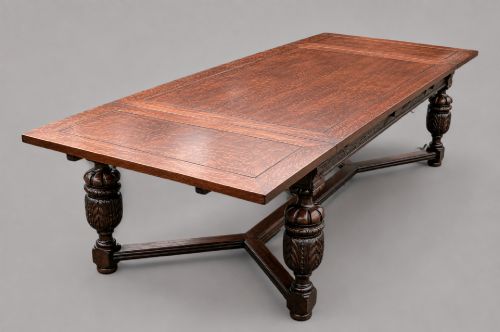
The pieces on this page emerge largely from the late nineteenth century through to the 1930s, including Edwardian examples alongside earlier nineteenth-century interpretations. Buyers encounter standard dining tables, draw-leaf extending variants, and trestle forms designed for daily household use.
Materials and Construction
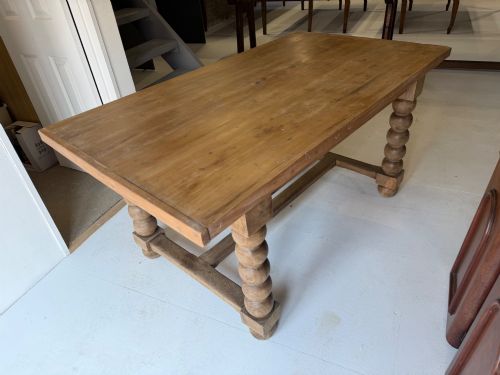
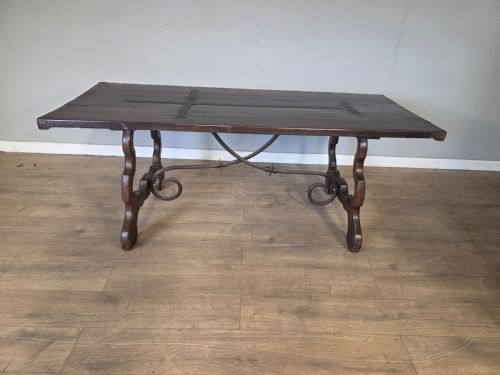
Makers relied heavily on solid oak, quarter-sawn oak, and pine, often selecting quartered timber to display distinctive grain patterns across the plank top. Supplementary elements incorporate beech for turned legs and wrought iron for structural support.
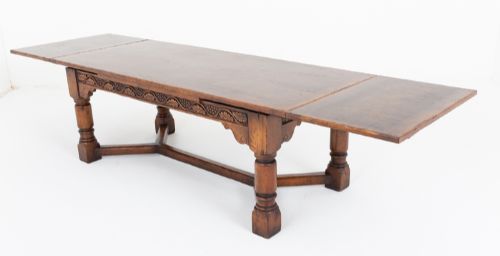
Joinery methods reflect traditional cabinet-making practices, utilising draw-leaf mechanisms for extension and sturdy trestle ends to bear heavy loads. Surfaces remain largely unadorned or feature restrained carved detailing consistent with revivalist movements.
Several tables arrive with hidden leaves that slide out like shy drawer tongues, ready to host unexpected dinner guests.
Craftsmanship and Material Selection
Superior examples employ quarter-sawn oak with dense medullary rays, providing both visual depth and structural stability to the plank top. Lesser pieces utilise secondary softwoods or plain timber that lacks the dense grain of the finer offerings.
The execution of joinery distinguishes the workshop standards, particularly in the smooth operation of draw-leaf mechanisms and the rigidity of trestle bases. Tables displaying thoughtful proportion and balanced carving demonstrate a higher degree of period craftsmanship.
The Refectory Style Kitchen Table Glossary
- Refectory table
- A long dining table historically used in monastic dining halls. These domestic adaptations translate that elongated format for modern kitchen and dining environments.
- Draw-leaf
- An extending table mechanism featuring leaves stored beneath the main top that pull out from either end. This allows the surface length to increase without removing the central boards.
- Quarter-sawn
- A method of milling logs radially to produce timber with vertical growth rings. This cut yields boards with enhanced dimensional stability and characteristic figuration.
- Trestle
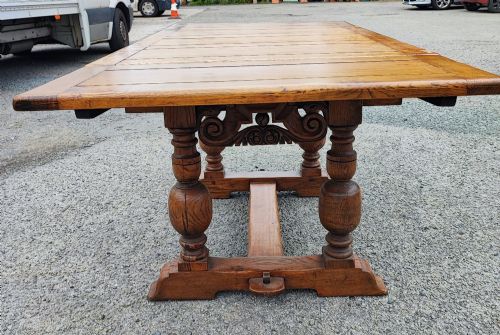
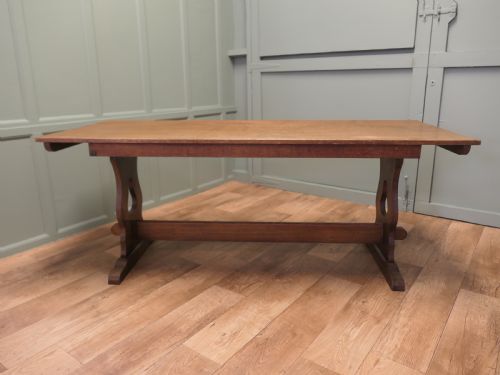
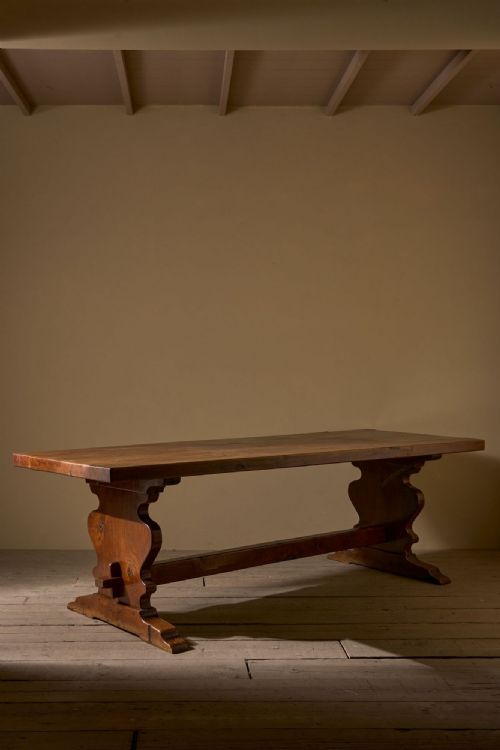
- A structural support consisting of a horizontal beam fixed to two splayed legs. Tables utilising this base design offer uninterrupted legroom along the length of the top.
- Jacobean Revival
- A nineteenth and twentieth-century design style emulating seventeenth-century English furnishings. Pieces in this manner typically feature turned supports and dark-finished oak.
Refectory Style Kitchen Table: Frequently Asked Questions
How many people do these tables seat?
The length of these tables comfortably accommodates six to ten diners depending on the specific dimensions. Many variants include extending leaves to adjust capacity for larger gatherings.
Trestle bases and narrow proportions ensure chairs tuck underneath efficiently without obstructive legs.
Are these tables practical for daily use?
Solid timber construction provides the durability required for active kitchens and dining rooms. Regular maintenance involves simple cleaning and occasional waxing to protect the wood grain.
The sturdy frames withstand heavy daily service while developing a deeper patina over time.
How do I identify the period of a table?
Dating relies on examining the timber preparation, tool marks, and specific revival style influences. Turnings, joinery techniques, and hardware mechanisms provide further clues regarding the era of manufacture.
Late nineteenth and early twentieth-century pieces often combine historic styling with modern mechanical conveniences like draw-leaves.
What is the difference between refectory and farmhouse tables?
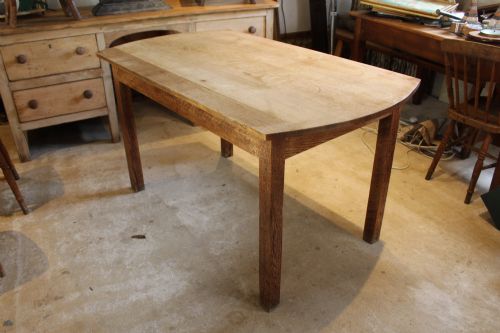
Refectory tables traditionally emphasise an elongated, narrow plank top supported by trestles or heavy legs linked by stretchers. Farmhouse tables frequently adopt standard four-leg configurations with broader proportions.
Both styles draw on vernacular domestic traditions but serve slightly different spatial requirements in a room.