
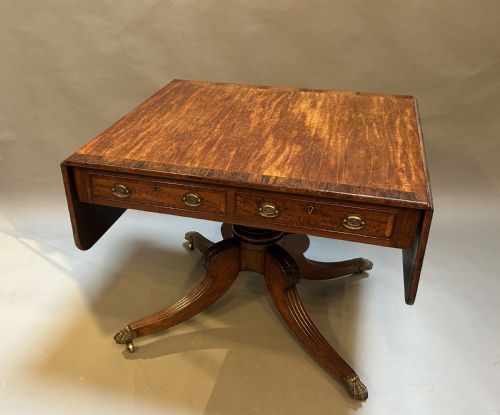
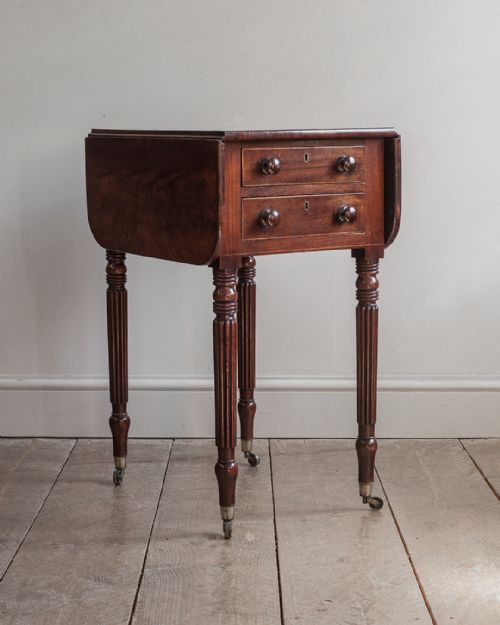


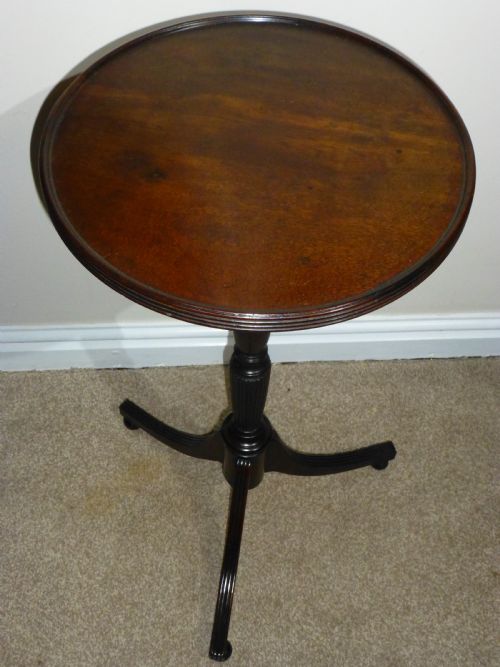


Reeded Mahogany Occasional Table
A reeded mahogany occasional table brings architectural line and rich timber to a room, spanning forms from tripod wine tables to pembroke and drum designs.
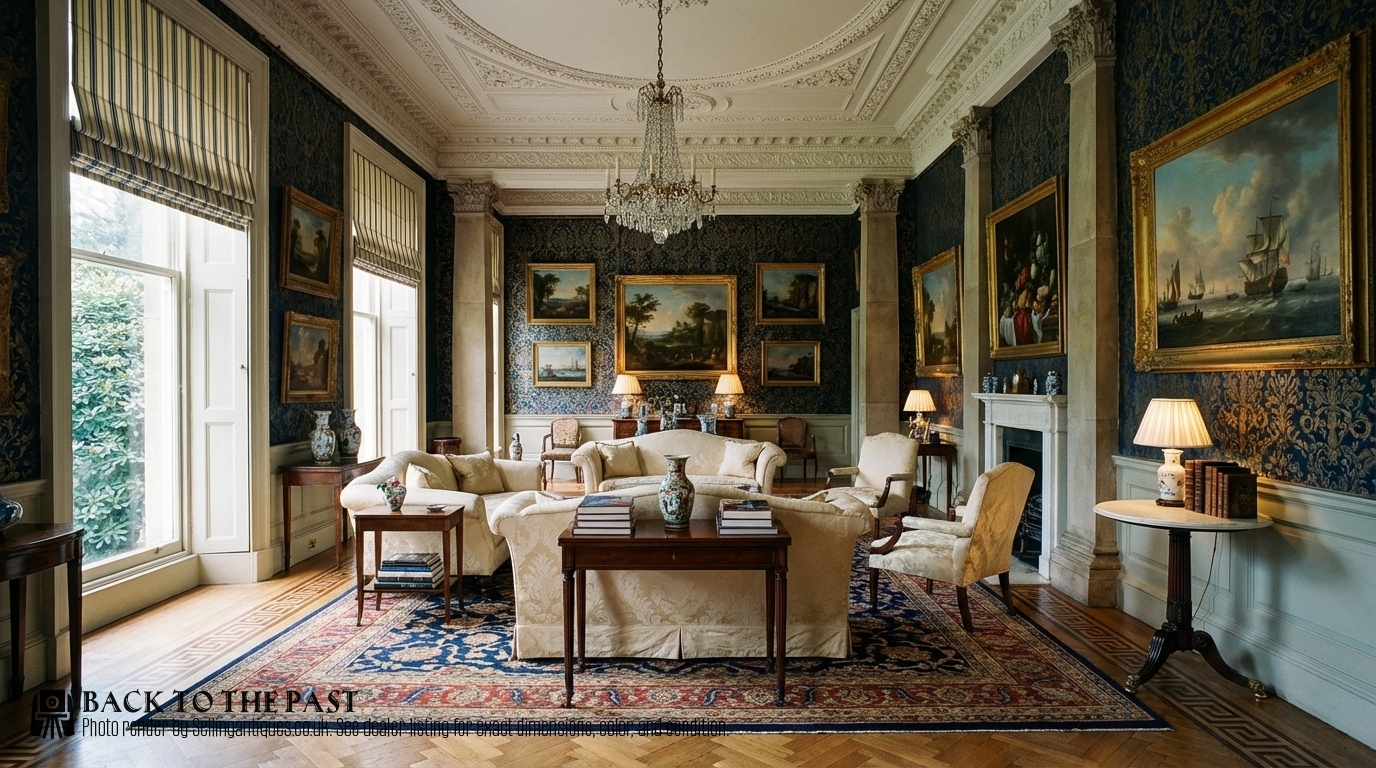
Reeded Mahogany Occasional Table
A reeded mahogany occasional table is a versatile small surface found across Georgian, Regency, and nineteenth-century periods, encompassing object types such as side tables, tilt-top wine tables, sofa tables, and pembroke tables. The listings show a strong presence of Regency pieces alongside Georgian origins and later twentieth-century revivals.
Buyers encounter various forms, from pedestal tripod bases and drum tables to dropleaf sewing and work tables fitted with drawers. Many examples highlight specific proportions suited for lamps, tea, or writing.
The aesthetic bridges formal dining rooms and sitting spaces, anchored by the dark warmth of mahogany and the characteristic carved parallel lines of reeding along legs or pillars.
How they were made
Cabinetmakers constructed these tables primarily from solid mahogany and selected mahogany veneers, occasionally incorporating satinwood, rosewood, or ebony for contrasting inlay work. Brass castors, paw feet, and handles frequently completed the mountings on pedestal bases and table legs.
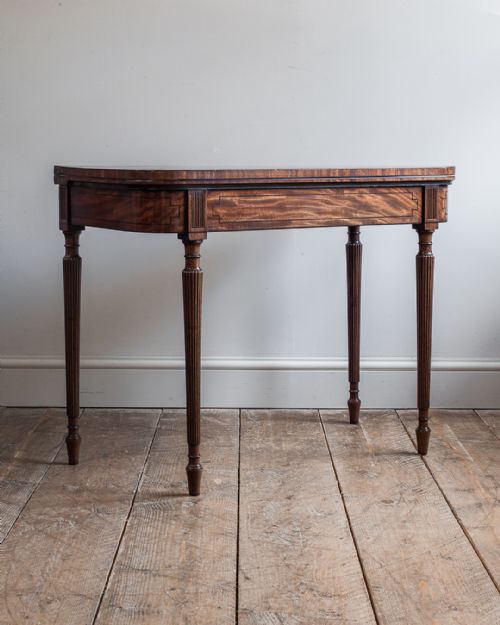
The defining decorative technique is reeding, where parallel convex mouldings are carved directly into the wood of table legs, columns, or pillar edges to catch the light. Tilt mechanisms, drop leaves, and drawers demonstrated sophisticated joinery suited for multifunctional domestic spaces.
Listings feature mahogany combined with brass, marble, fabric, satinwood, wood veneer, rosewood, and ebony across multiple centuries.
What varies in quality
Quality rests upon the crispness of the carved reeding and the depth of figure in the mahogany timber, where well-chosen grain and rich colour elevate a simple tripod or Pembroke table. The integrity of original brass fittings, turnings, and secondary woods dictates the standing of the piece.
The precision of moving parts - such as smooth drawer actions, balanced tilt-top catches, and sturdy pedestal joints - separates standard workshop production from the refined output associated with notable makers.
Gillow·Waring and Gillow
The Reeded Mahogany Occasional Table Glossary
- Reeding
- A decorative moulding consisting of parallel convex strips carved directly into the timber. It provides a classical textural contrast to smooth mahogany surfaces.
- Pembroke table
- A small rectangular table featuring two hinged drop leaves on opposing sides. Many examples include one or two small drawers for sewing or writing.
- Tripod table
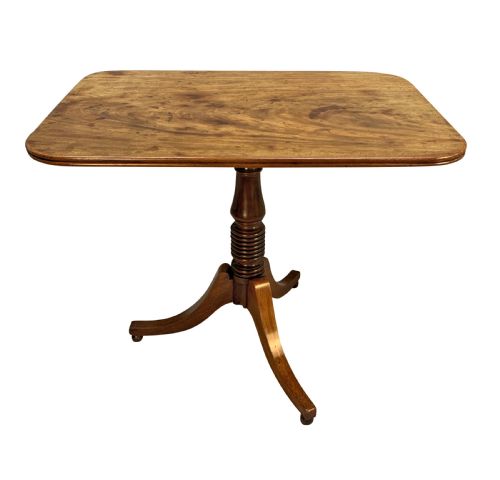
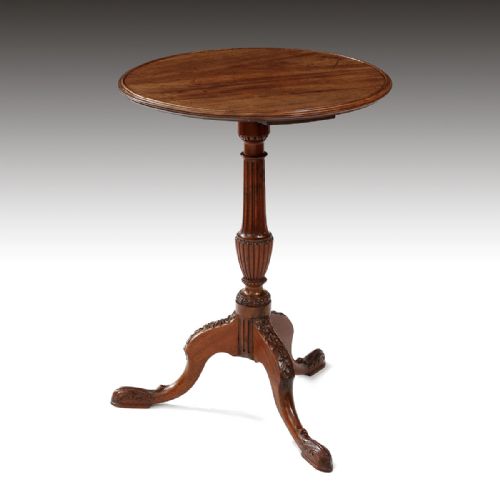
- A small freestanding table supported by a central pillar above three splayed legs. These frequently feature tilting mechanisms for easy storage.
- Drum table
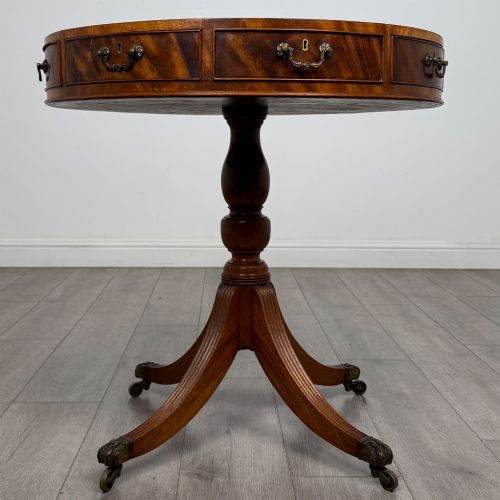
- A circular library or occasional table with a deep frieze containing alternating real and dummy drawers. They typically stand upon a robust central pedestal base.
- Sofa table
- A rectangular occasional table designed to stand in front of a sofa, featuring drop leaves at either end. They often incorporate double pedestal supports joined by a stretcher.
Reeded Mahogany Occasional Table: Frequently Asked Questions
What is a reeded mahogany occasional table used for?
These pieces function as versatile surfaces for lamps, drinks, or small decorative items beside seating areas. Many historical variants were designed specifically for sewing, writing, or serving tea.
Their compact scale allows them to move easily around a room as needed while adding architectural detail through their timber and carved legs.
How do I identify a Regency period table?
Regency tables typically display classical architectural influences, featuring columnar pedestals, brass paw feet, and crisp reeding on the legs. The timber selection often highlights rich, figured mahogany.
Matching these elements with period construction methods helps distinguish genuine early nineteenth-century examples from later revivals.
Are tilt-top tables stable?
Tilt-top tripod tables rely on a catch mechanism beneath the circular top to secure the surface horizontally. When engaged correctly, a well-made vintage catch holds the top firm during normal use.
The mechanism also allowed historical owners to tilt the surface vertically and store the table flat against a wall when space was required.
How do I care for mahogany surfaces?
Mahogany benefits from gentle dusting with a soft, dry cloth and occasional treatment with traditional beeswax to nourish the timber. Direct sunlight and excessive heat sources should be avoided to prevent the wood from drying or fading.
Using coasters and mats protects the polish from moisture and heat marks during everyday use.