
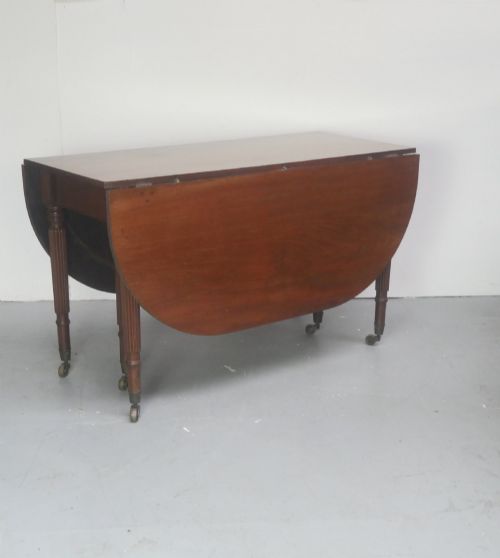
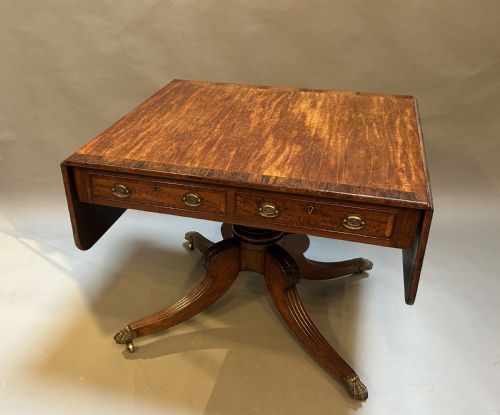


Reeded Leg Pembroke Table
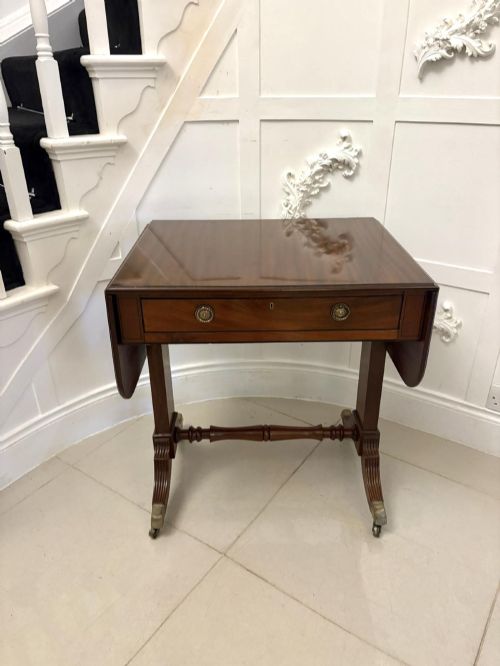
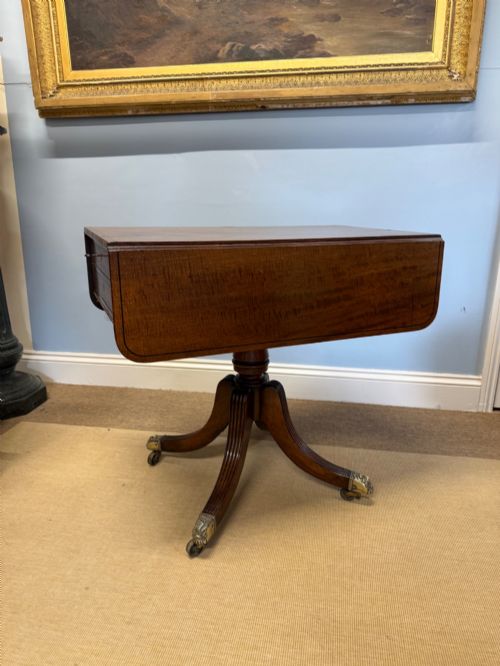
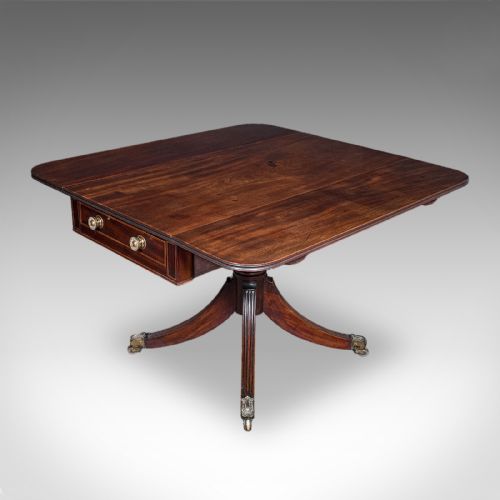
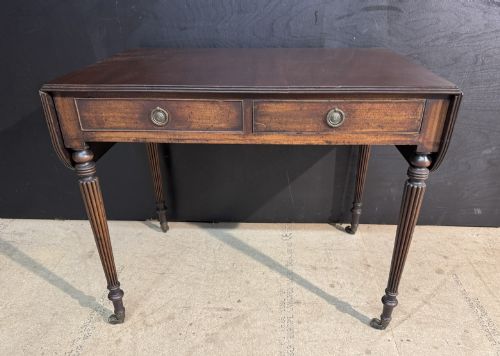
A reeded leg pembroke table is a drop-leaf occasional or dining piece built for flexible living, prized for its turned linear detail and compact folding leaves.
Reeded Leg Pembroke Table
A reeded leg pembroke table is a drop-leaf design featuring characteristic parallel rounded mouldings carved into the supports. These tables appear frequently from the Regency and Georgian periods, alongside 18th century, 19th century, and Victorian examples.
The format typically includes drop leaves supported by hinged rule joints, creating a versatile surface that expands from a narrow side table into a larger dining or work space. Surviving forms encompass specific variants such as work tables, sofa tables, and pedestal pembroke tables.
Most pieces encountered on this page originate from the Regency era, constructed in mahogany, satinwood, or oak. Buyers select these items to fit compact rooms while retaining traditional period character.
How they were made
Cabinet makers utilised solid timbers and veneers, predominantly employing mahogany, Cuban mahogany, and satinwood, supported by secondary woods like oak and pine. Brass fittings such as castors and handles appear on many pieces.
Legs were turned on a lathe to create the fine vertical reeding, a classical detail that mirrors architectural columns. Drop leaves were joined using traditional rule joints to ensure a smooth transition when the flaps were raised.
The listings on this site span multiple eras, with Regency mahogany examples forming the majority alongside Georgian and Victorian pieces.
What varies in quality
Quality rests in the crispness of the turned reeding and the selection of figured mahogany timber for the top. Finer examples display carefully matched grain patterns across the leaves and drawers.
Structural integrity of the drop-leaf rule joints and the original operation of the hinging mechanism distinguish superior pieces. The presence of secondary details, such as satinwood stringing or well-cast brass hardware, elevates the standard of the manufacture.
Gillows·Duncan Phyfe
The Reeded Leg Pembroke Table Glossary
- Pembroke table
- A small drop-leaf table with hinged flaps on either side, typically featuring one or two drawers. It was popularised during the 18th and 19th centuries for breakfast or occasional use.
- Reeded legs
- Vertical parallel rounded mouldings carved into furniture legs, resembling inverted fluting. This decorative technique is characteristic of neoclassical and Regency design.
- Rule joint
- A pivoting joint connecting a table top to its drop leaf, shaped so that a tight, neat line is formed whether the leaf is raised or lowered. It protects the hinges from excessive strain.
- Drop leaf
- A hinged flap attached to the fixed centre of a table top that can be raised and supported to increase the surface area. It allows the furniture to occupy minimal space when folded.
Reeded Leg Pembroke Table: Frequently Asked Questions
What is a reeded leg pembroke table used for?
These tables served primarily as adaptable pieces for breakfast, writing, or needlework in smaller reception rooms. The drop leaves allowed households to adjust the surface area depending on daily needs.
Today, they function well as console tables, desks, or occasional dining surfaces in compact modern spaces.
How do I identify a Regency example?
Regency pieces often display classical architectural motifs, including finely turned reeded legs, brass lion paw castors, and rich Cuban mahogany veneers. The proportions tend to be crisp and restrained.
Comparing the timber quality and the sharpness of the turning helps distinguish this period from later Victorian revivals.
Can I use a pembroke table for daily dining?
Many historical examples were built as dining or supper tables with sturdy rule joints designed to support daily meals when the leaves are raised.
Care should be taken to support the hinged flaps properly and avoid placing excessive weight on the outer edges of the drop leaves.
What woods were commonly used?
Mahogany is the predominant timber found in these listings, frequently featuring figured grains and occasional satinwood crossbanding. Secondary woods like oak and pine appear in drawer linings and interior framing.
Cabinet makers selected these dense hardwoods to ensure the stability of the slender reeded legs.