

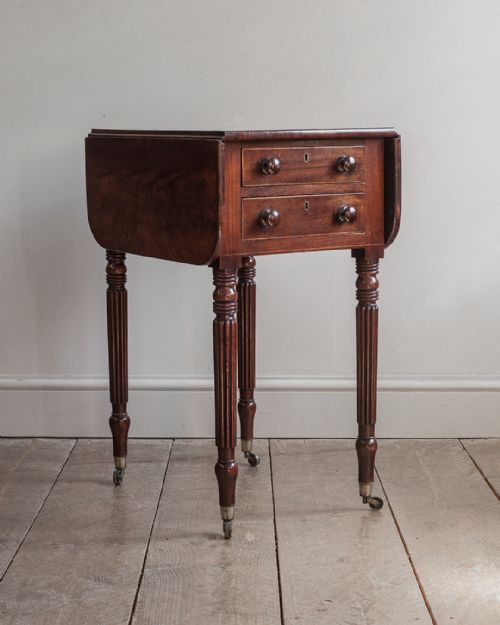


Reeded Leg Occasional Table
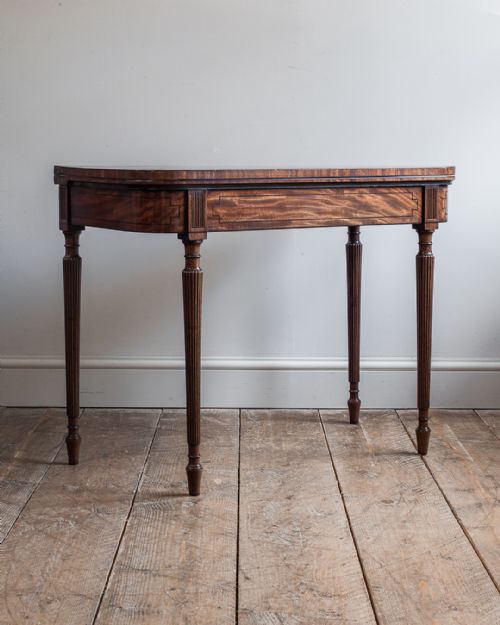
A reeded leg occasional table brings compact Regency and Georgian utility to a corner, combining neat fluted uprights with rich mahogany timber.

Reeded Leg Occasional Table
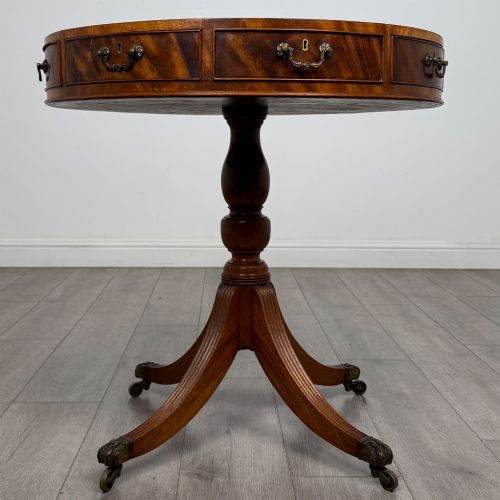
A reeded leg occasional table represents a practical form of small furniture designed for specific domestic tasks, appearing on this page primarily through Regency, Georgian, and 19th Century examples. Buyers examining these listings encounter various formats such as Pembroke tables, sofa tables, work tables, wine tables, and tripod tables alongside general occasional pieces. These tables serve multiple functions in a room, offering small surfaces for lamps, sewing supplies, or drinks while displaying the characteristic linear carving on the legs.
The material palette centres on mahogany, supplemented by rosewood, satinwood, and occasional walnut, reflecting the preferences of cabinet makers from the Georgian era through to Edwardian revivals. Most pieces rely on timber veneers or solid construction, sometimes featuring brass castors or subtle ebony stringing to frame the top. The forms range from simple round wine tables on central pillars to drop-leaf pembroke tables with functioning drawers.
How they were made
Cabinet makers constructed these tables predominantly using solid mahogany and mahogany veneers over secondary softwoods or oak carcases. The characteristic reeding on the legs was achieved by hand-carving parallel convex mouldings into the wood using specialised gouges, creating a textured surface that catches the light.
Joinery techniques included mortise and tenon frames for underframes, dovetailed drawer construction for work and pembroke tables, and stable tripod blocks for pillar tables. Surfaces were finished with shellac polishes or wax to enhance the natural grain and deep colour of the timber.
Reeded Leg Occasional Table Retail Price Guide 2026
Typical asking prices for reeded leg occasional table among the pieces listed under this phrase on Sellingantiques today, from the lower quarter to the upper quarter. They describe what is for sale here now, not the wider market.
Listings feature woods such as mahogany, rosewood, satinwood, and oak across Georgian, Regency, and Edwardian periods.
What varies in quality
The standard of carving on the reeded legs sets pieces apart, where crisp, evenly spaced fluting demonstrates superior workshop skill compared to shallow or unevenly cut channels. Timber selection also dictates value, with highly figured flame mahogany veneers or dense, uniform rosewood commanding greater attention than plain or heavily faded secondary woods.
Originality of brass hardware, castors, and internal drawer components influences the standing of a table, as does the integrity of the structural joints. Pieces that retain their original colour and possess balanced proportions without later alterations stand at the higher end of the range.
Gillows·Waring and Gillow
The Reeded Leg Occasional Table Glossary
- Reeding
- Parallel convex mouldings carved into wood, often seen on the legs of Regency and Georgian furniture. This decorative technique provides vertical emphasis and textural contrast to plain surfaces.
- Pembroke table
- A small rectangular table with hinged drop leaves on either side, frequently fitted with one or two small drawers. It gained popularity in the 18th century as a versatile piece for breakfast or writing.
- Tilt-top table
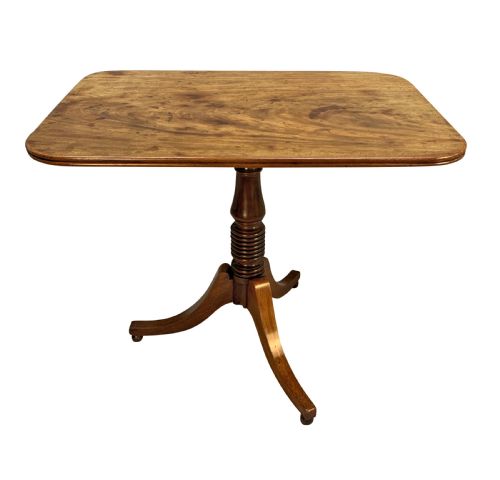
- A table featuring a mechanism that allows the top to pivot to a vertical position when not in use, saving floor space. These are typically supported by a central pillar and tripod base.
- Sofa table
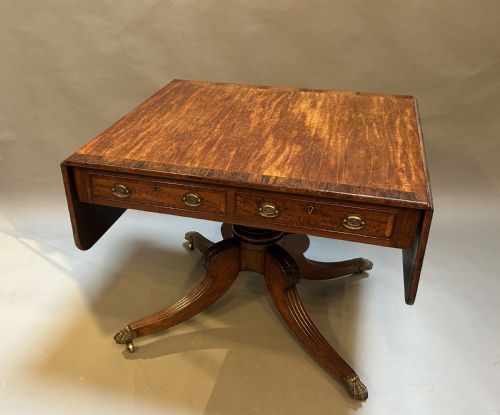
- A rectangular occasional table designed to stand in front of or beside a sofa, generally featuring drop leaves and double pedestals or trestle ends. They often incorporate drawers for sewing or writing materials.
- Tripod table
- A small freestanding table supported by a central column resting on three shaped legs. This form emerged during the Georgian period for use as a wine or tea table.
Reeded Leg Occasional Table: Frequently Asked Questions
What is a reeded leg occasional table used for?
These tables served various domestic purposes in period homes, functioning as surfaces for tea, sewing, writing, or displaying lamps. Their compact proportions allowed them to fit easily beside seating or against walls.
Today, buyers use them in similar ways throughout the home as bedside surfaces, small desk spaces, or accent tables in living areas.
Are drop leaves common on these tables?
Drop leaves appear frequently on pembroke and sofa tables within this category, allowing the surface area to expand or contract depending on need. Hinges and brass rule joints beneath the leaves enable this movement.
Fixed tops are more common on wine tables, tripod tables, and standard side or occasional tables.
How do I care for an antique mahogany table?
Maintenance requires keeping the timber away from direct heat sources and strong sunlight to prevent the mahogany finish from fading or drying out. Gentle dusting with a dry, soft cloth preserves the polish.
Applying a traditional beeswax occasionally helps nourish the wood and maintain its natural lustre without building up heavy residue.