

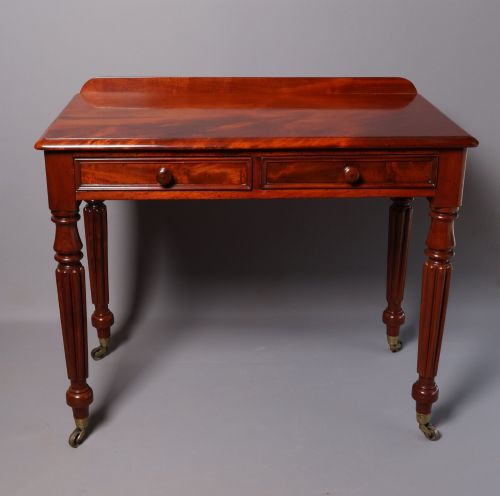


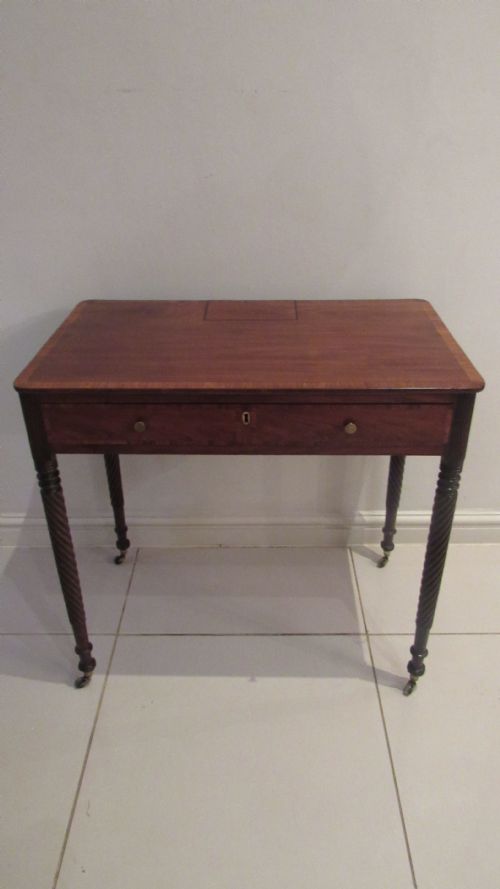
Reeded Leg Hall Table
A reeded leg hall table brings architectural carving and warm timber into an entrance, offering a practical surface with crisp linear detail.
Reeded Leg Hall Table
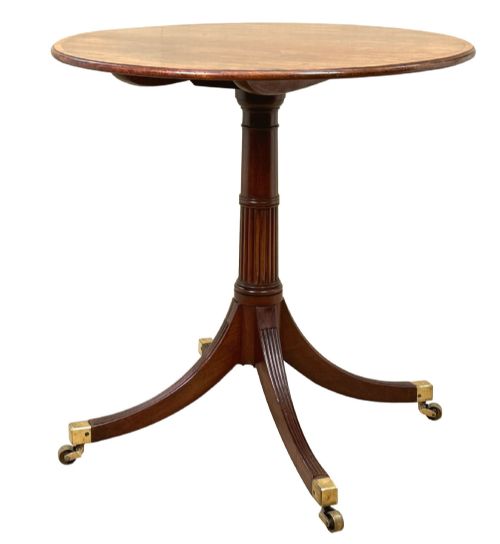
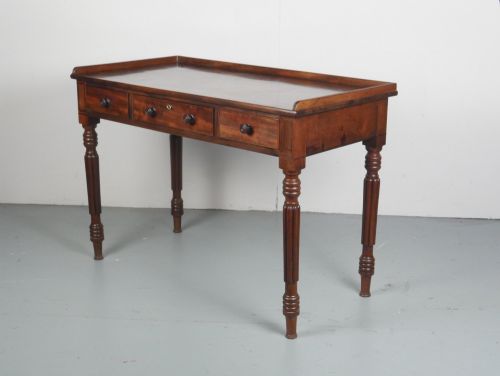
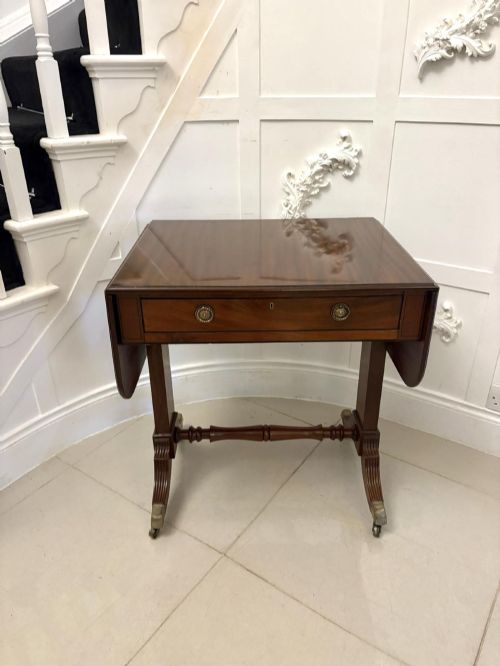
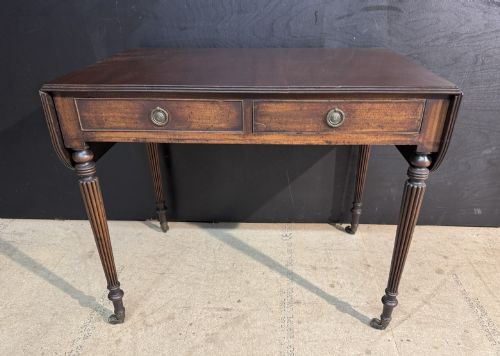
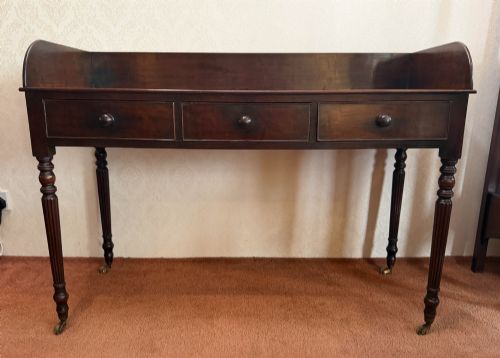
A reeded leg hall table is typically encountered as a console, side, or writing table shaped by Georgian, Regency, and Victorian cabinet makers. These pieces serve narrow entranceways and corridors where shallow depth and a decorative timber front are essential.
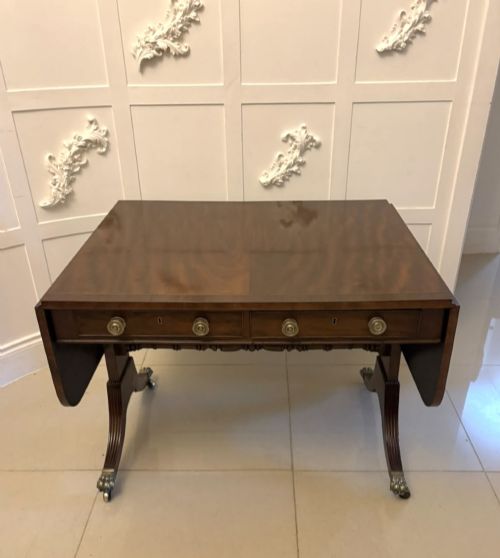
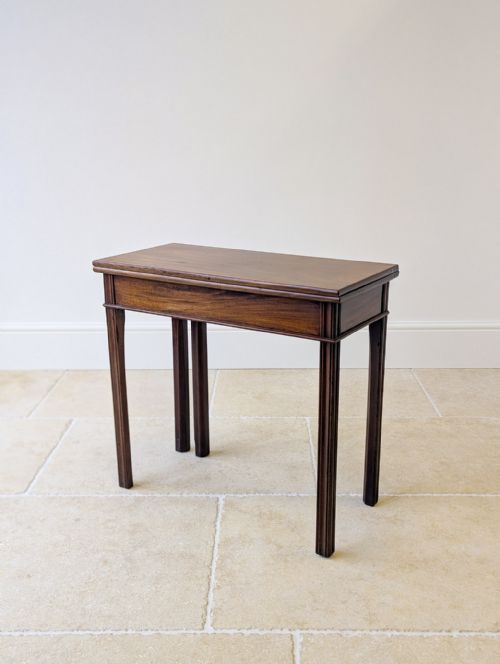
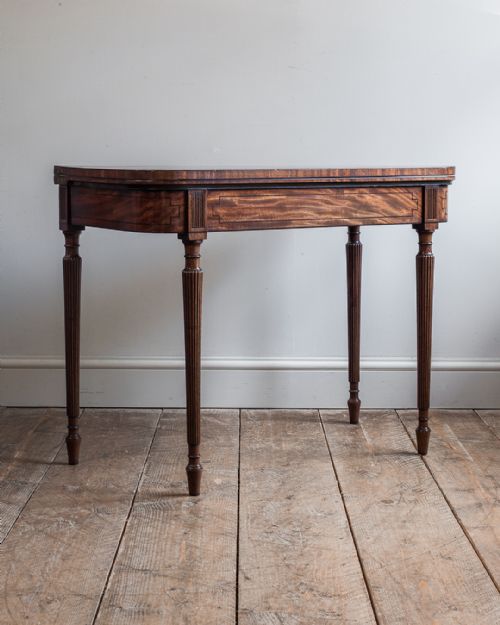
The selection on this page draws heavily from nineteenth century workshops, spanning strict Regency designs through to later Victorian and Edwardian revivals. Forms range from simple single-drawer side tables to elaborate D-shaped tea tables and fold-over card tables supported by vertically carved column legs.
How they were made
Makers constructed these tables predominantly using solid mahogany and mahogany veneers, occasionally incorporating oak for secondary framing and ebony for fine stringing details. Brass castors, leather inserts, and ceramic components appear on specific writing and console variations.
The defining feature, reeding, was executed by hand-carving parallel convex mouldings directly into the solid timber legs, requiring steady precision to achieve uniform shallow flutes.
Reeded Leg Hall Table Retail Price Guide 2026
Typical asking prices for reeded leg hall table among the pieces listed under this phrase on Sellingantiques today, from the lower quarter to the upper quarter. They describe what is for sale here now, not the wider market.
Listings feature mahogany, oak, burr walnut, and ebony alongside ceramic and leather elements across nineteenth century periods.
What varies in quality
Quality rests upon the crispness of the hand-carved reeding on the legs and the selection of figured mahogany timber for the top and drawer fronts. Tables attributed to documented makers demonstrate superior joint construction and careful timber matching.
Proportion and restraint separate standard utility pieces from finer country house examples. Subtle details such as ebony banding, brass mounts, and well-proportioned D-shaped or fold-over leaves elevate the architectural presence of the table.
Gillows·Holland and Sons·William Trotter
The Reeded Leg Hall Table Glossary
- Reeding
- A decorative moulding consisting of parallel convex semicircular strips resembling reversed fluting. It provides a crisp, classical texture to furniture legs.
- Console table
- A table designed to stand against a wall, frequently secured to it or supported by front legs. These forms suit hallways and narrow living spaces.
- Sofa table
- A rectangular occasional table with drop leaves on either side, traditionally placed in front of a sofa. They often feature double pedestals or end supports.
- D-shaped table
- A table with a semicircular top resembling the capital letter D, commonly used as a tea or console table against a flat wall.
- Ebony banding
- A thin strip of dark wood inlay used to create a contrasting border around drawer fronts or table edges. It defines the geometric outlines of the piece.
Reeded Leg Hall Table: Frequently Asked Questions
Where should a hall table go?
A reeded leg hall table fits best in an entranceway, corridor, or narrow landing where its shallow depth keeps walkways clear.
Position it against a flat wall to anchor a mirror, lamp, or small decorative bowl while providing a drop zone for everyday items.
What is a console table?
A console table is a narrow table designed specifically to stand flush against a wall. Many historical versions rely on the wall or front legs for stability.
They offer surface space without protruding far into domestic pathways.
How do I identify Regency style?
Regency furniture draws inspiration from classical antiquity, featuring clean lines, dark mahogany timbers, and architectural details like reeded legs. The aesthetic emphasises proportion and linear symmetry over heavy ornamentation.
Subtle brass mounts and ebony stringing often accent the woodwork.
Can these tables be used for writing?
Many surviving examples double as writing or chamber tables, equipped with one or two small drawers beneath the top. The flat surface accommodates correspondence or laptop use in compact rooms.
Check the kneehole clearance underneath to ensure comfortable seating.