
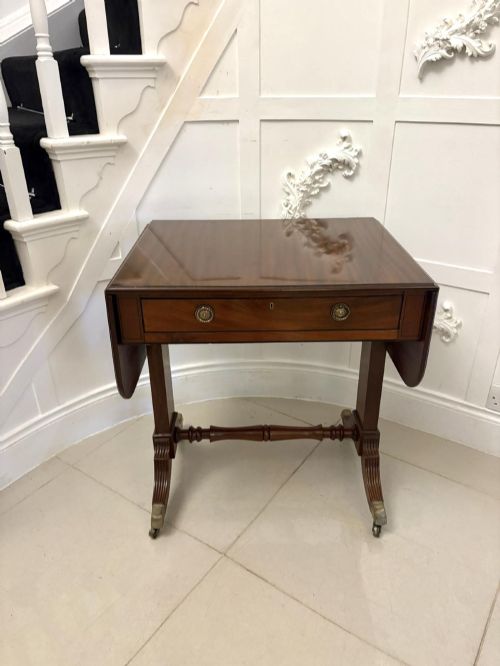
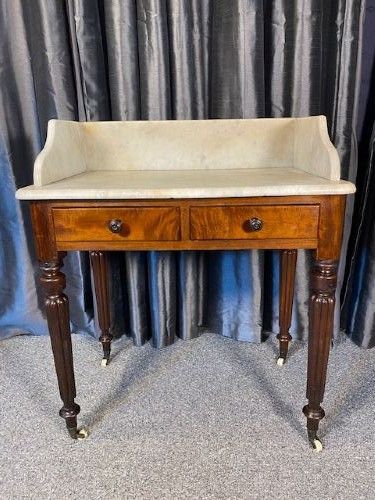
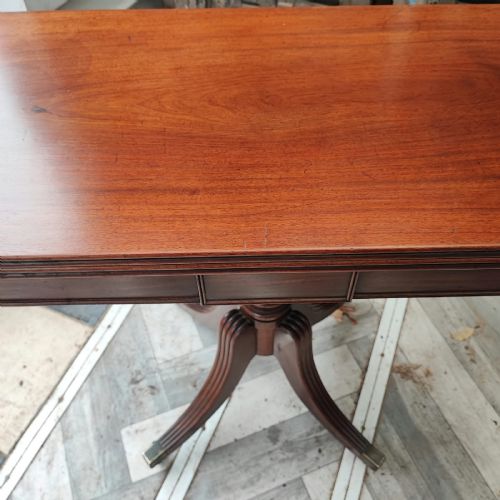
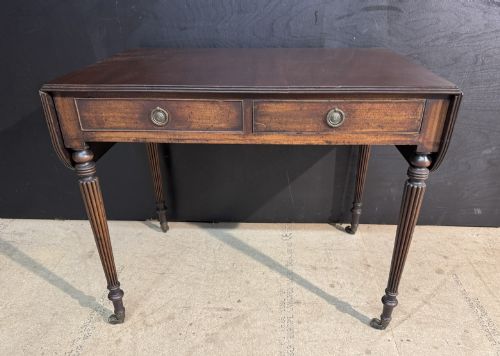




Reeded Leg Console
A reeded leg console brings architectural line and warmth to a hallway, drawn largely from the Regency and Victorian periods in rich mahogany.
Reeded Leg Console
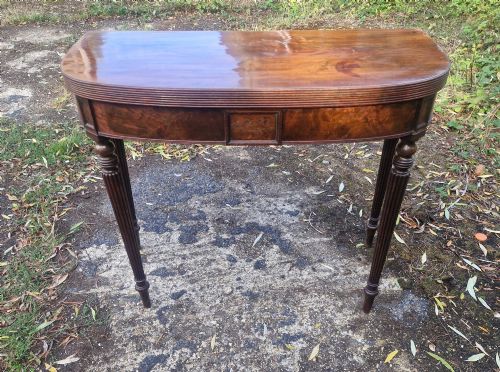
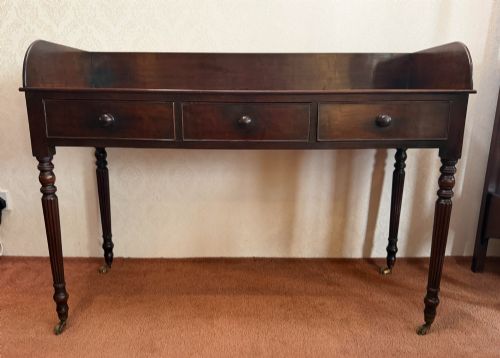
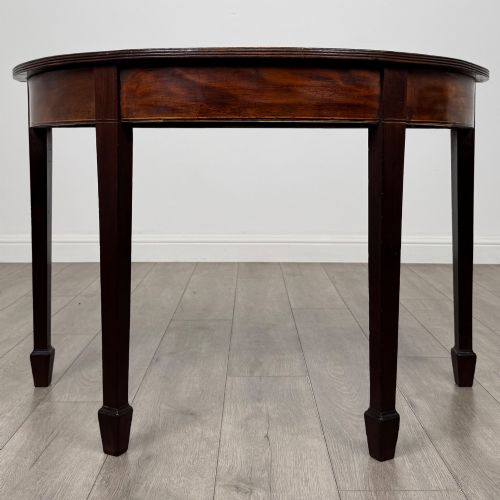
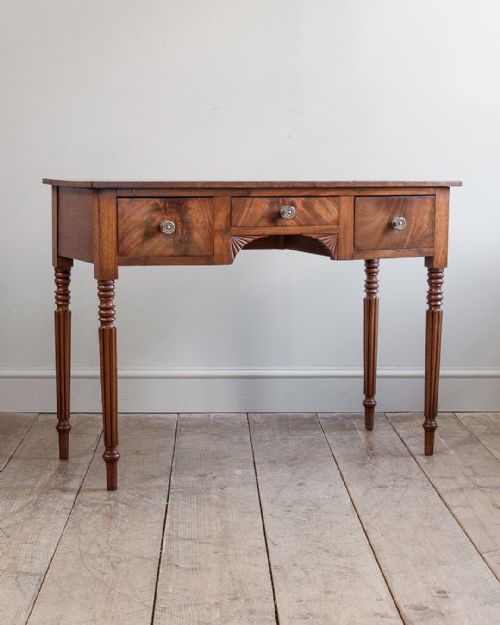
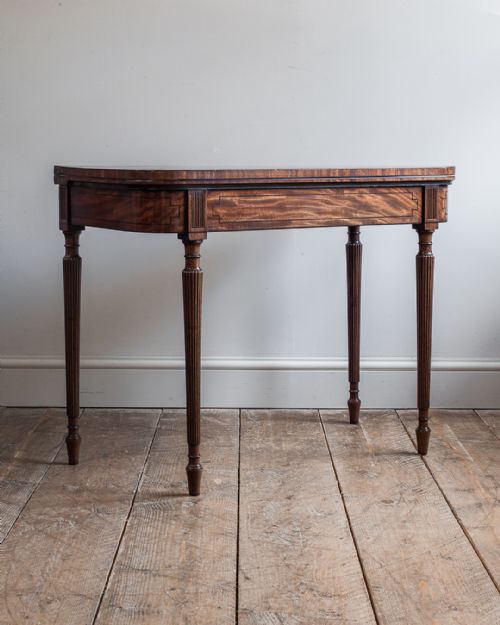
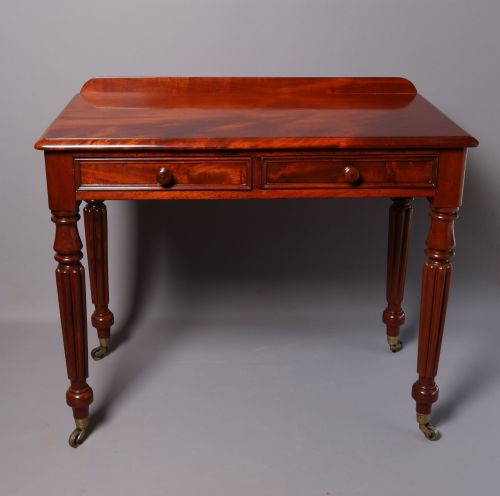
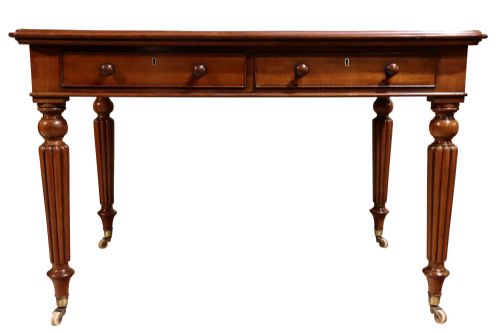
A reeded leg console sits against a wall in a hall, drawing rooms or dining spaces, serving as a surface for lamps, correspondence or decorative objects. When searching for a reeded leg console, buyers encounter variations in form that include D-shaped tea tables, serving tables, side tables and writing desks with drawers.
The pieces listed here stem chiefly from the 19th Century, encompassing Regency, George III, George IV and Victorian eras, alongside later revivals. Mahogany dominates the selection, frequently paired with secondary timbers and fitted with brass hardware or tooled leather writing surfaces.
Makers of the period applied parallel rounded vertical mouldings, known as reeding, directly into the timber of the table legs to catch the light and soften the heavy rectilinear forms of earlier decades. These tables range from neat single-drawer side pieces to grand pair consoles designed for formal reception rooms.
Materials and construction methods
Cabinet makers built these tables using solid mahogany and figured mahogany veneers applied to secondary woods like oak or pine, often incorporating boxwood and ebony inlay for contrast. Legs were turned on a lathe and then hand-carved with parallel vertical reeding channels to create texture.
Secondary materials included brass for castors, escutcheons and drawer pulls, alongside leather inserts for writing and card tables. Joinery relied on traditional techniques such as dovetailing for drawers and mortise and tenon joints for the frame.
Listings feature mahogany, oak, and brass, spanning the Georgian, Regency, and Victorian periods through to later revivals.
Distinguishing quality in construction
Quality reveals itself in the selection of timber, particularly the depth of figure in the mahogany veneer and the crispness of the hand-turned reeding on the legs. Superior pieces display precise joinery, such as hand-cut dovetails in the drawer linings and well-matched grain across the top boards.
The presence of attributed workshop execution, robust secondary woods like oak, and original brass hardware elevate an example above standard production. Proportion and stability also dictate worth, as finer proportions reflect the design confidence of the maker.
The Reeded Leg Console Glossary
- Reeding
- Parallel convex mouldings carved or turned into the surface of wood, often seen on table legs in the Regency and Victorian periods. This decorative technique creates a series of bright ridges that catch the light.
- Console table
- A table designed to stand against a wall, frequently secured to it or balanced on front legs. These pieces were traditionally used in formal halls and drawing rooms for display.
- Sofa table
- A rectangular occasional table with drop leaves on either side, originally designed to sit in front of a sofa. They typically feature two small drawers and trestle or pillar supports.
- Turnover top
- A table top hinged to fold out or rotate, doubling the surface area for dining or card games. This mechanism often reveals a hidden compartment or baize-lined interior.
- Crossbanding
- A strip of veneer applied perpendicularly to the grain of the main surface around the border of a tabletop. It creates a neat framing effect common in Georgian and Regency cabinet work.
Reeded Leg Console: Frequently Asked Questions
Where should I place a console table?
A console table works best in an entrance hall, narrow corridor, or against a blank wall in a living room where floor space is limited. Its shallow depth allows it to sit flush against the wall while offering a surface for lamps and decorative objects.
In dining rooms, these tables double as serving surfaces during meals. Paired with a mirror or painting above, they anchor an interior space visually.
How do I identify a Regency console?
Regency consoles typically date from the early nineteenth century and feature classical architectural influences such as saber or turned reeded legs. Look for dark, rich mahogany timbers, sometimes accented with brass inlay or ebony banding.
The overall silhouette is often clean and linear, drawing inspiration from ancient Greek and Roman furniture forms.
Can these tables be used as desks?
Many side and console tables from the Georgian and Victorian eras were built with integrated drawers specifically for writing and storing correspondence. Examples described as writing tables or chamber tables provide adequate knee clearance and a flat surface for daily tasks.
Adding a chair of appropriate height transforms a drawer-fitted console into a functional writing station.
What is the difference between a side table and a console?
Side tables and console tables share a similar function, but traditional consoles were often designed to rely partially on the wall for stability, though many freestanding variants exist today. Side tables are strictly freestanding pieces with four independent legs.
In practice, both terms describe narrow tables meant for placement against room perimeters.