


Reeded Column Chest
A reeded column chest brings architectural discipline to domestic storage, combining fine timber surfaces with structural pilasters.
Reeded Column Chest
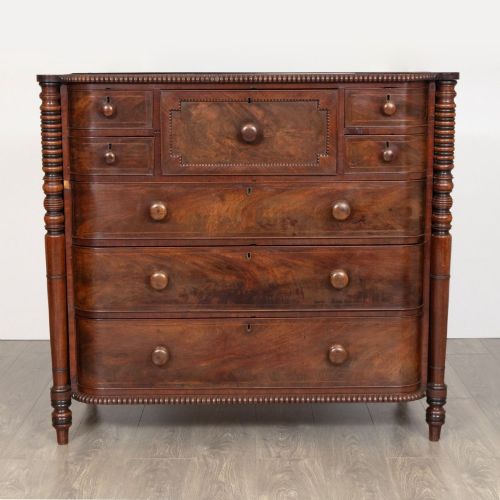
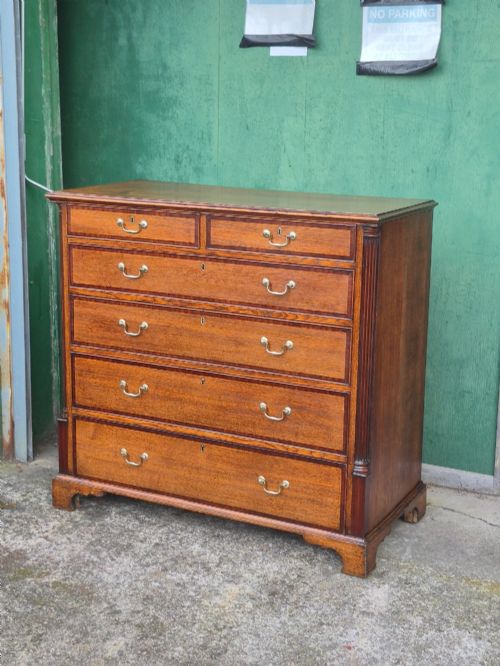
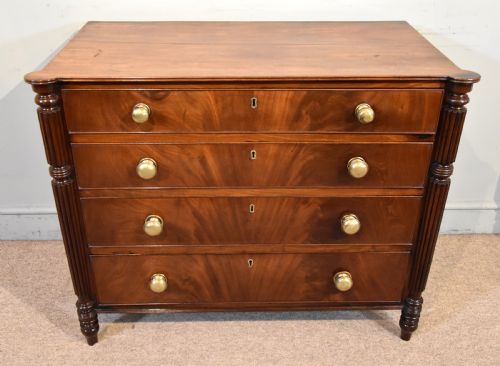
A reeded column chest is a substantial storage piece defined by vertical carved mouldings flanking the drawer stack. The examples gathered under the reeded column chest search phrase span the Regency and nineteenth century periods.
Most pieces seen here adopt the bow front or concave commode format, presenting curved drawer fronts rather than flat surfaces. Mahogany and flame mahogany veneer dominate the construction, often supplemented by oak secondary woods and brass fittings.
How they were made
Cabinet makers constructed these carcases using solid mahogany and oak, applying flame mahogany veneer to large surfaces to create distinctive grain patterns. Ebony line inlay frequently borders the drawer fronts and top edges on finer examples.
The characteristic reeded columns require precise woodworking, turning parallel semicircular ridges into solid timber to flank the central drawers. Brass mounts and handles complete the construction, secured to dovetailed drawer boxes.
Every listed piece utilises mahogany, with flame veneer and ebony line inlay appearing across Regency examples.
What varies in quality
Quality rests upon the selection of timber and the crispness of the architectural carving. Flame mahogany veneer with strong natural figuring separates standard carcases from superior examples.
The definition within the reeded columns and the precision of ebony line inlay indicate the level of craftsmanship invested in the piece. Well-proportioned bow fronts and intact original brass hardware elevate a chest above simpler alternatives.
The Reeded Column Chest Glossary
- Regency
- A stylistic period spanning the early nineteenth century characterised by classical restraint and architectural influence. Pieces from this era often feature column details and mahogany veneers.
- Bow front
- A convex curved cabinet front that projects outward in the centre. This shape softens the rectilinear appearance of a standard chest of drawers.
- Flame mahogany veneer
- A thin slice of timber cut from where branches join the trunk, producing a flickering, flame-like grain pattern. Cabinet makers laid this over stable secondary woods.
- Commode
- A low chest of drawers, often with a decorative curved or concave front. The term appears alongside standard chest designations in nineteenth-century furniture.
- Ebony line inlay
- A narrow contrasting stringing of dark wood embedded into the surface of the timber. It outlines panels and drawer edges to frame the primary grain.
Reeded Column Chest: Frequently Asked Questions
What is a reeded column chest?
A reeded column chest is a nineteenth-century storage piece featuring vertical carved mouldings down the sides of the carcase. These architectural details draw upon classical building forms adapted for domestic furniture.
Most examples seen here date from the Regency period and utilise mahogany timber with curved drawer fronts.
How do I identify a Regency chest?
Regency chests typically display mahogany timber, flame veneer, and classical architectural elements such as reeded columns or ebony line inlay. The proportions tend to be robust yet refined.
Bow fronts and concave commode shapes are common configurations found among pieces from this era.
Where were these chests placed?
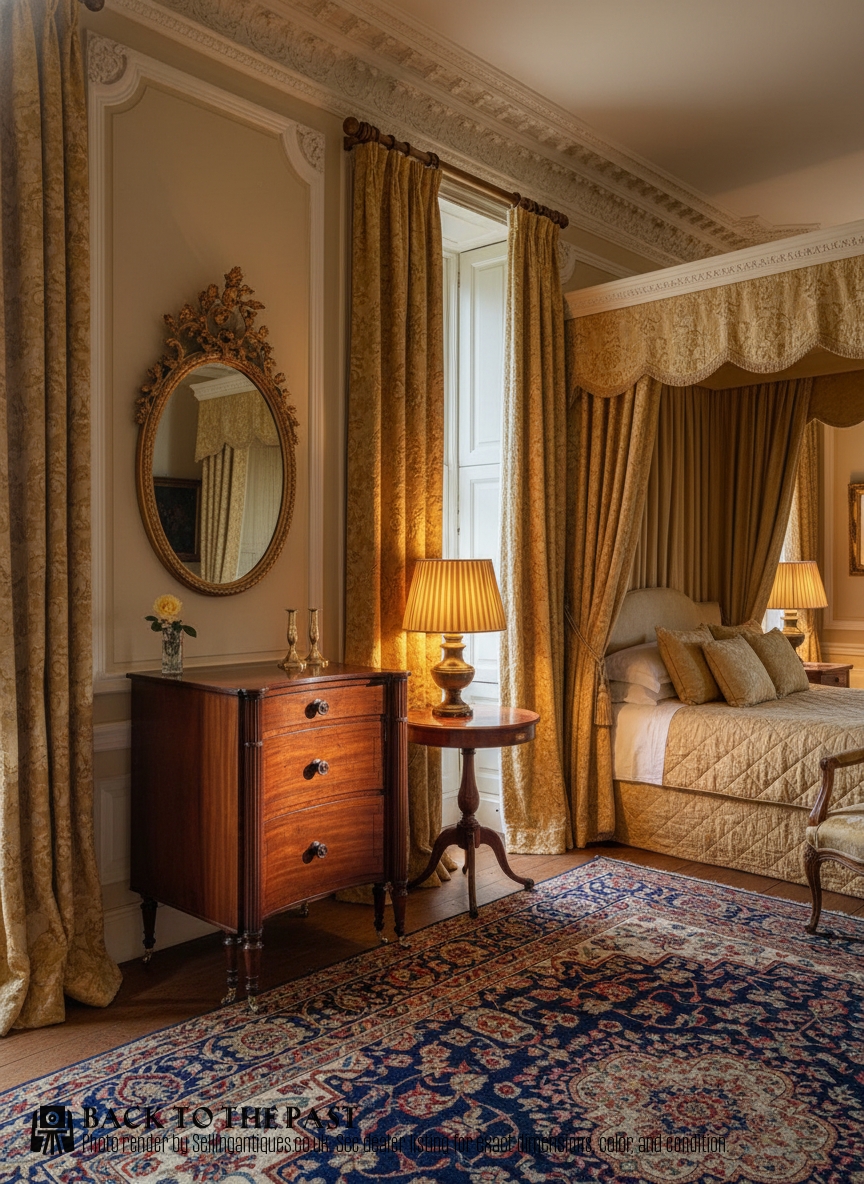
These chests served primarily as bedroom storage for clothing and linens, offering multiple stacked drawers of varying depths. Their finished tops also held mirrors or decorative objects.
The architectural presence of the reeded columns meant they functioned well in principal reception rooms as well as private chambers.
What woods were used in construction?
Mahogany serves as the primary timber for these pieces, often enhanced by highly figured flame mahogany veneer on the drawer faces. Secondary woods such as oak appear in the drawer linings and internal carcase construction.
Dark ebony is also utilised for fine line inlay details across select surfaces.