

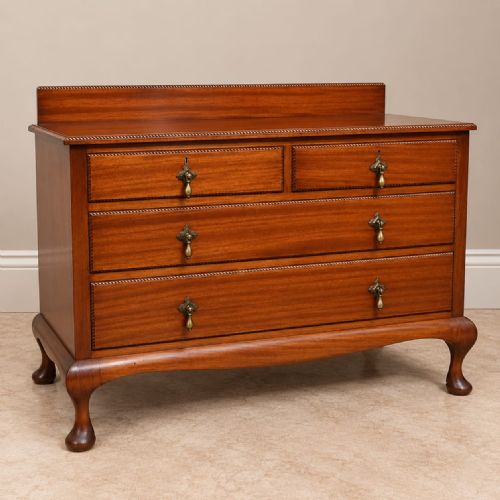
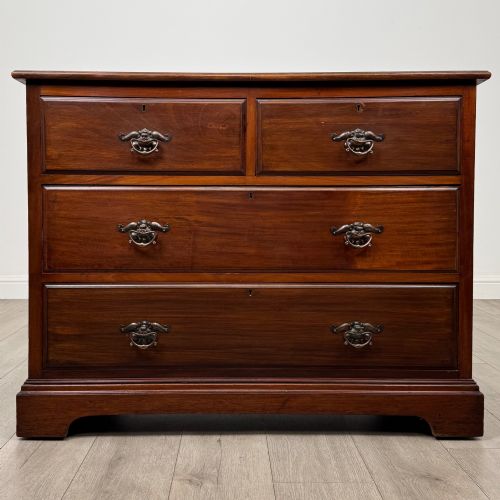
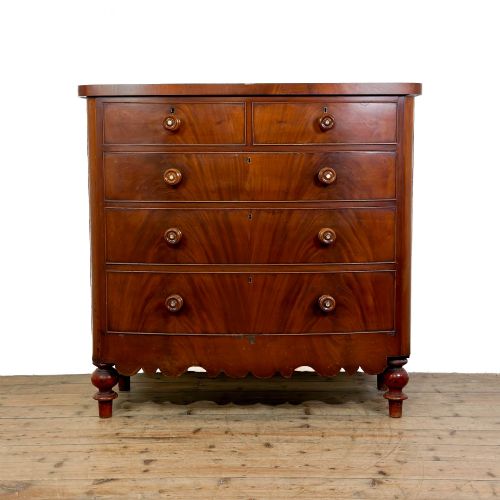


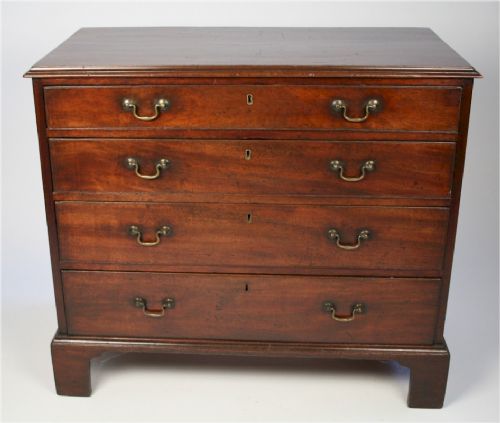
Reddish Brown Tallboy
A reddish brown tallboy is a commanding storage chest in deep timber tones, bringing traditional British craftsmanship and generous proportions to any room.
Reddish Brown Tallboy
When you search for a reddish brown tallboy, you are looking at substantial wooden chests of drawers built to hold a household's wardrobe. These pieces stand as towering chests of drawers, often referred simply as chests in period terminology.
The versions you are most likely to meet on this page date from the Georgian, Victorian, and Edwardian eras. They take the form of tall chests, bowfront chests, and models equipped with pull-out brushing slides or four long drawers.
Makers constructed these storage items primarily during the 18th Century, 19th Century, and early 20th Century. They serve as practical focal points in a bedroom while providing deep storage capacity in classic formats.
How they were made
Cabinet makers relied heavily on solid mahogany and pine, frequently lining internal drawers with cedar or chestnut. They selected these timbers for their durability and rich natural grain patterns.
Decoration and hardware involved careful handiwork, including boxwood inlay, mother of pearl accents, and turned wooden knobs. Craftsmen fitted pieces with brass handles and supported the structures on original turned feet.
Listings feature mahogany, pine, chestnut, and cedar, spanning Georgian, Victorian, and Edwardian periods.
What varies in quality
The refinement of the timber and secondary woods dictates the standing of a piece, from simple pine structures to finely figured mahogany with boxwood inlay. Secondary linings in cedar or chestnut indicate thoughtful interior construction.
Detailing such as original turned knobs, brass hardware, and specialised fittings like brushing slides elevate a chest above standard utilitarian versions. The precision of the drawer construction and cabinet joinery defines the upper tier of these tall chests.
The Reddish Brown Tallboy Glossary
- Tallboy
- A tall chest of drawers, typically constructed by stacking one chest atop another or building a single tall carcass. It provides maximum vertical storage with a minimal floor footprint.
- Brushing slide
- A pull-out wooden shelf integrated into the cabinet framework just beneath the top surface. Historically, servants used this surface to brush clothing or fold garments.
- Bowfront
- A curved cabinet front where the central section swells outward in an arc. This styling became popular during the Georgian and Victorian periods.
- Boxwood inlay
- A decorative technique where thin strips of pale boxwood are fitted flush into recesses cut into darker primary woods. It creates contrasting geometric or linear borders.
- Cedar lined
- An interior construction method utilising cedar wood for the drawer boxes. This timber offers a pleasant aroma and natural protective qualities.
Reddish Brown Tallboy: Frequently Asked Questions
What is a reddish brown tallboy?
A reddish brown tallboy is a tall wooden chest of drawers finished in rich timber tones like mahogany. These pieces provide deep vertical storage for clothing and linens.
They originate from periods spanning the eighteenth through the early twentieth centuries, featuring traditional craftsmanship and robust wooden construction.
How were these chests used?
Households utilised these tall chests primarily in bedrooms for storing garments, undergarments, and household textiles. Some variants included pull-out brushing slides for garment preparation.
The multiple drawer tiers allowed families to organise clothing systematically before the widespread use of built-in wardrobes.
How do I live with a tall chest?
Integrating a tall chest into a modern interior requires appreciating its vertical presence and deep storage capacity. Position it against a sturdy wall where its height anchors the room.
Pair the rich wood tones with neutral walls to let the natural timber grain and traditional hardware stand out as a focal point.
How can I tell the periods apart?
Georgian examples often display formal proportions, mahogany construction, and refined details like bowfronts or brushing slides. Victorian and Edwardian pieces frequently incorporate turned wooden knobs, pine carcasses, and boxwood inlay.
Examining the secondary woods, such as chestnut or cedar linings, helps identify the era of manufacture alongside the external style.