
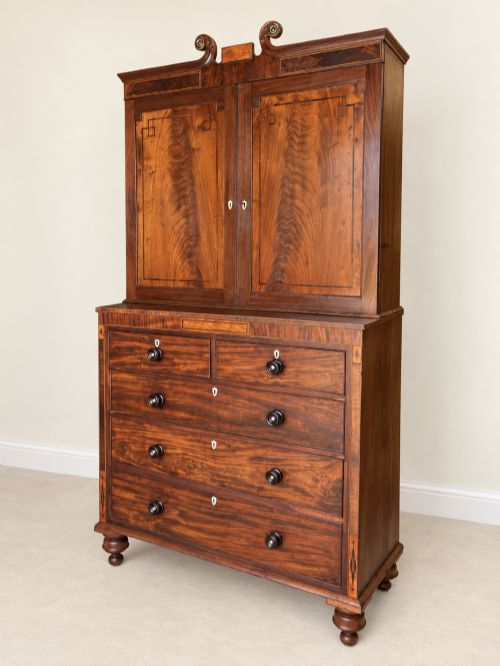
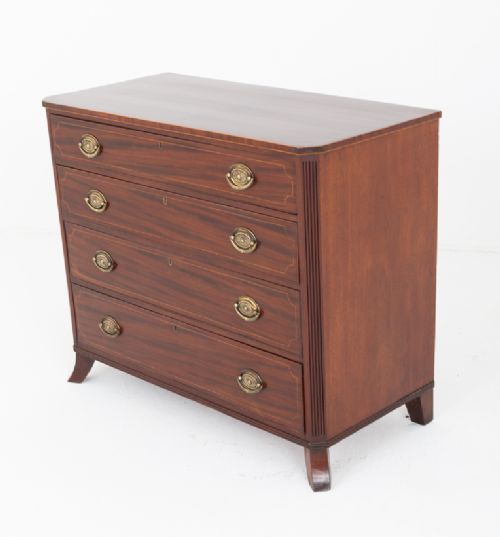
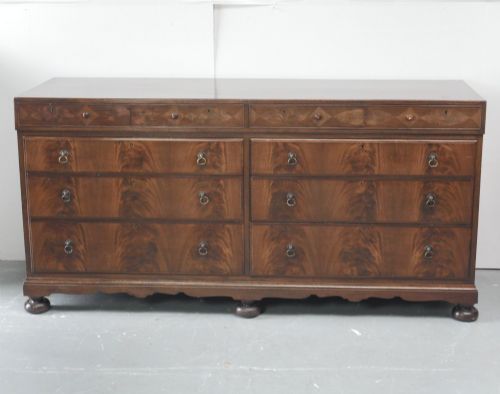
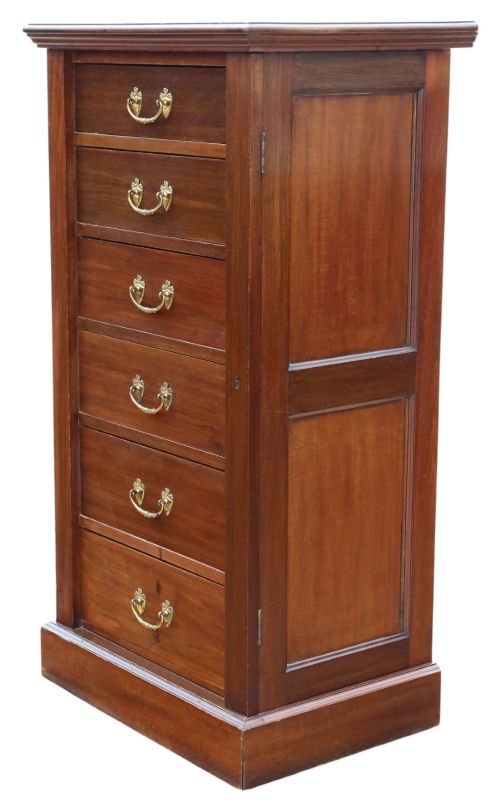
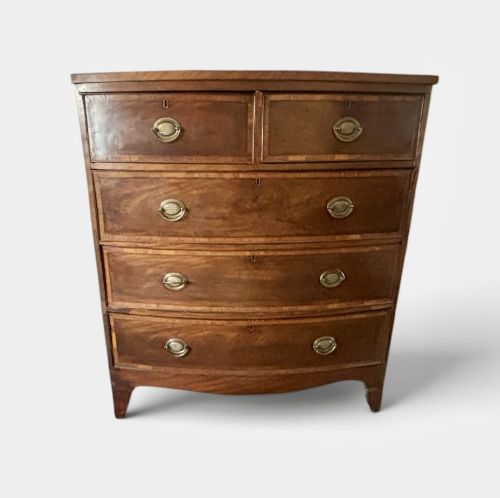


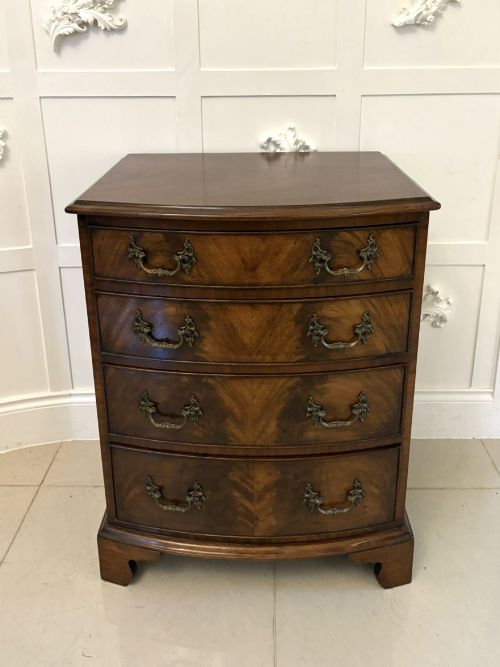
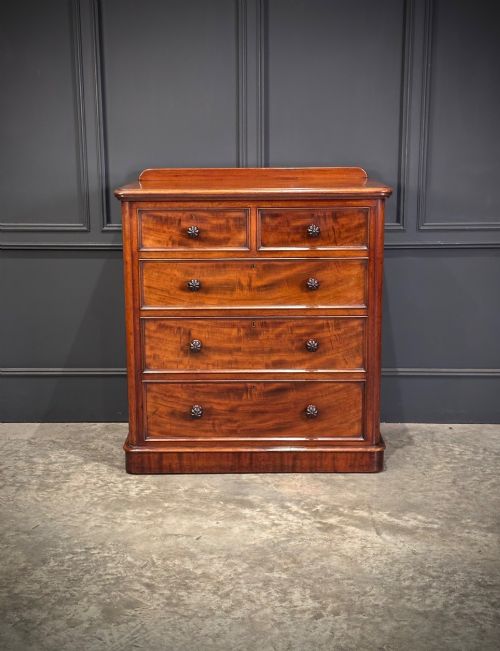
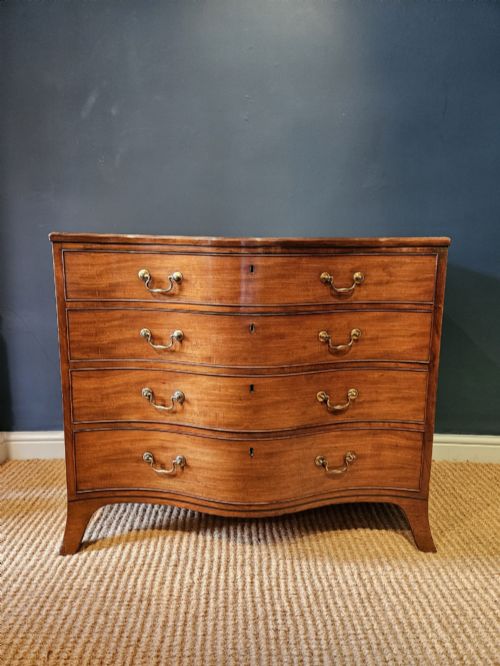
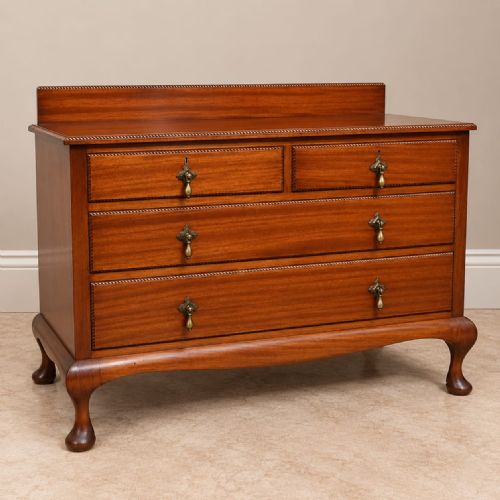
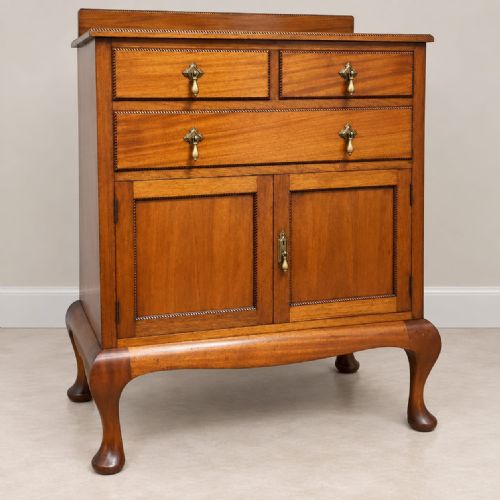
Edwardian Mahogany Bedroom Chest
An edwardian mahogany bedroom chest delivers solid storage with rich grain and proportion, offering a practical centrepiece for traditional rooms.
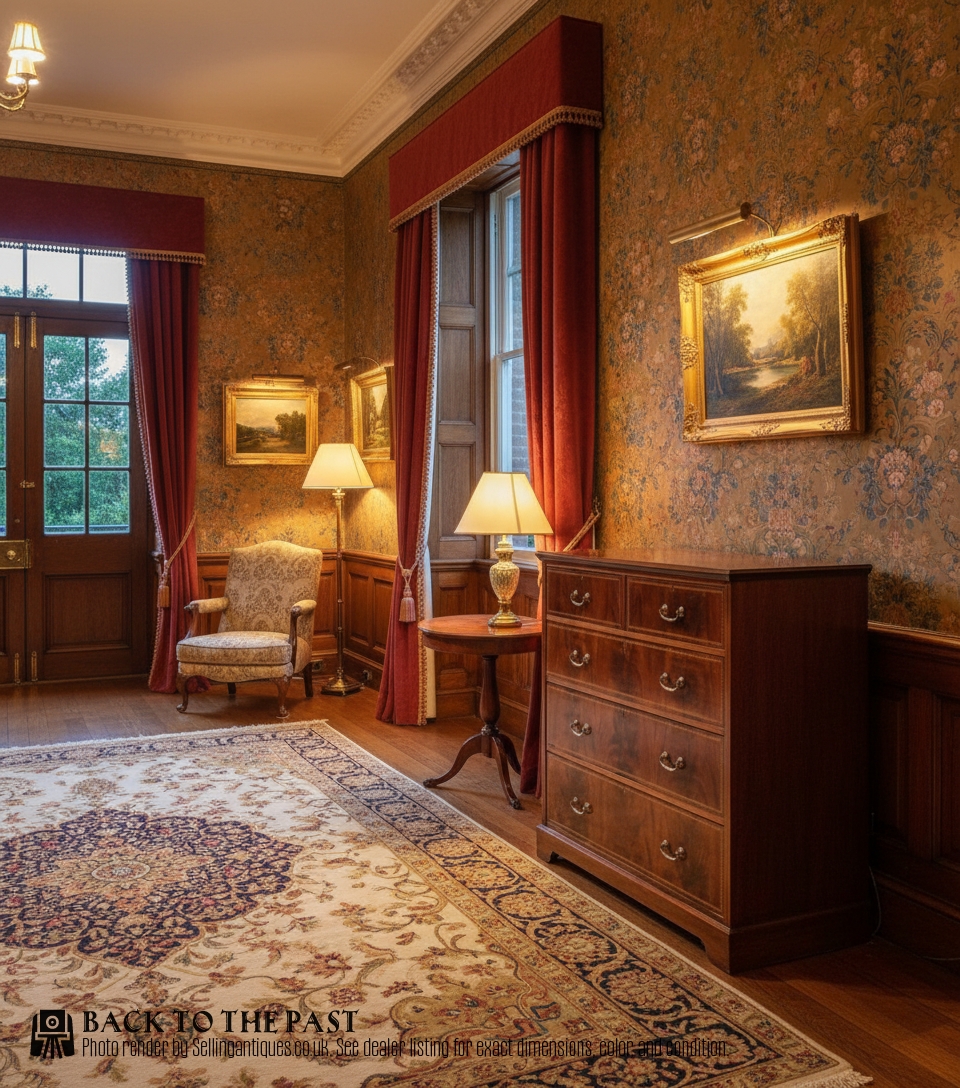
Edwardian Mahogany Bedroom Chest
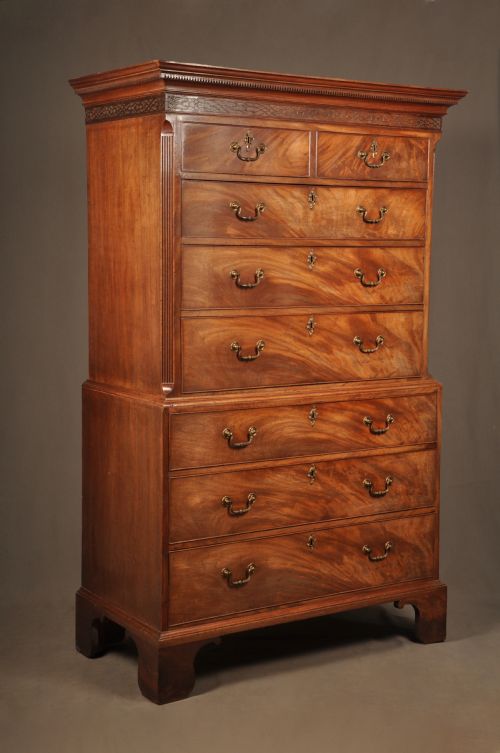
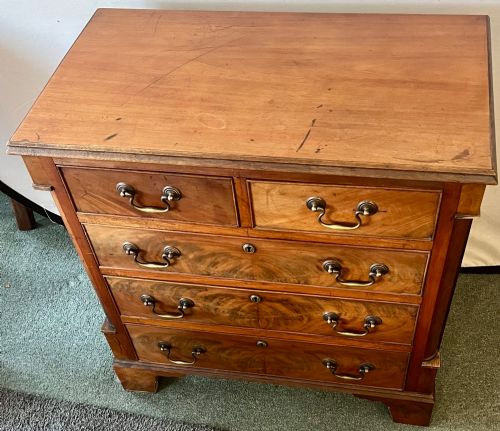
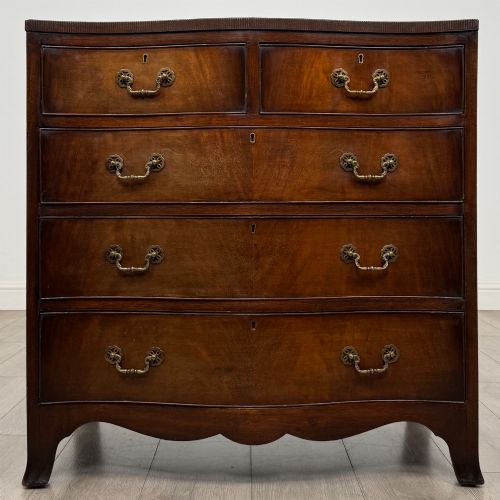
An edwardian mahogany bedroom chest provides generous drawer space designed for domestic storage, appearing frequently in bow-front, tallboy, and standard low configurations across the selection.
The pieces on this page span the Edwardian period alongside earlier Georgian, Victorian, and Regency influences, reflecting how makers drew on traditional forms while adapting to early twentieth-century homes.
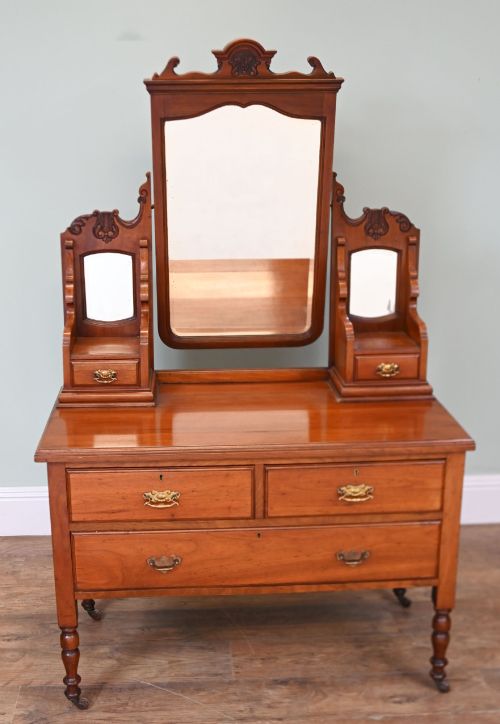
Beyond standard drawer units, the selection encompasses related bedroom furniture forms including tallboys, dressing tables, linen presses, and bedside tables built from similar timbers.
How they were made
Constructed primarily from mahogany, often enhanced with flame mahogany veneer or satinwood banding, these pieces rely on dense hardwoods combined with secondary timbers like oak and pine for drawer linings.
Cabinetmakers utilised brass handles and key escutcheons as functional hardware, occasionally incorporating glass elements in mirrors or cabinets where dressing chests were paired with the primary drawer units.
Listings feature Edwardian, Victorian, and Georgian styles built from mahogany, satinwood, oak, and pine.
What varies in quality
The distinction between standard examples and finer pieces rests in the selection of timber figures, where richly grained flame mahogany and delicate floral inlay elevate the visual weight of the furniture.
Structural refinement shows in the graduation of drawer depths, the tightness of dovetail joints, and the crisp execution of stylistic details such as bow fronts and satinwood stringing.
Whytock & Reid·Druce & Co·Maple & Co
The Edwardian Mahogany Bedroom Chest Glossary
- Flame mahogany
- A veneer cut from the fork of the mahogany tree to create a distinctive, flickering flame-like pattern across the drawer fronts. This decorative figure requires skilled matching by the cabinetmaker.
- Bow front
- A convex curved cabinet front that projects outward in the centre. This shape gained popularity in the Georgian era and continued through the Victorian and Edwardian periods.
- Tallboy
- A tall chest of drawers standing higher than a standard chest, often constructed in two stacked sections. It maximises vertical storage capacity while maintaining a narrow footprint.
- Satinwood
- A pale, durable exotic timber used extensively for contrasting inlay bands and stringing on mahogany furniture. Its golden sheen provides a sharp visual border against darker woods.
- Dovetail
- A traditional interlocking joint used to connect drawer sides to drawer fronts and backs. Fine, tight joints indicate skilled hand carpentry.
Edwardian Mahogany Bedroom Chest: Frequently Asked Questions
What is an edwardian mahogany bedroom chest?
An edwardian mahogany bedroom chest is a wooden storage unit featuring multiple drawers, produced during the Edwardian era using rich mahogany timbers.
These items served as essential bedroom furniture for storing garments and linens, combining domestic utility with decorative cabinetmaking traditions.
How do I spot an edwardian piece?
Edwardian pieces often display lighter proportions, refined satinwood inlay, and Sheraton or Hepplewhite revival styles dating around nineteen hundred.
Examining the secondary timbers inside the drawers and the style of the brass handles helps confirm the manufacturing period.
Will a bow front fit smaller rooms?
A bow-front chest curves outward in the middle, which alters the depth slightly compared to a flat-fronted chest of the same width.
Measuring the floor space carefully ensures the projecting curved front clears adjacent doors and walkways in compact bedrooms.
How should I care for mahogany?
Mahogany benefits from occasional dusting with a soft, dry cloth and protection from direct sunlight to preserve the rich colour and finish.
Keeping the timber away from extreme temperature fluctuations prevents the solid wood and delicate veneers from drying out or splitting.