
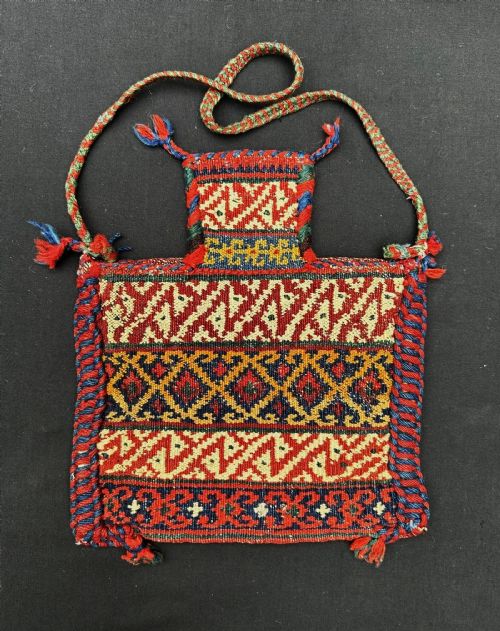
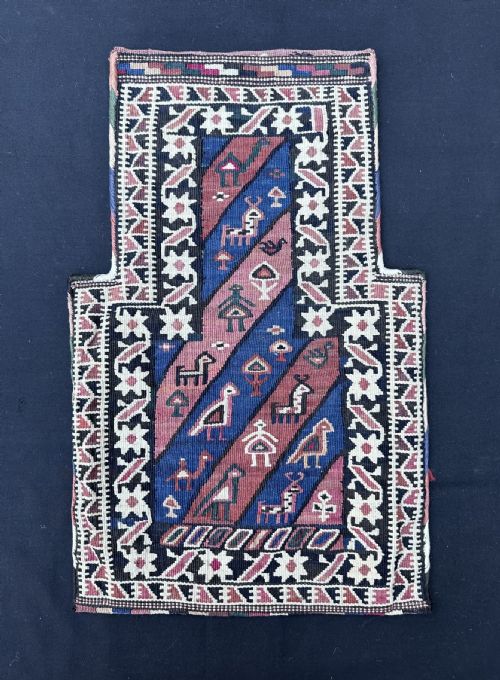
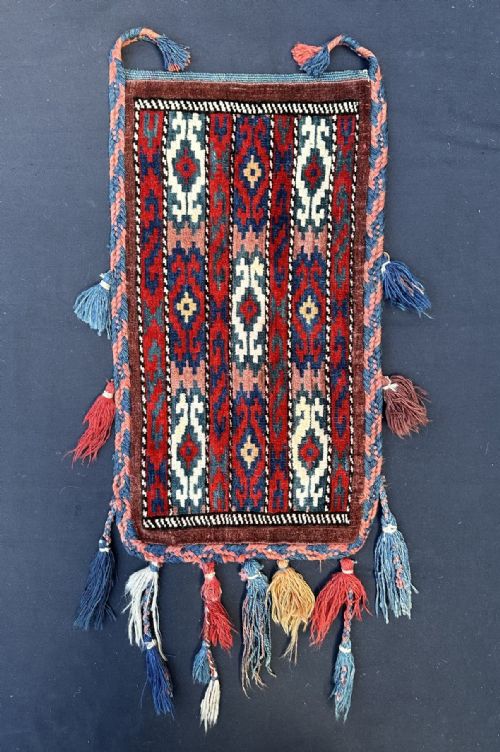
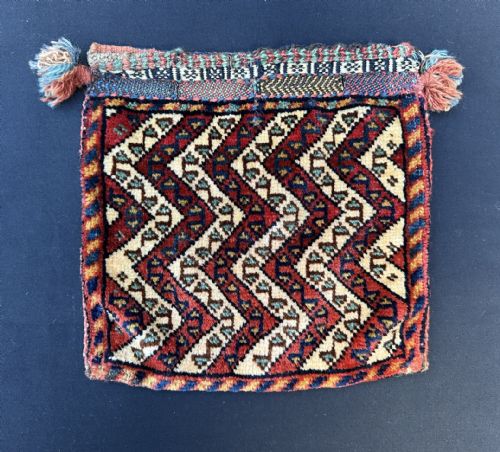






Red Woven Tribal Pouch
A red woven tribal pouch brings nomadic handcraft into daily rooms through robust utility pieces made by weavers across Persia, Central Asia and the Caucasus.
Red Woven Tribal Pouch
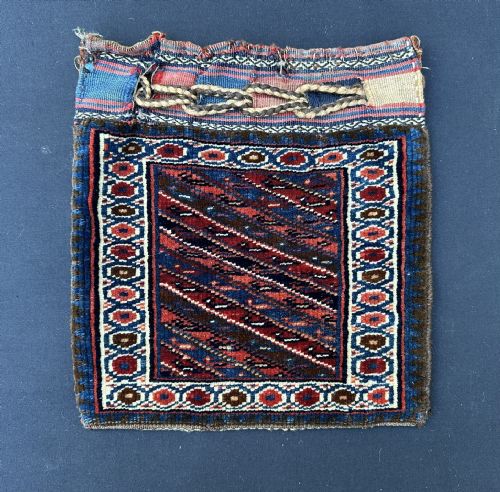
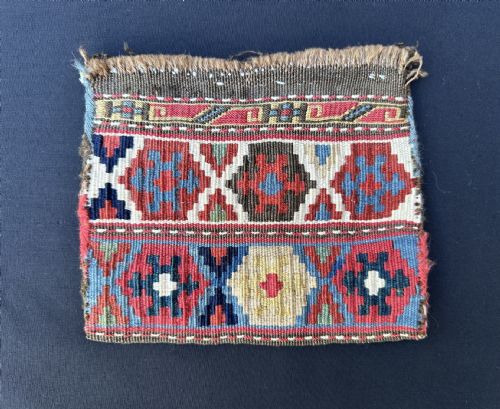
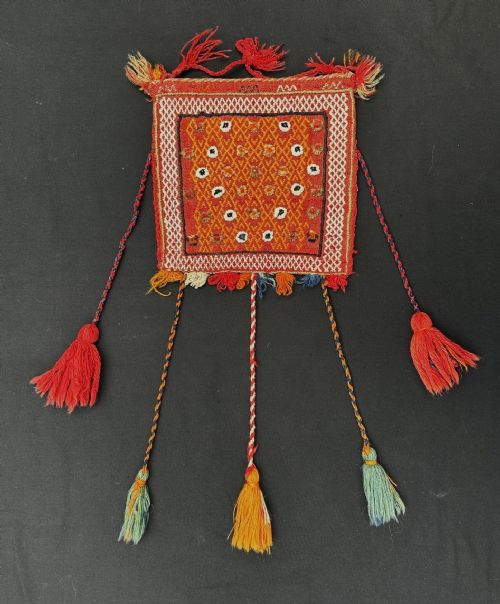
A red woven tribal pouch encompasses functional receptacles such as salt-bags, vanity-bags, spindle-bags and chantehs created by nomadic groups including the Afshar, Yomut, Tekke, Shahsevan and Baluch. These pieces served practical roles in encampments and during migrations, functioning to store tobacco, salt, personal items or spinning tools. The selection on this page centres heavily on Persian and Central Asian tribal weaving traditions dating from the mid-nineteenth century through the early twentieth century.
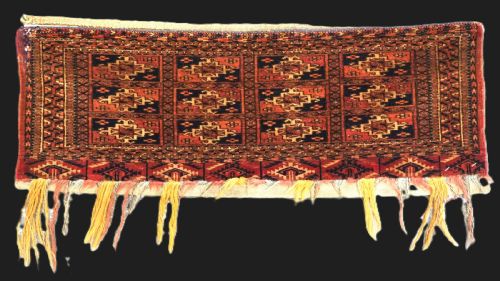
Most examples present compact formats measuring under a metre, constructed for portability and everyday utility rather than large floor coverings. Collectors encounter distinct tribal structural norms, from the deep red field of a Turkmen torba to the soumak weave of an Afshar salt bag. Each regional group employed specific proportions and utilitarian designs that distinguish a personal bag from a larger saddlebag or animal trapping.
Materials and construction
Weavers relied primarily on wool and hand-spun wool for the main structural pile and flatweave backs, often utilising natural dyes to achieve deep reds, browns and contrasting accents. Certain specialised forms integrate supplementary materials such as cotton foundations, silk highlights, glass beads, and cowrie shells for ornamentation or structural reinforcement.
Techniques varied by region and specific utility, combining warp-faced plain weave, pile knotting and soumak work to produce durable receptacles capable of enduring nomadic travel. Complete survivals frequently retain their original plain-weave backs and hanging loops, demonstrating the intact construction methods used by nineteenth-century tribal makers.
Nomadic weavers packed spare spindles and salt into these pouches, ensuring that even a humble storage bag travelled in full colour.
Evaluating quality and execution
Quality rests in the precision of the tribal pattern, the fineness of the knotting or weave structure, and the vibrancy derived from natural dyes. Tightly packed wool foundations and well-balanced compositions separate structurally sound examples from standard utility work.
Survival condition significantly influences the standing of a piece, particularly the retention of original plain-weave backs, side cords and closure systems. Completeness and crisp detail across regional motifs mark the distinction between ordinary containers and superior textile art.
The Red Woven Tribal Pouch Glossary
- Chanteh
- A small tribal personal bag or vanity bag used by nomads for carrying small possessions. These miniature pouches frequently display sophisticated regional weaving patterns.
- Torba
- A Turkmen storage bag traditionally hung inside a yurt or tent. They often feature multiple guls and horizontal format designs.
- Soumak
- A flat-weave technique where coloured weft threads wrap around the warp threads in a continuous brocade-like fashion. This method creates a durable fabric with a textured face and smooth reverse.
- Igsalyk
- A specific Turkmen designation for a spindle-bag used to hold spinning materials and tools. These narrow pouches typically include plain weave backs.
- Gul
- A primary octagonal or medallion motif repeated across Turkmen and tribal carpets and bags. Each design identifies specific tribal groups and sub-lineages.
Red Woven Tribal Pouch: Frequently Asked Questions
What were tribal pouches used for?
Nomadic groups utilised these pouches for storing salt, tobacco, pipes, spindles and personal items during seasonal migrations and daily encampment life. They hung inside tents or fastened to pack animals for secure transport.
Their varied sizes and shapes, such as narrow spindle-bags or square chantehs, corresponded directly to the specific household commodity they contained.
How do I care for an antique textile bag?
Keep textile bags away from direct sunlight to protect natural dye colours from fading over time. Gentle vacuuming through a mesh screen helps remove dust without pulling loose fibres.
Avoid hanging heavy objects inside them or displaying them in damp environments where wool can attract moth damage.
How can I tell which tribe made a pouch?
Tribal attribution relies on specific colour palettes, structural weaves, and repeating motifs such as guls or borders. For instance, Tekke and Yomut pieces display distinct Central Asian formats, while Afshar and Qashqa'i works reflect southern Persian traditions.
Comparing the knotting style and wool texture against documented regional examples clarifies the likely maker.
What is the difference between a torba and a chanteh?
A torba is a larger, wide storage bag traditionally produced by Turkmen tribes to hang on tent walls. A chanteh is a smaller personal pouch used by Persian nomads to carry intimate belongings.
Both items utilise traditional tribal weaving, but their scale and intended placement within the nomadic household differ.