


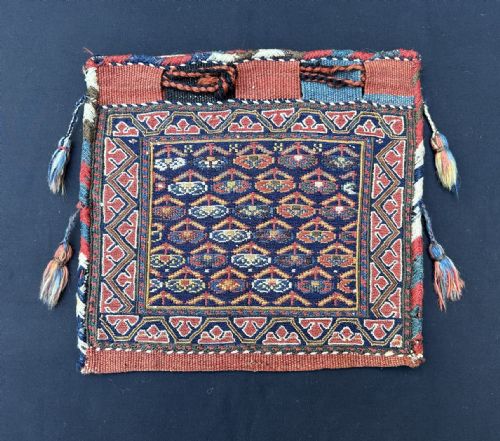
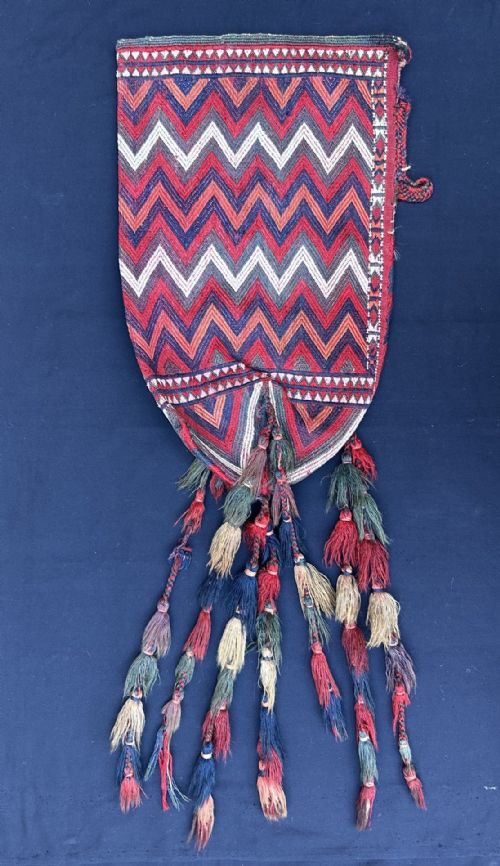
Red Woven Tribal Bag
A red woven tribal bag brings nomadic craftsmanship into domestic interiors, offering portable utility shaped by Central Asian and Persian traditions.
Red Woven Tribal Bag
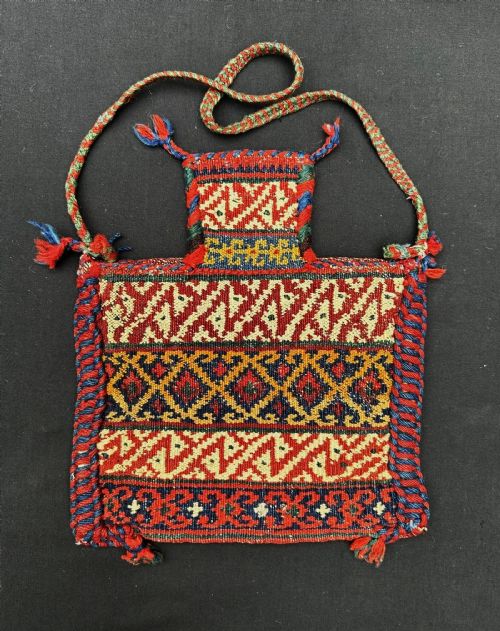
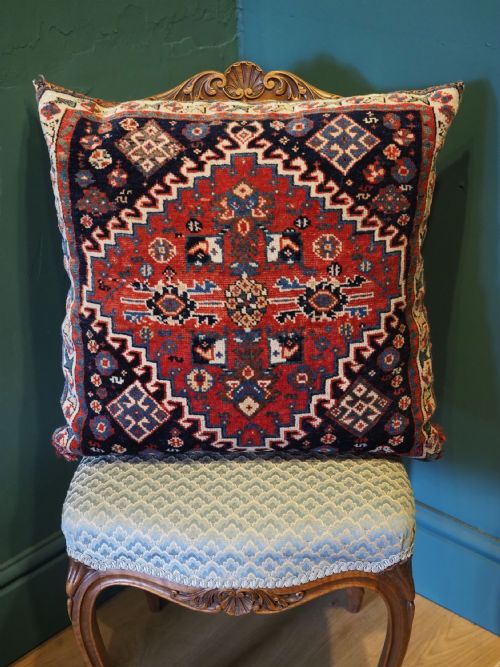
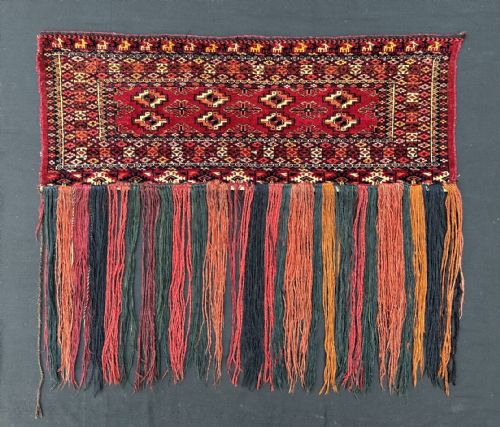
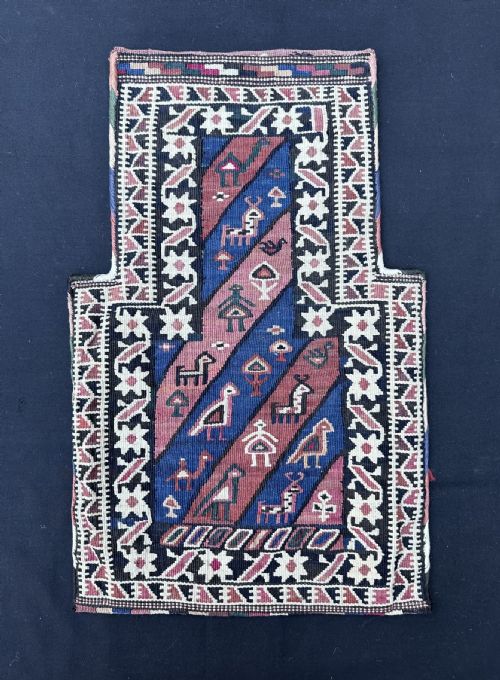
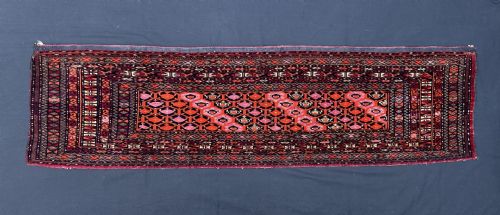
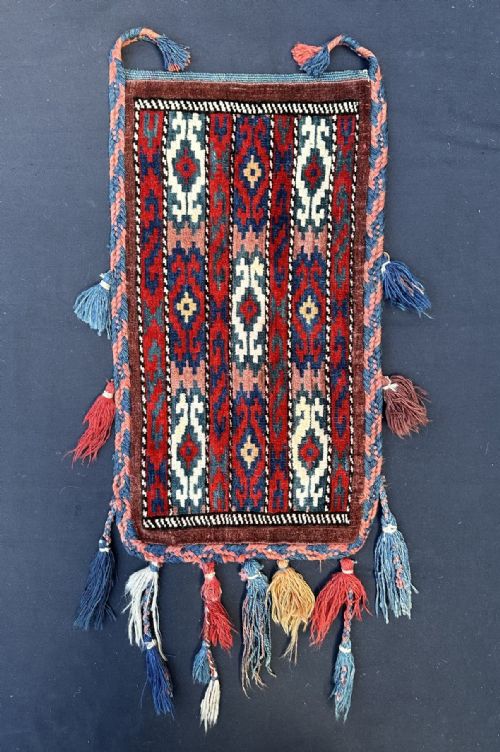
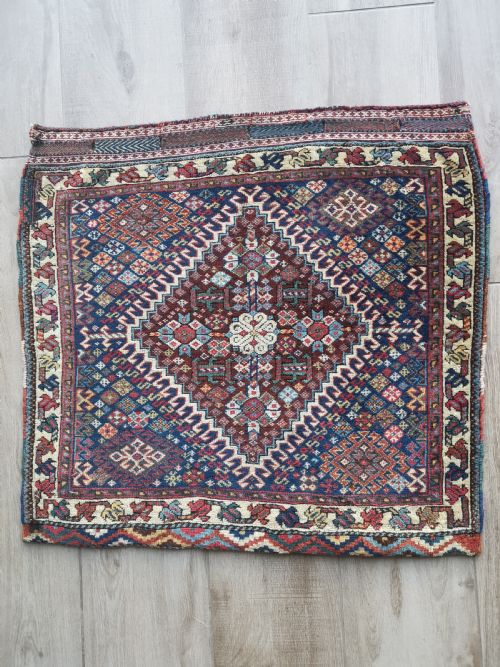
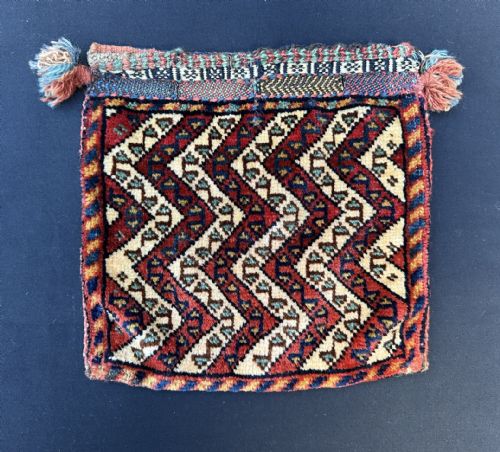
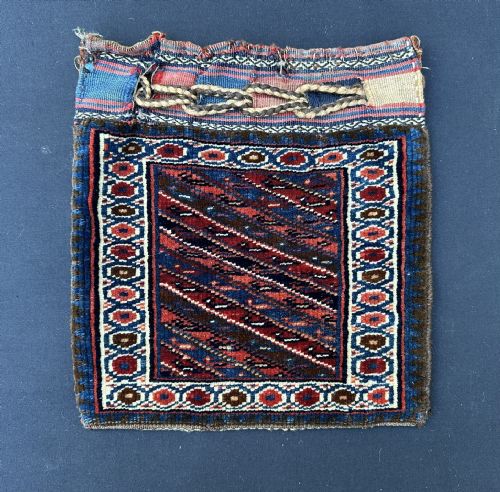
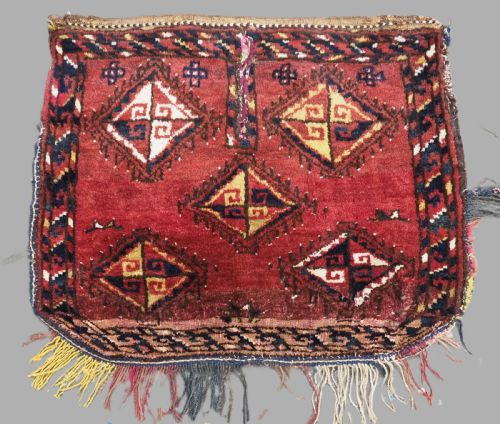
The version most commonly encountered on this page is the bag face or complete small container originating from Turkmen tribes such as the Tekke, Yomut, and Saryk, alongside Persian nomadic groups including the Qashqai, Afshar, and Lori-Bakhtiari. They display distinctive tribal motifs and deep madder-red grounds developed over generations of nomadic weaving traditions.
Makers utilised portable vertical looms to produce these dense textiles, integrating various formats from small chantehs to larger chuvals and torbas. Each format reflects specific domestic functions within camp life, while retaining the characteristic visual vocabulary of its producing tribe.
Materials and construction
The foundation of these pieces relies predominantly on hand-spun wool, valued for its natural lanolin content and resilience against the rigours of nomadic migration. Weavers also incorporated cotton for structural warps or wefts in certain regional types, and occasionally utilised silk highlights to accentuate specific motifs.
Colour comes from natural dyes, with rich madder reds dominating the palettes alongside indigo blues and earthy tones derived from local plants and minerals. These dyestuffs were applied to wool that had been spun by hand, producing subtle tonal variations across the surface of the textile.
Nomads kept vanity bags tucked inside large tents to guard mirrors and combs from roaming goats.
Evaluating weave and design
Quality in these nomadic textiles rests upon the density of the weave and the precision with which intricate tribal guls or geometric patterns are executed. Finer knotting allows for sharper delineation of motifs and greater structural integrity in the finished fabric.
The handling of natural dyes also dictates distinction, where depth of colour and harmonious saturation elevate an example. Consistency in hand-spinning and the preservation of complete original formats, such as retaining the plain weave backs or closure systems, further distinguish superior survivals.
The Red Woven Tribal Bag Glossary
- Gul
- A primary octagonal or medallion motif repeated across Turkmen and other Central Asian carpets and bags. Each design often corresponds to a specific tribe or sub-group.
- Torba
- A small storage bag produced by nomadic weavers, typically wider than it is tall. These were used inside tents for possessions and bedding.
- Chuval
- A large tent bag used by Turkmen nomads for storing household goods. They often feature multiple rows of guls on a deep red ground.
- Chanteh
- A small traditional Persian or Kurdish carrying bag or vanity case. They were frequently woven with detailed face designs and carried personally.
- Khorjin
- A double saddle bag designed to be thrown over the back of a pack animal. Surviving examples often appear as half-sections or separated bag faces.
Red Woven Tribal Bag: Frequently Asked Questions
What were tribal bags used for?
Nomadic tribes utilised these bags for everyday storage, transporting belongings during seasonal migrations, and organising household items inside tents. Different formats served specific purposes, from carrying salt and personal vanity items to storing bedding and heavy provisions.
Their construction was entirely practical, designed to withstand the harsh conditions of nomadic life while displaying the identity and weaving skill of the maker's tribe.
How do I care for an antique textile?
Protect these pieces from direct, strong sunlight to prevent natural dyes from fading over time. Gentle vacuuming through a mesh screen helps remove dust without damaging the hand-spun wool fibres.
Avoid hanging heavy bags by a single point, as this places undue strain on the historic foundation threads. Professional textile conservation cleaning should be sought if deep washing ever becomes necessary.
How do I distinguish different tribal designs?
Tribal attribution relies on identifying specific repeating motifs, such as the distinctive gul patterns used by Tekke, Yomut, and Saryk Turkmen groups. Colour palettes also provide clues, with certain Persian confederacies like the Qashqai or Afshar utilising particular shades of madder red and indigo.
The structure of the weave, border arrangements, and structural materials further help separate Caucasian pieces from those originating in Khorassan or Fars.
Are bag faces different from complete bags?
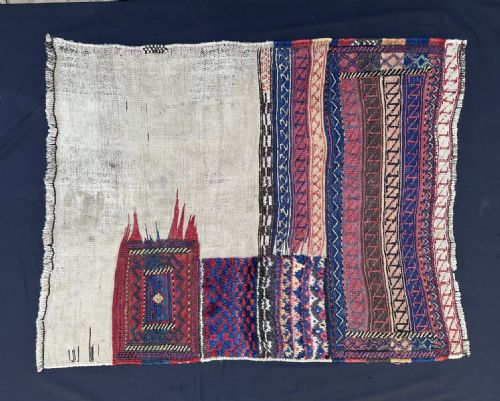
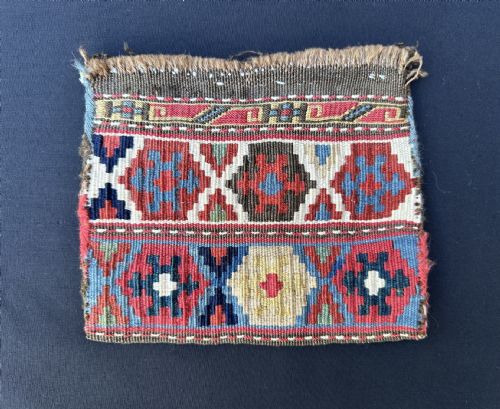
Many surviving examples on the market consist solely of the decorative front panel, known as a bag face, rather than the complete container. Over decades of use, the plain weave backs made of simpler utility wool often wore out and were detached.
Complete pieces retain their original backs or closure mechanisms, offering a more intact representation of the original nomadic object, though bag faces remain equally valued for their artistry.