


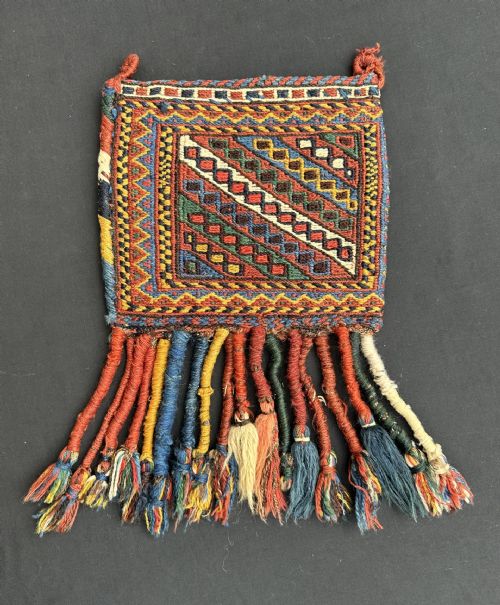

Geometric Tribal Wool Bag
A geometric tribal wool bag carries the history of nomadic weavers through bold motifs and practical forms designed for daily camp life.
Geometric Tribal Wool Bag
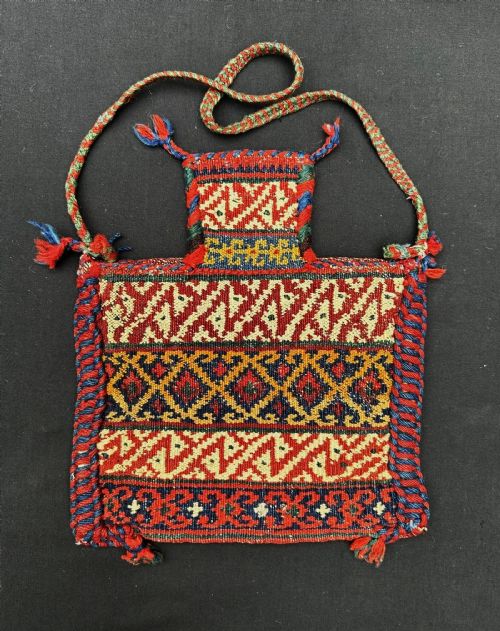
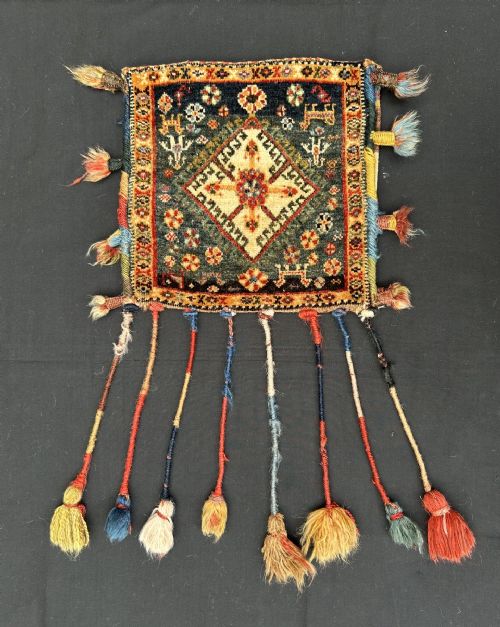
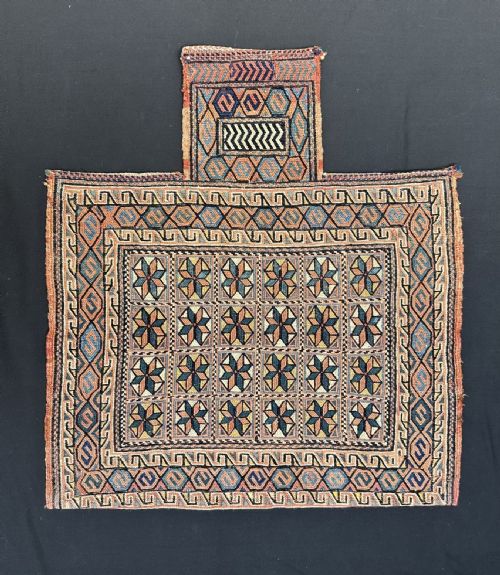
A geometric tribal wool bag encompasses utilitarian containers such as salt-bags, vanity-bags, saddle-bags, and storage torbas woven by nomadic groups. These textiles originate from nineteenth-century and early twentieth-century workshops across Persia, the Caucasus, and Central Asia.
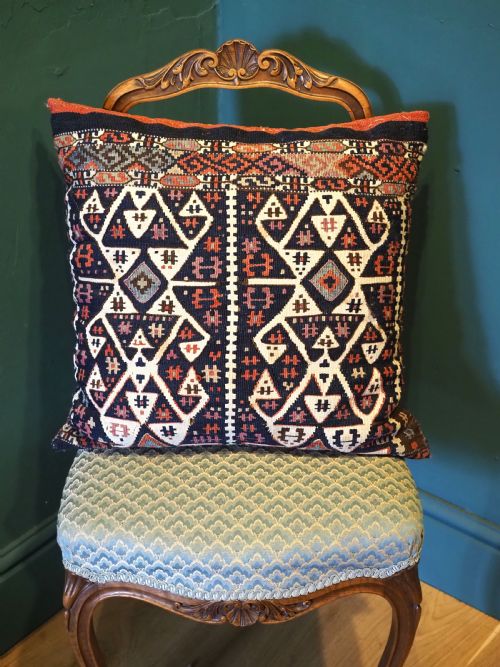
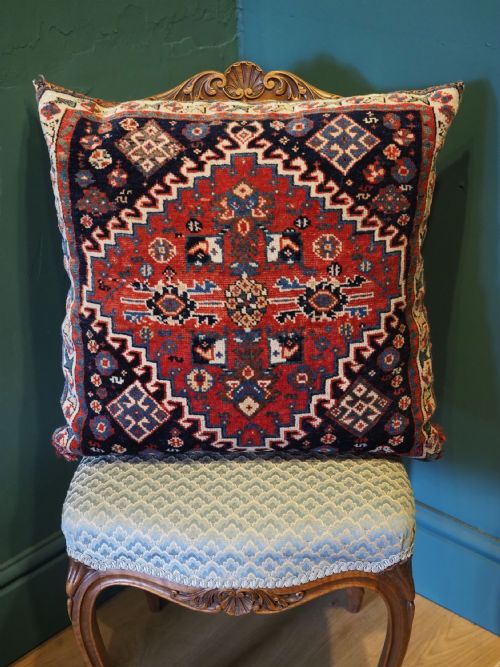
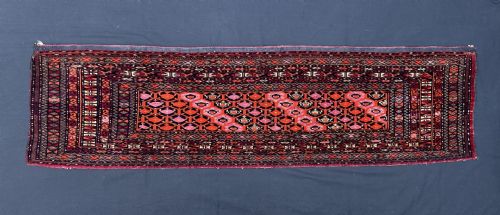
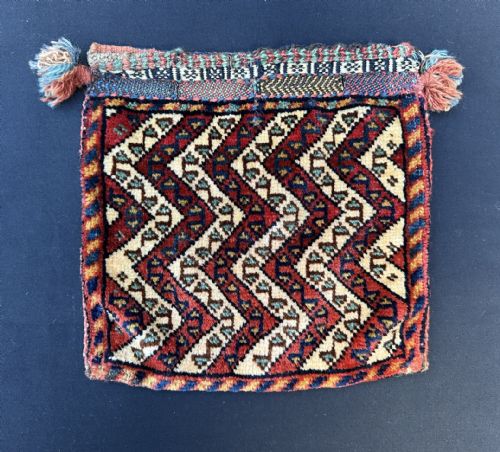
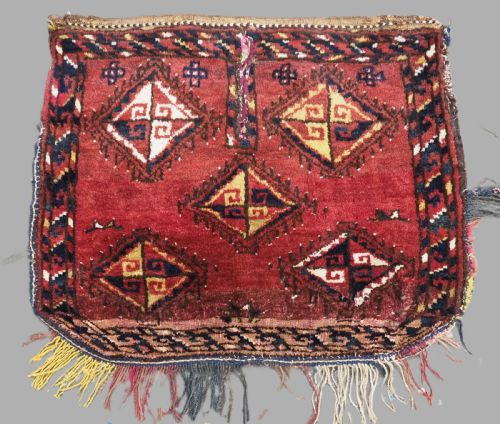
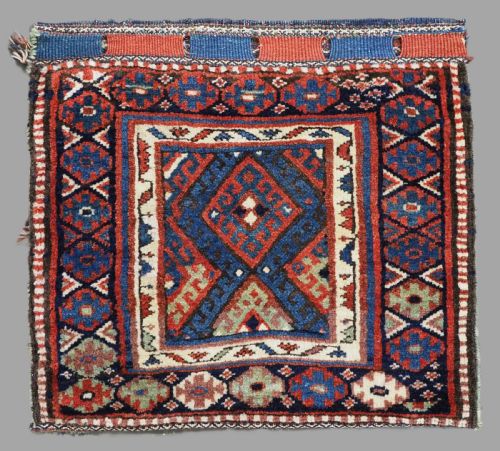
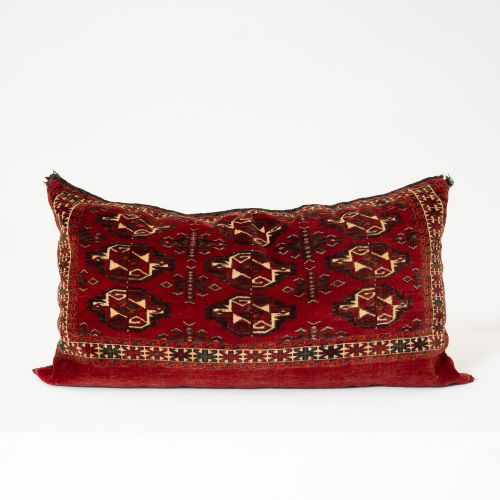
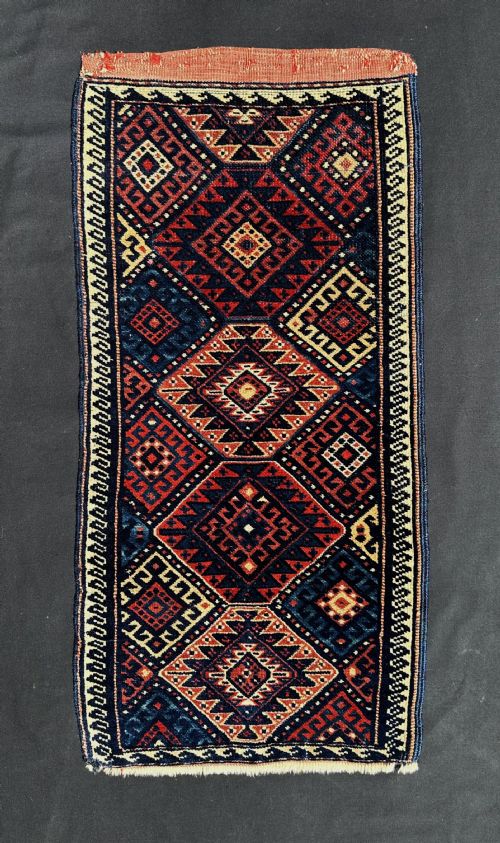
The version most commonly encountered on this page is the bag-face or converted cushion, where the front panel of a larger saddle-bag or storage container survives independently. Tribal weavers created these dense, flat-woven or pile structures to store personal possessions, grain, or salt during seasonal migrations.
Materials and construction
Weavers relied primarily on hand-spun wool for both the foundation warps and the thick surface pile, often combining it with cotton for structural strength. Natural dyes sourced from plants and minerals provided the rich palette of reds, blues, and ivory that underpins each geometric composition.
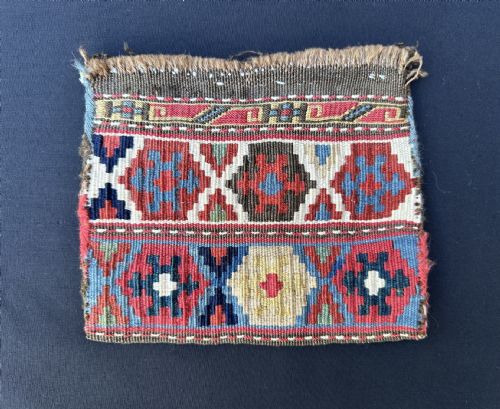
Techniques varied between symmetrical knotting for plush pile surfaces and precise soumak or plain-weave methods for flat-faced pouches. These structural choices dictated how the containers handled the heavy wear of nomadic transport.
Listings span the nineteenth and early twentieth centuries, featuring wool and natural dyes across Persian, Caucasian, and Central Asian tribal traditions.
Assessing quality
Quality rests upon the fineness of the spin and the saturation of the natural dyes, which determine the crispness of the tribal patterns. Tightly packed knots or precise flat-weaving indicate disciplined workshop practice and superior material selection by the maker.
The survival of original plain-weave backs and complete side structures elevates the historical integrity of a piece above isolated fragments. Structural completeness ensures the textile retains its original utilitarian context.
The Geometric Tribal Wool Bag Glossary
- Torba
- A small Turkmen storage bag traditionally hung inside a tent to hold household items. These pieces typically display characteristic gul motifs and banded borders.
- Soumak
- A flat-weave technique where coloured weft threads wrap over and under the warp threads in a herringbone pattern. This method creates a dense, durable face without a pile.
- Khorjin
- The Persian term for a double-sided saddle-bag designed to be slung across a pack animal. Surviving examples often feature split faces or individual cushion conversions.
- Chuval
- A large Turkmen tent-storage bag used for bedding and heavy belongings. They showcase intricate geometric güls arranged in strict grid formations.
Geometric Tribal Wool Bag: Frequently Asked Questions
What were these bags used for?
Nomadic tribes utilised these containers for storing salt, grain, pipes, and personal vanity items during seasonal migrations across Persia and Central Asia. They served as durable, portable furniture within tents.
Over time, many of these utilitarian containers transitioned into decorative cushions or wall hangings as traditional nomadic lifestyles evolved.
How do I care for a wool bag?
Protect the wool textile from direct sunlight to prevent natural dyes from fading over the years. Gentle vacuuming through a mesh screen removes surface dust safely.
Avoid placing heavy objects directly on the pile surface to maintain the integrity of the hand-spun wool fibres. Professional textile cleaners should handle any deeper restoration needs.
How are different tribes identified?
Weavers incorporated specific geometric motifs, border styles, and colour palettes unique to regional confederations like the Qashqa'i, Shahsevan, or Yomut. Examining the structural weave and back construction reveals regional traditions.
Expert attribution relies on matching these structural details against known historical examples from specific geographic provinces.
Are complete bags common?
Complete double-sided saddle-bags or storage pieces with original plain-weave backs survive less frequently than individual bag-faces. Many items were divided over generations to fit domestic decorating trends.
When a complete piece does appear, it preserves the full functional design intended by the original nomadic weaver.