



Red Wool Saddle Rug
A red wool saddle rug brings tactile tribal heritage into a modern interior through rich vegetable dyes and resilient nomad weaving.
Red Wool Saddle Rug
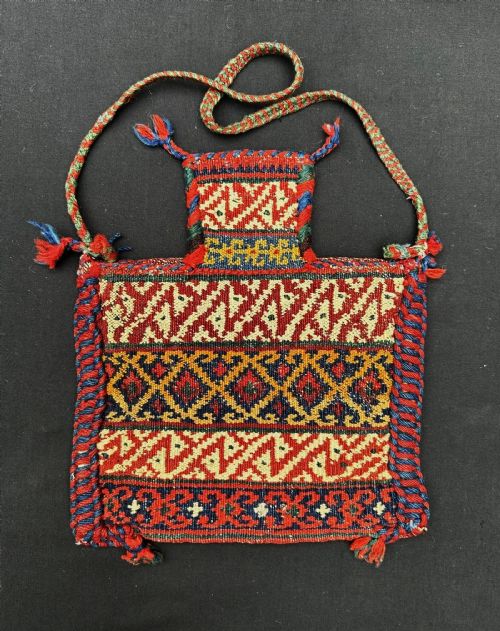
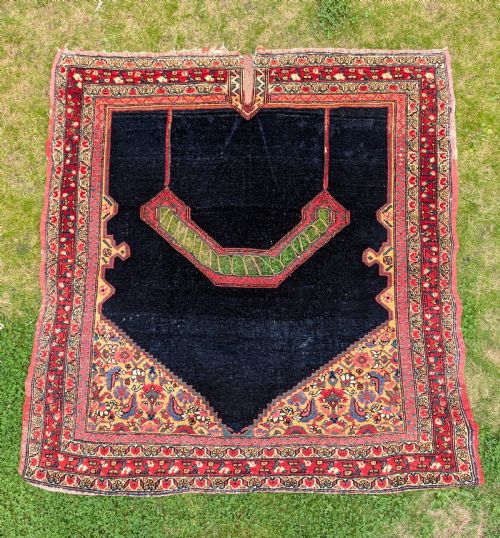
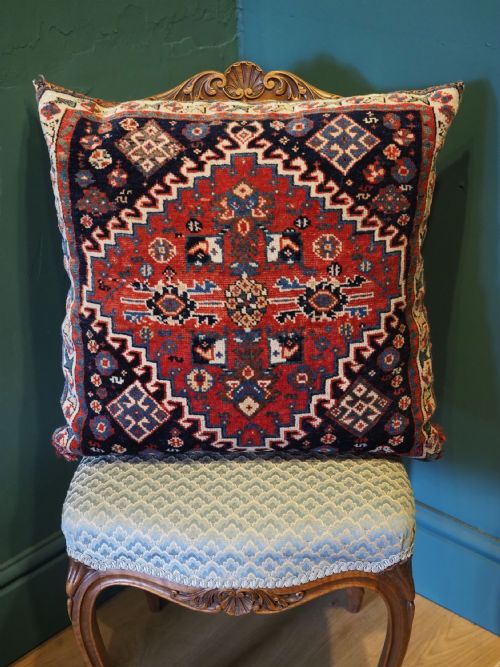
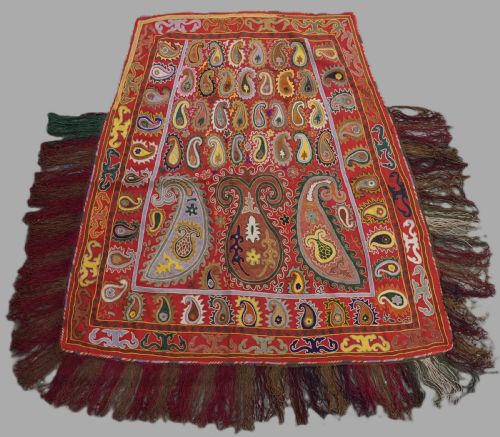
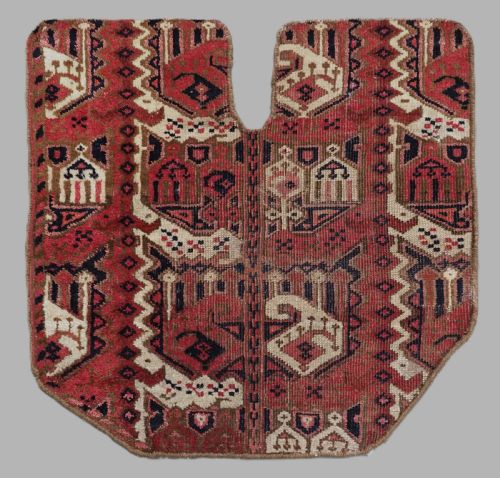
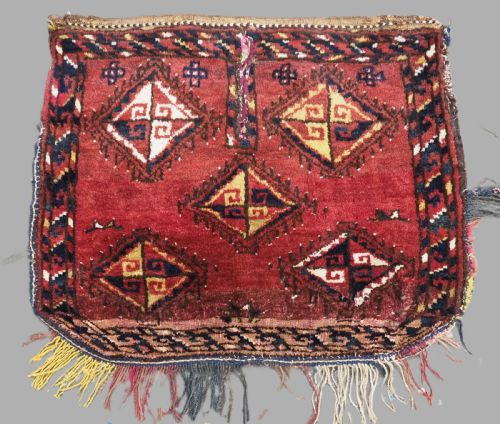
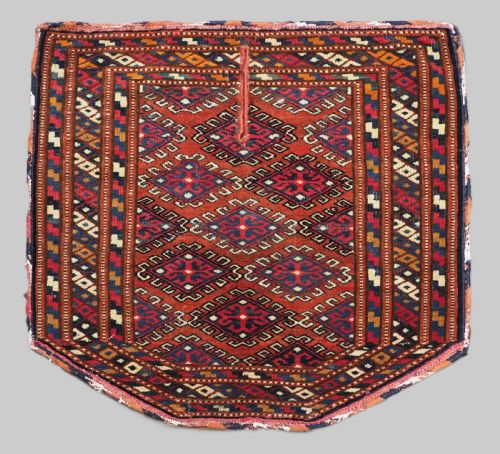
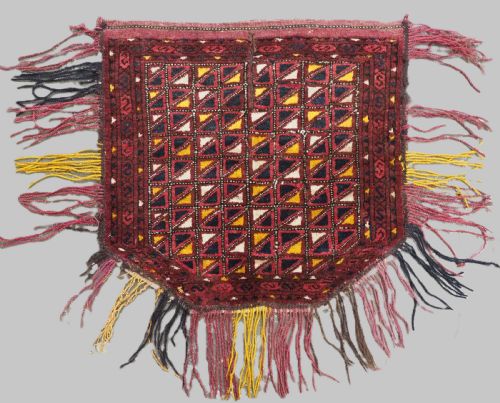
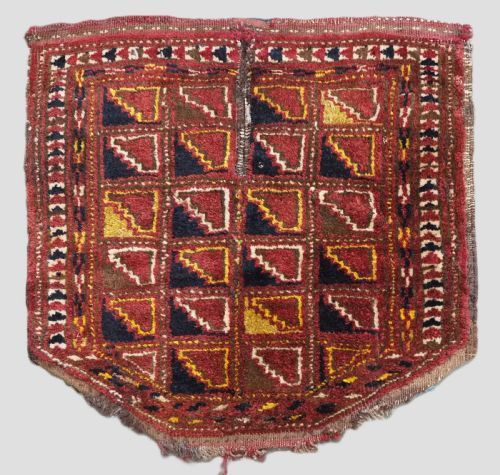
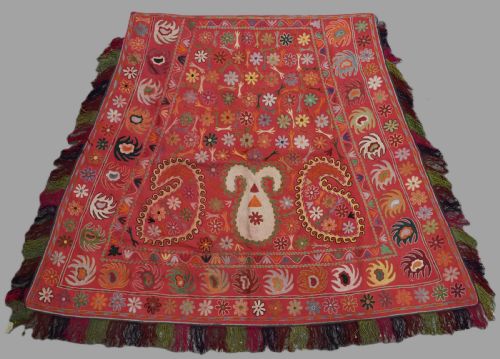
When searching for a red wool saddle rug, a buyer encounters utilitarian tribal pieces woven by nomadic and village groups across Persia, Central Asia, and the Caucasus during the nineteenth and early twentieth centuries. These items originated as functional pack animals gear, including complete double bags, single bag faces, covers, and utilitarian carriers designed for transport on horses, camels, and donkeys. On this page, the pieces most frequently met are nineteenth-century and early twentieth-century saddle covers and bag faces created by tribal groups such as the Afshar, Qashqai, Shahsavan, Ersari, and Yomut Turkmen.
The forms vary from utilitarian flatweaves and sumakh structures to knotted-pile fragments and embroidered ceremonial horse covers. Many survive as single panels or bag faces because the original backing fabrics deteriorated through heavy pack use, leaving only the decorative front visible. Collectors prize these portable textiles for their dense geometric patterns, saturated natural coloration, and compact proportions that suit modern wall hanging or floor placement.
Materials and construction
Weavers constructed these pieces using hand-spun wool for the pile and foundation yarns, sometimes combining cotton and metal threads for structural strength or decorative contrast. Natural dyes provided the characteristic rich palettes, utilising madder root for reds alongside indigo and other plant extracts.
Techniques ranged from asymmetric and symmetric hand-knotting to intricate flatweave methods like soumak and supplementary weft wrapping. Artisans reinforced high-wear edges with leather or braided wool to withstand the rigours of nomadic pack transport.
Many a pack horse carried these intricate geometric carpets across dusty mountain passes, oblivious to the fact that collectors would one day frame them.
Evaluating quality and merit
Quality rests upon the handle and lustre of the wool, where high lanolin content and hand-spun yarn yield a tactile depth that machine preparation cannot replicate. The precision and complexity of the tribal motifs, combined with the vibrancy of the natural dye palette, distinguish standard utility weaving from exceptional artistic output.
Preservation of original structural elements, such as surviving tassels, complete borders, and untouched plain-weave backs, elevates the historical integrity of a piece. The crispness of drawing within the tribal guls or medallions indicates the weaver's control over the medium.
The Red Wool Saddle Rug Glossary
- Khorjin
- A traditional double saddlebag used by nomads for carrying household goods on pack animals. These pieces were joined by a central slit web and folded across the animal's back.
- Gul
- A repeating medallion or floral-like octagonal motif frequently utilised in Turkmen and Central Asian tribal weaving. Each design often signifies a specific clan or tribal lineage.
- Soumak
- A flatweave technique involving wraps of coloured weft threads over warp threads to create a textured, durable surface resembling embroidery. This method allows for crisp diagonal lines and intricate geometric patterns.
- Chuval
- A large storage bag produced by Turkmen tribes, often featuring multiple rows of guls. Surviving examples are typically displayed as wall hangings or collector panels.
- Sumac
- An alternative spelling for soumak denoting the wrapped flatweave construction method seen across Caucasian and Persian tribal pieces.
Red Wool Saddle Rug: Frequently Asked Questions
What is a red wool saddle rug used for today?
These antique textiles serve primarily as decorative wall hangings, small accent floor rugs, or table covers in contemporary interiors.
Their compact scale and durable wool construction allow them to fit into hallways, studies, or living spaces where standard carpets prove too large.
How do I care for an antique saddle bag face?
Maintenance requires gentle vacuuming without a rotating brush roll to protect fragile wool pile and historic flatweave foundations.
Professional textile conservation cleaning should be employed periodically to remove embedded dust without damaging delicate natural dyes.
How do I tell tribal groups apart on these rugs?
Attribution relies on identifying specific structural palettes, knotting techniques, and characteristic geometric motifs unique to each region.
For instance, Turkmen pieces often display repeated octagonal guls in deep madder reds, while Persian Qashqai or Afshar works incorporate angular medallions and boteh motifs.
Why are many pieces sold as bag faces?
Nomadic double bags suffered severe wear along the central connecting web and plain-weave backs during daily pack transport on animals.
When the backing disintegrated over time, owners or dealers separated the durable knotted or embroidered front panels to preserve the surviving artistry.