

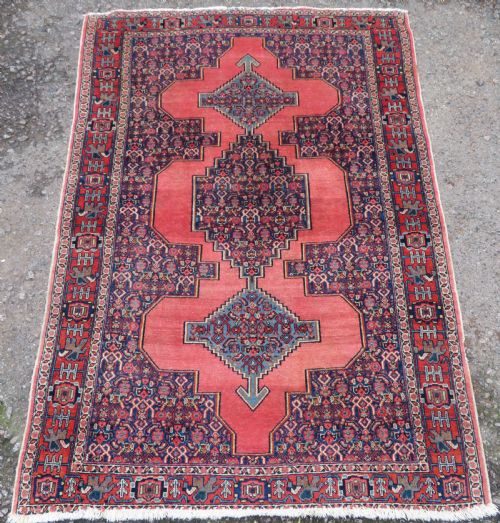
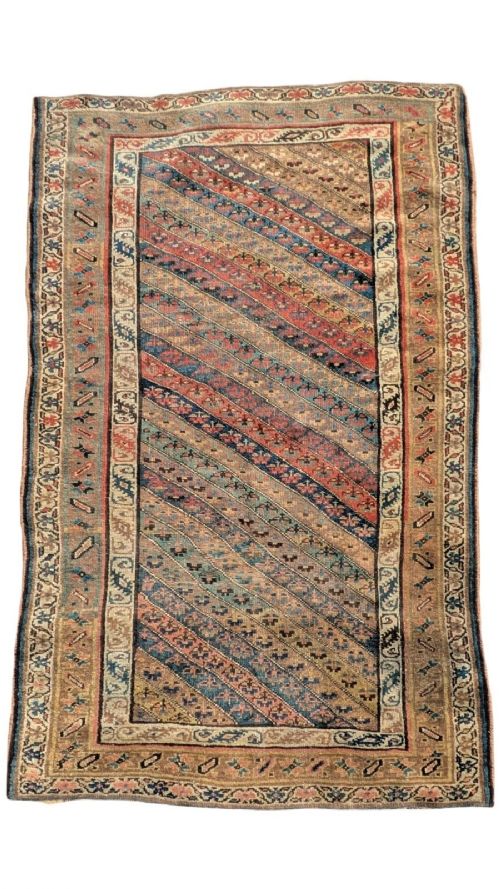
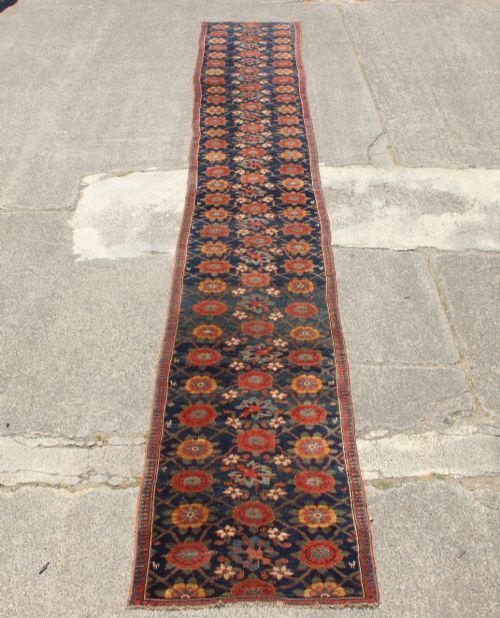
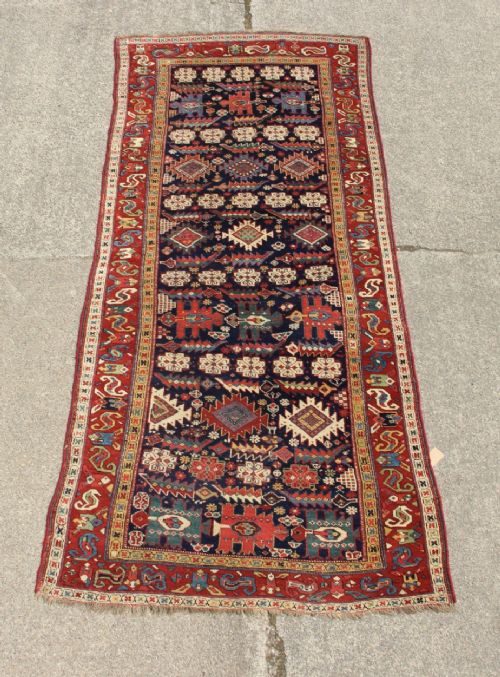


Red Wool Kurdish Runner
A red wool kurdish runner brings durable tribal warmth and striking geometry to a long hallway or narrow space.
Red Wool Kurdish Runner
A red wool kurdish runner is a hand-woven carpet originating from tribal weavers in regions such as Persia, Anatolia, and the Caucasus. These narrow floor coverings emerge from 19th-century and early 20th-century weaving traditions, spanning periods from the 1850s to the 1930s.
Buyers will encounter formats varying from compact hallway strips to substantial long runners exceeding four metres in length. The prevalent colour palette relies on rich reds offset by deep blues, ivories, and geometric motifs characteristic of tribal workshops.
Materials and construction
Weavers constructed these runners using wool and hand-spun wool for the pile, yielding a dense, resilient surface designed for heavy foot traffic. Foundations commonly incorporate cotton or wool warps and wefts to provide structural stability.
Natural dyeing methods produced saturated crimson and madder red tones that deepen with age. Hand-knotting techniques varied across specific tribal groups, resulting in tight foundations and distinctive structural weight.
Red Wool Kurdish Runner Retail Price Guide 2026
Typical asking prices for red wool kurdish runner among the pieces listed under this phrase on Sellingantiques today, from the lower quarter to the upper quarter. They describe what is for sale here now, not the wider market.
Certain antique runners capture the quiet personality of their makers through subtle irregularities in the repeating border geometry.
Evaluating quality and execution
Knot density and structural tightness dictate the integrity of each runner, with finer examples displaying precise geometric control across complex field patterns. The quality of the wool directly influences handle, suppleness, and long-term durability under daily use.
Consistency in natural dye saturation and the clarity of tribal motifs distinguish superior weaving. Pieces retaining full pile alongside intact original borders achieve greater architectural presence in interior settings.
The Red Wool Kurdish Runner Glossary
- Kelleh
- A large format rectangular carpet, often longer than a standard room-size rug but broader than a hallway runner.
- Pile
- The vertical tufts of wool that form the usable surface of the carpet, created by knotting yarn onto the warp threads.
- Warp
- The vertical foundation threads stretched tightly on the loom, running the entire length of the textile.
- Weft
- The horizontal threads passed across the warp threads to lock the rows of knots firmly in place.
- Gul
- A medallion or repeating octagonal motif frequently found in tribal weaving traditions.
Red Wool Kurdish Runner: Frequently Asked Questions
Where do these long runners work best?
These narrow formats suit hallways, landings, and corridors where traditional floorboards require protection and warmth. Their elongated proportions draw the eye down a passage while adding distinct tribal character to transitional spaces.
Placing them in high-traffic areas allows the dense wool pile to absorb daily wear. Proper underlay helps secure the runner firmly to wooden or stone floors.
How do I care for an antique wool runner?
Regular gentle vacuuming without a rotating brush roll prevents dust accumulation within the wool pile. Professional cleaning by specialists in antique textiles ensures safe maintenance of natural dyes.
Rotating the runner periodically balances exposure to foot traffic and sunlight. Avoiding excessive moisture preserves the integrity of the wool and foundation threads.
How can I tell the age of a Kurdish runner?
Dating relies on assessing material characteristics, structural wear patterns, and natural dye variations. Earlier pieces from the mid-19th century often display hand-spun wool with deeper chromatic subtlety.
Structural traits such as wool content in the foundation threads provide additional clues to period origin. Comparing specific motif structures against documented tribal styles helps narrow down the decade of production.
What is the difference between a rug and a runner?
Runners are significantly longer than they are wide, specifically proportioned for corridors and staircases. Standard rugs feature balanced rectangular dimensions suited for central floor placement in rooms.
Weavers adjusted their loom setups to create these elongated formats for specific architectural uses. Both share identical hand-knotting techniques and wool materials.