


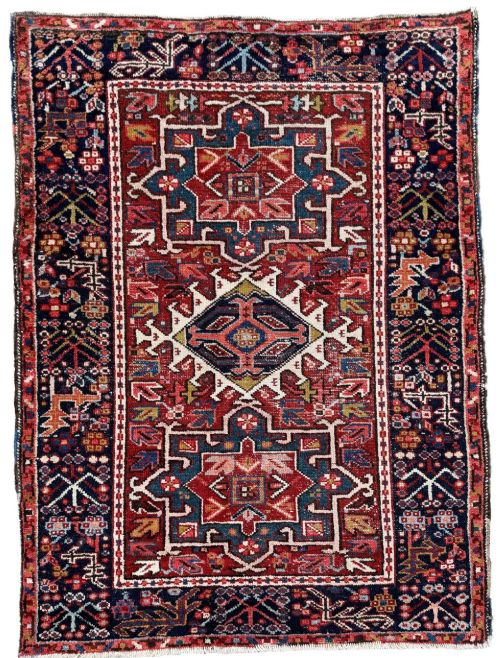
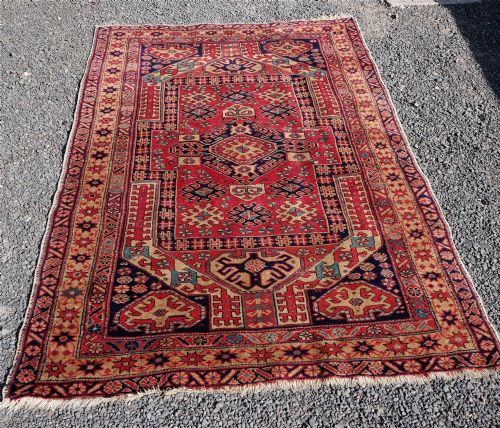
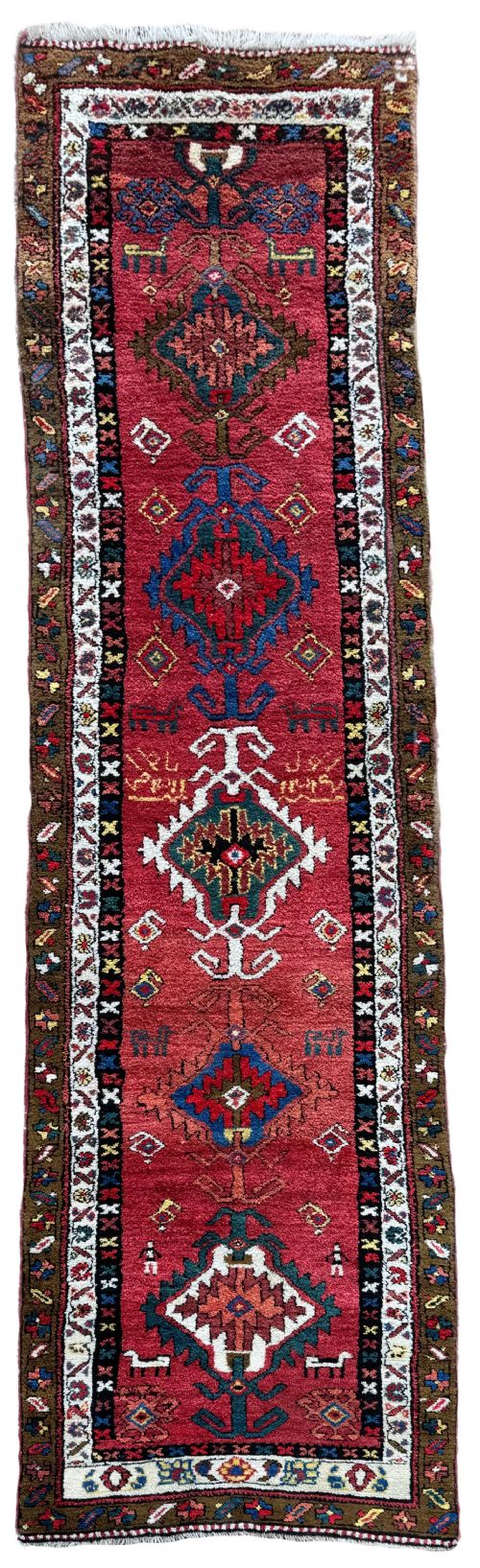
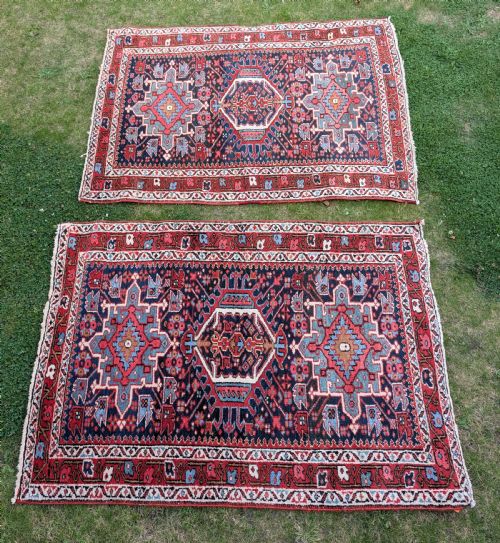

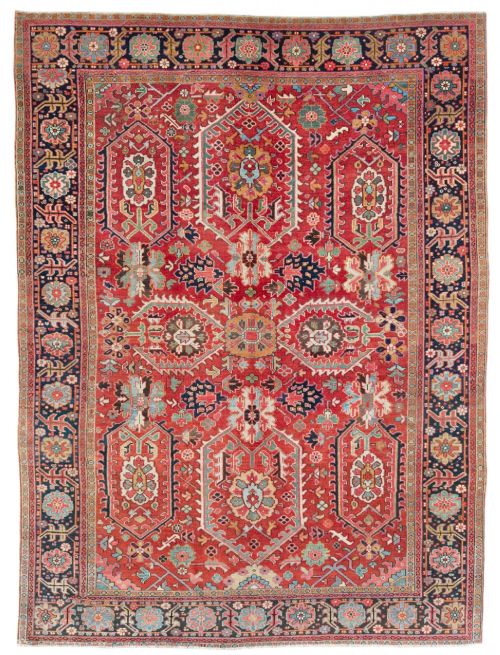
Red Wool Heriz Rug
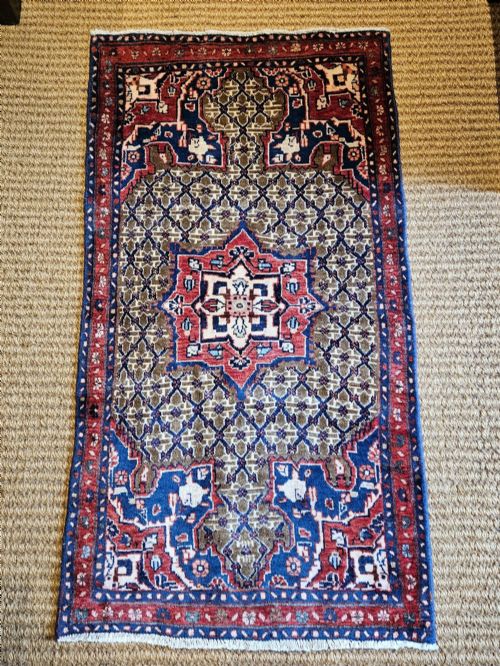
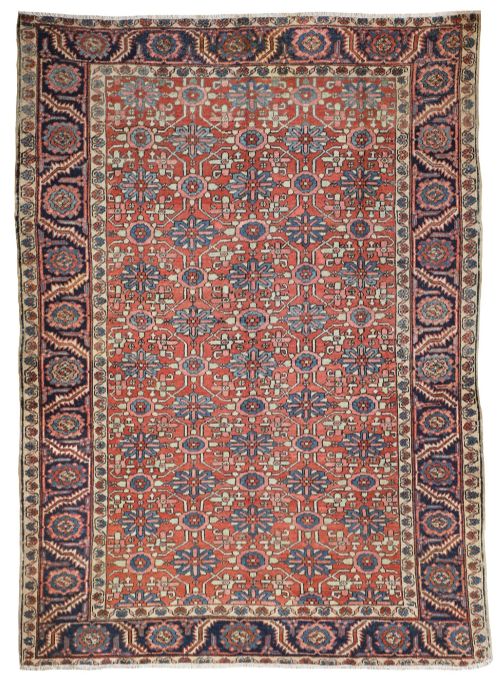
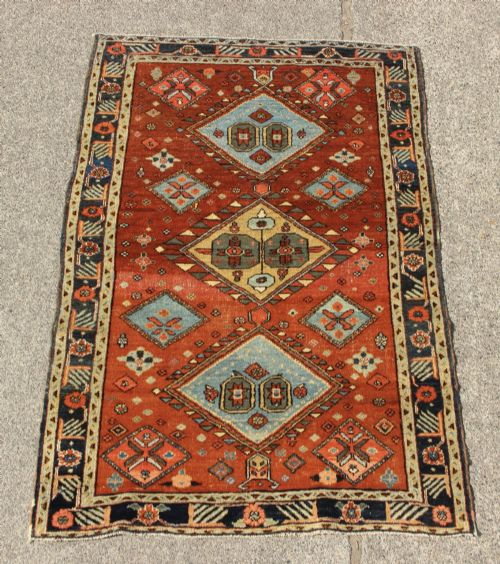
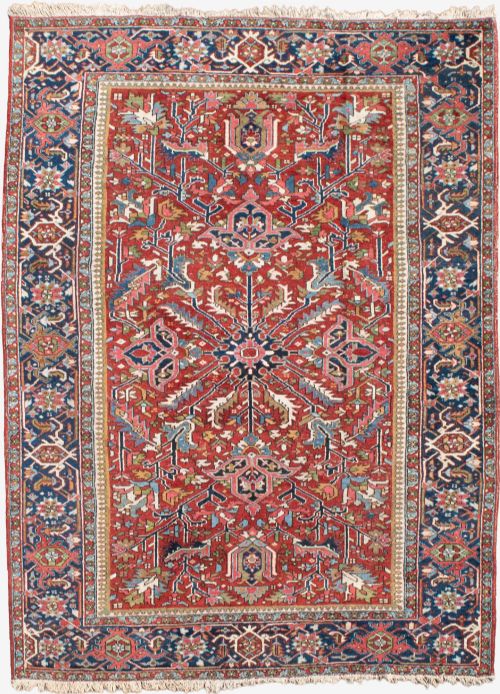
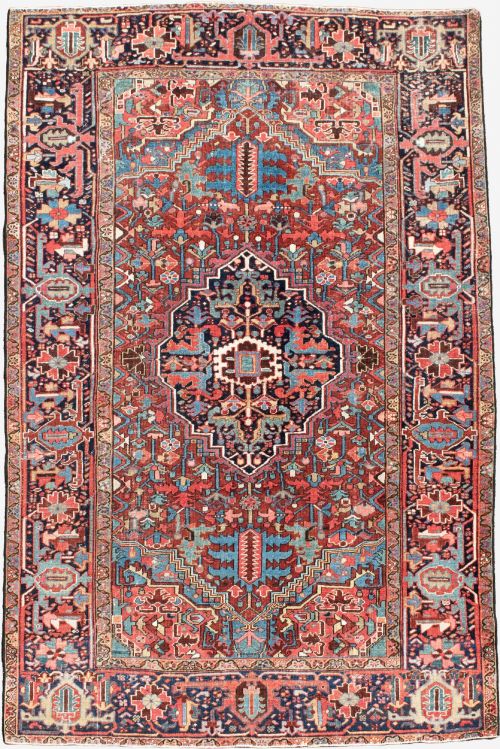
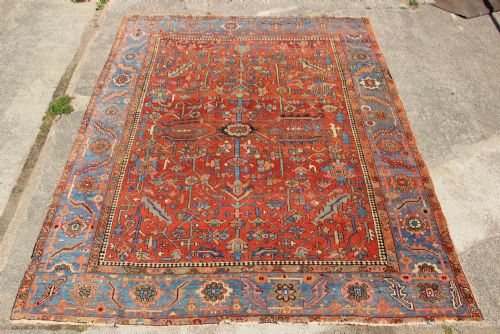
A red wool heriz rug brings robust Persian craftsmanship and distinct geometric motifs directly into a room.
Red Wool Heriz Rug
When you search for a red wool heriz rug, you encounter floor coverings woven in north-west Persia during the late nineteenth and early twentieth centuries.
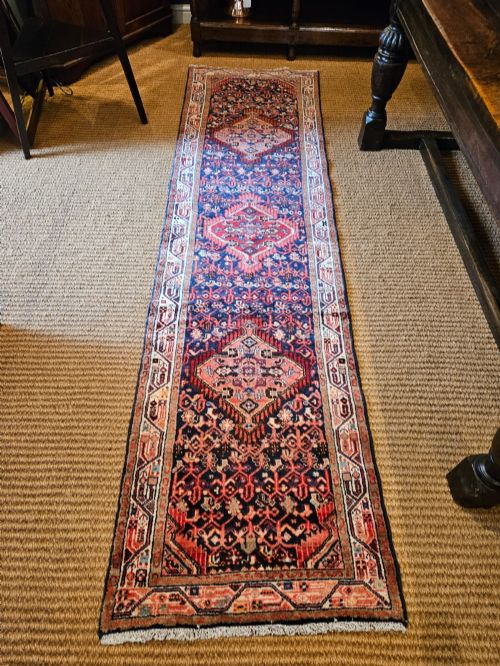
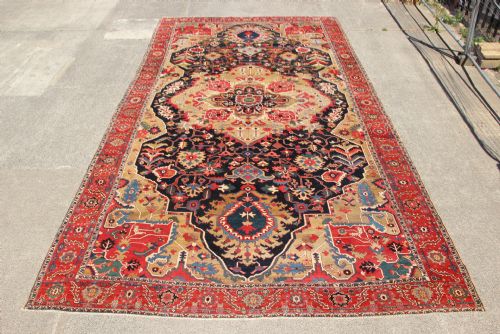
The pieces on this page span from the eighteen-eighties to nineteen-thirty, encompassing formats from small hearth rugs and bag faces to expansive hall runners and large carpets.
Alongside traditional Heriz and Serapi types, the selection includes related regional weaving traditions such as Karaja, Bakshaish, and Ahar.
How they were made
Weavers constructed these pieces utilising sturdy wool piles knotted onto cotton foundations, ensuring resilience under heavy foot traffic.
Natural dye methods produced rich red ground tones complemented by contrasting secondary colours across the geometric fields.
One surviving piece even includes a pocket-sized bag face for nomadic storage.
What varies in quality
The fineness of the knotting and the complexity of the geometric medallion design dictate the calibre of an individual rug.
The clarity and saturation of the natural red dye hues alongside the integrity of the original wool pile determine the standing of the piece.
The Red Wool Heriz Rug Glossary
- Heriz
- A region in north-west Persia renowned for producing durable carpets featuring bold geometric medallions. These rugs often utilise strong red fields.
- Serapi
- A sub-style of Heriz weaving associated with nineteenth-century production, typically displaying a more open design and finer knot density.
- Karaja
- A style of rug originating from the Heriz district, frequently characterised by geometric village patterns and smaller formats.
- Bakshaish
- An older weaving type from the Heriz region known for stylized, spacious geometric layouts and earthy colour palettes.
- Runner
- A long, narrow carpet format designed specifically for hallways and corridors.
Red Wool Heriz Rug: Frequently Asked Questions
Where should I place a Heriz rug?
These floor coverings suit high-traffic areas like hallways, living rooms, and dining spaces due to their sturdy wool construction.
Larger carpets anchor central seating arrangements, while runner formats fit narrow corridors.
How do I identify a Serapi rug?
Serapi pieces represent an earlier, finer group of Heriz weaving typically dated to the nineteenth century.
They display a more open geometric design compared to later village carpets.
Are these rugs made from pure wool?
The pile consists of wool knotted firmly onto a structural cotton foundation.
This combination provides both tactile warmth and structural stability.
How do I care for an antique Persian rug?
Vacuum gently without using a rotating brush roll to protect the wool pile.
Rotate the carpet periodically to ensure even wear across the surface.