



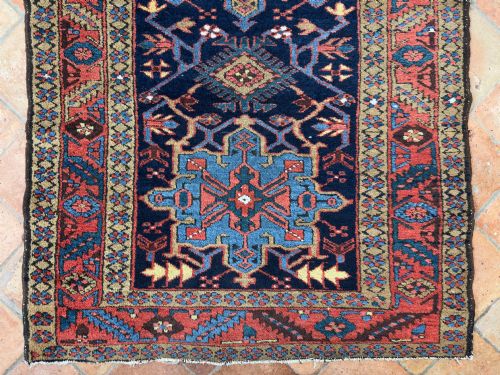
Red Wool Heriz Carpet
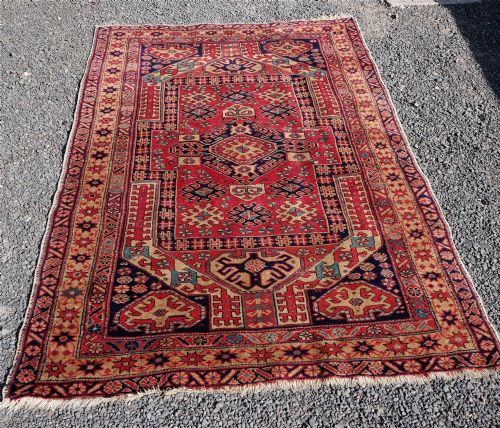
A red wool heriz carpet brings bold geometric medallions and durable village weaving into a large interior space.
Red Wool Heriz Carpet
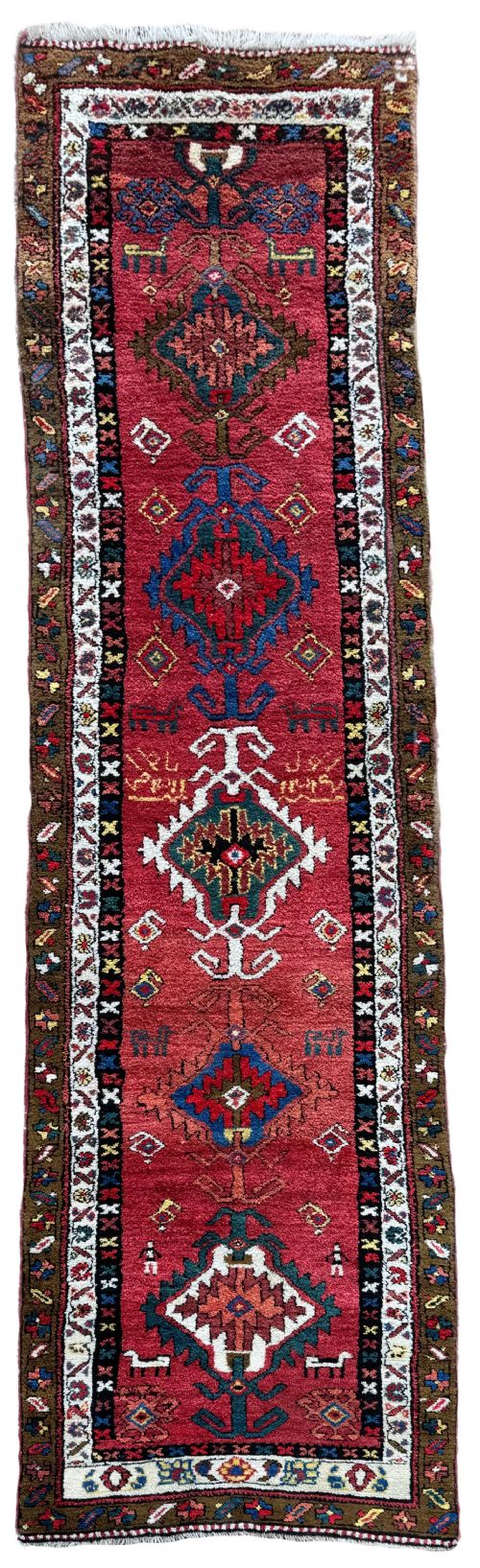
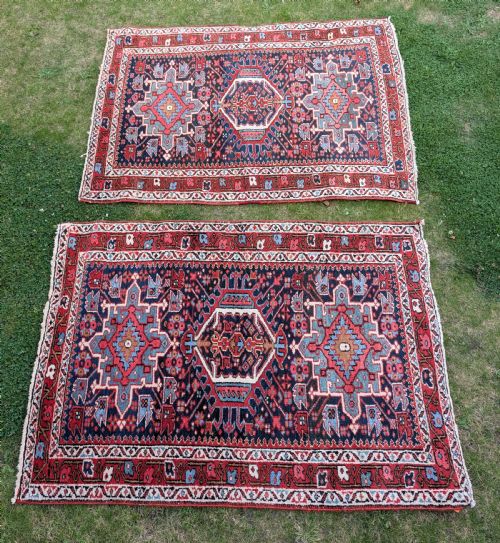
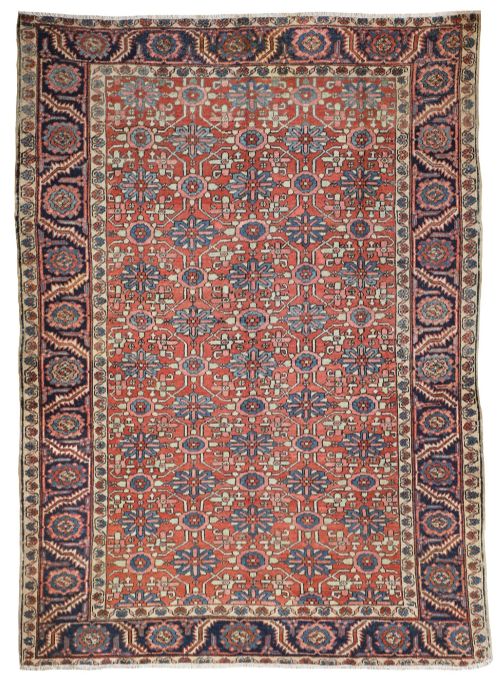
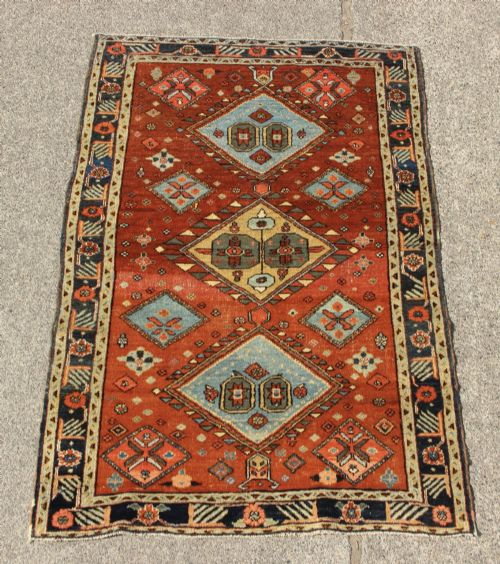
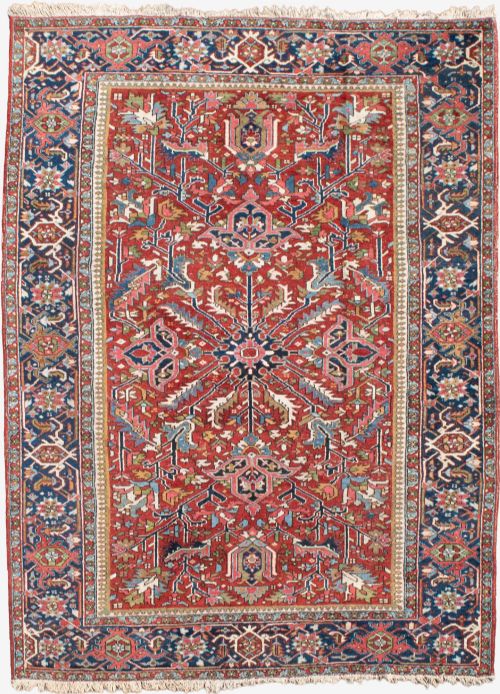
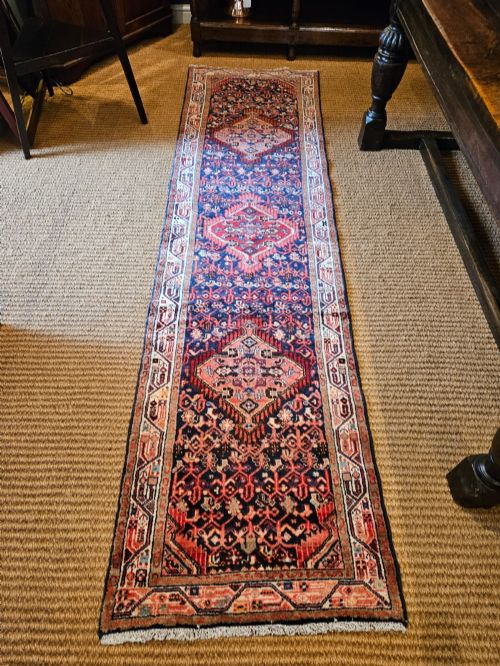
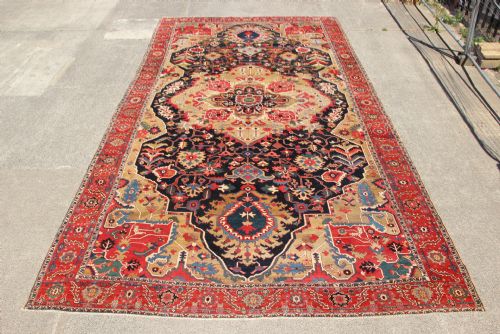
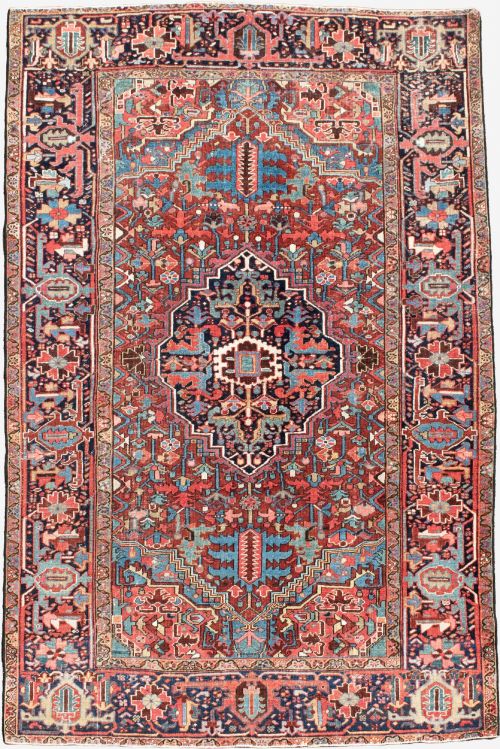
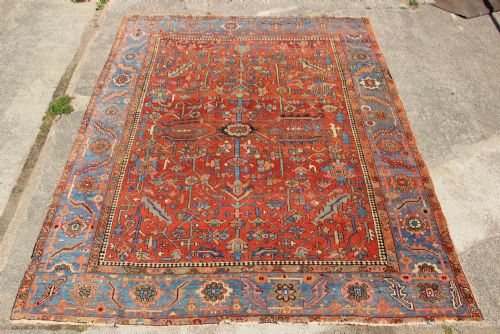
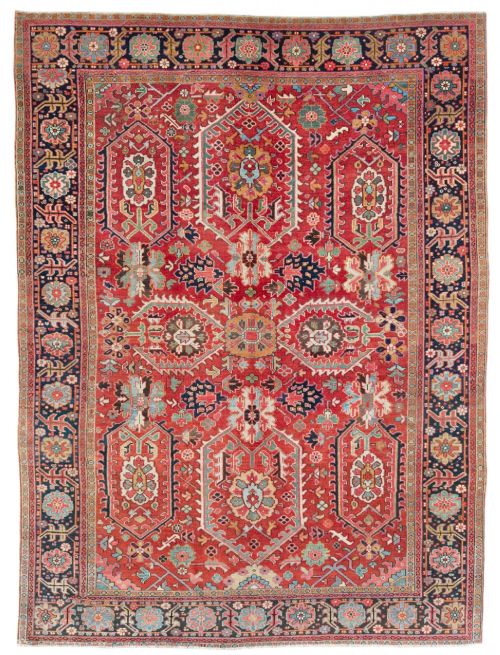
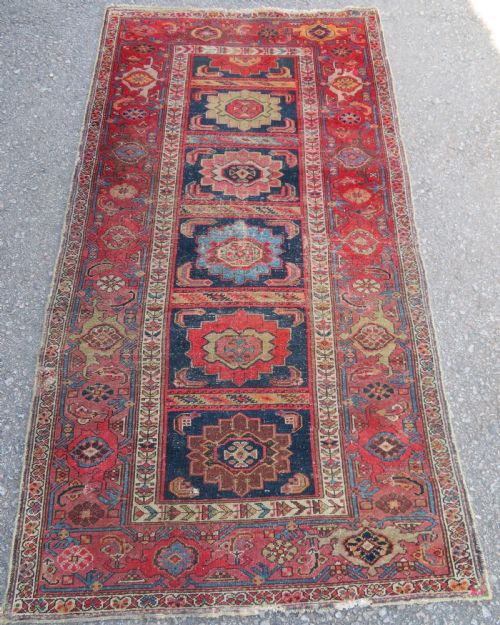
A red wool heriz carpet sits firmly within the tradition of Persian village and town production from North-West Persia. These floor coverings span the late nineteenth century and the early decades of the twentieth century, arriving in various dimensions from small scatter formats to expansive room-sized formats. A buyer searching this phrase encounters robust room-sized carpets alongside elongated runners and smaller area formats.
The aesthetic centres on large-scale geometric designs, often dominated by a central medallion set against a richly dyed red ground. Pieces originate from the Heriz region and nearby weaving centres such as Karaja, Serapi, Ahar, and Bakshiash, sharing a common heritage of sturdy construction. The specimens seen here represent decades of traditional Persian carpet making, recorded across periods from the eighteen-eighties through to the nineteen-thirties.
Materials and construction
The structural foundation relies upon a durable cotton warp and weft, providing the stability necessary for heavy domestic use. Hand-spun wool forms the thick pile, which is knotted tightly by hand across the foundation threads to create a resilient surface. Certain examples incorporate unspun or hand-spun variations within the wool, yielding subtle shifts in texture across the field.
Natural dye materials produce the deep reds and contrasting tones that define the palette of these village carpets. The knotting technique binds the wool firmly to the cotton grid, ensuring the geometric motifs retain their sharp definition over generations of wear.
Red Wool Heriz Carpet Retail Price Guide 2026
Typical asking prices for red wool heriz carpet among the pieces listed under this phrase on Sellingantiques today, from the lower quarter to the upper quarter. They describe what is for sale here now, not the wider market.
The listings span production dates from the eighteen-eighties to the nineteen-thirties, utilising wool pile upon a cotton warp.
Distinctions in quality
The refinement of the knot density and the precision of the geometric drawing govern the tier of a piece. Earlier examples from the Serapi style group display a more open layout and finer detail, whereas later village pieces lean towards heavier, bolder abstraction.
The vibrancy and depth of the red ground depend upon the mastery of the dye batch and the quality of the wool fleece selected. The integrity of the outer borders and the crispness of the secondary motifs further distinguish standard room carpets from exceptionally fine specimens.
The Red Wool Heriz Carpet Glossary
- Heriz
- A region in North-West Persia renowned for large, geometric carpets featuring bold central medallions and sturdy wool construction. These rugs emerged from village and town workshops during the nineteenth and twentieth centuries.
- Warp
- The vertical cotton threads stretched tightly on the loom that form the foundational skeleton of the carpet. The knotted pile wraps around these parallel strands.
- Weft
- The horizontal threads passed back and forth across the warp strings to lock the rows of knots into place. Cotton serves as the standard material for this structural grid.
- Serapi
- A sub-style associated with older Heriz carpets, distinguished by a more spacious composition and lighter, balanced colour palettes. Collectors prize these for their distinct aesthetic.
- Karaja
- A neighbouring weaving origin in North-West Persia producing smaller rugs and runners with geometric village patterns. They share technical similarities with Heriz production.
Red Wool Heriz Carpet: Frequently Asked Questions
Where were these carpets made?
These floor coverings originate from the Heriz region and surrounding districts in North-West Persia. Local village weavers produced them using traditional techniques passed down through generations.
The surrounding towns and workshops, including Karaja and Bakshiash, contributed distinct regional variations while maintaining the characteristic geometric style.
How do I care for a wool carpet?
Regular gentle vacuuming without a rotating brush roll keeps the wool pile free from dust and grit. Professional cleaning suited to antique textiles preserves the natural lanolin in the wool.
Positioning the rug away from direct, harsh sunlight prevents the red dyes from fading unevenly over the years.
What size options exist?
The inventory encompasses expansive room-sized carpets exceeding four metres in length alongside narrow hallway runners. Smaller area rugs and square formats also appear frequently.
Dimensions range from compact scatter sizes up to very large formats designed to anchor principal reception rooms.
How do I date an antique carpet?
Dating relies upon stylistic markers, structural characteristics, and the nature of the wool and dye materials used. Pieces span from the late nineteenth century through the early twentieth century.
Earlier nineteenth-century examples often display more spacious medallion layouts, while nineteen-thirties pieces tend toward denser village patterns.