

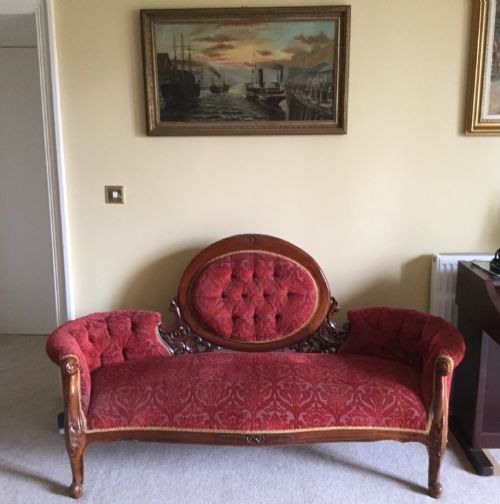

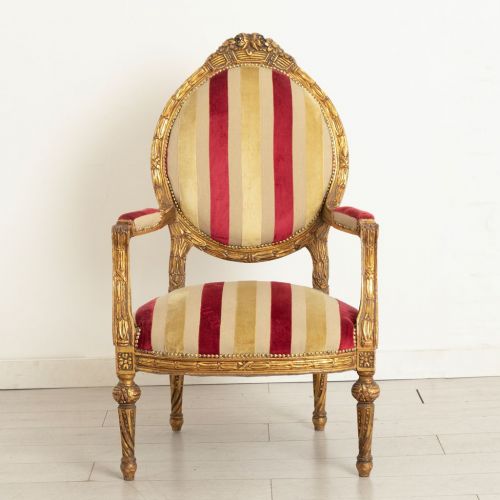


Red Velvet Salon Chairs
These red velvet salon chairs combine rich textiles with period frames, offering both striking visual presence and traditional seating comfort for a reception room.
Red Velvet Salon Chairs
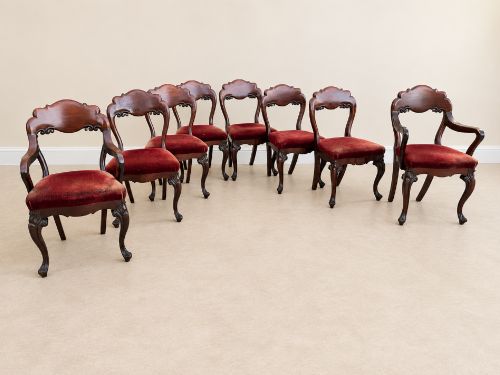
When you search for red velvet salon chairs, you encounter seating designed for formal reception rooms and parlours across several distinct eras. The selection draws primarily from Victorian, Edwardian, and Regency periods, alongside continental revival styles.
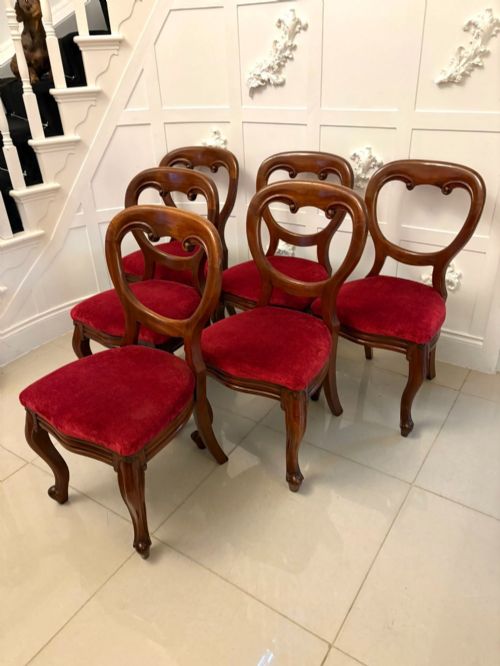
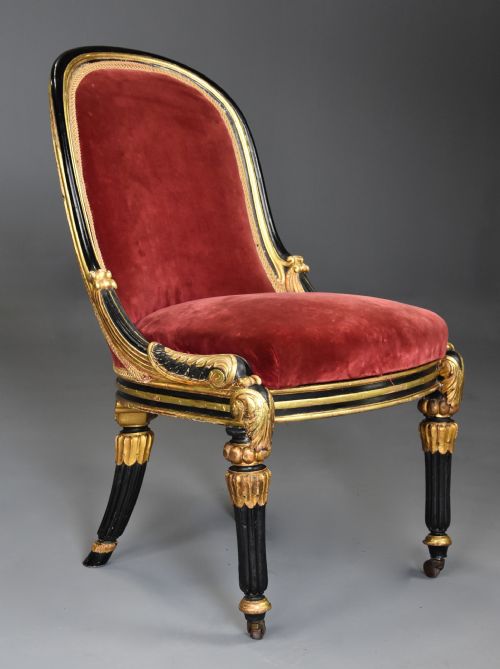
Most examples you meet here take the form of armchairs, side chairs, and nursing chairs upholstered in deep pile fabrics or brocade. Frames range from mahogany and walnut to ebonised wood and giltwood.
Makers of the past produced these seats to anchor a room scheme, pairing rich crimson or burgundy textiles with carved wooden structures. The grouping spans solitary fireside seats through to pairs and larger sets.
How they were made
Cabinetmakers shaped the structural frames from dense hardwoods like mahogany, walnut, and oak, often applying intricate carving or turning. Giltwood and ebonised finishes provided an alternative decorative surface for formal reception pieces.
Upholsters utilised traditional stuffing methods, securing sprung bases and applying durable red velvet, fabric, or brocade. Brass details and inlaid woodwork frequently finished the exterior of these chairs.
Red Velvet Salon Chairs Retail Price Guide 2026
Typical asking prices for red velvet salon chairs among the pieces listed under this phrase on Sellingantiques today, from the lower quarter to the upper quarter. They describe what is for sale here now, not the wider market.
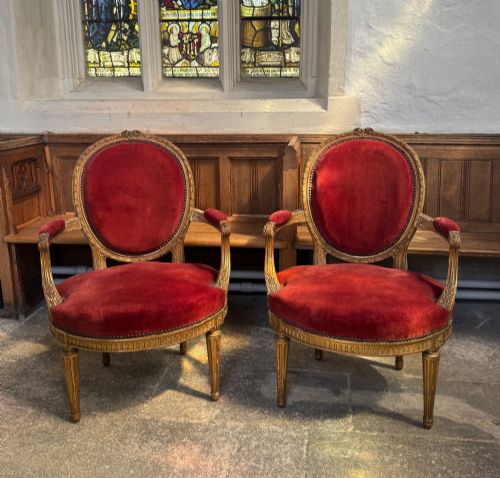
Several armchairs are recorded as specific his-and-her pairs, proving that Victorian couples liked matching seats by the fire.
What varies in quality
The distinction between standard and superior pieces lies in the crispness of the timber carving and the integrity of the original frame. Heavier hardwoods and refined giltwood finishes separate more ambitious workshop output from simpler production.
Upholstery execution also defines the standard, with deep pile brocade and traditional sprung bases representing higher levels of period craftsmanship. The harmony between the textile choice and the underlying style determines the overall success of the piece.
The Red Velvet Salon Chairs Glossary
- Giltwood
- Timber coated with gold leaf or a gold-coloured metallic finish. This technique was favoured on formal salon pieces to create a reflective, luminous surface.
- Ebonised
- Wood treated to resemble ebony through staining or painting. It provides a dark, contrasting finish popular on Regency and nineteenth-century frames.
- Brocade
- A rich, jacquard-woven fabric often featuring raised patterns. It adds considerable texture and visual weight to nineteenth-century upholstery.
- Fauteuil
- An open-armed upholstered armchair with exposed wooden armrests. Originating in France, the style became popular across subsequent European revival periods.
- Balloon Back
- A chair back shaped in a continuous curve resembling a balloon. This silhouette is particularly characteristic of Victorian seating design.
Red Velvet Salon Chairs: Frequently Asked Questions
Where did people put salon chairs?
These seats belonged in formal reception rooms, drawing rooms, and parlours where guests gathered for conversation. They were arranged to encourage social interaction while displaying the household's taste.
In modern spaces, they function effectively as standalone accent pieces in living rooms, bedrooms, or studies, bringing period character to contemporary interiors.
How do I spot a Victorian chair?
Victorian examples often feature darker hardwoods such as mahogany and walnut, accompanied by deep buttoning or sprung upholstery. Common silhouettes include balloon backs and carved fireside armchairs.
These pieces typically display heavier proportions than their Regency predecessors, reflecting the robust manufacturing styles of the nineteenth century.
Can I use these chairs daily?
Most of these pieces were constructed from solid hardwoods designed for regular domestic use. Frames built from mahogany or walnut remain structurally robust for modern seating.
Chairs that have undergone re-upholstering provide reliable comfort, though older frames benefit from sensible placement away from direct heat sources.
What defines Edwardian seating?
Edwardian versions tend to display lighter woodwork, sometimes incorporating inlaid details and paired configurations for sitting rooms. The proportions are frequently more slender than those of the preceding Victorian era.
These chairs often utilise mahogany frames and refined fabric choices, suiting the airier domestic interiors of the early twentieth century.