


Red Velvet Easy Chair
A red velvet easy chair brings warmth and traditional comfort to a room, offering deep seats upholstered in rich textile.
Red Velvet Easy Chair
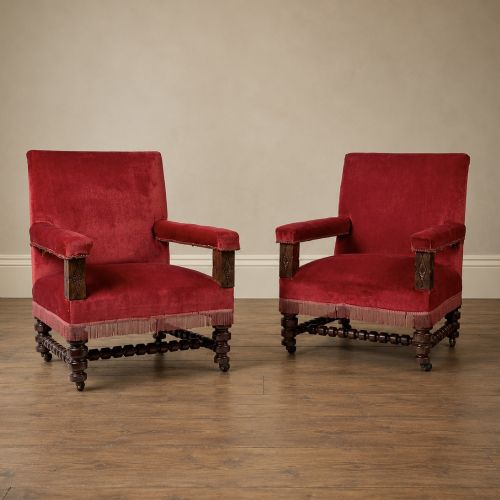
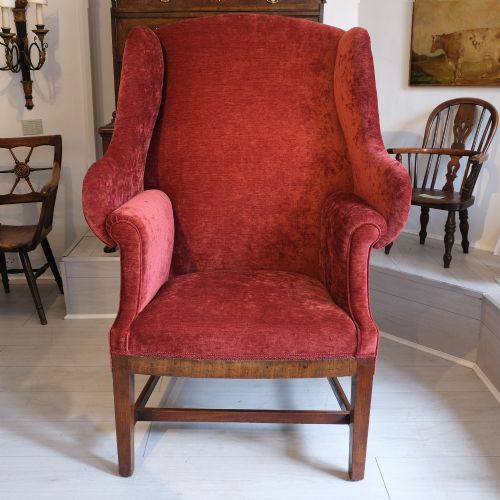
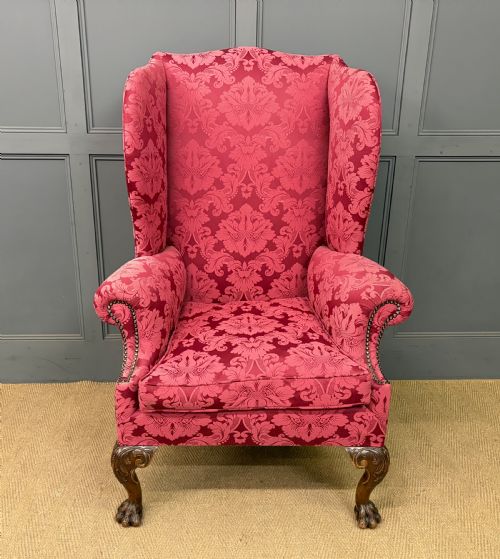
When you search for a red velvet easy chair, you encounter large upholstered seating designed for relaxation, spanning several historic periods from the Georgian era through the Victorian period and into the early twentieth century. These pieces primarily take the form of armchairs and wingback chairs, built to provide substantial support with generous proportions.
The versions you are most likely to meet on this page include Victorian button-backed chairs, nineteenth-century wing chairs, and occasional twentieth-century club chairs. Many examples feature robust wooden frames paired with soft pile fabric in shades of red, creating a striking focal point for a study or drawing room.
How they were made
Makers constructed the structural frames of these armchairs using traditional hardwoods such as mahogany, oak, walnut, and general timber. These sturdy foundations support deep upholstery and are frequently accented with exposed polished wood on legs and arms.
Textiles like velvet provide the tactile outer layer, while structural support is often enhanced with brass details and iron framing in specific Victorian variants. Traditional joinery and hand-tack upholstery techniques secure the fabric firmly to the hardwood frames.
Listings on this page span the Georgian, Victorian, and early twentieth-century periods, utilising materials like mahogany, oak, walnut, brass, and velvet.
What varies in quality
The distinction between standard examples and superior pieces rests in the integrity of the underlying hardwood frame and the depth of the upholstery work. Items displaying finely carved mahogany or walnut frames alongside resilient spring systems demonstrate superior craftsmanship.
Subtleties in the pile and weight of the red velvet fabric, as well as the proportion and balance of the wingback or armchair design, dictate the overall refinement of the piece. Well-balanced proportions and heavy timber construction elevate certain chairs above simpler utilitarian seating.
HOWARD AND SONS
The Red Velvet Easy Chair Glossary
- Wingback chair
- An armchair with high sides attached to the arms, designed to shield the sitter from draughts. These high panels provide a classic silhouette found across Georgian and Victorian examples.
- Button back
- An upholstery style where depressions are formed in the padding by pulling thread or twine tight through the stuffing and securing it with covered buttons. This creates a tufted texture.
- Club chair
- A deep, comfortable armchair typically upholstered in fabric or leather, originating in the early twentieth century. It prioritises relaxed seating over formal posture.
- Sheraton Revival
- A late nineteenth-century style drawing inspiration from the lighter, neoclassical furniture designs of the eighteenth century. It incorporates refined woodwork and elegant proportions.
Red Velvet Easy Chair: Frequently Asked Questions
How do I identify a Victorian armchair?
Victorian armchairs often feature dark hardwoods like walnut or oak, substantive proportions, and sometimes button-backed upholstery or iron framing. They prioritise heavy comfort and robust construction.
Looking closely at the frame materials and the style of the legs helps distinguish these mid-to-late nineteenth-century pieces from earlier Georgian or later twentieth-century seating.
What is a wingback chair used for?
Historically, wingback chairs were placed near firesides to protect the sitter from cold draughts using the characteristic side panels. Today, they serve as prominent statement armchairs in living rooms and studies.
Their high backs also offer ergonomic head and neck support for reading and relaxing.
How do I care for velvet upholstery?
Velvet requires gentle brushing to maintain the direction of the pile and prevent flattening over time. Avoiding direct sunlight helps preserve the rich red dye of the fabric.
Professional cleaning is recommended for antique textiles to protect the delicate pile and underlying structure.
How can I tell Georgian chairs apart?
Georgian chairs, dating from the eighteenth century, typically display elegant mahogany framing and generous proportions without the heavier Victorian button-tufting. They reflect the classical design sensibilities of the period.
Examining the construction joints and timber type reveals the older Georgian craftsmanship compared to later revivals.